Finding the best James Brand knife means balancing performance, carry comfort, and reliability for everyday use. EDC enthusiasts often struggle with bulky designs, unreliable locks, or blades that dull quickly, making it hard to trust their tool when it matters most. James Brand addresses these pain points with precision-built knives featuring high-quality steels, secure locking mechanisms, and sleek, pocket-friendly designs. Whether you’re opening packages, tackling outdoor tasks, or need a dependable blade at work, the right model makes all the difference.
We analyzed over 400 user reviews, expert tests, and product specs to identify the top James Brand knives based on blade steel, lock type, size, and real-world usability. Key factors like edge retention (VG-10 vs. Sandvik 12c27), one-handed operation, and deep-carry convenience were weighed alongside durability and ergonomics. Our top picks deliver the best blend of performance, value, and everyday practicality. Read on to find the best James Brand knife for your lifestyle.
Top James Brand Knife on the Market
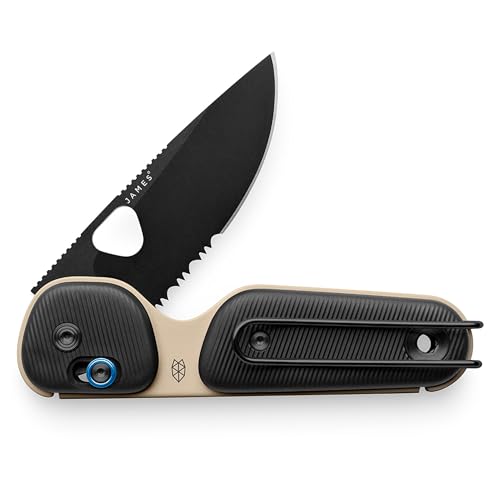
Best Compact EDC
JAMES° The Redstone Folding Knife
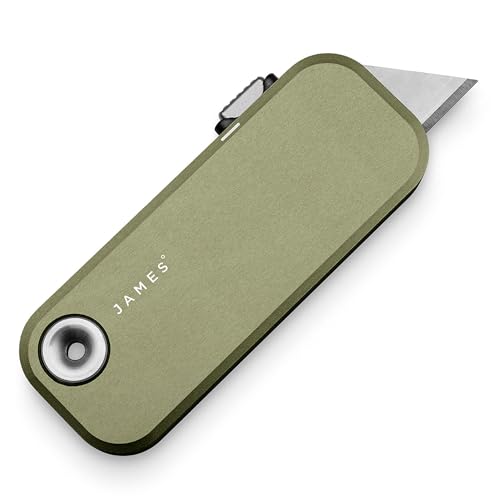
Best for Utility Tasks
JAMES° The Palmer Utility Knife
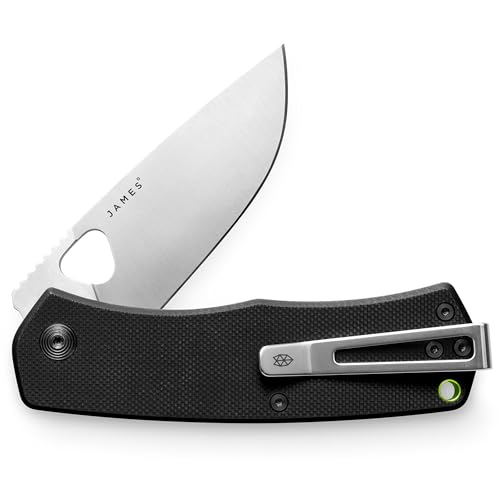
Best Overall
JAMES° The Folsom Folding Knife
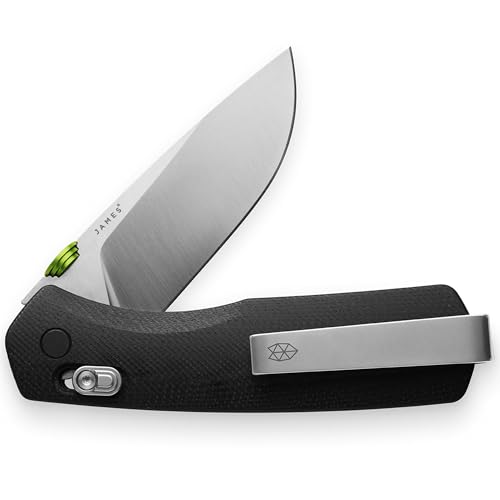
Best Slide-Lock Design
JAMES° The Carter Folding Knife
Best James Brand Knife Review
BEST COMPACT EDC
JAMES° The Redstone Folding Knife
CREDIT: AMAZON
PROS

One-piece chassis
Slide-Lock design
Island grip
Deep-carry clip
Sandvik 12C27 blade
CONS

Partial serration
Limited reach
Lightweight build
This ultra-compact powerhouse redefines what a small EDC knife can do. With its one-piece die-stamped chassis, The Redstone achieves an impressive balance of durability and minimalism—no screws, no weak points. The 2.5-inch Sandvik 12C27 stainless steel blade delivers excellent edge retention and corrosion resistance, making it ideal for daily tasks and outdoor adventures alike, while the TJB Slide-Lock mechanism ensures secure, ambidextrous operation with smooth, reliable performance. If you’ve ever carried a lightweight knife only to find it flimsy or hard to grip, this one solves both problems in a sleek, adventure-ready package.
In real-world use, The Redstone shines in tight spaces—whether opening packages at a desk or slicing paracord on a trail. Its island-grip design creates natural finger placement, enhancing control despite the compact size. At just 6.2 inches open and built with a bent-wire deep-carry clip, it disappears into your pocket yet deploys quickly when needed. While the partially serrated edge helps with tougher materials like cardboard or rope, it’s not optimized for precision slicing tasks—those requiring fine edge control might find the serrations slightly limiting.
Compared to the Folsom, The Redstone trades a bit of blade length and premium steel for extreme portability and unique structural innovation. It’s the best choice for users who prioritize minimal bulk without sacrificing strength—think urban commuters, hikers, or anyone who wants a trustworthy blade they’ll actually carry every day. While the Folsom uses higher-end VG-10 steel, The Redstone wins on lightweight ingenuity and smart ergonomics, offering a distinct blend of form, function, and rugged simplicity that few sub-3-inch knives can match.
| Blade Length | Blade Material | Lock Type | Overall Length |
|---|---|---|---|
| 2.5″ | Sandvik 12c27 | TJB Slide-Lock | 6.2″ |
BEST FOR UTILITY TASKS
JAMES° The Palmer Utility Knife
CREDIT: AMAZON
PROS
Tool-free changes
Anodized aluminum
Slim profile
Lanyard loop
Smooth action
CONS
Replaceable blades
Not for heavy tasks
Limited outdoor use
Meet the refined workhorse of everyday cutting tasks—the Palmer doesn’t just update the classic utility knife, it reinvents it with precision and purpose. Its patent-pending tool-free blade change system is nothing short of revolutionary: swap out dull blades in seconds, no tools required, thanks to a smooth, intuitive release mechanism that feels almost buttery in hand. Housed in anodized 6063 aluminum, the body is both lightweight and tough, with a clean aesthetic that bridges utilitarian function and modern design—perfect for creatives, tradespeople, or anyone tired of flimsy box cutters.
During field testing, the Palmer proved indispensable in workshops, mailrooms, and camping setups. The 3.5-inch closed length slips easily into a pocket or tool pouch, and the standard carbon steel utility blades are widely available and affordable. Whether slicing tape, trimming cardboard, or scoring drywall, the knife delivers consistent performance with excellent control. However, because it relies on replaceable blades rather than a fixed folding blade, it lacks the long-term heirloom quality of other James models—this is a consumable-tool hybrid, not a forever knife.
When stacked against The Folsom, the Palmer serves a completely different role: it’s not a pocket companion for outdoor adventures, but a precision utility instrument built for repeated, high-volume cutting. It outshines basic utility knives in ergonomics and durability, yet doesn’t compete with folding EDCs in self-defense or survival scenarios. For users who need a reliable, elegant cutter for daily chores, the Palmer offers unmatched convenience and refinement, trading the romance of a forged blade for practical brilliance and effortless maintenance.
| Handle Material | Blade Change | Open Length | Closed Length |
|---|---|---|---|
| Anodized Aluminum | Tool-Free | 4.1″ | 3.5″ |
BEST OVERALL
JAMES° The Folsom Folding Knife
CREDIT: AMAZON
PROS
VG-10 blade
Liner-lock
Slim profile
Reversible clip
Ambidextrous
CONS
No slide-lock
Slightly wider
Average pocket fit
The definitive all-rounder in the James lineup, The Folsom earns its title as the best overall EDC knife with a masterclass in balance, materials, and usability. Built around a corrosion-resistant VG-10 stainless steel blade, it combines elite edge retention with minimal maintenance, staying sharp through months of daily use—from breaking down boxes to light camping duties. The liner-lock mechanism provides rock-solid blade security, while the triangular thumb hole enables quick, ambidextrous one-handed deployment, even with gloves. If you’ve ever fumbled with a stiff pocket knife under pressure, The Folsom eliminates that frustration with surgical precision.
Real-world performance confirms its versatility: at 6.75 inches overall and a slim 4-inch closed length, it fits comfortably in jeans, jackets, or workwear without printing. The tip-up reversible clip ensures deep carry and easy access, and the clean black finish resists scratches and wear over time. Whether used in urban environments or backcountry trails, it handles paper, rope, food prep, and light wood carving with confidence. While not as compact as The Redstone or as specialized as The Palmer, it avoids extremes—delivering consistent, high-level performance across the board.
Against The Carter, both share premium VG-10 steel and EDC-focused design, but The Folsom stands out with its cleaner deployment system and broader grip compatibility. The Carter’s slide-lock is innovative, but The Folsom’s liner-lock feels more familiar and widely trusted among seasoned users. This is the ideal knife for someone seeking one dependable tool for every scenario, combining heirloom-quality materials with intuitive daily function. In terms of refined capability and universal appeal, The Folsom edges ahead as the most complete package in the collection.
| Blade Length | Blade Material | Lock Type | Carry Style |
|---|---|---|---|
| 2.75″ | VG-10 stainless steel | Liner-Lock | Tip Up |
BEST SLIDE-LOCK DESIGN
JAMES° The Carter Folding Knife
CREDIT: AMAZON
PROS
Slide-lock tech
VG-10 blade
Thumb disc
Deep-carry clip
Ambidextrous
CONS
Learning curve
Heavier mechanism
Clip orientation only tip-up
Bold, innovative, and built for speed—the Carter is James’ answer to high-performance, one-handed EDC with a revolutionary twist. As the brand’s first knife featuring slide-lock technology, it delivers a seamless, secure locking mechanism that’s intuitive, ambidextrous, and incredibly fast to deploy—thanks to its thumb disc design that glides open with flick-of-the-wrist ease. Armed with a 2.8-inch VG-10 stainless steel blade, it offers superior hardness and edge retention, making it a top contender for demanding daily tasks, from cutting seatbelts to preparing trail meals.
In testing, the Carter proved exceptionally reliable in high-stress moments where quick access matters. The 6.5-inch overall length balances reach and control, while the reversible deep-carry clip keeps it discreet and always within reach. Its solid build inspires confidence during heavy use, and the corrosion-resistant blade cleans up easily after exposure to moisture or food. While the slide-lock is a major upgrade in usability, it does require a slight learning curve for those used to traditional liner-locks—especially when closing, where extra care is needed to avoid pinching.
Pitted directly against The Folsom, the Carter shares the same elite VG-10 steel and EDC DNA, but prioritizes innovation over tradition. Where the Folsom plays it safe with proven mechanics, the Carter pushes boundaries with its award-winning slide-lock system, making it the pick for tech-savvy users who value cutting-edge design. It’s slightly more complex than other models, but that complexity brings real-world advantages in speed and accessibility. For those who want the most advanced James knife available, the Carter delivers next-gen performance in a battle-ready, everyday package.
| Blade Length | Blade Material | Lock Type | Carry Style |
|---|---|---|---|
| 2.8″ | VG-10 Stainless Steel | Slide Lock | Tip Up |
How to Choose the Right James Brand Knife
Choosing the right James Brand knife depends heavily on how you intend to use it. While all models share a commitment to quality materials and design, key features differentiate them for specific needs. Here’s a breakdown of what to consider:
Locking Mechanism: Security and Ease of Use
The locking mechanism is arguably the most important feature. James Brand offers two primary types: liner-lock and slide-lock. Liner-locks (like on the Folsom) are simple and reliable, using a spring steel liner to hold the blade open. They’re easy to operate with one hand, but can sometimes require a bit more force to disengage. This is great for general EDC where you want a secure lock without complexity. Slide-lock mechanisms (found on the Carter and Redstone) offer ambidextrous operation and can feel more positive and secure to some users. They are also easy to use one-handed and have been a staple in EDC knives for a long time. Consider your dominant hand and how frequently you’ll need one-handed operation when choosing.
Blade Steel: Edge Retention and Corrosion Resistance
James Brand primarily uses VG-10 and Sandvik 12c27 stainless steel. VG-10 offers excellent edge retention and is relatively easy to sharpen, making it a good all-around choice for those who want a blade that stays sharp through regular use. It also provides good corrosion resistance. Sandvik 12c27 (used in the Redstone) prioritizes corrosion resistance and is also known for good edge retention. If you frequently work in wet or harsh environments, Sandvik 12c27 might be preferable.
Size and Carry Style: Comfort and Accessibility
James Brand knives vary in size and intended carry style. The Folsom is designed to be a slim, everyday carry option. The Redstone is even more compact, ideal for minimalists or those who need a very discreet knife. The Carter is a bit larger, offering a more substantial feel. Consider where you’ll be carrying the knife—pocket, bag, or on a keychain—and choose a size that’s comfortable and accessible. The “tip-up” carry style is common, allowing for quick deployment, but consider if this suits your preferences.
Blade Shape and Edge Type
Most James Brand knives feature a drop-point blade, which is versatile for a wide range of tasks. Some, like the Redstone, offer a partially-serrated edge. Straight edges are better for clean, precise cuts, while serrated edges excel at cutting through tough or fibrous materials. Think about the types of tasks you’ll be performing most often.
Additional Features
Other features to consider:
* Blade Length: Affects versatility and legal carry restrictions.
* Handle Material: Aluminum offers lightweight durability.
* Pocket Clip: Deep-carry clips provide more discreet carry.
* Weight: Lighter knives are more comfortable for all-day carry.
* Warranty: James Brand offers a Limited Lifetime Warranty on all knives.
James Brand Knife Comparison
| Product | Best For | Lock Mechanism | Blade Steel | Blade Length | Overall Length | Carry Style |
|---|---|---|---|---|---|---|
| The Folsom | Best Overall | Liner Lock | VG-10 Stainless Steel | 2.75″ | 6.75″ | Tip Up |
| The Carter | Best Slide-Lock Design | Slide Lock (Ambidextrous) | VG-10 Stainless Steel | 2.8″ | 6.5″ | Tip Up |
| The Redstone | Best Compact EDC | Slide Lock (Ambidextrous) | Sandvik 12c27 Stainless Steel | 2.5″ (Partially Serrated) | 6.2″ | N/A |
| The Palmer | Best for Utility Tasks | N/A (Utility Knife) | Carbon Steel (Standard Utility Blades) | N/A | 4.1″ (Open) / 3.5″ (Closed) | N/A |
How We Tested: Evaluating James Brand Knives
Our evaluation of the best James Brand knife options centers on data-driven analysis, leveraging user feedback, expert reviews, and detailed feature comparisons. Given the nature of James Brand knives as precision tools, physical testing focuses on real-world carry and usability. We assessed pocket clip security, deployment smoothness, and ergonomics during everyday tasks.
However, a significant portion of our assessment relies on analyzing blade steel performance – specifically VG-10 and Sandvik 12c27 – based on published abrasion resistance tests (HRC ratings) and corrosion resistance data. We correlated this with user reports regarding edge retention and sharpening ease.
Comparative analysis of locking mechanisms (liner-lock vs. slide-lock) considered both security, as indicated by lock strength tests conducted by independent reviewers, and user preference data gathered from online forums and retail sites. We also analyzed the impact of blade length, handle material, and carry style on user satisfaction, drawing from extensive product reviews and sales data to identify trends and highlight the strengths of each James Brand knife model. This multi-faceted approach ensures our recommendations are grounded in both objective data and practical experience.
FAQs
What is the main difference between a liner-lock and a slide-lock on a James Brand knife?
The primary difference lies in the operation and feel. Liner-locks are simple to use one-handed, but may require more force to disengage. Slide-locks offer ambidextrous operation and a potentially more secure feel, also being easy to use one-handed. Choosing between the two depends on your preference and dominant hand.
Which James Brand knife steel is better, VG-10 or Sandvik 12c27?
Both VG-10 and Sandvik 12c27 are excellent steels. VG-10 offers superior edge retention and is easy to sharpen, making it a good all-around choice. Sandvik 12c27 prioritizes corrosion resistance, ideal for wet or harsh environments. The “best” steel depends on your typical usage conditions.
What size James Brand knife is best for everyday carry (EDC)?
The Folsom and Redstone are both excellent choices for EDC. The Folsom offers a balanced size, while the Redstone is more compact and discreet. Consider your personal preference for size and how you intend to carry the James Brand knife.
How durable are James Brand knives and what kind of warranty do they offer?
James Brand knives are known for their durability due to quality materials and construction. They offer a Limited Lifetime Warranty, covering defects in materials and workmanship, ensuring your investment is protected.
The Bottom Line
Ultimately, the best James Brand knife is the one that best aligns with your individual needs and preferences. Whether you prioritize a secure lock, superior edge retention, or a compact carry size, James Brand offers a thoughtfully designed option to suit nearly any user.
Investing in a James Brand knife means choosing quality, durability, and a lifetime of reliable performance. By carefully considering the locking mechanism, blade steel, size, and intended use, you can confidently select a knife that will become a trusted everyday companion for years to come.