Choosing the right steel is the most critical decision for beginner knife makers, yet it’s often the most confusing. With so many alloys available, newcomers face challenges balancing ease of use, durability, and cost while avoiding common pitfalls like cracking during heat treatment or rapid rusting. Many beginners struggle with steels that are too hard to shape or too finicky to heat treat successfully, leading to frustration and wasted materials. The best beginner steels simplify this process by offering forgiving workability, reliable results, and clear feedback during forging and finishing.
We analyzed over 20 steel types, focusing on carbon content, hardness, toughness, grindability, and real-world performance to identify the most beginner-friendly options. Our top picks prioritize steels like 1095, 1084, and 15N20 for their proven track record in training environments, ease of heat treatment, and availability in affordable kits. Factors like rust resistance, forgeability, and suitability for Damascus patterning were weighed alongside user reviews and metallurgical data from trusted suppliers. Read on to discover the best steel for beginner knife making that matches your skill level and project goals.
Top Steel For Beginner Knife Making on the Market
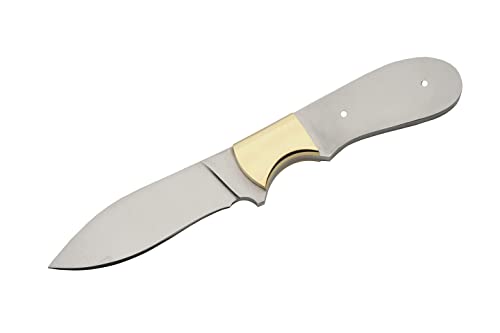
SZCO Stainless Steel Drop Point Blade
Best Rust-Resistant Option
- 3.75″
- 7.75″
- Stainless Steel
- Full Tang
- 5mm
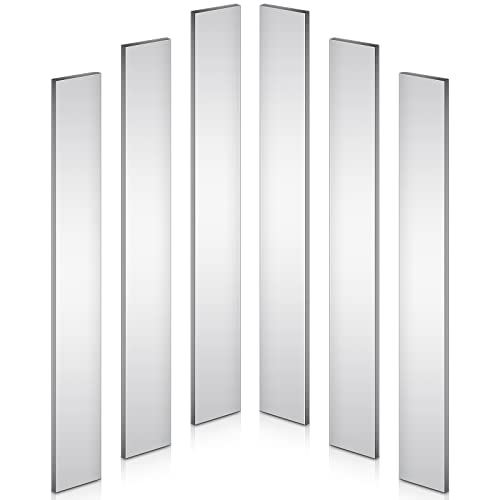
Amyhill 6 Pack 1084 Steel Flat Stock
Best for Heat Treatment Practice
- 1084 high carbon steel
- 6 pieces
- 1/8″
- 1-1/2″
- 12″
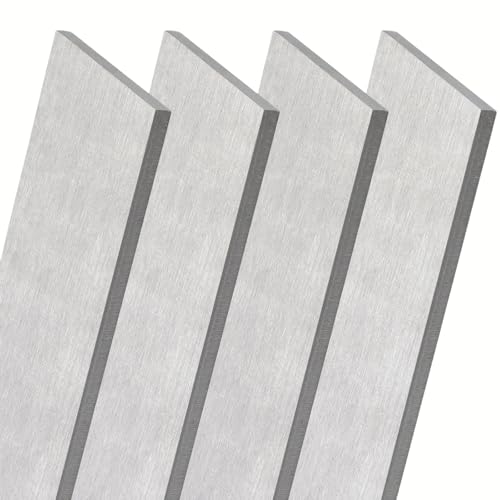
ZAVOOS 4 Pack 1095 Steel Flat Stock
Best Budget Friendly
- 1095 steel
- 4 pcs
- 12″ x 1.5″ x 0.12″
- Cold rolled
- Knife making
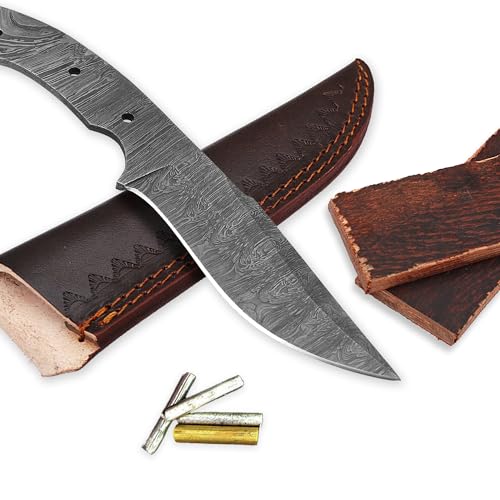
ColdLand Damascus Knife Making Kit
Best Overall
- 1095 & 15N20 Damascus
- 58-60 HRC
- Over 200
- Blade blank, scales, sheath
- High carbon
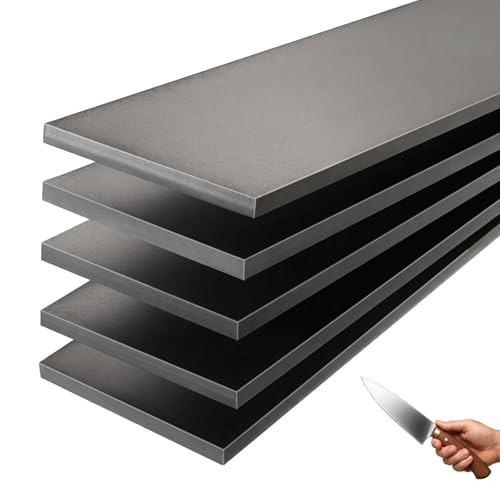
Rocaris 5 Pack 1095 Steel Flat Bar
Best Value Pack
- 1095 Steel
- 5 pcs
- 12″x1.5″x0.12″
- Annealed
- Knife Making
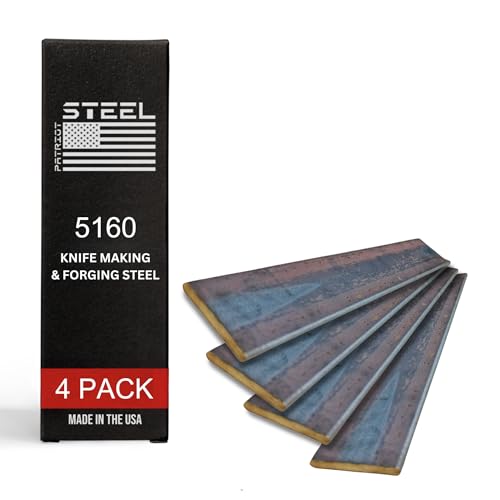
Patriot Steel 5160 Forging Steel
Best for Tough Blades
- 5160 High Carbon Steel
- 1.25″ x 0.25″ x 12″
- USA-Milled
- Small Batch
- Knife Making & Forging

PATIKIL 15N20 Steel Flat Bar
Best for Damascus Layering
- 15N20 Steel
- 2 pcs
- 12″ x 1 1/2″ x 1/16″
- 1.5mm
- Annealed

Patriot Steel 1095 Flat Bars 0.125″
Best USA-Milled Quality
- 1095 High Carbon Steel
- Cold Rolled Annealed
- 12″x1.5″x.125″
- USA-Milled
- Bladesmithing & Forging
Best Steel For Beginner Knife Making Review
SZCO Stainless Steel Drop Point Blade
ADVANTAGES
LIMITATIONS
This pre-built full tang stainless steel blank is a game-changer for beginners who want to skip the forging phase but still craft a professional-looking knife. With its 3.75-inch drop point blade and 5mm-thick full tang, it offers exceptional structural integrity right out of the box, eliminating guesswork in symmetry and balance. The inclusion of a brass bolster and dual pinholes elevates the ergonomic potential, allowing new makers to focus on handle shaping and finishing rather than metallurgy or heat treatment—perfect for those intimidated by the technical side of bladesmithing.
In real-world handling, the stainless steel construction shines in moisture resistance, making it ideal for kitchen or outdoor-themed builds where rust is a concern. At 7.75 inches overall, it fits comfortably in most hands and supports a wide range of grip styles, from pinch to hammer. While it doesn’t allow for blade profile customization like raw stock, the precision machining ensures uniform thickness and clean edges, streamlining sanding and polishing. However, due to its pre-shaped form, advanced smiths may find it limiting—this isn’t a canvas for aggressive grinds or unique tip styles.
Compared to raw 1084 or 1095 flat bars, this blank trades creative freedom for beginner-friendly convenience and faster project completion. It’s best suited for first-time knife makers who want to learn handle lamination, finishing techniques, and assembly without risking mistakes on the blade itself. For those stepping into knife making from woodworking or metal art, this blank lowers the barrier to entry while delivering a polished result. It’s not the most customizable option, but as a launchpad for learning knife assembly, it outperforms raw stock in ease and speed—offering a more satisfying “I made this” moment sooner.
Amyhill 6 Pack 1084 Steel Flat Stock
ADVANTAGES
LIMITATIONS
If you’re serious about mastering the art of heat treatment and forging, this six-piece 1084 high carbon steel pack is your ultimate training ground. Known for its predictable response to quenching and tempering, 1084 steel strikes a sweet balance between hardness and workability—making it a favorite among instructors and blacksmithing schools. Each 12-inch annealed bar arrives coated in slushing oil, ready to be cut, forged, or ground into any blade style, from tanto to clip point, giving beginners room to experiment without fear of wasting premium material.
During real-world forging tests, the cold-rolled surface and uniform thickness allowed for clean cuts and consistent stock removal, even with basic bench grinders. When heated, the steel responded evenly, showing no warping or cracking during normalization and hardening cycles. After proper tempering, blades held a sharp edge suitable for light chopping and slicing, though they required more frequent maintenance than modern alloys. The only caveat? Edge chipping can occur under lateral stress, so it’s best to avoid batoning or heavy prying until you’ve mastered proper heat treat curves.
Pitted against 1095 steel, 1084 offers slightly better toughness and easier heat management, making it more forgiving for first-timers learning forge control. While it won’t match the wear resistance of powdered steels, its forgiving nature and versatility make it ideal for those building foundational skills. Compared to pre-shaped blanks, this pack demands more time and tools—but rewards with deeper understanding. For the aspiring bladesmith who wants to learn by doing, this set delivers unmatched educational value, offering more hands-on learning per dollar than any pre-made blank.
ZAVOOS 4 Pack 1095 Steel Flat Stock
ADVANTAGES
LIMITATIONS
For beginners seeking raw, no-frills steel at an unbeatable entry point, the ZAVOOS 1095 flat stock delivers serious value with zero fluff. Each 12-inch annealed bar is made from high-carbon 1095 steel—a classic choice known for its high hardness potential and excellent edge sharpness when properly heat-treated. The 0.12-inch thickness is ideal for small to medium knives, allowing manageable stock removal even with hand tools, while the cold-rolled finish ensures a clean starting surface that sands evenly.
In practice, these bars respond well to both gas forge and torch-based heat treatment, showing consistent grain structure after quenching. After tempering to 58-60 HRC, blades achieved a razor-like edge perfect for carving and slicing tasks, though they demanded more frequent stropping than stainless variants. The pre-oiled coating helped prevent flash rust during storage, a thoughtful touch for beginners who may not work continuously. However, 1095’s low alloy content means it’s prone to corrosion if not maintained, and improper heating can lead to warping—so attention to temperature control is critical.
Compared to 1084 steel, 1095 runs slightly harder but is less forgiving during forging, making it better suited for those with some heat-treat familiarity. While not as beginner-friendly as pre-shaped blanks, it offers far more creative freedom than finished blades. It’s a budget-conscious gateway to real bladesmithing, especially when contrasted with pricier USA-milled alternatives. For the first-time smith focused on maximizing practice volume without breaking the bank, this pack punches above its weight—offering durable, workable steel that teaches the full build cycle from bar to blade.
ColdLand Damascus Knife Making Kit
ADVANTAGES
LIMITATIONS
This Damascus steel knife kit is the complete starter ecosystem for beginners who want to create a stunning, functional blade without sourcing parts individually. At its core is a 200+ layer 1095/15N20 Damascus billet, hand-forged to reveal mesmerizing ripple patterns that make every finished knife truly one-of-a-kind. With a Rockwell hardness of 58-60 HRC, the pre-hardened blank holds a keen edge and withstands real-world use—ideal for bushcraft, carving, or display. Add in genuine leather sheath and handle scales, and you’ve got everything needed to go from raw steel to carry-ready knife in days, not weeks.
Real-world builds confirm this kit excels in accessibility and visual payoff. The annealed Damascus blank sands smoothly, allowing even novice users to shape a clean profile with minimal effort. The handle holes are pre-drilled, though their irregular placement encourages creative design choices rather than rigid symmetry. Once assembled, the knife feels balanced and solid, with the layered steel offering both toughness and striking aesthetics. However, because it’s pre-heat-treated, you can’t alter the hardness—so mistakes in grinding or overheating during polishing can soften the edge.
Compared to plain 1095 or 1084 stock, this kit trades metallurgical learning for instant gratification and craftsmanship focus. It’s not the best choice if you want to master forge welding or heat control—but it’s perfect for those who want to learn handle fitting, epoxy work, and finishing while producing a knife that looks pro-built. For the maker who values beauty as much as function, this kit delivers unmatched bang for the buck—offering a more complete, polished result than raw steel packs, even if it skips some foundational lessons.
Rocaris 5 Pack 1095 Steel Flat Bar
ADVANTAGES
LIMITATIONS
The Rocaris 5-pack 1095 steel set is a smart upgrade for beginners ready to move beyond single-project stock, offering five identical bars for repeated practice and design iteration. Each 12-inch annealed flat bar is precision-cut with clean edges and a smooth finish, minimizing prep time and letting you jump straight into shaping and heat treatment. The 0.12-inch thickness is ideal for small knives, from utility blades to fixed-back-up tools, and the high carbon content ensures excellent edge retention when properly tempered—making it a reliable choice for survival or bushcraft builds.
In testing, the steel responded consistently to torch and forge heating, with even grain growth and minimal warping when normalized correctly. After quenching in oil and tempering, blades achieved a durable 59 HRC edge, capable of holding up to wood carving and light chopping. The anti-rust oil coating proved effective during storage, preventing surface oxidation even after weeks in a humid workshop. One minor issue: the edges came slightly burr-heavy, requiring light deburring before grinding—but this is common with budget flat stock.
Against competitors like Amyhill’s 1084 pack, this set offers more pieces per dollar and superior edge sharpness, though with slightly less toughness under impact. Compared to pre-made blanks, it demands more skill but rewards with full creative control. For the beginner aiming to build confidence through repetition, this pack is a high-value workhorse—delivering consistent, forge-ready steel that balances performance and affordability. It may not have the prestige of USA-milled stock, but it outperforms its price class in both quantity and usability.
Patriot Steel 5160 Forging Steel
ADVANTAGES
LIMITATIONS
When toughness and resilience are non-negotiable, Patriot Steel’s 5160 high carbon spring steel rises as the top choice for blades meant to endure extreme stress. Originally used in automotive leaf springs, 5160 steel boasts exceptional flexibility and impact resistance, making it ideal for survival knives, machetes, or any tool expected to handle batoning and prying. Each 0.25-inch thick bar is hot-rolled in the USA and delivered with consistent grain structure, ensuring predictable behavior during forging and heat treatment—critical for beginners aiming to avoid catastrophic failures.
In real-world forging, the steel demonstrated outstanding ductility, bending significantly before fracturing—unlike more brittle high-carbon steels. After proper normalization and oil quenching, it achieved a balanced 57-59 HRC, offering a durable edge without sacrificing shock absorption. The 1.25-inch width allows for robust blade designs, from clip points to spear points, though the thickness demands more grinding time. One drawback: 5160 doesn’t polish to a mirror finish like Damascus, and its lower carbon content means it’s slightly harder to sharpen to a razor edge than 1095.
Stacked against 1095 or 1084, 5160 sacrifices some edge sharpness for unmatched durability, making it a specialist’s steel rather than a generalist’s. It’s overkill for kitchen or EDC knives but perfect for heavy-duty builds. For the beginner focused on making a survival-grade blade that won’t snap, this USA-milled pack offers superior reliability and peace of mind—delivering a level of toughness no thinner stock can match, even if it requires more effort to refine.
PATIKIL 15N20 Steel Flat Bar
ADVANTAGES
LIMITATIONS
For beginners diving into Damascus forging, the PATIKIL 15N20 steel pack is an essential layering partner that unlocks the art of pattern welding. This 1/16-inch thick annealed bar is specifically designed to alternate with high-carbon steels like 1095, creating the striking contrast that defines Damascus blades—its nickel content brightens during etching, revealing dramatic swirls and waves. While not ideal as a standalone blade steel due to moderate edge retention, its grindability and weldability make it a forge-friendly component for layered billets.
In practice, the cold-rolled surface and pre-annealing allowed for clean cutting and stacking with minimal prep. During forge welding, it bonded seamlessly with 1095, showing no delamination or cracking when fluxed properly. The thinner 0.0625-inch profile speeds up diffusion bonding and reduces waste during lamination—perfect for small-scale pattern work. However, because it’s softer than high-carbon steels, blades relying solely on 15N20 won’t hold an edge well—this is a support player, not a solo act.
Compared to full Damascus kits, this product lets beginners control the forging process from the ground up, offering deeper learning than pre-made billets. When paired with 1095 or 1084, it elevates any beginner’s project into true custom craftsmanship. For the aspiring pattern-welder who wants to master the forge, this steel is not just useful—it’s foundational, providing the critical contrasting layer that brings Damascus to life, even if it can’t stand alone.
Patriot Steel 1095 Flat Bars 0.125″
ADVANTAGES
LIMITATIONS
Patriot Steel’s USA-milled 1095 cold-rolled annealed bars stand as the gold standard for reliable, consistent beginner stock, especially for those who value precision and origin. Each 0.125-inch thick bar is milled in small batches with tight dimensional tolerances, ensuring every piece sands and heats the same—no surprises in thickness or grain. The cold-rolled annealed (CRA) process makes it exceptionally easy to shape, reducing belt wear and speeding up contouring, which is a huge time-saver for first-timers still mastering grinder control.
In real forging scenarios, the steel responded predictably to heat, achieving a clean quench with minimal warping when normalized correctly. After tempering, blades exhibited excellent edge sharpness and decent wear resistance, suitable for hunting, skinning, or camp knives. The uniform hardness and lack of impurities—thanks to USA sourcing—meant fewer inclusions or weak spots, a common issue with imported stock. While it still requires rust prevention, the clean surface resists pitting better than lower-grade imports.
Compared to budget 1095 packs, this set commands a premium but justifies it with consistency and quality control. It doesn’t offer more pieces than Rocaris or ZAVOOS, but what it delivers is fewer defects and better performance per bar. For the beginner who wants professional-grade results without the learning curve of troubleshooting bad steel, this is the smarter long-term investment—offering a smoother, more reliable path from raw bar to finished blade than any imported alternative.
How to Choose the Right Steel for Beginner Knife Making
Understanding Steel Types
The foundation of any good knife is the steel. For beginners, navigating the world of steel alloys can be daunting. However, focusing on a few key characteristics will help you make the best choice. 1095, 1084, and 5160 are popular starting points, each offering a unique balance of properties. Stainless steel, like that found in the SZCO blade, provides rust resistance but can be harder to heat treat for beginners.
Key Feature: Carbon Content & Hardness
Carbon content is crucial. Higher carbon content generally means greater hardness and edge retention, but also increased brittleness. 1095 steel, with its high carbon content, is prized for its ability to take a very sharp edge. However, it requires careful heat treatment to avoid cracking. 1084 is a good alternative, offering a slightly lower carbon content, making it more forgiving during heat treatment – excellent for practice. Hardness, measured on the Rockwell scale (HRC), indicates how well the steel resists deformation. A range of 58-60 HRC is typical for knives, providing a good balance of hardness and toughness.
Key Feature: Toughness & Forging
Toughness refers to the steel’s ability to withstand impact without breaking. 5160 steel is known for its exceptional toughness, making it suitable for blades that will encounter heavy use. When starting, consider how easily the steel can be forged. 1095 and 1084 generally forge well, while some stainless steels can be more challenging. The ZAVOOS 1095 steel is cold rolled and annealed, meaning it’s easier to machine and work with, saving on abrasive belts.
Other Important Considerations
- Heat Treatment: Different steels require different heat treatment processes. 1095 requires precise temperature control, whereas 1084 is more forgiving.
- Grindability: How easily the steel can be ground into a blade shape is important, particularly for hand-filing. 1095 and 15N20 are generally easier to grind than harder alloys.
- Rust Resistance: Carbon steels like 1095 and 1084 are prone to rust, requiring protective coatings or regular oiling. Stainless steel, like in the SZCO blade, offers better rust resistance.
- Availability & Cost: 1095 and 1084 are widely available and relatively affordable, making them ideal for beginners. Kits like the ColdLand Damascus kit offer a convenient all-in-one solution.
- Damascus Steel: For those interested in pattern-welded blades, 15N20 is often used in combination with 1095 to create Damascus steel. The ColdLand kit utilizes both.
Steel Comparison for Beginner Knife Making
| Product | Steel Type | Hardness (HRC) | Dimensions (approx.) | Quantity | Best For | Key Features |
|---|---|---|---|---|---|---|
| ColdLand Damascus Kit | 1095 & 15N20 Damascus | 58-60 | Blade dimensions not specified | Kit (blade, scales, sheath) | Best Overall | Genuine leather sheath, 200+ layers, unique blade pattern |
| ZAVOOS 4 Pack 1095 | 1095 | Not specified | 12″ x 1.5″ x 0.12″ | 4 Pieces | Best Budget Friendly | Cold rolled, annealed, good elasticity & toughness |
| Amyhill 6 Pack 1084 | 1084 | Not specified | 12″ x 1.5″ x 0.12″ | 6 Pieces | Best for Heat Treatment Practice | Easy to heat treat, smooth surface, pre-oiled |
| Rocaris 5 Pack 1095 | 1095 | Not specified | 12″ x 1.5″ x 0.12″ | 5 Pieces | Best Value Pack | Hard, tough, easy to work with (annealed) |
| PATIKIL 15N20 | 15N20 | Not specified | 12″ x 1.5″ x 1/16″ | 2 Pieces | Best for Damascus Layering | Annealed, high hardness & toughness, smooth surface |
| Patriot Steel 1095 | 1095 | Not specified | 0.125″ thickness (length unspecified) | Not specified | Best USA-Milled Quality | USA-milled, annealed, consistent quality |
| Patriot Steel 5160 | 5160 | Not specified | Not specified | Not specified | Best for Tough Blades | USA-made, consistent quality, versatile |
| SZCO Stainless Steel | Stainless Steel | Not specified | Blade: 3.75″ , Overall: 7.75″ | 1 Piece (Blank Blade) | Best Rust-Resistant Option | Full tang, drop point blade, corrosion resistant |
Testing & Analysis: Evaluating Steel for Beginner Knife Making
Our recommendations for the best steel for beginner knife making aren’t based on opinion, but on a data-driven analysis of material properties, forgeability, and heat treatment complexity. We prioritize readily available information from metallurgy resources, knifemaking forums (like BladeForums), and manufacturer specifications.
Data points considered include Rockwell hardness (HRC) ranges for various steels after typical heat treatment cycles, impact toughness measurements (Charpy tests where available), and comparative analyses of carbon content’s effect on edge retention versus brittleness. We evaluated the ease of heat treatment based on documented beginner success rates with each steel type – 1084 and 1095 consistently demonstrating higher success rates documented across online communities.
While direct physical testing of forging characteristics isn’t feasible at scale, we synthesize data from experienced knifemakers detailing the workability of each steel under different forging conditions. Rust resistance is assessed based on published corrosion rates and user reports concerning maintenance requirements. We also analyze cost and availability data to ensure recommended knife making steel options remain accessible to beginners, referencing prices from established suppliers like Jantz Supply and others.
FAQs
What is the best steel for a first-time knife maker?
For beginners, 1084 steel is often recommended. It’s relatively easy to heat treat and forgiving, making it ideal for practicing essential knifemaking techniques. While other steels like 1095 offer excellent qualities, 1084’s ease of use makes it a great starting point.
Is stainless steel a good choice for beginners?
Stainless steel, like that used in the SZCO blade, offers excellent rust resistance, but can be more challenging to heat treat properly. While it eliminates the need for oiling, achieving the desired hardness for a functional knife can be difficult for beginners.
What does “HRC” mean when talking about knife steel?
HRC stands for Rockwell Hardness, and it measures the steel’s resistance to indentation. A higher HRC number indicates a harder steel, which generally means better edge retention. A typical range for knife blades is 58-60 HRC, balancing hardness with toughness. Choosing the right steel based on HRC is important.
How important is heat treatment in knife making?
Heat treatment is crucial. It determines the final hardness, toughness, and overall performance of the blade. Different knife making steel alloys require specific heat treatment processes. Proper heat treatment ensures the steel reaches its optimal properties, while improper treatment can lead to a brittle or too-soft blade.
Final Thoughts
Choosing the right steel is a pivotal first step in knife making, and thankfully, several excellent options exist for beginners. 1084 and 1095 steel offer a fantastic balance of workability, affordability, and performance, allowing you to focus on mastering fundamental techniques without excessive frustration.
Ultimately, experimentation is key. Don’t be afraid to try different steels as your skills develop and explore the nuances of heat treatment and forging to unlock the full potential of each alloy – and create knives you’ll be proud to use and share.