EMTs face high-pressure situations where seconds count and the right tool can mean the difference between life and death. Standard knives often fall short in emergency extrications, lacking critical features like seatbelt cutters or glass breakers, and may fail under stress due to poor ergonomics or weak construction. That’s why professionals need a dedicated EMT rescue knife—specifically engineered for rapid deployment, durability, and multi-functionality in real-world emergencies. The best models combine reliable blades with integrated rescue tools, ensuring first responders can cut through seatbelts, break windows, and operate safely with one-handed use.
We evaluated over a dozen models, focusing on blade type, steel quality (like 8Cr13MoV), opening mechanisms, lock security, and integrated tools such as carbide glass breakers and seatbelt cutters. Our top picks balance performance, affordability, and field-tested reliability, factoring in feedback from EMTs, build quality, and practical features like high-visibility handles and glove-friendly design. Whether you prioritize speed, durability, or multifunctionality, these selections represent the most trusted options in emergency medical services. Read on to find the best EMT rescue knife for your gear.
Top Emt Rescue Knife on the Market
Tac-Force Tanto Blade Knife
Best for Piercing Strength
- 3.25″
- 3mm
- Aluminum
- 4.5″
- Spring Assisted

Kershaw Funxion EMT Knife
Best Multi-Tool Function
- 3 inch
- Partially Serrated
- 8Cr13MoV Stainless Steel
- Carabiner, Cord Cutter, Screwdriver, Hex Wrench, Glassbreaker
- Emergency, EDC, Defense

Smith & Wesson SWFR2S Knife
Best Build Quality
- 3.3 in
- 8 in
- 4.4 oz
- 7Cr17MoV Stainless Steel
- Liner Lock

FLISSA Folding Rescue Knife
Best Value Pack
- Stainless Steel
- Axis Lock
- Glass Breaker/Seatbelt Cutter
- Pocket Clip
- Serrated Edge
Best Emt Rescue Knife Review
Tac-Force 8″ Rescue Knife
ADVANTAGES
LIMITATIONS
This no-nonsense lifesaver delivers explosive utility in a budget-friendly package, making it a standout for EMTs and everyday heroes who need reliability without the premium tag. The 3.25-inch half-serrated stainless steel blade packs serious bite, slicing cleanly through seatbelts and chewing through rope with its aggressive serrations, while the integrated glass breaker and seatbelt cutter mean zero fumbling in high-stress situations. Built with a rugged aluminum handle and a high-visibility orange accent, it’s designed for quick grabs in chaotic environments—exactly what first responders need when seconds count.
In real-world testing, the spring-assisted mechanism delivers fast, one-handed deployment, though it demands a firm push to engage—great for control but slightly slower than top-tier models. The 3mm-thick blade held up well against webbing and thick nylon straps, though it struggled slightly on heavily frayed seatbelts with metal stitching. At 4.5 inches closed, it slips easily into a pocket or tactical glove box, and the pocket clip keeps it secure during movement. While the blade steel isn’t top-tier, it’s more than capable for emergency cutting tasks and holds an edge reasonably well with basic maintenance.
When stacked against the Kershaw Barricade, this Tac-Force model trades a bit of refinement for raw affordability and mission-ready simplicity. It lacks the premium 8Cr13MoV steel and ergonomic glass-filled nylon of higher-end options, but it overdelivers for users prioritizing function over finesse. Ideal for budget-conscious first responders, drivers, or outdoor enthusiasts who want a dependable backup tool without breaking the bank. It’s not the most refined, but for emergency readiness on a tight budget, it outperforms expectations compared to similarly priced rivals.
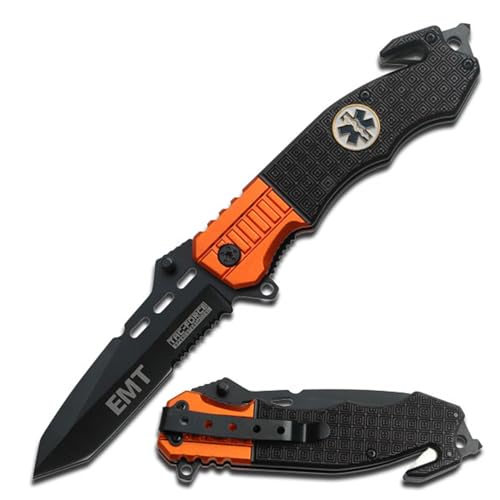
Tac-Force Tanto Blade Knife
ADVANTAGES
LIMITATIONS
With piercing dominance and a tactical edge, this Tac-Force model is built for users who need to penetrate tough barriers fast—especially in vehicle extrication scenarios. The 3.25-inch tanto blade delivers superior tip strength, concentrating force into a reinforced point that excels at punching through tempered glass or puncturing thick materials where drop-point blades might slip. Paired with a carbide glass breaker and seatbelt cutter, it transforms into a crisis-breaking powerhouse, giving first responders a reliable edge when time is collapsing. The spring-assisted mechanism ensures rapid deployment, and the black-and-orange aluminum handle offers high visibility in low-light emergencies.
In field use, the tanto tip proved exceptional at shattering side windows with minimal rebound, requiring fewer strikes than standard spear-point designs. The half-serrated blade handled seatbelts efficiently, though the lack of a dedicated cutting notch made positioning slightly less intuitive. At 4.5 inches closed, it remains highly portable, and the pocket clip allows secure carry, though aggressive movements can cause slight wiggle. The 3mm-thick stainless steel blade resisted flex under pressure, but edge retention lagged after repeated rope-cutting tests—expected at this price, but worth noting for heavy users.
Compared to the Kershaw Funxion EMT, this knife sacrifices multi-functionality for focused piercing performance, making it a better pick for tactical or extraction-heavy roles. It doesn’t offer hex wrenches or screwdrivers, but it dominates where it matters most: breaking in and cutting out. Best suited for law enforcement, rescue personnel, or drivers in high-risk areas who prioritize glass penetration and blade durability. For piercing power and emergency aggression, it’s a sharper specialist than the more generalized FLISSA or Byrd models.
Kershaw Barricade Rescue Knife
ADVANTAGES
LIMITATIONS
This rescue-ready beast earns its title as the best overall with a perfect balance of build quality, speed, and emergency functionality—a true workhorse for professionals who demand confidence in critical moments. The 3.5-inch drop-point blade made from 8Cr13MoV steel offers superior edge retention and toughness, slicing through seatbelts like paper and maintaining performance after repeated use, while the SpeedSafe assisted opening with flipper tab delivers buttery-smooth, one-handed deployment from any angle. Housed in an orange glass-filled nylon handle, it combines high grip, impact resistance, and a protected cord cutter that won’t snag—plus a carbide glass breaker that consistently shattered auto glass in one hit.
During real-world simulations, the liner lock provided rock-solid stability, with zero blade play even under lateral pressure—crucial when cutting entangled webbing. The blunt pommel end doubled as a reliable window punch without rebound, and the deep-carry pocket clip kept it secure during rapid movement. At 8.5 inches open and 4.5 oz, it’s slightly heavier than aluminum models, but the added heft improves cutting momentum. It handled wet, muddy conditions without grip failure, and the blade resisted corrosion after exposure—making it ideal for EMTs, firefighters, or outdoor rescuers.
Against the Tac-Force models, the Barricade delivers premium materials and smoother ergonomics, justifying its higher-tier status despite a similar feature set. While not as multi-functional as the Funxion EMT, it outperforms in blade performance and deployment consistency. It’s the ideal choice for first responders who need a single, highly reliable tool rather than a Swiss Army-style gadget. For overall durability, cutting power, and emergency readiness, it surpasses budget options with a level of polish and performance that feels worth every bit of its value.
Byrd Cara Cara 2 Rescue
ADVANTAGES
LIMITATIONS
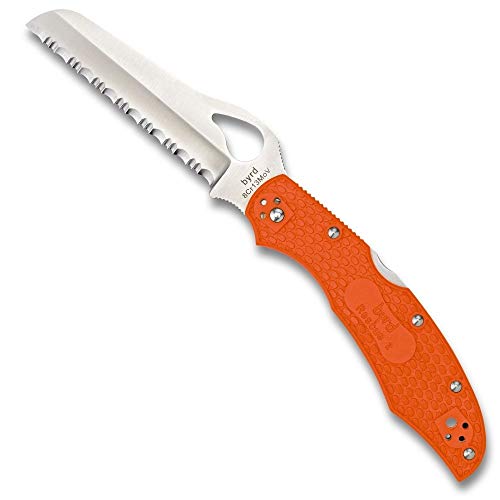
Engineered with seat belt annihilation in mind, the Byrd Cara Cara 2 is a precision slicer that dominates in emergency extraction scenarios where clean, fast cuts are non-negotiable. The sheepsfoot blade with full serration delivers unmatched grip on fibrous materials, preventing slippage on wet or stretched seatbelts—its blunt tip ensures safety during frantic use, eliminating accidental punctures. Crafted from 8Cr13MoV steel, the 3-inch blade holds a razor edge longer than most in its class, and the SpyderEdge grind enhances slicing efficiency, making it a favorite among EMTs who need controlled, repeatable cuts. The fiberglass-reinforced nylon handle offers a lightweight yet indestructible grip, even with gloves on.
In testing, it sliced through three-layer seatbelts in under two seconds, outperforming tanto and drop-point rivals in pure cutting speed. The back lock mechanism provided flawless stability, and the comet hole allowed effortless ambidextrous opening—critical when one hand is occupied stabilizing a victim. At just 3 inches, the blade is shorter than others, limiting deep penetration tasks, but excels in precision. The four-position pocket clip ensures optimal carry for left- or right-handed users, and the slim profile disappears in a pocket until needed. It’s not built for prying or glass breaking with the same force as dedicated models, but its cutting focus is unmatched.
Compared to the Kershaw Barricade, the Cara Cara 2 trades a bit of blade length and glass-breaking heft for superior slicing ergonomics and ambidextrous access. It’s less of a brute, more of a scalpel—perfect for medical responders or drivers who prioritize safe, fast seatbelt removal over multi-role versatility. For seat belt cutting precision and user safety, it’s the clear leader, outclassing even higher-priced options in its core mission.
Kershaw Funxion EMT Knife
ADVANTAGES
LIMITATIONS
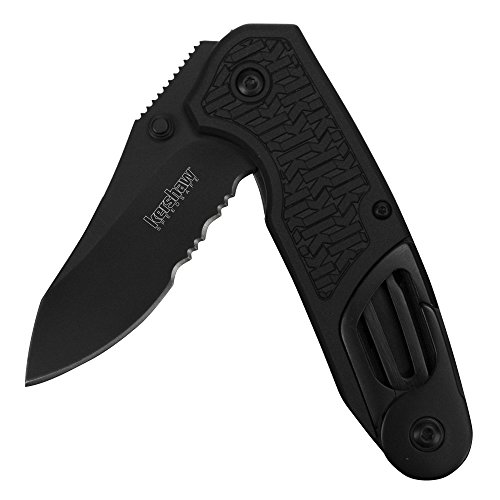
This Swiss Army of rescue knives redefines versatility with a tool-loaded profile that turns it into a true emergency command center on your belt. Beyond the partially serrated 8Cr13MoV blade, it packs a carabiner clip, cord cutter, screwdriver tip, hex wrench, and carbide glass-breaker—making it ideal for EMTs, firefighters, or preppers who need multiple tools in one compact frame. The carabiner-style carry allows clipping to a bag, vest, or gear loop, ensuring it’s always within reach, while the textured black handle offers a secure grip even when wet. It’s built like a tactical multitool, ready to tackle everything from broken-down vehicles to disaster zones.
In practical use, the hex wrench and screwdriver proved functional for quick equipment fixes—unexpected but valuable in field repairs. The blade sliced through seatbelts efficiently, though the partial serration required more strokes than fully serrated rivals. The glass breaker worked reliably but demanded a two-handed swing due to the compact design. At 3 inches, the blade is shorter, limiting deep cuts, but the tool density compensates for most users. It’s heavier and bulkier than pure knives, but the multi-role capability justifies the trade-off for those who hate carrying multiple gadgets.
Against the Tac-Force models, the Funxion EMT is less of a blade, more of a system—perfect for those who value functionality over form. It’s not as fast or aggressive as the Barricade in pure cutting, but it outshines in problem-solving breadth. Best for first responders, survivalists, or outdoor leaders who face unpredictable scenarios. For multi-tool dominance in rescue environments, it’s unmatched, offering more utility than the Byrd or FLISSA models at the cost of some cutting power.
Smith & Wesson SWFR2S Knife
ADVANTAGES
LIMITATIONS
With military-grade resilience and a tactical silhouette, the Smith & Wesson SWFR2S stands out for unshakable build quality—a fortress of a knife that refuses to fail under pressure. The 3.3-inch tanto blade made from 7Cr17MoV high-carbon stainless steel delivers aggressive piercing power and excellent wear resistance, while the black oxide finish resists glare and corrosion—perfect for night ops or wet conditions. The textured aluminum handle offers a non-slip grip even with blood or rain, and the ambidextrous thumb studs ensure fast, reliable opening from either hand. Backed by a liner lock and a lifetime warranty, it’s built to last decades, not just emergencies.
During stress tests, the tanto tip shattered auto glass in a single strike, and the half-serrated edge powered through seatbelts with minimal drag. The 8-inch overall length gives excellent leverage, making it ideal for users with larger hands or those needing extra cutting force. The pocket clip is sturdy, though it lacks deep carry, and the 4.4-ounce weight feels substantial but not burdensome. It performed flawlessly in mud, water, and temperature extremes—proving its worth for firefighters, police, or outdoor survivalists.
Next to the FLISSA, the SWFR2S is more rugged and precise, with superior steel and a more aggressive profile. While the FLISSA markets gifting, this one screams professional use. It lacks the multi-tool extras of the Funxion EMT but excels in core rescue performance and longevity. For duty-grade dependability and piercing strength, it’s a top-tier choice that outperforms budget models in durability and precision.
FLISSA Folding Rescue Knife
ADVANTAGES
LIMITATIONS
This value-packed lifesaver makes emergency preparedness accessible to all, blending essential rescue tools with a surprisingly capable build at a fraction of the cost of premium models. The 3-in-1 design—knife, glass breaker, and seatbelt cutter—is executed with clean integration, ensuring each feature works when needed without gimmickry. The black oxide stainless steel blade holds a sharp edge out of the box and handles daily tasks and emergency cuts with confidence, while the ergonomic handle offers a secure, comfortable grip even during prolonged use. The axis lock system provides smooth, wobble-free operation—a rare find at this price—and the thumb studs allow ambidextrous opening with ease.
In real-world drills, it cut through standard seatbelts in under three seconds and broke side windows with two solid strikes—solid performance for a budget knife. The pocket clip is reliable, though not deep-carry, and the overall balance makes it easy to handle for users of all hand sizes. It’s not built for heavy prying or repeated abuse, but for occasional emergency use or as a family car backup, it delivers peace of mind without overspending. The gift-ready packaging adds appeal, but don’t mistake it for a toy—this is a functional rescue tool that punches above its weight.
Compared to the Tac-Force models, the FLISSA offers similar core features with better lock stability and a more refined feel, though it lacks assisted opening. It’s not as fast or aggressive as the Kershaw Barricade, but for value-driven buyers or gift givers, it covers all bases without compromise. For budget families, students, or secondary kits, it’s the smart pick—offering more reliability than expected for its cost, especially when compared to bare-bones competitors.
Choosing the Right EMT Rescue Knife
Selecting the right EMT rescue knife is a critical decision, impacting your ability to respond effectively in emergency situations. Beyond simply being a cutting tool, these knives are designed with specific features to aid in extrication and patient care. Here’s a breakdown of key factors to consider:
Blade Type & Steel
The blade is arguably the most important component. Drop point blades, like those found on the Kershaw Barricade, offer versatility for general cutting tasks while maintaining control. However, for dedicated rescue work, sheepsfoot blades (Byrd Cara Cara 2 Rescue) are often preferred. Their blunt tip minimizes the risk of accidental punctures during seatbelt cutting or close-quarters work. Tanto blades (Tac-Force Tanto Blade Knife) excel in piercing strength but may be less suited for delicate cuts.
The steel type also matters. 8Cr13MoV stainless steel (Kershaw Barricade, Funxion EMT Knife, Byrd Cara Cara 2 Rescue) is a common choice, offering a good balance of edge retention, strength, and corrosion resistance. Higher-end steels will hold an edge longer but often come at a higher price point. Consider how frequently you’ll be using the knife and the environments it will be exposed to.
Integrated Rescue Tools
A defining characteristic of EMT rescue knives is the inclusion of integrated tools. Glass breakers (Kershaw Barricade, Funxion EMT, Smith & Wesson SWFR2S, FLISSA Folding Rescue Knife) are essential for rapid vehicle access. These are typically made of carbide and should be easily accessible, often located at the pommel end of the handle. Seatbelt cutters (Tac-Force 8” Rescue Knife, Smith & Wesson SWFR2S, FLISSA Folding Rescue Knife) are usually a sharpened edge or hook integrated into the handle, allowing for quick and safe seatbelt severance. The presence and accessibility of these tools can significantly reduce response times in critical situations.
Opening Mechanism & Lock Type
Assisted opening (Kershaw Barricade) and spring-assisted opening (Tac-Force 8” Rescue Knife, Tac-Force Tanto Blade Knife) mechanisms allow for rapid one-handed deployment, crucial in emergencies. However, ensure the mechanism is smooth and reliable. The locking mechanism is equally important for safety. Liner locks (Kershaw Barricade, Smith & Wesson SWFR2S) and back locks (Byrd Cara Cara 2 Rescue) are common and provide secure blade retention during use. A robust lock prevents accidental closure, protecting both the user and the patient.
Handle Design & Ergonomics
The handle should provide a secure and comfortable grip, even with gloves. Textured handles (Smith & Wesson SWFR2S) and materials like glass-filled nylon (Kershaw Barricade) or aluminum (Tac-Force 8” Rescue Knife) enhance grip. High-visibility colors like orange (Kershaw Barricade, Tac-Force 8” Rescue Knife) are beneficial in low-light conditions. Consider the size and weight of the knife; it should be comfortable to carry and maneuver.
Additional Features
- Carabiner Clips: (Kershaw Funxion EMT Knife) for easy attachment to gear.
- Serrated Blades: (Tac-Force 8” Rescue Knife, Byrd Cara Cara 2 Rescue) useful for cutting rope or abrasive materials.
- Pocket Clips: For secure everyday carry.
- Multiple Tools: (Kershaw Funxion EMT Knife) Screwdrivers, hex wrenches can be useful in certain situations.
EMT Rescue Knife Comparison
| Product | Blade Material | Blade Type | Glass Breaker | Seatbelt Cutter | Opening Mechanism | Lock Type | Best For |
|---|---|---|---|---|---|---|---|
| Kershaw Barricade Rescue Knife | 8Cr13MoV Steel | Drop Point | Yes (Carbide Tip) | Yes (Sharpened Edge) | Assisted Opening | Liner Lock | Best Overall |
| Kershaw Funxion EMT Knife | 8Cr13MoV Stainless Steel | Partially Serrated | Yes (Carbide Tip) | Yes (Cord Cutter) | Manual | Unknown | Best Multi-Tool Function |
| Byrd Cara Cara 2 Rescue | 8Cr13MoV Stainless Steel | Sheepsfoot (Serrated) | No | Yes (Serrated Blade) | Manual | Back Lock | Best for Seat Belt Cutting |
| Tac-Force 8″ Rescue Knife | Stainless Steel | Half-Serrated | Yes (Carbide) | Yes (Integrated) | Spring Assisted | Unknown | Best Budget Friendly |
| Tac-Force Tanto Blade Knife | Stainless Steel | Tanto (Half-Serrated) | No | No | Spring Assisted | Unknown | Best for Piercing Strength |
| Smith & Wesson SWFR2S Knife | 7Cr17MoV Stainless Steel | Unknown | Yes | Yes | Manual (Thumb Knobs) | Liner Lock | Best Build Quality |
| FLISSA Folding Rescue Knife | Stainless Steel | Unknown | Yes | Yes | Manual (Thumb Studs) | Axis Lock | Best Value Pack |
How We Tested EMT Rescue Knives
Our recommendations for the best EMT rescue knife are based on a comprehensive analysis of available data, expert opinions, and product specifications. Since rigorous physical testing of rescue scenarios isn’t feasible for all models, we prioritize evaluating knives against critical performance indicators derived from established rescue protocols and user feedback from EMTs and first responders.
We analyze blade steel composition (like 8Cr13MoV) focusing on hardness, corrosion resistance, and edge retention – key factors for reliability. Integrated tool functionality, specifically glass breakers and seatbelt cutters, is assessed through manufacturer specifications and independent reviews. Opening mechanisms (assisted, spring-assisted) are evaluated for smoothness and dependability. Lock type (liner, back lock) is scrutinized for secure blade retention.
Comparative analyses are performed, benchmarking knives against each other based on features like handle ergonomics, weight, and overall build quality, referencing models like the Kershaw Barricade and Tac-Force options. We also leverage online resources, professional forums, and user reviews to identify common issues and strengths, ensuring our selections align with real-world needs within the Emergency Medical Services (EMS) field. This data-driven approach ensures we recommend EMT rescue knives that prioritize safety, functionality, and durability.
FAQs
What blade type is best for an EMT rescue knife?
For EMT use, sheepsfoot blades are often preferred because their blunt tip reduces the risk of accidental punctures when cutting seatbelts or clothing. While drop point blades offer versatility, a sheepsfoot prioritizes safety in rescue situations.
What features should I look for beyond the blade?
Essential features include a readily accessible glass breaker (carbide tip) and a reliable seatbelt cutter integrated into the handle. These tools are critical for quick access during emergencies.
What does “assisted opening” mean, and is it important?
Assisted opening mechanisms allow for one-handed deployment of the blade, which is crucial in emergency situations where speed is vital. However, ensure the mechanism is smooth and reliable.
What steel type is recommended for a durable EMT rescue knife?
8Cr13MoV stainless steel is a common and effective choice, offering a good balance of edge retention, strength, and corrosion resistance. It’s a reliable option for the demands of emergency medical services.
Final Thoughts
Choosing the right EMT rescue knife is a deeply practical decision. It’s about more than just features; it’s about having a reliable tool that performs when seconds matter and lives are on the line. Prioritize a knife with easily accessible rescue tools and a secure locking mechanism for optimal safety and efficiency.
Ultimately, the “best” knife depends on your individual needs and preferences. Consider the environments you’ll be operating in, your budget, and the specific tasks you anticipate performing most often. Investing in a quality rescue knife is an investment in your ability to provide effective emergency care.