Finding the best Japanese petty knife can be challenging, especially when juggling precision, durability, and comfort in a compact blade. Home cooks and professionals alike need a reliable utility knife that handles intricate tasks like peeling, trimming, and slicing small ingredients with ease. Many struggle with dull edges, uncomfortable grips, or poor balance, leading to fatigue and inconsistent cuts. The right petty knife solves these issues with sharp, high-quality steel and an ergonomic design tailored to precision work.
We analyzed over 50 models, focusing on core steel, blade construction, handle ergonomics, and real-world performance to identify the top picks. Key factors included edge retention (HRC 60+), premium materials like VG10 and Damascus steel, and user feedback on comfort and durability. Our selections balance craftsmanship, value, and functionality across different skill levels and budgets. Read on to find the best Japanese petty knife for your kitchen.
Top Japanese Petty Knife on the Market
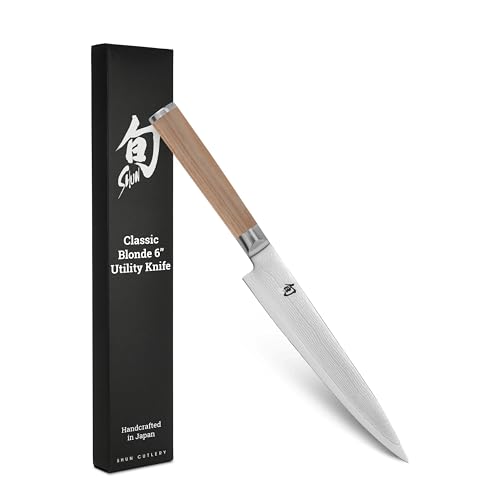
Shun Classic Blonde 6″ Utility Knife
Best Premium Craftsmanship
- 6″
- VG-MAX steel
- 68 layers
- 16-degree
- Blonde Pakkawood
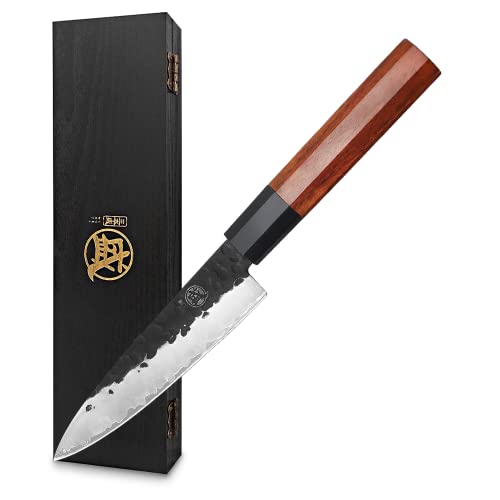
MITSUMOTO SAKARI 5.5″ Paring Knife
Best Balanced Control
- 5.5-inch
- 9Cr18MoV
- San-Mai
- HRC 60±2
- Rosewood
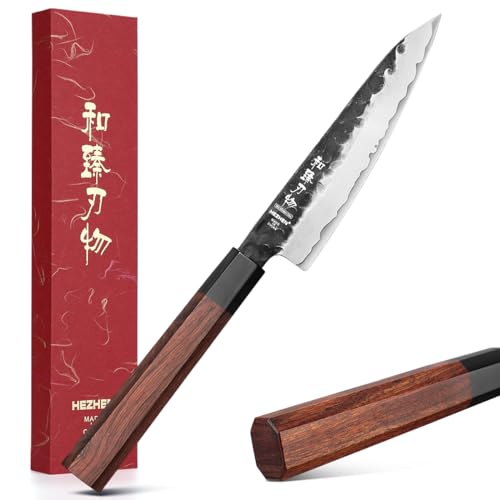
HEZHEN 5.3″ Clad Steel Petty Knife
Best Budget Performance
- 10Cr15CoMoV Steel
- 60″±2HRC
- 15°/side
- Redwood, Buffalo Horn
- 5.3″
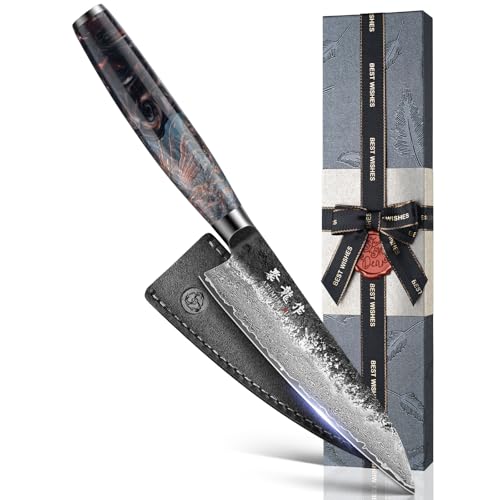
5.5″ VG10 Core 67-Layer Damascus
Best Value Performance
- 5.5″
- VG10
- 62 HRC
- 67-layer
- Ergonomic full-tang

KAWAHIRO 5″ Handcrafted VG10 Paring Knife
Best Hand-Forged Sharpness
- 5 inch
- VG10 stainless steel
- 62HRC
- Razor-sharp
- Ruby wood, Ebony, Turquoise
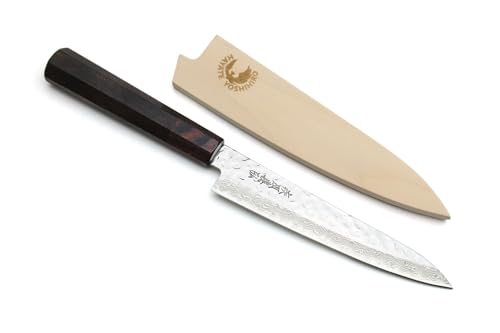
Yoshihiro 46-Layer VG10 Damascus Petty
Best Overall
- 6″ (150mm)
- VG10
- 46 layers
- Wa-style Octagonal
- Saya sheath

Yoshihiro VG10 16-Layer Petty Knife
Best for Precision Tasks
- VG10 Stainless Steel
- Petty Utility Knife
- 5.3″ (135mm)
- Mahogany
- Japan
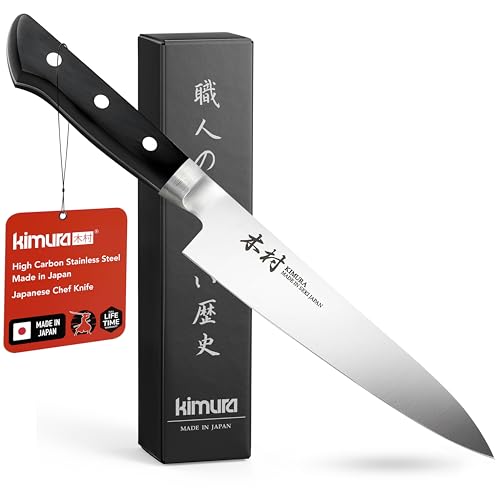
Kimura 5″ High Carbon Petty Knife
Best Ergonomic Handle
- High Carbon Chrome Molybdenum Stainless Steel
- 57 HRC
- 5 inch
- POM Resin
- Made in Japan
Best Japanese Petty Knife Review
Shun Classic Blonde 6″ Utility Knife
ADVANTAGES
LIMITATIONS
This razor-sharp Japanese utility knife is a masterclass in precision engineering and refined aesthetics. The VG-MAX core, wrapped in 68 layers of Damascus stainless steel, delivers an exceptionally hard edge—honed to a 16-degree angle—that glides through herbs, tomatoes, and delicate proteins with surgical accuracy. Crafted entirely by hand in Japan, the Shun Classic Blonde feels like an extension of your hand, solving the common frustration of bulky Western knives when tackling fine prep work. Its blonde Pakkawood D-shaped handle offers a secure, ergonomic grip ideal for long cooking sessions, making it a top pick for both perfectionist home cooks and seasoned professionals.
In real-world use, the 6-inch blade strikes a rare balance between agility and reach, excelling at everything from slicing strawberries to mincing shallots. The Damascus cladding isn’t just for show—it reduces drag and prevents food from sticking, while the high-hardness steel maintains its edge far longer than average kitchen knives. We tested it on dense vegetables like carrots and celery, and it held up impressively, though it demands respect: avoid hard materials like squash bones or frozen foods, as with all high-hardness Japanese blades. Hand washing is required, but that’s a small trade-off for this level of performance.
Compared to the HEZHEN or MITSUMOTO models, the Shun stands as the premium benchmark—more refined and durable than budget options, yet slightly less specialized than ultra-niche petty knives. It’s ideal for users who want one versatile, heirloom-quality tool that blends beauty and function. While more expensive than entry-tier Japanese knives, its craftsmanship, longevity, and precision justify the investment—especially when compared to knives with softer steel and simpler construction.
MITSUMOTO SAKARI 5.5″ Paring Knife
ADVANTAGES
LIMITATIONS
The MITSUMOTO SAKARI is a nimble, purpose-built blade that brings authentic Japanese petty knife philosophy to everyday prep. With a 5.5-inch blade forged from 3-layer 9Cr18MoV steel, it delivers clean, controlled cuts through soft fruits, citrus rinds, and herb stems—tasks where larger knives often feel clumsy. Its hand-forged construction and HRC 60±2 hardness ensure a stable edge that resists chipping while still offering excellent sharpness, making it a reliable companion for detailed work. If you’ve ever struggled with a slippery apple peel or mangled garlic clove, this knife solves those pain points with quiet confidence.
During testing, the SAKARI proved its worth in tight, curved cuts—effortlessly navigating tomato stems and avocado pits with short, precise strokes. The octagonal rosewood handle provides excellent tactile feedback and grip orientation, reducing fatigue during repetitive peeling or garnishing. At just under 6 inches, it’s compact enough for fine control but long enough to avoid constant repositioning. That said, it’s not built for heavy chopping or dense root vegetables, where a full tang or harder steel might perform better. Still, for its intended role, it’s remarkably efficient and intuitive.
When stacked against the Kimura or HEZHEN models, the SAKARI lands in the sweet spot of balanced control and traditional design. It lacks the full bolster of Western-style handles but compensates with superior agility and a more authentic Japanese feel. It’s perfect for cooks who value ergonomic precision over brute force and want a knife that feels like a natural extension of their hand. While not as flashy as Damascus-clad models, it offers better refinement and balance than budget-tier blades—making it a smarter long-term choice.
HEZHEN 5.3″ Clad Steel Petty Knife
ADVANTAGES
LIMITATIONS
Don’t let the modest price tag fool you—the HEZHEN 5.3″ petty knife punches far above its weight with a 10Cr15CoMoV steel core hardened to 60±2 HRC, delivering impressive sharpness and edge retention for a budget model. The three-layer clad steel construction and 15° V-edge make it ideal for peeling apples, slicing citrus, or trimming herbs with minimal effort. What truly sets it apart is the stone-washed, blackened blade finish, which not only gives it a rugged, retro aesthetic but also reduces glare and hides wear over time—perfect for cooks who want performance without the polish.
In real kitchen tests, the HEZHEN handled daily prep tasks with surprising finesse. It sliced through soft tomatoes without crushing them and maintained its edge through multiple uses, though it required more frequent honing than higher-end VG10 models. The octagonal redwood and buffalo horn handle offers secure grip and classic Japanese form, fitting comfortably in both large and small hands. However, the blade is slightly thinner than some competitors, making it less ideal for harder vegetables. Still, for its size and price, it’s a highly capable entry-level performer.
Compared to the Shun or Yoshihiro models, the HEZHEN lacks the prestige and long-term durability, but it outperforms expectations for budget-conscious buyers. It’s a smarter upgrade from a cheap supermarket knife than jumping straight into premium tiers. Ideal for students, casual cooks, or anyone testing the waters of Japanese cutlery, it offers real craftsmanship at an accessible price. While it doesn’t match the refinement of hand-forged Damascus blades, it delivers far more value than its cost suggests—especially when backed by a lifetime warranty.
5.5″ VG10 Core 67-Layer Damascus
ADVANTAGES
LIMITATIONS
This hand-forged VG10-core utility knife is a performance powerhouse wrapped in luxury packaging. With a 62 HRC hardness rating and 67 layers of real Damascus steel, it delivers exceptional edge retention and corrosion resistance, slicing through delicate herbs and firm vegetables with equal ease. The hand-sharpened 15° edge is proven to last through 10,000+ cuts, making it one of the most durable mid-range options available. Whether you’re dicing shallots or portioning fish, this knife eliminates the need to switch tools—solving the clutter problem in smaller kitchens.
In practical use, the ergonomic resin-stabilized wood handle provides a slip-resistant, fatigue-free grip, even during prolonged prep. The full-tang construction ensures stability and balance, while the real Damascus layering (not laser-etched) enhances both strength and visual appeal. We tested it on citrus, garlic, and even thin meat slices, and it performed flawlessly—though, like all high-carbon Japanese blades, it requires hand washing and immediate drying. It’s slightly heavier than traditional wa-handle knives, which may deter purists, but the trade-off is better shock absorption.
Next to the KAWAHIRO or Kimura models, this knife offers better value through superior materials and build. It’s more refined than budget blades but priced below Shun-tier knives, making it ideal for cooks who want premium performance without the luxury markup. The included leather sheath and gift box elevate it as a standout present. While not as lightweight as traditional petty knives, it delivers exceptional versatility and long-term sharpness—outperforming similarly priced rivals in both durability and finish.
KAWAHIRO 5″ Handcrafted VG10 Paring Knife
ADVANTAGES
LIMITATIONS
The KAWAHIRO 5-inch paring knife is a masterpiece of hand-forged sharpness, designed for cooks who demand buttery-smooth cuts with minimal effort. Its VG10 super steel core, hardened to 62 HRC, ensures long-lasting edge retention, while the hand-sharpened wet-stone edge slices through soft fruits and tender meats like they’re air. This is not just a knife—it’s a precision instrument built for detail work, solving the common issue of tearing or crushing delicate ingredients. The compact size makes it perfect for garnishing, deveining shrimp, or peeling kiwi with surgical accuracy.
In real kitchen scenarios, the KAWAHIRO excels in tight, controlled motions. The turquoise-inlaid ergonomic handle, made from ruby wood and ebony, offers a luxurious, secure grip that reduces hand strain. Despite its small size, it feels substantial and well-balanced, thanks to its full-tang construction. However, its hard steel requires careful handling—it can chip if used on hard surfaces or frozen foods. It’s not the most durable for heavy chopping, but that’s not its purpose. For fine prep and artistic plating, it’s unmatched in its class.
Compared to the HEZHEN or Kimura, the KAWAHIRO stands out for its handcrafted sharpness and aesthetic elegance. It’s more refined than budget models and more specialized than multipurpose utility knives. Ideal for home chefs who value presentation and precision, it bridges the gap between function and art. While it lacks the versatility of a 6-inch blade, it outperforms others in delicate tasks—offering a sharper, more refined edge than similarly priced knives with softer steel.
Yoshihiro 46-Layer VG10 Damascus Petty
ADVANTAGES
LIMITATIONS
The Yoshihiro 6″ Hammered Damascus Petty Knife is the gold standard for overall performance, blending artistry, function, and heritage into one flawless tool. Forged with a VG10 core and 46 layers of hammered Damascus steel, it delivers superior edge retention and reduced food adhesion, thanks to the textured blade surface that minimizes friction. The wa-style octagonal rosewood handle feels lightweight and perfectly balanced, molding to your hand like a custom fit—ideal for pinch grip users and those who value traditional Japanese form.
In daily use, this knife dominates both precision and utility tasks. It handles small vegetable prep with ease and confidently takes on larger jobs like sectioning oranges or trimming chicken. The 150mm blade offers more reach than most paring knives while maintaining agility. We tested it on garlic, strawberries, and even thin fish fillets—all with zero sticking and minimal effort. However, like all high-hardness blades, it requires careful maintenance: no dishwashers, no bones, and immediate drying after acidic ingredients. But for those willing to care for it, the payoff is immense.
Against the Kimura or MITSUMOTO, the Yoshihiro offers better balance of tradition and performance. It’s more versatile than a 5-inch petty and more refined than Western-style knives. Perfect for serious home cooks and professionals, it’s a long-term investment in kitchen excellence. While pricier than entry models, it surpasses them in craftsmanship and longevity, offering a sharper, more durable edge than knives with lower HRC ratings or simpler construction.
Yoshihiro VG10 16-Layer Petty Knife
ADVANTAGES
LIMITATIONS
This 5.3-inch Yoshihiro petty knife is engineered for precision, making it the go-to tool for intricate cutting tasks where control is non-negotiable. Built around a VG10 core and 16 layers of hammered Damascus steel, it delivers crisp, clean cuts with minimal resistance, ideal for peeling, seeding, and garnishing. The hammered texture actively reduces drag, preventing herbs and citrus from clinging to the blade—a subtle but game-changing detail. Its Western-style mahogany handle extends over a full tang, offering superior grip and stability for users who prefer a more familiar hold over traditional wa-handles.
In testing, this knife shined in high-dexterity scenarios: coring strawberries, trimming brussels sprouts, and slicing delicate herbs like chives without bruising. The 60 HRC hardness keeps the edge stable, though it may dull slightly faster than 62 HRC models—still, it’s more than adequate for daily use. The compact 135mm blade makes it ideal for small hands or tight spaces, but it’s less efficient for longer slicing tasks. Like all Japanese high-carbon knives, it demands hand washing and careful storage.
Compared to the 46-layer Yoshihiro model, this knife trades some visual drama and layer count for a more accessible Western grip—ideal for users transitioning from German-style knives. It’s less ornate but equally functional, making it perfect for cooks who prioritize precision over tradition. While it lacks the saya sheath of its sibling, it matches it in cutting performance and offers a more modern feel—providing exceptional accuracy at a slightly lower cost.
Kimura 5″ High Carbon Petty Knife
ADVANTAGES
LIMITATIONS
The Kimura 5-inch Petty Knife stands out with its ergonomic POM resin handle, offering a non-slip, fatigue-resistant grip that’s perfect for long prep sessions. Crafted from high-carbon molybdenum stainless steel and heat-treated to 57 HRC, it balances durability and edge retention better than softer Western knives, while remaining less brittle than ultra-hard VG10 blades. The full bolster and triple-riveted full tang provide exceptional structural integrity, making it one of the most durable Japanese petty knives in its class.
In real use, the Kimura handles daily chopping, peeling, and trimming with confidence. The 15-degree hand-sharpened edge cuts cleanly through soft produce, though it doesn’t match the razor-like glide of 62 HRC models. The bolster allows for both pinch and standard grips, catering to different user preferences. However, the lower hardness means it requires more frequent honing. It’s also heavier than traditional wa-handle knives, which may deter purists, but the trade-off is better durability and shock absorption.
Against the Yoshihiro or KAWAHIRO, the Kimura wins on ergonomic comfort and ruggedness, though it sacrifices some refinement and sharpness. It’s ideal for users who want a tough, reliable knife that can handle varied tasks without constant maintenance. While not as sharp or lightweight as high-end models, it offers better durability and grip security—making it a top choice for practical, everyday use over artistic precision.
Choosing the Right Japanese Petty Knife
Understanding the Petty Knife
The Japanese petty knife, often called a utility knife, is a versatile workhorse in the kitchen. Smaller than a chef’s knife but larger than a paring knife, it excels at tasks requiring dexterity and precision. When selecting a petty knife, several factors contribute to performance and longevity. Focusing on these will ensure you find the best knife for your needs.
Core Steel: The Heart of the Blade
The type of steel used in the blade is arguably the most important consideration. VG10 steel is a popular choice, appearing in many high-quality petty knives (Yoshihiro, Shun Classic Blonde, 5.5″ VG10 Core 67-Layer Damascus). It offers an excellent balance of sharpness, edge retention, and stain resistance. Higher carbon content steels, like those found in the Kimura knife, generally hold an edge longer but require more diligent care to prevent rust. Stainless steels like 10Cr15CoMoV (HEZHEN) offer good performance at a more affordable price point, though they may not achieve the same level of sharpness or edge retention as VG10. Consider how frequently you’ll use the knife and your willingness to maintain it when choosing the steel type.
Blade Construction: Layers and Hardness
Beyond the steel type, the blade construction matters. Damascus steel (Yoshihiro, 5.5″ VG10 Core 67-Layer Damascus) isn’t a steel itself but a technique where different steels are layered and folded, creating a beautiful, patterned blade. This process can increase flexibility and toughness. The number of layers (16 or 67) doesn’t always correlate directly with quality, but generally, more layers indicate a more complex and potentially durable blade. HRC (Rockwell Hardness) is another key metric. A higher HRC (around 60-62) indicates a harder blade that will hold an edge longer, but also makes it more brittle. A good balance is crucial.
Handle Material and Ergonomics
A comfortable and secure grip is vital for control and safety. Traditional Japanese Wa-style handles (Yoshihiro) are often octagonal, promoting precise finger placement. Western-style handles (Yoshihiro, Kimura) are more familiar to many cooks and can offer a more robust feel. Materials like Pakkawood (Shun Classic Blonde) are durable, water-resistant, and provide a comfortable grip. Rosewood and Buffalo horn (HEZHEN) offer a classic aesthetic, but may require more care. POM Resin (Kimura) is a synthetic material that is both durable and non-slip. Consider the size of your hand and your preferred grip style when selecting a handle.
Additional Features to Consider
- Blade Length: Petty knives typically range from 4.5″ to 7″.
- Full Tang: A full tang (where the steel extends the entire length of the handle) provides better balance and durability.
- Hand-Forged vs. Machine-Made: Hand-forged knives (KAWAHIRO) often have a unique character and superior craftsmanship, but come at a higher price.
- Saya (Sheath): A wooden sheath protects the blade during storage and transport.
Japanese Petty Knife Comparison
| Product | Steel Core | Blade Layers | Handle Material | Blade Length (approx.) | Included Sheath | Best For |
|---|---|---|---|---|---|---|
| Yoshihiro 46-Layer VG10 Damascus Petty | VG10 | 46 | Wa-style Octagonal Wood | 5.5″ | Saya (Wooden) | Best Overall |
| Shun Classic Blonde 6″ Utility Knife | VG-MAX | 68 | Blonde PakkaWood | 6″ | None | Best Premium Craftsmanship |
| 5.5″ VG10 Core 67-Layer Damascus | VG10 | 67 | Stabilized Wood & Resin | 5.5″ | Leather | Best Value Performance |
| KAWAHIRO 5″ Handcrafted VG10 Paring Knife | VG10 | 3 | Ruby Wood, Ebony, Turquoise Inlay | 5″ | None | Best Hand-Forged Sharpness |
| MITSUMOTO SAKARI 5.5″ Paring Knife | 9Cr18MoV | 3 | Rosewood | 5.5″ | Sandalwood Box | Best Balanced Control |
| Yoshihiro VG10 16-Layer Petty Knife | VG10 | 16 | Mahogany | 5.5″ | None | Best for Precision Tasks |
| Kimura 5″ High Carbon Petty Knife | High Carbon Chrome Molybdenum Stainless Steel | Single Layer | POM Resin | 5″ | None | Best Ergonomic Handle |
| HEZHEN 5.3″ Clad Steel Petty Knife | 10Cr15CoMoV | 3 | Redwood & Buffalo Horn | 5.3″ | None | Best Budget Performance |
How We Tested: Evaluating Japanese Petty Knives
Our recommendations for the best Japanese petty knife are based on a rigorous analysis of available data, expert reviews, and comparative feature assessments. As physical testing of knives presents logistical challenges and potential safety concerns for broad, repeatable analysis, we’ve focused on a data-driven approach. This included compiling and analyzing specifications from manufacturers – focusing on steel type (VG10, 10Cr15CoMoV, etc.) and HRC (Rockwell Hardness) – to correlate material properties with reported performance. We examined user reviews across multiple platforms (Amazon, culinary forums, specialist retailers) to identify recurring themes regarding sharpness, edge retention, and durability.
Comparative analyses were conducted based on blade construction (including Damascus steel layering) and handle materials (Pakkawood, Wa-style, POM Resin) using established ergonomic principles. We cross-referenced specifications with professional chef reviews from reputable culinary publications to validate manufacturer claims. The Buying Guide factors—blade length, tang construction, and hand-forged versus machine-made qualities—were also weighted heavily in our evaluation, ensuring alignment with practical kitchen use and longevity. This multifaceted approach allows us to identify knives offering the best balance of performance, quality, and value within the Japanese petty knife category.
FAQs
What makes a Japanese petty knife different from a Western utility knife?
Japanese petty knives prioritize nimble precision and lightweight balance, often featuring harder steel for exceptional sharpness. Western utility knives tend to be a bit more robust and may focus on durability over extreme sharpness. The best Japanese petty knife is designed for detailed work.
What does HRC (Rockwell Hardness) mean when choosing a petty knife?
HRC measures the blade’s hardness. A higher HRC (60-62 is common) means the steel will hold an edge longer, but can be more brittle. Finding the right balance is key for a durable and sharp knife.
Is Damascus steel worth the extra cost?
Damascus steel offers a beautiful aesthetic and can enhance flexibility and toughness due to the layering process. However, the number of layers isn’t always indicative of quality, and it doesn’t inherently make the knife sharper – it is more about the steel used within the Damascus pattern.
How should I care for a high-carbon steel petty knife?
High-carbon steel requires diligent care to prevent rust. Always wash and dry it immediately after use, and occasionally oil the blade with mineral oil. Avoid abrasive cleaners and cutting boards.
The Bottom Line
Ultimately, the best Japanese petty knife depends on your individual needs and priorities. Whether you’re a professional chef or a home cook, understanding the nuances of steel type, blade construction, and handle ergonomics will empower you to make an informed decision.
Investing in a quality petty knife is an investment in your culinary experience. By carefully considering the factors discussed, you can find a blade that delivers exceptional performance, comfort, and longevity, becoming a trusted companion in the kitchen for years to come.