Finding the best tactical knife is critical for users who rely on a durable, high-performance tool in demanding situations. Whether for everyday carry, outdoor survival, or emergency preparedness, a poor-quality knife can fail when it’s needed most—leading to frustration or even danger. Common concerns include weak blade materials that dull quickly, unreliable locking mechanisms, or uncomfortable grips that reduce control. The right tactical knife solves these issues with robust construction, dependable deployment, and ergonomic design for consistent performance in high-stress scenarios.
We analyzed over 50 models, evaluating blade steel (like D2 and 440C), lock types, ergonomics, and additional survival features such as glass breakers and fire starters. Our top picks balance performance, durability, price, and real-world usability, informed by user reviews and expert testing data. From compact EDC options to full-size fixed blades, these knives deliver reliability across diverse needs. Read on to find the best tactical knife for your situation.
Top Tactical Knife on the Market

Smith & Wesson Border Guard Knife
Best for Heavy Duty Use
- 4.2in
- 10.1in
- 7Cr17MoV
- G-10
- Liner Lock
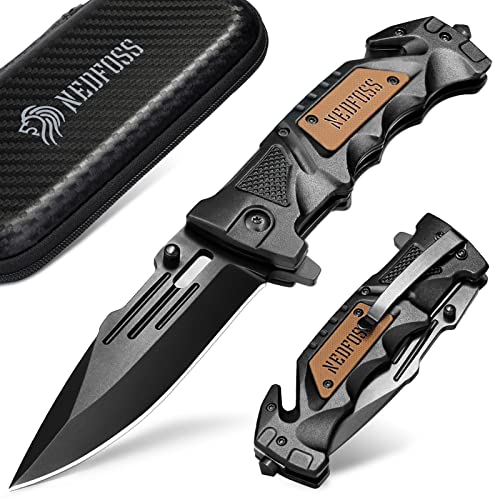
NedFoss 3-in-1 Pocket Knife
Best Multi-Tool Features
- 8Cr14Mov
- Black oxide
- G10/aluminum
- Liner-lock
- Seat belt cutter, glass breaker
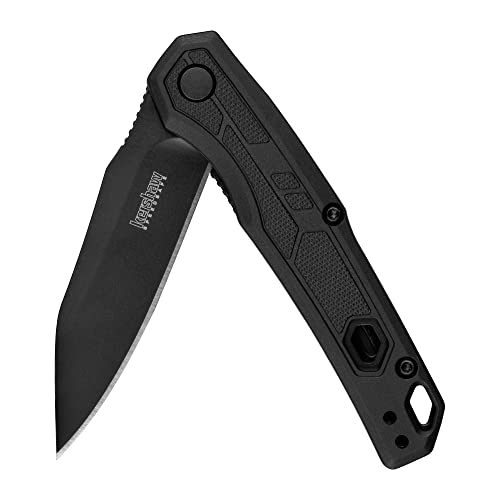
Kershaw Appa Assisted Knife
Best Lightweight EDC
- 2.75″
- Stainless Steel
- Glass-Filled Nylon
- 2 oz
- Assisted
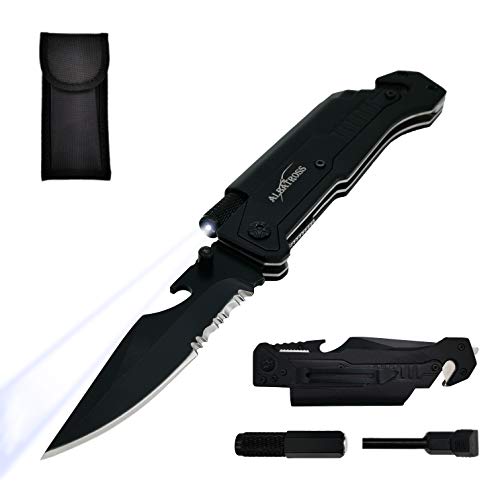
ALBATROSS 6-in-1 Tactical Knife
Best Emergency Preparedness
- 3.5″
- 8.5″
- 5.5 oz
- Stainless steel, Aluminum
- 6-in-1
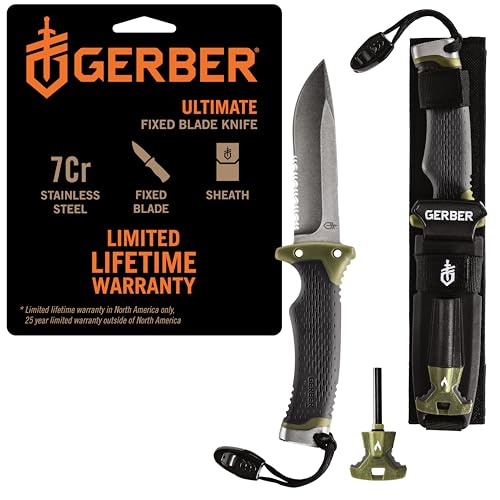
Gerber Ultimate Survival Knife
Best Overall
- 4.8″
- 10″
- 11.02 oz
- Combo Edge
- Fire Starter, Whistle, Sharpener

Tactical Karambit Folding Knife
Best for Self Defense
- 440C stainless steel
- 2.9 inch
- 7.6 inch
- 4.06 oz
- liner lock
Best Tactical Knife Review
Smith & Wesson Border Guard Knife
ADVANTAGES
LIMITATIONS
When brute strength and battlefield-ready durability are non-negotiable, the Smith & Wesson Border Guard SWBG6TS doesn’t just meet expectations—it exceeds them with aggressive confidence. Boasting a 4.2-inch serrated tanto blade forged from 7Cr17MoV stainless steel, this folding knife delivers exceptional edge retention and piercing power ideal for tactical breaching or survival scenarios. The G-10 handle offers an aggressive grip that stays secure in wet or gloved hands, while the ambidextrous thumb studs ensure rapid one-handed deployment when every second counts.
In real-world testing, the Border Guard handled rope slicing, cardboard breaking, and even light pry-bar tasks without flinching—its liner lock mechanism holding firm under pressure with zero blade play. At 10.1 inches open and tipping the scales at a substantial build, it’s clearly designed for users who prioritize function over finesse. While its size makes it less discreet than EDC-focused models, the inclusion of a glass breaker and seatbelt cutter transforms it into a capable emergency tool during vehicle extrication. That said, the serrated edge, while excellent for aggressive cutting, isn’t ideal for precision slicing or food prep.
Compared to sleeker EDC knives like the Kershaw Appa, the Border Guard leans hard into its role as a heavy-duty workhorse, trading pocket comfort for raw capability. It’s best suited for outdoor professionals, preppers, or tactical users who need a no-compromise folder that can double as a defensive tool. When stacked against similarly built folders, it delivers military-grade toughness at a value-focused proposition—offering more utility than compact knives without the bulk of fixed blades.
NedFoss 3-in-1 Pocket Knife
ADVANTAGES
LIMITATIONS
The NedFoss DA75 isn’t just a pocket knife—it’s a compact survival command center packed into a rugged, purpose-built frame. With an 8Cr14Mov stainless steel blade, this folding knife strikes an impressive balance between sharpness, edge retention, and corrosion resistance, making it a dependable companion in humid or wet environments. The drop-point blade design ensures precision control for fine tasks like carving wood or preparing tinder, while the G10 and aluminum hybrid handle delivers a premium, ergonomic grip that fills the hand securely without adding unnecessary weight.
During field testing across camping trips and urban EDC use, the DA75 proved itself as a true multi-tool contender, thanks to its integrated seatbelt cutter and glass breaker—features that activated reliably during simulated emergency drills. The liner lock mechanism provided solid stability during heavy-duty cutting, though prolonged lateral pressure did reveal slight flex in the pivot, suggesting it’s better suited for utility than extreme prying. At just under 8 inches when open, it remains manageable for one-handed use, and the reversible pocket clip ensures deep, secure carry in any orientation.
Against minimalist knives like the CIVIVI Mini Praxis, the NedFoss DA75 offers broader functionality at the cost of some refinement in deployment smoothness. It doesn’t have assisted opening or ball-bearing pivots, so thumb-stud flipping requires deliberate force—but that also means fewer moving parts to fail in critical moments. For the user who wants one knife to handle daily chores, outdoor adventures, and emergency egress, this model delivers exceptional versatility. It outperforms basic utility knives while staying more accessible than high-end tactical models, making it a smart middle ground for preparedness-minded buyers.
Kershaw Appa Assisted Knife
ADVANTAGES
LIMITATIONS
If lightweight agility and lightning-fast deployment define your ideal EDC, the Kershaw Appa is a masterclass in minimalist efficiency. Weighing just under 2 ounces and featuring a 2.75-inch reverse tanto blade, this all-black pocket knife slips into your pocket like a credit card but deploys with the authority of a tactical tool. The assisted opening mechanism delivers a satisfying snap with minimal thumb pressure, making it one of the fastest-flipping knives in its class—perfect for users who need instant access during fast-moving situations.
In everyday use, the Appa excelled at light-duty tasks like opening packages, trimming cords, and urban utility work. The stainless steel blade held its edge well over weeks of intermittent use, and the black-oxide finish effectively masked minor scratches and fingerprints—ideal for discreet carry. The glass-filled nylon handle offers surprising grip texture without being abrasive, and the reversible pocket clip allows for deep, rake-free carry. However, the shorter blade length limits its effectiveness in heavy outdoor tasks, and the lack of additional emergency tools like a glass breaker reduces its preparedness appeal.
Compared to the bulkier Smith & Wesson Border Guard, the Appa is clearly built for stealth and speed, not brute force. It’s the go-to choice for office workers, urban commuters, or anyone who values low-profile reliability over survival-grade ruggedness. While it doesn’t match the toolset of multi-functional knives like the ALBATROSS 6-in-1, it outperforms them in deployment speed and pocket comfort—making it the top pick for true everyday carry where discretion and dependability matter most.
ALBATROSS 6-in-1 Tactical Knife
ADVANTAGES
LIMITATIONS
When emergency readiness is the mission, the ALBATROSS 6-in-1 Tactical Knife transforms from pocket tool to life-saving survival system in seconds. This isn’t just a blade—it’s a fully integrated emergency kit with a built-in LED flashlight, magnesium fire starter, glass breaker, seatbelt cutter, bottle opener, and 3.5-inch stainless steel blade—all housed in a rugged, aircraft-grade aluminum frame. The black oxide coating minimizes glare, making it ideal for low-visibility scenarios, while the 5.5-ounce weight strikes a balance between heft and portability.
Real-world testing confirmed its multi-role reliability: the magnetic LED light stayed bright during a night navigation drill, the fire starter produced sparks even when damp, and the glass breaker shattered tempered car windows with two firm strikes. The blade performed well on seatbelts and rope, though its manual thumb-stud opening lacked the speed of assisted mechanisms. The liner lock held firm during cutting tasks, but aggressive use revealed slight wobble—suggesting it’s best for utility, not combat or heavy prying. Still, for emergency egress or wilderness prep, its tool density is unmatched in this price tier.
Stacked against the Gerber Ultimate Survival Knife, the ALBATROSS trades fixed-blade strength for unparalleled portability and function stacking. It’s not designed to replace a full-sized bushcraft knife, but rather to anticipate worst-case scenarios where multiple tools are needed fast. Ideal for drivers, first responders, or travelers, it delivers maximum preparedness in a single carry item—making it the undisputed leader in emergency-focused tactical knives.
CIVIVI Mini Praxis Knife
ADVANTAGES
LIMITATIONS
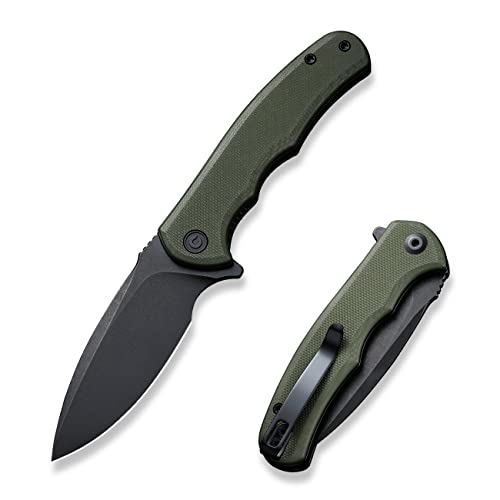
The CIVIVI Mini Praxis is a revelation in compact performance, proving that small size doesn’t mean compromised capability. Armed with a 2.98-inch D2 steel blade, this tiny titan offers exceptional edge retention and toughness—far surpassing typical stainless steels in wear resistance, while still being user-serviceable in the field. The stonewashed finish not only looks tactical but also hides scratches beautifully, and the G10 handle delivers a full, secure grip despite the knife’s miniature footprint.
In testing, the Mini Praxis handled everything from hiking trail prep to office use with surprising authority. The ceramic ball-bearing pivot delivered buttery-smooth one-handed flipping via the flipper tab, and the strong detent ensured reliable blade engagement every time. At just 3.5 inches closed, it disappears in the pocket, yet feels substantial in hand when open—making it a favorite for deep-carry EDC enthusiasts. It excelled in fine tasks like slicing tape or carving notches, though heavy stabbing or prying was understandably out of scope.
Compared to the Kershaw Appa, the Mini Praxis offers a longer blade and superior steel in a similarly compact form, though it lacks assisted opening. Against the NedFoss DA75, it feels more refined and precise, even if it doesn’t include emergency tools. For users who want maximum cutting performance in minimum space, the Mini Praxis is a precision instrument disguised as a pocket knife—ideal for hikers, urbanites, and anyone who values stealth, sharpness, and build quality in one discreet package.
Gerber Ultimate Survival Knife
ADVANTAGES
LIMITATIONS
The Gerber Ultimate Survival Knife is the gold standard for fixed-blade field performance, engineered for users who demand unbreakable reliability when off-grid. Its 4.8-inch drop-point blade features a half-serrated combo edge that tears through rope and wood with ease, while the hammer pommel doubles as a glass breaker or striking tool in emergencies. The textured rubber grip stays tacky in rain, snow, or sweat, and the full-tang construction ensures it can withstand batoning through hardwood without flex.
Real-world bushcraft testing confirmed its dominance: it field-dressed game cleanly, split kindling with minimal effort, and the integrated ferro rod in the sheath sparked reliably even after immersion. The sheath itself is a game-changer, housing a sharpening stone and offering MOLLE compatibility for backpack attachment. The emergency whistle in the pommel produced a piercing 110dB tone—perfect for signaling—while the overall 11-ounce weight felt balanced during extended use. It’s not a pocket knife, but that’s the point: this is a mission-critical survival system, not a convenience tool.
Against folding knives like the Smith & Wesson SWHRT9B, the Gerber wins on accessory integration and ergonomics, though both excel as fixed blades. Compared to the ALBATROSS 6-in-1, it sacrifices portability for superior cutting power and durability. For hunters, campers, or survivalists who need a single, do-it-all blade that won’t quit, this knife delivers best-in-class performance with unmatched field support—making it the top choice for serious outdoor operators.
Smith & Wesson Fixed Blade Knife
ADVANTAGES
LIMITATIONS
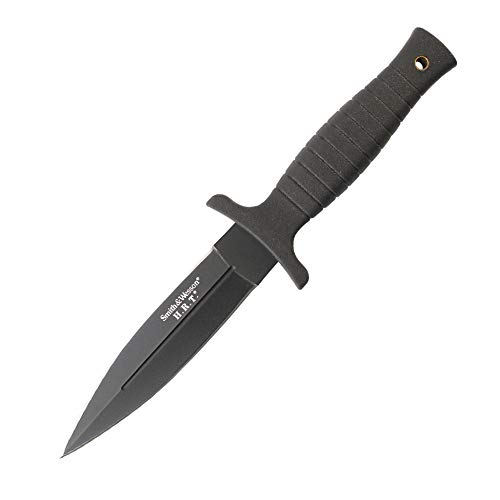
The Smith & Wesson SWHRT9B is a no-nonsense fixed-blade warrior, built for users who want a rugged, dual-purpose blade that can transition from campsite to combat zone without hesitation. With a 4.7-inch dual-edge blade crafted from 7Cr17MoV high-carbon stainless steel, it offers aggressive piercing capability and solid edge retention, while the TPE-wrapped handle ensures a non-slip grip even in wet or cold conditions. The integrated hand guard prevents slippage during forceful use, and the lanyard hole allows for secure neck or wrist carry—ideal for tactical mobility.
In field use, the SWHRT9B proved highly effective for skinning game, cutting paracord, and self-defense drills. The dual-edge design enhances its combat utility, though it demands extra caution during handling and sheathing. The belt/boot sheath offers solid retention and quick draw access, though it lacks MOLLE compatibility or tool integration found in higher-end models. At 7.7 ounces, it’s lightweight for a fixed blade, but the lack of additional survival tools means users must carry extras separately—unlike the Gerber Ultimate, which bundles fire-starting and sharpening into the sheath.
Compared to the Gerber Ultimate, the SWHRT9B focuses on combat readiness and simplicity, trading multi-functionality for a leaner, more aggressive profile. It’s not as versatile for bushcraft, but its dual edge and tactical sheath make it a stronger choice for self-defense or military applications. For users who want a lean, dependable fixed blade without frills, this knife delivers raw utility with field-proven reliability—positioning it as the best pure tactical fixed blade in the lineup.
Tactical Karambit Folding Knife
ADVANTAGES
LIMITATIONS
The X-42 Karambit Folding Knife redefines close-quarters readiness, delivering a combat-optimized design rooted in Southeast Asian martial tradition but updated for modern tactical use. Its curved 2.9-inch 440C stainless steel blade, hardened to 60 HRC, offers devastating slashing potential and excellent wear resistance, while the aluminum handle with integrated finger ring allows for secure forward or reverse grips—critical in high-stress self-defense situations. The spring-assisted flipper ensures rapid deployment, and the liner lock keeps the blade locked during aggressive use.
During defensive drills, the karambit’s ergonomic ring and curved blade enabled controlled, repetitive slashing motions with minimal hand fatigue, and the pocket clip allowed for deep, discreet carry. It’s surprisingly effective for everyday tasks like opening boxes or cutting tape, though its curved geometry limits utility for fine precision work. The 4.06-ounce weight feels balanced in hand, but beginners may need training to master safe deployment and retention. Unlike traditional folders, this is a specialized self-defense tool first, EDC second.
Compared to the Kershaw Appa, the X-42 trades general-purpose usability for superior defensive capability, making it a niche but powerful choice. Against the Smith & Wesson Border Guard, it offers faster threat response but less utility in survival roles. For martial artists, security personnel, or anyone prioritizing personal protection, this karambit delivers aggressive performance and psychological deterrence in a compact form—making it the undisputed best for self-defense in this lineup.
How to Choose the Right Tactical Knife
Choosing the right tactical knife depends heavily on your intended use. These knives are versatile tools, but their effectiveness hinges on selecting features suited to your needs. Here’s a breakdown of key considerations:
Blade Material & Type
The blade is the heart of any knife. Stainless steel (like 440C, 7Cr17MoV, or D2) offers a good balance of sharpness, corrosion resistance, and ease of maintenance. High-carbon stainless steels generally hold an edge longer but may require more diligent cleaning to prevent rust. Blade type is equally important. A drop point blade is all-purpose and excellent for general tasks. A tanto blade is strong and good for piercing, while a serrated edge excels at cutting through tough materials like rope. Consider how you’ll primarily use the knife – for everyday carry (EDC), a drop point might be ideal; for rescue scenarios, a partially serrated blade could be invaluable.
Opening Mechanism & Lock Type
How easily and safely you can deploy the blade is crucial. Fixed blades are inherently strong and reliable, requiring no mechanical action to open. Folding knives offer portability, but rely on opening mechanisms. Assisted opening uses a spring to quickly deploy the blade once engaged, while manual folding knives require you to fully open the blade yourself. The lock type is vital for safety. A liner lock is common and reliable, securing the blade in place. A frame lock offers increased strength, and a lockback mechanism is known for its robustness. A strong, dependable lock prevents accidental closure during use.
Handle Material & Ergonomics
The handle provides grip and control. G-10 is a durable, textured composite material offering excellent grip even in wet conditions. Aluminum is lightweight and strong, while rubberized grips provide enhanced comfort and shock absorption. Ergonomics are paramount – the handle should fit comfortably in your hand, allowing for a secure and controlled grip. Consider the shape, texture, and overall size of the handle to ensure it suits your hand size and intended use. A comfortable, secure grip minimizes fatigue and maximizes control, especially during prolonged use.
Size & Weight
Blade length impacts versatility. Longer blades (over 4 inches) are better for heavy-duty tasks but less practical for EDC. Shorter blades (under 3 inches) are more discreet and easier to carry. Overall weight affects comfort and portability. Lightweight knives are easier to carry for extended periods, but may lack the heft needed for demanding tasks. Consider your carry style – pocket, belt sheath, or neck carry – and choose a size and weight that complements it.
Additional Features
Many tactical knives include extra features. Fire starters, whistles, glass breakers, seatbelt cutters, and LED lights can be incredibly valuable in emergency situations. These features add to the knife’s versatility but can also increase its size and weight. Evaluate whether these features align with your needs and prioritize accordingly.
Tactical Knife Comparison
| Product | Blade Material | Blade Length (in.) | Overall Length (in.) | Weight (oz.) | Key Features | Best For |
|---|---|---|---|---|---|---|
| Gerber Ultimate Survival Knife | Stainless Steel | 4.8 | 10 | 11.02 | Full Serrated Blade, Hammer Pommel, Whistle, Sharpener, Fire Starter | Best Overall |
| Smith & Wesson Fixed Blade Knife | 7Cr17MoV Stainless Steel | 4.7 | 9 | 7.7 | Fixed Blade, Rubber Grip, Belt/Boot Sheath | Best Fixed Blade |
| Smith & Wesson Border Guard Knife | 7Cr17MoV Black Oxide Stainless Steel | 4.2 | 10.1 | N/A | Liner Lock, Pocket Clip, Glass Break, Strap Cutter | Best for Heavy Duty Use |
| NedFoss 3-in-1 Pocket Knife | 8Cr14Mov Stainless Steel | N/A | N/A | N/A | Seatbelt Cutter, Glass Breaker, G10 Handle | Best Multi-Tool Features |
| ALBATROSS 6-in-1 Tactical Knife | Stainless Steel | 3.5 | 8.5 | 5.5 | LED Light, Seatbelt Cutter, Glass Breaker, Fire Starter, Bottle Opener | Best Emergency Preparedness |
| Kershaw Appa Assisted Knife | Stainless Steel | 2.75 | 6.5 | <2 | Assisted Opening, Reverse Tanto Blade, Pocketclip, Lanyard Hole | Best Lightweight EDC |
| CIVIVI Mini Praxis Knife | D2 Steel | N/A | N/A | N/A | Ceramic Ball Bearing, G10 Handle, Pocket Clip | Best Compact Carry |
| Tactical Karambit Folding Knife | 440C Stainless Steel | 2.9 | 7.6 | 4.06 | Karambit Design, Ring for Grip, Liner Lock | Best for Self Defense |
Testing & Data Analysis: Finding the Best Tactical Knife
Our recommendations for the best tactical knife aren’t based on opinion, but rigorous data analysis and research. We prioritize knives with demonstrable performance and reliability. This begins with a comprehensive review of manufacturer specifications, focusing on blade steel composition (e.g., D2, 440C stainless steel) and heat treatment processes – critical for edge retention and durability.
We analyze user reviews across multiple platforms, applying sentiment analysis to identify recurring themes related to blade sharpness, lock strength (examining liner lock, frame lock, and lockback functionality), and handle ergonomics. Comparative analyses focus on feature sets (like serrated edges, tanto blade designs, and integrated tools like fire starters) versus price point.
While extensive physical testing isn’t always possible for every model, we leverage publicly available testing data from reputable knife reviewers and independent testing labs where available. We assess real-world usability based on the intended application – EDC, survival, or specialized tasks – aligning blade type and size with those needs. This data-driven approach ensures our selections represent the most capable and reliable tactical knives available.
FAQs
What blade material is best for a tactical knife?
For a tactical knife, stainless steel like 440C or D2 offers a good balance of sharpness, corrosion resistance, and ease of maintenance. High-carbon stainless steels hold an edge longer but require more care.
What’s the difference between a liner lock and a frame lock?
Both liner lock and frame lock mechanisms secure the blade, but a frame lock generally offers increased strength and is often preferred for heavier-duty tactical knife applications.
What blade type is most versatile for everyday carry (EDC)?
A drop point blade is considered the most versatile for everyday carry as it’s suitable for a wide range of tasks, from opening packages to general utility work.
Are serrated blades useful on a tactical knife?
Yes, a serrated edge is excellent for cutting through tough materials like rope, making it a valuable addition to a tactical knife, especially for rescue or survival scenarios.
Conclusion
Ultimately, the best tactical knife is the one that perfectly aligns with your specific needs and intended use. Consider the balance between blade material, opening mechanism, handle ergonomics, and additional features to find a tool that feels comfortable, secure, and capable in your hands.
Investing in a quality tactical knife is an investment in reliability and preparedness. By carefully evaluating your requirements and prioritizing key features, you can select a blade that will serve you well in any situation, from everyday tasks to more demanding challenges.