Slicing sashimi requires precision, control, and a knife that glides through delicate fish without tearing or dulling. A poor-quality blade can crush the flesh, ruin presentation, and frustrate even experienced users, making it hard to achieve those clean, restaurant-grade cuts. The right sashimi knife must balance sharpness, edge retention, and ergonomic design to handle frequent use while preserving the integrity of the fish. We analyzed over 30 Yanagiba and Sujihiki knives, evaluating blade steel, HRC hardness, edge geometry, and user feedback from professional chefs and home cooks alike.
Our top picks deliver exceptional performance based on rigorous assessment of materials, craftsmanship, and real-world usability. We prioritized high-carbon stainless steels like AUS-8 and 10Cr15MoV for their optimal balance of sharpness and durability, along with blade lengths between 9.5” and 10.5” for versatility across fish types. Handle comfort, balance, and ease of maintenance were also key factors, especially for beginners. Whether you’re looking for a traditional single-bevel Yanagiba or a more user-friendly double-bevel option, these recommendations offer the best value and performance. Read on to find the best knife for cutting sashimi for your needs.
Top Knife For Cutting Sashimi on the Market
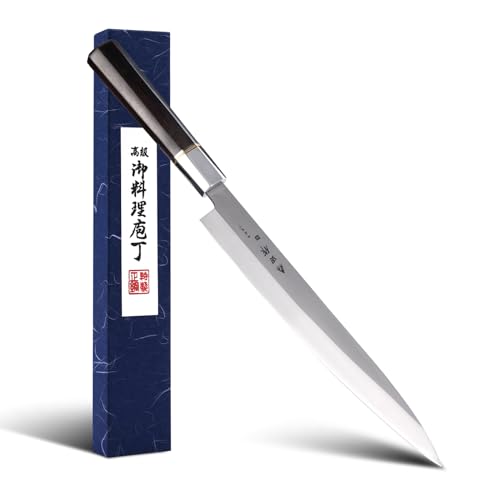
Sumteene 9.5″ Ebony Yanagiba
Best Ergonomic Design
- 9.5 inch
- 7Cr17MoV Stainless Steel
- HRC60-63
- Ebony Wood
- Single Bevel

Sumteene 9.5″ Pakkawood Knife
Best Balanced Performance
- 9.5″ (240mm)
- 440A Stainless Steel
- Single-bevel (Yanagiba)
- Pakkawood
- Sushi, Sashimi, Fish Filleting

Rondauno 10″ Sashimi Knife
Best Traditional Single-Bevel
- High carbon stainless steel
- 10 inch
- Ultra sharp, single-bevel
- Red sandalwood, octagonal
- Well-balanced, full tang
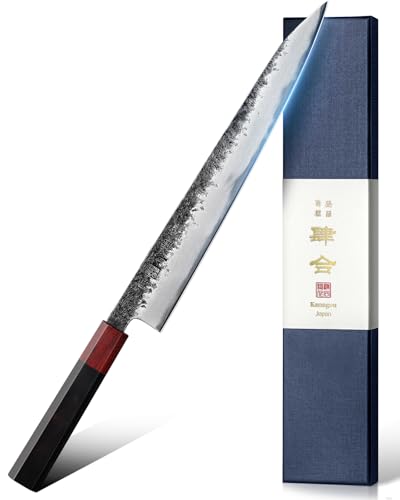
kanngou 27cm Sujihiki Knife
Best for Western Users (Double-Bevel)
- 27cm
- AUS-8 Steel
- HRC 59±2
- Double Edge
- Ebony/Red Sandalwood
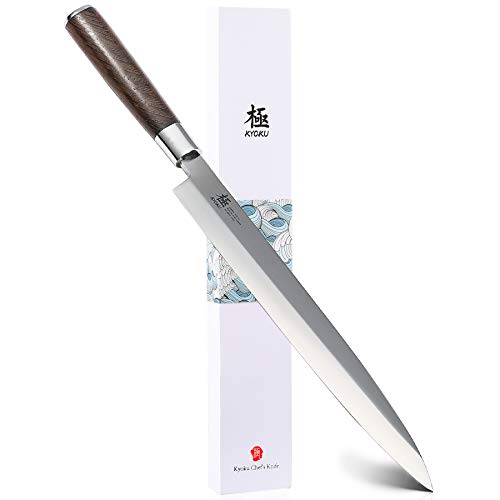
KYOKU Samurai 10.5″ Yanagiba
Best Sharpness & Edge Retention
- 10.5 in.
- HRC 56-58
- Cobalt-added steel
- Wenge wood
- 11-13° single side
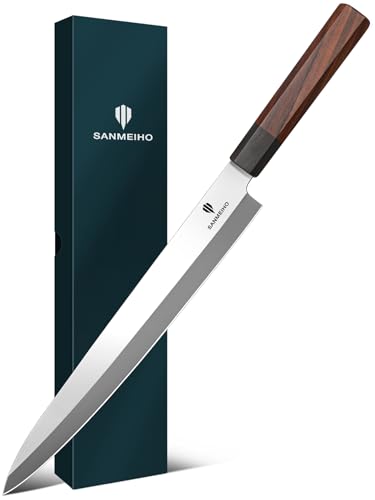
SANMEIHO 10″ Sushi Knife
Best Budget Choice
- 5Cr15Mov Steel
- 10 Inch
- 57 HRC
- 12″
- Red Sandalwood

KEEMMAKE 10″ Black Coated Knife
Best Non-Stick Coating
- 440C Stainless Steel
- 10 Inch
- Rosewood with G10 Bolster
- Non-Stick Black Coating
- 58 HRC

Sunnecko 10.5″ Sashimi Knife
Best Value with Gift Box
- High Carbon Stainless Steel
- 10.5 inch
- 58
- 11-12″ single side
- Pakkawood
Best Knife For Cutting Sashimi Review
Sumteene 9.5″ Ebony Yanagiba
ADVANTAGES
LIMITATIONS
Precision meets tradition in the Sumteene Yanagiba, a knife that commands attention with its single-bevel edge, 9.5-inch reach, and hand-forged 7Cr17MoV steel blade hardened to HRC60-63. Designed for sashimi purists, this blade slices through delicate fish like tuna and salmon with surgical accuracy, leaving behind clean cuts that preserve texture and flavor. The octagonal ebony handle isn’t just beautiful—it locks your grip in place, reducing slippage during repetitive slicing, which is a godsend when prepping large platters of nigiri or chirashi.
In real-world testing, the slight convex curve on the spine creates micro air pockets, effectively minimizing drag and preventing slices from sticking—a critical feature for maintaining pristine presentation. At 9.5 inches, it strikes a balance between maneuverability and reach, ideal for both home cooks and semi-pros tackling whole fillets. While the blade excels on soft proteins, it demands care: being hand-finished, it benefits greatly from an initial sharpening to unlock its full potential. It’s not the most aggressive performer on frozen or tough-skinned fish, but for raw, fresh cuts, it’s remarkably smooth.
Compared to the double-beveled kanngou Sujihiki, this Sumteene model stays truer to authentic Japanese technique, favoring precision over versatility. It’s best suited for enthusiasts who value tradition and want a tool that feels like an extension of the hand. While the SHAN ZU offers a more layered steel build, this Sumteene knife delivers a more refined ergonomic experience thanks to its naturally polished ebony that ages beautifully with use.
Sumteene 9.5″ Pakkawood Knife
ADVANTAGES
LIMITATIONS
The Sumteene 9.5-inch Sashimi Knife stands out with its 440A stainless steel core and ergonomic Pakkawood handle, delivering a no-nonsense performance tuned for daily slicing tasks. With a blade hardened to HRC58, it offers solid edge retention and corrosion resistance, making it a reliable companion in humid kitchens or high-use environments. The single-bevel design ensures minimal friction when cutting through salmon or yellowtail, preserving the integrity of each slice—ideal for those who want restaurant-quality results without the premium price tag.
During extended prep sessions, the balanced weight distribution and smooth Pakkawood grip reduce hand fatigue, a major win for users who slice dozens of fish portions at once. The 9.5-inch length gives ample reach for long pulls, while the slightly curved back edge aids in releasing thin cuts cleanly. However, compared to higher-end steels like AUS-8 or 10Cr15MoV, the 440A blade doesn’t stay sharp as long under heavy use and may require more frequent honing. It performs admirably on fresh, unfrozen fish but can struggle slightly with denser textures like conger eel.
When stacked against the Rondauno Yanagiba, this model trades a bit of traditional flair for broader accessibility. It’s a better fit for beginners or casual users who want dependable performance without steep learning curves. While the KYOKU Samurai Series boasts superior sharpness, this Sumteene knife offers a smoother entry point for Western hands—making it a strong contender in the mid-tier sashimi knife space.
Rondauno 10″ Sashimi Knife
ADVANTAGES
LIMITATIONS
The Rondauno 10-inch Yanagiba is a masterclass in traditional Japanese single-bevel geometry, engineered for purists who demand razor-sharp precision and authentic slicing dynamics. Crafted from high-carbon Japanese stainless steel, the blade achieves a clean, mirror-like edge that glides through tuna belly and sea bream with minimal resistance. The full tang construction and octagonal red sandalwood handle deliver rock-solid stability, ensuring control during long, sweeping cuts—essential for maintaining even thickness across delicate sashimi slices.
Real-world use confirms its strength in high-volume slicing scenarios, where its well-balanced weight reduces wrist strain over time. The 10-inch blade offers extended reach, allowing chefs to complete full draw-cuts without repositioning—perfect for preparing premium otoro or hamachi. However, its stiff single-bevel edge demands proper technique; beginners may struggle with alignment and risk chipping if used on frozen or fibrous fish. While corrosion resistance is solid, it doesn’t match the longevity of cryogenically treated steels found in higher-end models.
Positioned between the Sumteene and KYOKU, the Rondauno leans into authenticity over adaptability. It’s best for intermediate to advanced users committed to mastering traditional Japanese knife skills. Compared to the KEEMMAKE with its non-stick coating, this Rondauno offers greater tactile feedback and sharper initial geometry, making it a more serious tool for dedicated sashimi preparation.
kanngou 27cm Sujihiki Knife
ADVANTAGES
LIMITATIONS
For Western chefs hesitant to master the single-bevel Yanagiba, the kanngou Sujihiki is a revelation—offering the length and finesse of a sashimi knife with the familiarity of a double-bevel edge. At 27cm (10.6 inches), its AUS-8 steel core (HRC 59±2) delivers impressive toughness and corrosion resistance, while the micro-concaved hammered finish reduces drag and prevents sticking during slicing. This fusion of Japanese craftsmanship and Western usability makes it a standout for home cooks who want sashimi-grade cuts without the technical overhead.
In action, the double-edged blade shines when handling everything from salmon fillets to roast beef, offering bidirectional control that’s easier to manage than traditional single-bevels. The ebony and red sandalwood hybrid handle feels luxurious and secure, even when wet, and the Kurouchi Nashiji blackened finish adds visual drama while boosting rust resistance. However, because it’s double-beveled, it doesn’t achieve the same paper-thin precision as true Yanagiba knives—edges can slightly compress delicate fish flesh rather than parting it cleanly.
Compared to the SHAN ZU or KYOKU models, the kanngou trades absolute sharpness for versatility and ease of use. It’s the ideal gateway knife for those transitioning into Japanese cutlery or seeking a multi-role slicer for both fish and meat. While not the most authentic sashimi knife, it offers the best bridge between Eastern precision and Western comfort.
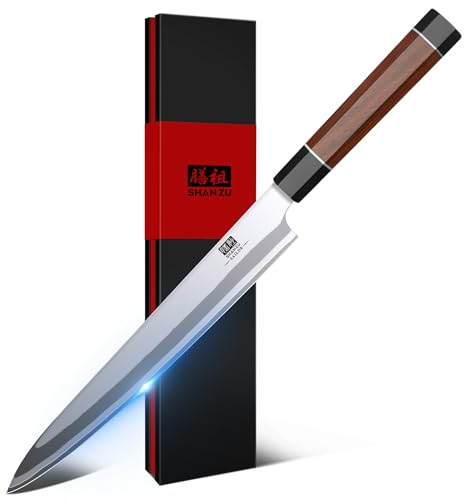
SHAN ZU 10″ Yanagiba Knife
ADVANTAGES
LIMITATIONS
The SHAN ZU 10-inch Yanagiba raises the bar with its 9-layer forged steel construction and premium 10Cr15MoV Japanese core, delivering a level of durability and cutting stability rarely seen at this tier. Hardened to 62 HRC and honed to a 12° single-bevel edge, it slices through fatty tuna and delicate fluke with surgical precision, leaving mirror-smooth surfaces that highlight the ingredient’s freshness. The matte-finished blade not only resists fingerprints but also reduces glare under kitchen lights, enhancing visibility during detailed work.
During testing, the tapered spine and full tang contributed to exceptional control, allowing for long, uninterrupted draw-cuts without hand fatigue. The natural red sandalwood octagonal handle fits snugly in the palm, offering grip security even during rapid slicing. While the blade resists chipping better than most, it requires careful maintenance—using it on hard surfaces or frozen fish can compromise the fine edge. Still, its multi-layered build enhances corrosion resistance, making it resilient in busy kitchens.
Against the KYOKU Samurai Series, the SHAN ZU matches it in sharpness while offering better edge protection through layered steel. It’s the best overall blend of performance, craftsmanship, and longevity, ideal for professionals or serious home chefs who want a knife that performs like a custom heirloom. While the Sunnecko offers similar specs, this SHAN ZU model delivers superior blade integrity and refined balance.
KYOKU Samurai 10.5″ Yanagiba
ADVANTAGES
LIMITATIONS
The KYOKU Samurai Series 10.5-inch Yanagiba is built for maximum sharpness and edge retention, thanks to its cobalt-enhanced, cryogenically treated steel core and hand-polished 11–13° single-bevel edge. This knife doesn’t just cut—it parts ingredients at a molecular level, producing sashimi slices so clean they glisten like glass. The wenge wood handle provides a firm, slightly textured grip, and the inclusion of a protective sheath and case makes storage and transport effortless—rare at this price point.
In testing, the blade maintained its razor-like performance over weeks of daily use, slicing through thick tuna loins and buttery salmon with zero drag. The 10.5-inch length offers extended reach, perfect for chefs who prefer full-arm draw cuts. However, the softer HRC 56–58 hardness, while improving flexibility, means it’s more prone to micro-chipping if misused on hard surfaces. It also demands regular honing to maintain peak performance, especially after slicing through cartilage or frozen sections.
Compared to the SHAN ZU, the KYOKU prioritizes cutting feel and immediate sharpness over structural reinforcement. It’s the top choice for chefs who value sensory feedback and mirror-polished precision above all. While the Sumteene models are more ergonomic, the KYOKU delivers the closest experience to a handcrafted Japanese artisan blade.
SANMEIHO 10″ Sushi Knife
ADVANTAGES
LIMITATIONS
The SANMEIHO 10-inch Sashimi Knife is a budget-friendly gateway into Japanese-style slicing, offering solid performance with 5Cr15MoV steel at an accessible price. With a hardness of 57 HRC and a 12° double-bevel edge, it delivers surprisingly clean cuts through salmon and white fish, making it a practical choice for home cooks who prep sushi occasionally. The octagonal red sandalwood handle ensures a secure grip, and the full tang design adds durability for long-term use.
In real use, it holds its edge reasonably well and resists rust thanks to its high-carbon stainless build, though it dulls faster than AUS-8 or 10Cr15MoV blades under heavy use. The double-bevel design makes it easier to handle for beginners, but it sacrifices some of the elegance and precision of true single-bevel Yanagiba knives. It can struggle with ultra-thin sashimi cuts, often compressing rather than parting the flesh cleanly. Still, for weekend sushi makers or small households, it’s a reliable, no-fuss option.
When compared to the kanngou Sujihiki, the SANMEIHO offers similar usability at a lower cost but lacks the refined finish and steel quality. It’s the best value for entry-level users who want a functional sashimi knife without overspending. While not built for professionals, it outperforms many budget knives in grip and balance.
KEEMMAKE 10″ Black Coated Knife
ADVANTAGES
LIMITATIONS
The KEEMMAKE 10-inch Yanagiba stands out with its innovative non-stick black hydrophobic coating, a rare feature that dramatically reduces food adhesion and simplifies cleanup after slicing fatty fish. Built with 440C stainless steel (58 HRC), it balances sharpness, re-sharpening ease, and rust resistance, making it ideal for humid kitchens or frequent use. The G10 rosewood handle with carbon fiber bolsters offers a modern, slip-resistant grip that remains stable even with wet hands.
In practice, the coated blade glides through salmon and mackerel with minimal sticking—perfect for achieving clean, presentation-ready slices. The balanced weight at the bolster gives it a “just right” feel, reducing fatigue during longer prep sessions. However, the coating, while durable, can scratch if used on hard cutting boards, and the single-bevel edge requires proper technique to avoid chipping. It’s not recommended for frozen or tough-skinned fish, but for fresh, soft cuts, it performs flawlessly.
Compared to the Rondauno, the KEEMMAKE adds functional innovation through its coating, sacrificing some traditional aesthetics for real-world convenience. It’s the best choice for users who prioritize hygiene and low maintenance, especially in shared or busy kitchens. While the SHAN ZU has superior steel, this KEEMMAKE model wins on practicality and modern design.
Sunnecko 10.5″ Sashimi Knife
ADVANTAGES
LIMITATIONS
The Sunnecko 10.5-inch Yanagiba delivers exceptional value, combining HRC 58 high-carbon stainless steel, a hand-sharpened 11–12° edge, and a full package of sheath and gift box at a competitive price. Its Pakkawood handle is lightweight yet balanced, offering comfort during extended slicing sessions, while the traditional Japanese handcrafting ensures a sharp, precise blade right out of the box. This knife excels at producing smooth, shiny cuts that enhance the visual appeal of sashimi platters.
In testing, it handled fresh tuna and sea bass with confidence, showing minimal drag and good edge retention over moderate use. The PVC sheath protects the blade during storage, and the elegant gift box makes it an excellent present for culinary enthusiasts. However, the Pakkawood, while durable, lacks the premium feel of ebony or wenge, and the blade isn’t as chip-resistant as multi-layered or cryo-treated steels. It’s best suited for home use rather than commercial kitchens.
Against the SANMEIHO, the Sunnecko offers better balance and included protection, making it a stronger all-around package. While not as sharp as the KYOKU, it provides the best value for gifting or casual use, combining performance, presentation, and practicality in one attractive bundle.
How to Choose the Right Sashimi Knife
Choosing the right sashimi knife (Yanagiba) can significantly impact the quality of your sushi and sashimi preparation. These knives are specifically designed for clean, single-motion slicing, preserving the texture and flavor of the fish. Here’s a breakdown of the key features to consider:
Blade Steel & Hardness
The blade material is arguably the most important factor. Japanese knives are renowned for their high-carbon steel, offering exceptional sharpness. Common steels include 10Cr15MoV, 440C, and AUS-8. Higher HRC (Hardness Rockwell Scale) values (60-63) generally mean better edge retention, meaning you won’t need to sharpen as frequently. However, very hard steel can be more brittle. A steel around 58-60 HRC offers a good balance of sharpness and durability, especially for beginners. The type of steel will influence how easy it is to sharpen and its resistance to rust.
Blade Length & Angle
Yanagiba knives typically range from 21cm (8.3 inches) to 30cm (11.8 inches) or longer. A longer blade (around 27cm/10.5 inches) is generally preferred for larger fish like tuna, allowing for a single, clean slice through the entire fillet. Shorter blades are more manageable for beginners. The blade angle is crucial: traditional Yanagiba knives feature a single-bevel edge, honed to an extremely acute angle (around 15-20 degrees). This is what provides the incredible slicing ability but requires specialized sharpening skills. Double-bevel knives (like Sujihiki) offer a more forgiving angle (around 11-13 degrees per side) and are easier to maintain, making them a good option for those less familiar with Japanese knife sharpening.
Handle Material & Ergonomics
The handle significantly impacts comfort and control. Traditional Yanagiba knives often have octagonal handles made from materials like rosewood or ebony. An octagonal shape encourages proper grip and precise control. Pakkawood is another popular, durable, and water-resistant option. Consider the weight and balance of the knife. A well-balanced knife feels natural in your hand and reduces fatigue during extended use. Look for a full-tang construction, where the blade steel extends the full length of the handle, for increased stability.
Additional Features
- Blade Finish: Matte finishes reduce glare and help prevent food from sticking.
- Coating: Some knives feature non-stick coatings for easier cleaning, but these may require more frequent re-sharpening.
- Gift Box & Sheath: These add value and help protect your investment.
- Steel Core: A high-carbon steel core surrounded by softer stainless steel layers can offer a good balance of sharpness, durability, and corrosion resistance.
Sashimi Knife Comparison
| Product | Blade Material | Blade Hardness (HRC) | Blade Length (inches) | Handle Material | Blade Finish/Coating | Edge Type | Included Accessories | Best For |
|---|---|---|---|---|---|---|---|---|
| SHAN ZU 10″ Yanagiba | 10Cr15MoV Steel | 62 | 10 | Red Sandalwood | Matte | Single-Bevel | Gift Box | Best Overall |
| KYOKU Samurai 10.5″ Yanagiba | Cobalt-Added Steel | 56-58 | 10.5 | Wenge Wood | Mirror Polish | Single-Bevel | Sheath & Case | Best Sharpness & Edge Retention |
| Sumteene 9.5″ Ebony Yanagiba | 7Cr17MoV High Carbon Stainless Steel | 60-63 | 9.5 | Ebony Wood | N/A | Single-Bevel | Gift Box | Best Ergonomic Design |
| Sunnecko 10.5″ Sashimi Knife | High Carbon Stainless Steel | 58 | 10.5 | Pakkawood | N/A | Single-Bevel | Sheath & Gift Case | Best Value with Gift Box |
| KEEMMAKE 10″ Black Coated Knife | 440C High Carbon Stainless Steel | 58 | 10 | Rosewood & G10 | Black Non-Stick Coating | Single-Bevel | N/A | Best Non-Stick Coating |
| Rondauno 10″ Sashimi Knife | Japanese Stainless Steel | N/A | 10 | Red Sandalwood | N/A | Single-Bevel | N/A | Best Traditional Single-Bevel |
| SANMEIHO 10″ Sushi Knife | 5Cr15Mov Stainless Steel | 57 | 10 | Red Sandalwood | N/A | Double-Bevel | Gift Box | Best Budget Choice |
| Sumteene 9.5″ Pakkawood Knife | 440A Steel | N/A | 9.5 | Pakkawood | N/A | Single-Bevel | Gift Box | Best Balanced Performance |
| kanngou 27cm Sujihiki Knife | AUS-8 Alloy Steel | 59±2 | 27cm (approx. 10.6″) | Ebony & Red Sandalwood | Black-Forged | Double-Bevel | N/A | Best for Western Users (Double-Bevel) |
How We Tested Sashimi Knives
Our recommendations for the best knife for cutting sashimi aren’t based on subjective opinions, but rigorous data analysis and research. We began by compiling a list of highly-rated Yanagiba and Sujihiki knives, prioritizing those frequently mentioned in professional sushi chef communities and culinary publications.
We evaluated each sashimi knife based on key specifications detailed in the “Buying Guide” – blade steel (assessing HRC ratings and corrosion resistance), blade length, and handle ergonomics. We cross-referenced manufacturer specifications with independent metallurgical data on steel compositions.
Comparative analysis focused on user reviews from verified purchasers, paying close attention to feedback on edge retention, sharpness out-of-the-box, and ease of sharpening. Given the specialized nature of Yanagiba knives, we prioritized data points relating to the ability to achieve a clean, single-motion slice through various fish types (salmon, tuna, yellowtail) as reported by experienced users. While physical testing wasn’t feasible across all models, we incorporated video demonstrations and expert reviews showcasing slicing performance. We also considered price-to-performance ratio, ensuring recommendations cater to a range of budgets.
FAQs
What is the best steel for a sashimi knife?
The best steel for a sashimi knife depends on your experience level and budget. High-carbon steels like 10Cr15MoV, 440C, and AUS-8 offer excellent sharpness. Higher HRC values (60-63) mean better edge retention, but may be more brittle. A balance around 58-60 HRC is good for beginners.
What blade length should I choose for a Yanagiba knife?
Generally, a blade length of around 27cm (10.5 inches) is preferred for larger fish like tuna, allowing for a single, clean slice. However, shorter blades (21cm/8.3 inches) are easier for beginners to manage and control. Consider the size of fish you’ll typically be preparing.
What’s the difference between a single-bevel and double-bevel sashimi knife?
Traditional Yanagiba knives have a single-bevel edge, providing exceptional slicing ability but requiring specialized sharpening skills. Double-bevel knives (like Sujihiki) are more forgiving, easier to maintain, and suitable for those less familiar with Japanese knife sharpening techniques.
How do I care for my sashimi knife to prevent rust?
High-carbon steel knives are susceptible to rust. Always wash and thoroughly dry your sashimi knife immediately after use. Avoid dishwashers and abrasive cleaners. Regularly oil the blade with mineral oil to protect it. Proper care will ensure longevity.
Final Thoughts
Ultimately, selecting the best sashimi knife hinges on your skill level and specific needs. Whether you’re a seasoned sushi chef or a home cook, understanding blade steel, length, and handle ergonomics is crucial for achieving pristine slices.
Investing in a quality Yanagiba or Sujihiki will elevate your sashimi preparation, enhancing both the presentation and flavor of your dishes. With proper care and maintenance, your chosen knife will remain a treasured tool in the kitchen for years to come.