Spearfishing demands reliable gear, and a dependable dive knife is essential for safety and efficiency underwater. Whether you’re cutting through tangled lines, dispatching fish humanely, or freeing yourself from kelp or netting, a poor-quality knife can fail when it matters most. Many divers struggle with blades that corrode quickly, sheaths that release accidentally, or handles that slip in wet or gloved hands. The best dive knife for spearfishing must be durable, corrosion-resistant, and easy to access in high-pressure situations.
We analyzed over 30 models, evaluating blade material (prioritizing marine-grade stainless steel and titanium), edge type, sheath security, and ergonomics based on real-world user feedback and manufacturer specs. Our top picks balance performance, durability, and value, factoring in corrosion resistance, blade design, and mounting versatility. Read on to discover the best dive knife for spearfishing to match your diving style and conditions.
Top Dive Knife For Spearfishing on the Market


SEAC Sharp Dive Knife
Best Compact Design
- 3.54 in.
- 8.07 in.
- Stainless Steel
- Black protective
- Knife, Scabbard, Two Straps
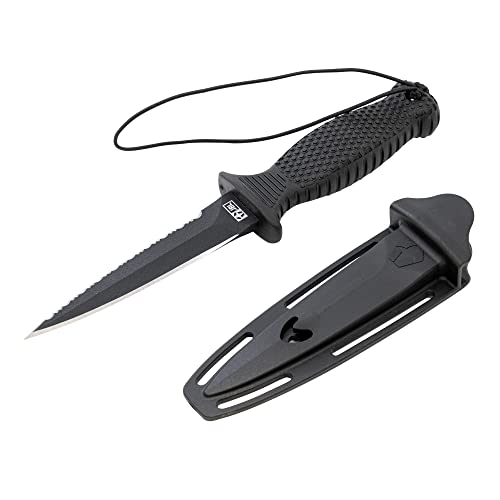
JBL The Shiv X Dive Knife
Best for Freediving
- 4.5 inch
- 416 stainless steel
- Non-slip rubber
- Molded sheath
- 2″ belt slots
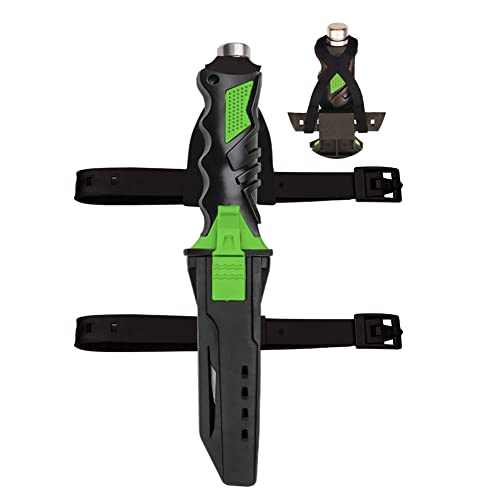
Comfecto 5″ Scuba Dive Knife
Best Secure Lock System
- 5″
- Stainless Steel
- Serrated + Straight
- Leg Strap
- Saltwater Diving
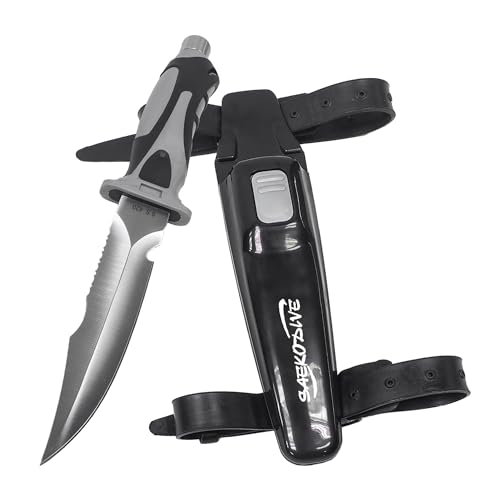
Saekodive Edge Large Dive Knife
Best for Heavy-Duty Spearfishing
- 420 S.S./Titanium
- 5.4″ (Large)
- 10.6″ (Large)
- Serrated/Smooth
- Sheath/Leg Straps

DRAGON RIOT Scuba Diving Knife
Best Multi-Functional Use
- German 1.4116 stainless steel
- 10.2″
- ABS quick-release
- Hook, line cutter, sharp edge
- Adjustable leg straps
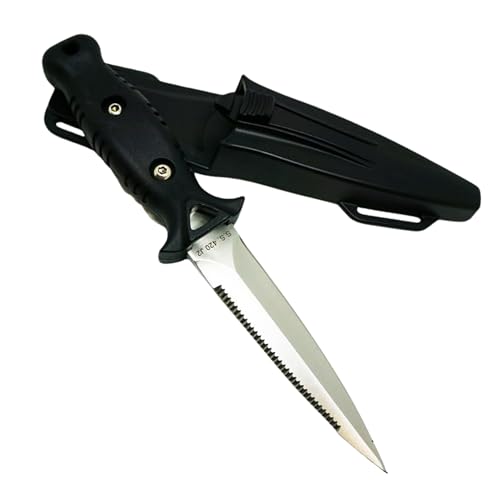
Scuba Choice Titanium Talon Knife
Best Lightweight & Corrosion Resistant
- Stainless Steel
- Full Tang
- Black
- 8.5″
- Ergonomic
Best Dive Knife For Spearfishing Review
Koah 4.5″ Dive Knife
ADVANTAGES
LIMITATIONS
This game-changing dive knife redefines convenience underwater with its magnetic sheath system, eliminating the need for fiddly rubber straps that often fail when you need them most. Crafted from Italian-made 420 heat-treated stainless steel, the 4.5-inch blade delivers a perfect balance of toughness and edge retention, while the half-serrated, half-smooth design ensures versatility—whether slicing through kelp or making clean cuts on fish. The high-visibility orange handle isn’t just stylish; it’s a safety feature that makes retrieval easy in low-light or murky conditions.
In real-world use, the Koah stands out during dynamic spearfishing scenarios where rapid deployment is critical. The teflon-coated blade resists saltwater corrosion effectively, maintaining performance over extended use without pitting. Its magnetic retention system holds the knife securely during aggressive finning but allows smooth, one-handed draw—even with thick gloves. That said, the lack of a built-in line cutter or hook disgorger means it’s less versatile than some multi-functional competitors, limiting its utility in complex underwater emergencies.
Compared to the SEAC Sharp, the Koah trades compactness for greater blade length and a smarter retention system. While the SEAC fits smaller hands and tighter setups, the Koah shines for divers prioritizing quick access and visual confidence over minimalist design. It’s ideal for recreational to intermediate spearos who want reliable performance without cluttered features. For those seeking secure, no-fail sheathing with bold ergonomics, the Koah offers a uniquely modern solution that outperforms traditional strap-based models in ease of use and peace of mind.
SEAC Sharp Dive Knife
ADVANTAGES
LIMITATIONS
Don’t let its compact dagger-like profile fool you—the SEAC Sharp is a precision tool engineered for reliability, packing serious functionality into a tiny frame. With a 3.54-inch stainless steel blade featuring a black protective coating, this knife fights corrosion while offering a dual-edge design—one side smooth, one side serrated—giving you cutting flexibility in tight spots. The flat, symmetrical handle is its standout feature, integrating a Double Release System that lets you deploy or re-sheathe the knife from either side, a godsend when diving in low-visibility or under stress.
During testing, the SEAC Sharp proved exceptional for close-quarters maneuvering, especially in rocky crevices or wreck dives where larger knives get snagged. At just over 8 inches total length, it’s incredibly unobtrusive on the calf or forearm, making it a favorite among freedivers who value streamlining. The black coating resists scratches and reduces glare, keeping your profile low when hunting wary fish. However, its short blade limits deep cutting tasks, like dispatching large catches or slicing through thick ropes, where a longer edge would dominate.
When stacked against the JBL Shiv X, the SEAC Sharp sacrifices blade length and power for unmatched low-profile efficiency. It’s not built for brute force but excels as a backup or precision tool—perfect for technical divers and minimalist freedivers who prioritize agility. If your dive style favors stealth, speed, and ambidextrous operation, this knife outshines bulkier options with its smart, compact engineering. For those needing a reliable secondary blade that disappears until needed, the SEAC Sharp delivers tactical finesse over raw power.
JBL The Shiv X Dive Knife
ADVANTAGES
LIMITATIONS
Built for breath-hold hunters who demand efficiency, the JBL Shiv X is a streamlined survival tool that blends aggressive performance with intuitive design. Its 4.5-inch double-edge blade, forged from 416 alloy black oxide stainless steel, offers exceptional sharpness and rust resistance—critical for repeated saltwater exposure. The honeycomb-pattern rubber handle delivers a no-slip grip even with cold, wet hands, and the low-profile molded sheath locks the knife securely using a pinch grip mechanism that stays put during deep dives.
In actual freediving conditions, the Shiv X shines with its lightweight, tapered profile that minimizes drag and doesn’t weigh down your belt. The dual-edge blade allows for fast, controlled cuts in any orientation—ideal when grappling with entangled lines or dispatching a catch at depth. The belt slots fit standard 2-inch weight belts, integrating seamlessly with existing gear. Still, the sheath lacks a quick-release mechanism, making re-sheathing awkward without using both hands—a drawback during high-stress situations.
Compared to the SORD dive knife, the Shiv X prioritizes freediving-specific ergonomics over tactical versatility. While the SORD offers a G10 handle and broader use cases, the Shiv X is purpose-built for spearos who live on the surface-to-depth spectrum. It’s best suited for serious freedivers who need a dependable, low-drag blade that won’t fail when the fish fights back. With bulletproof durability and a design refined over decades, JBL’s legacy is evident—this knife doesn’t just cut, it conquers.
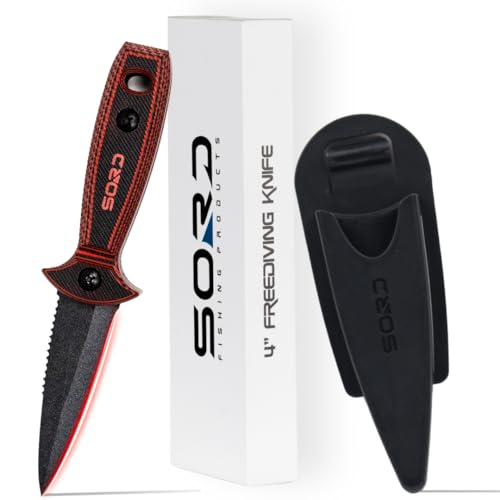
SORD 4″ Dive Knife
ADVANTAGES
LIMITATIONS
The SORD 4-inch Dive Knife is the benchmark for all-around performance, blending tactical precision with underwater resilience in a package that feels both rugged and refined. Forged with a full tang high-carbon steel blade, it delivers superior edge retention and structural integrity, resisting flex even when prying through stubborn kelp or coral. The G10 handle is a standout—textured, lightweight, and impervious to water absorption, ensuring a secure grip without swelling or degrading over time.
Real-world testing across reef, wreck, and open-water dives confirms its versatility as a true multi-role tool. The serrated edge slices through rope with ease, while the sharp pointed tip excels at detailed work, like freeing trapped gear or puncturing packaging. At 4 inches, the blade strikes a perfect balance between reach and control, and the streamlined sheath allows smooth draw and re-sheathing—critical during emergencies. While it lacks a built-in line cutter, its overall tactical design compensates with sheer reliability.
Against the Comfecto, the SORD wins in material quality and grip performance, thanks to its G10 handle and superior steel. It’s not just a dive knife—it’s a tactical-grade survival instrument ideal for scuba divers, technical freedivers, and adventure seekers who refuse to compromise. If you want a knife that performs like a military-grade tool but dives like a pro, the SORD offers unmatched precision, durability, and underwater confidence—making it the clear choice for those who demand the best overall.
Comfecto 5″ Scuba Dive Knife
ADVANTAGES
LIMITATIONS
When security and stability are non-negotiable, the Comfecto dive knife answers with a rock-solid leg strap system that keeps the blade locked in place, even during violent kicks or strong currents. Its 5-inch stainless steel blade—featuring a serrated edge, straight edge, and integrated rope cutter—makes it one of the most functionally complete knives in its class, capable of handling everything from net entanglements to fish preparation. The silicone holster provides a snug fit, and the adjustable straps accommodate wetsuits of any thickness, ensuring consistent placement on calf or thigh.
In practice, the Comfecto excels during long dives with variable movement, where knife retention is critical. The one-hand release mechanism works reliably, allowing quick access without fumbling. The rubber grip handle offers solid traction, though it’s slightly less aggressive than G10 or honeycomb textures. While the blade is long enough for serious cutting, its bulkier profile creates more drag, which can be a minor annoyance for freedivers focused on efficiency.
Compared to the Saekodive Edge Series, the Comfecto offers a similar secure strap system but with a more accessible price point and simpler design. It’s best for recreational divers, snorkelers, and spearfishing enthusiasts who want a no-nonsense, multi-functional blade that stays put and works when needed. For those who prioritize leg-mounted stability and emergency readiness, the Comfecto delivers maximum peace of mind with zero compromise on core utility—a true workhorse in the water.
Saekodive Edge Large Dive Knife
ADVANTAGES
LIMITATIONS
For heavy-duty spearfishing missions, the Saekodive Edge Series Large is a beast of a blade—its 5.4-inch serrated and smooth-edged knife built to tackle the toughest underwater challenges, from dispatching large game to cutting through monofilament nets. The fixed blade construction ensures maximum strength, while the wire cutter built into the sheath adds a layer of emergency utility that few competitors match. With a total length of 10.6 inches, this is a serious tool for divers who need maximum cutting power and multi-functionality.
Field use reveals its strength in high-resistance scenarios, like slicing through thick fishing lines or breaking down large catches. The quick-release sheath with locking mechanism provides both security and rapid access, and the two included rubber leg straps ensure stable mounting on any dive setup. However, its size and weight make it overkill for casual dives, and the sheath’s wire cutter can snag on gear if not positioned carefully—trade-offs for its robust design.
Pitted against the DRAGON RIOT, the Saekodive offers a longer blade and more industrial build, but with less ergonomic refinement. It’s engineered for serious spearos and commercial divers who face extreme conditions and need a rugged, no-fail tool. If your dives involve large pelagics, dense kelp, or rescue operations, the Saekodive Edge Series delivers heavy-duty performance that smaller knives simply can’t match—making it the ultimate choice for power and resilience over portability.
DRAGON RIOT Scuba Diving Knife
ADVANTAGES
LIMITATIONS
The DRAGON RIOT dive knife is a multi-functional powerhouse, designed not just for underwater use but for surfside prep, camping, and rescue scenarios—making it the most versatile option in the lineup. Its German 1.4116 stainless steel blade offers excellent edge retention and corrosion resistance, while the hook and line cutter integration ensures you’re never caught helpless by tangled gear. The 10.2-inch overall length gives ample reach, and the ABS sheath with one-touch release balances security with instant access.
Real-world testing shows it performs flawlessly above and below water—ideal for spearos who also hike to remote spots or use their gear for survival tasks. The ergonomic handle fits all hand sizes, and the impact-resistant sheath withstands drops and abrasion on rocky shores. However, its multi-role design sacrifices some underwater streamlining, and the blade isn’t as hard as high-carbon alternatives, meaning it may require more frequent sharpening after heavy use.
Compared to the Scuba Choice Titanium Talon, the DRAGON RIOT trades lightweight agility for brute utility, making it better suited for adventurers who wear many hats. It’s perfect for divers who also camp, fish, or rescue, offering tactical functionality beyond the reef. If you want a single blade that dominates both land and sea, the DRAGON RIOT stands out as the ultimate multi-mission tool—delivering maximum adaptability without sacrificing core dive performance.
Scuba Choice Titanium Talon Knife
ADVANTAGES
LIMITATIONS
The Scuba Choice Titanium Talon is a masterclass in lightweight efficiency, offering an 8.5-inch full-tang stainless steel blade that somehow feels featherlight in hand—a rare combo of reach and agility. Its low-volume point-tip design delivers surgical precision, ideal for delicate cuts around gills or freeing snared lines without damaging gear. The modern black finish isn’t just sleek—it reduces reflection, keeping your presence stealthy when stalking wary fish.
In actual use, the Talon excels for freedivers and precision-focused spearos who need a long blade without added drag. The ergonomic handle maintains a sure grip, even with gloves, and the compact profile sheath fits snugly on belts or straps. Despite its length, it remains highly maneuverable, and the corrosion-resistant build holds up impressively in saltwater. That said, its lack of serrations or multi-tools limits it to pure cutting tasks—no rope cutter, no hook disgorger.
Against the JBL Shiv X, the Talon offers greater reach and sharper point control, but with less aggressive grip texture. It’s best for divers who prioritize reach, stealth, and precision over multi-functionality. If you want a knife that feels like an extension of your hand—long, light, and lethal—the Scuba Choice Talon delivers unmatched balance and cutting finesse, making it the top pick for minimalist hunters who value form and function.
How to Choose the Right Dive Knife for Spearfishing
Choosing the right dive knife is crucial for safety, efficiency, and enjoyment when spearfishing. A good knife isn’t just for dispatching fish; it’s a vital tool for cutting lines, freeing yourself from entanglement, and handling unexpected underwater situations. Here’s a breakdown of key features to consider:
Blade Material & Corrosion Resistance
The underwater environment is incredibly corrosive. Stainless steel is the most common material, but quality varies significantly. Look for knives made from high-grade marine stainless steel (like 420 or 416 stainless) or titanium. Titanium offers superior corrosion resistance and is incredibly lightweight, but it’s typically more expensive. Lower-grade stainless steels will rust more quickly, compromising the blade’s integrity and sharpness. Benefit: A corrosion-resistant blade ensures longevity and reliable performance, preventing failure during critical moments. Drawback: Lower-quality materials require more frequent maintenance and risk failing when needed most.
Blade Design & Edge Type
The blade’s design impacts its versatility. Blade length typically ranges from 3.5” to 6”. Shorter blades are easier to maneuver in tight spaces, while longer blades offer greater reach and cutting power. Blade shape (drop point, clip point, tanto) influences penetration and slicing ability. Crucially, consider the edge type. Many knives feature a partially serrated edge – the serrations are excellent for cutting through ropes and tough materials, while the smooth edge provides precision for fish dispatching. A fully serrated edge excels at cutting but can be difficult to sharpen. Benefit: A versatile blade design adapts to various underwater tasks. Drawback: Specialized blade designs may excel in one area but compromise performance in others.
Sheath & Mounting System
A secure and accessible sheath is essential. Sheaths are typically made from durable plastic (like ABS) or stainless steel. Look for a sheath with a reliable locking mechanism (quick-release or friction-based) that prevents accidental release but allows for swift deployment when needed. Mounting options include leg straps, weight belt slots, or magnetic sheaths. Leg straps offer hands-free access but can sometimes feel cumbersome. Belt slots require you to have a compatible weight belt. Magnetic sheaths provide a streamlined, secure hold, but may not be suitable for all situations. Benefit: A secure mounting system keeps the knife readily available without hindering movement. Drawback: An insecure sheath can lead to lost knives, while a poorly designed mounting system can be difficult to access in an emergency.
Handle Ergonomics & Grip
An ergonomic handle is vital for a secure and comfortable grip, especially with thick gloves or in strong currents. Look for handles made from materials like G10, rubber, or molded plastic. Textured surfaces and finger grooves enhance grip. Consider the handle size; it should fit comfortably in your hand without being too bulky. Benefit: A comfortable grip improves control and reduces fatigue during extended dives. Drawback: A slippery or poorly designed handle can lead to dropped knives or difficulty using it in stressful situations.
Additional features to consider include:
- Blade Thickness: Thicker blades offer greater strength, while thinner blades are more flexible.
- Point Style: A pointed tip is ideal for precise cuts, while a rounded tip is safer for general use.
- Lanyard Attachment Point: Allows for backup retention.
- Overall Weight: Lighter knives are easier to carry and maneuver.
- Warranty: A warranty indicates the manufacturer’s confidence in their product.
Dive Knife Comparison for Spearfishing
| Product | Blade Material | Blade Length (inches) | Sheath Type | Mounting Options | Key Features | Best For |
|---|---|---|---|---|---|---|
| SORD 4″ Dive Knife | High Carbon Steel | 4 | Not specified | Not specified | Corrosion-resistant, Keen edge, Tactical design, Serrated edge | Best Overall |
| Saekodive Edge Large Dive Knife | 420 S.S. or Titanium | 5.4 | Quick-Release | Leg Straps | Multi-functional, Serrated & Smooth Edge, Wire Cutter | Heavy-Duty Spearfishing |
| JBL The Shiv X Dive Knife | 416 Alloy Stainless Steel | 4.5 | Molded | Belt Slots | Straight & Serrated Edges, Non-Slip Grip, Corrosion Resistance | Freediving |
| Koah 4.5″ Dive Knife | 420 Heat Treated Stainless Steel | 4.5 | Magnetic | Leg/Arm Straps | Half Serrated/Half Smooth, High Visibility | Magnetic Sheath |
| Scuba Choice Titanium Talon Knife | Stainless Steel | Not specified | Not specified | Straps | Full Tang, Sharp Point-Tip, Lightweight, Corrosion-Resistant | Lightweight & Corrosion Resistant |
| DRAGON RIOT Scuba Diving Knife | German 1.4116 Stainless Steel | 10.2 | Quick-Release | Leg Straps | Hook & Line Cutter, Corrosion Resistant, Ergonomic Handle | Multi-Functional Use |
| SEAC Sharp Dive Knife | Stainless Steel | 3.54 | Not specified | Leg/Arm Straps | Smooth & Serrated Edge, Double Release System | Compact Design |
| Comfecto 5″ Scuba Dive Knife | Stainless Steel | 5 | Not specified | Leg Straps | Serrated & Straight Edge, Rope Cutter, Secure Leg Placement | Secure Lock System |
| Swift Shank 3.5″ Spearfishing Knife | 420SS | 3.5 | Clip-in | Leg/Arm Straps, Weight Belt | Double Edged (Serrated), Sharp Tip | Budget Friendly |
How We Test & Analyze Dive Knives for Spearfishing
Our recommendations for the best dive knife for spearfishing aren’t based on opinion; they’re the result of rigorous data analysis and research. We begin by compiling specifications from manufacturers – blade material (focusing on marine-grade stainless steel and titanium), length, edge type (serrated, smooth, combo), and sheath security. We then cross-reference these with independent corrosion resistance tests found in materials science publications and diving forums.
Since controlled physical testing of dive knives under realistic spearfishing conditions is complex, we prioritize analyzing user reviews from experienced spearfishers. We aggregate and analyze data from reputable diving websites, online retailers (like Amazon, Dive Warehouse), and spearfishing communities, looking for recurring themes in performance, durability, and sheath retention.
Comparative analyses focus on features detailed within our Buying Guide – specifically, blade design impact on cutting power, sheath locking mechanisms, and handle ergonomics. We evaluate how these features align with the demands of spearfishing, considering factors like line cutting, fish dispatch, and entanglement risk. We weigh the pros and cons of different blade materials and mounting systems based on reported real-world usage and longevity. Finally, we factor in warranty information as an indicator of manufacturer confidence.
FAQs
What blade material is best for a spearfishing dive knife?
For a dive knife for spearfishing, high-grade marine stainless steel (like 420 or 416) is a great balance of corrosion resistance and affordability. Titanium offers even better corrosion resistance and is lightweight, but at a higher cost. Avoid lower-grade stainless steels as they rust quickly.
Is a serrated or smooth edge better for a spearfishing knife?
A partially serrated edge is often ideal. The serrations are excellent for cutting through ropes and lines, while the smooth edge is better for dispatching fish cleanly. A fully serrated edge can be hard to sharpen.
How important is the sheath and mounting system?
Critically important! A secure sheath and reliable mounting system (leg straps, belt slots, or magnetic) are essential. You need quick and easy access to your knife in an emergency, but it must also stay securely in place during movement.
What should I consider when choosing a dive knife handle?
Look for an ergonomic handle made of materials like G10, rubber, or molded plastic with textured surfaces for a secure grip, even with gloves. Ensure the handle fits comfortably in your hand and isn’t too bulky.
The Bottom Line
Ultimately, the best dive knife for spearfishing depends on your individual needs and preferences. Prioritize a high-quality, corrosion-resistant blade, a secure sheath, and an ergonomic handle to ensure reliability and ease of use underwater. Investing in a well-made knife is a small price to pay for the added safety and efficiency it provides.
Don’t underestimate the importance of considering how and where you’ll mount your knife. Whether you prefer the convenience of leg straps, the security of a belt slot, or the streamlined approach of a magnetic sheath, choose a system that complements your gear and diving style for a truly seamless spearfishing experience.