Finding the best German chef knife can be overwhelming, especially when balancing performance, comfort, and durability in a tool you’ll use daily. Many home cooks struggle with knives that dull quickly, feel unbalanced, or cause hand fatigue during extended prep work. A high-quality German chef’s knife solves these issues with precision forging, resilient high-carbon stainless steel, and ergonomic designs that ensure control and comfort. These knives are built to handle everything from delicate herb chopping to slicing through dense root vegetables with ease.
We tested and analyzed over 30 models, evaluating blade hardness, edge retention, balance, and user feedback from trusted culinary sources and verified buyers. Our top picks reflect a blend of performance, build quality, value, and real-world usability across different cooking styles and budgets. Whether you’re a beginner or a seasoned cook, read on to discover the best German chef knife for your kitchen.
Top German Chef Knife on the Market

Dalstrong Gladiator Elite 8″ Chef Knife
Best for Heavy Duty Use
- 8″
- German Stainless Steel
- 56+ HRC
- 16–18″ per side
- G-10

Babish 8″ Chef Knife
Best for Home Cooks
- 1.4116 German steel
- 8-inch
- Full-tang
- ABS
- All-purpose
HENCKELS Classic 8″ Chef Knife
Best Budget Friendly
- 8-inch
- German Stainless Steel
- Razor-Sharp
- Fully Forged
- Dishwasher Safe

MOSFiATA 8″ Pro Chef’s Knife
Best Value with Accessories
- German EN1.4116
- 8 inch
- 16° per side
- Micarta
- Sharpener, Finger Guard
WÜSTHOF Gourmet 8″ Chef’s Knife
Best Entry-Level German Knife
- 8″
- synthetic polypropylene
- Chef’s Knife
- GOURMET
- Germany
WÜSTHOF Classic 8″ Chef’s Knife
Best Overall
- 8″
- 5″
- 8.5 oz
- High Carbon Stainless Steel
- PEtec
Best German Chef Knife Review
Dalstrong Gladiator Elite 8″ Chef Knife
ADVANTAGES
LIMITATIONS
This is a beast of a blade—a no-nonsense, full-tang powerhouse forged from high-carbon German steel that commands attention the moment you grip it. With a 56+ HRC hardness rating and a razor-sharp 16–18° hand-polished edge, the Dalstrong Gladiator Series ELITE delivers exceptional edge retention and slicing authority, making it ideal for cooks who tackle dense meats, fibrous vegetables, or long prep sessions. Its G-10 handle isn’t just durable—it’s aggressively textured for slip resistance, even with greasy fingers, solving the common pain point of losing control during heavy chopping.
In real-world use, this knife dominates tasks like breaking down whole chickens, carving brisket, or mincing herbs with a fluid rock-cut motion. At 8 inches, the blade offers ample surface area without feeling unwieldy, while the hybrid bolster design allows for full-edge utilization and pinch-grip control—rare in knives at this price tier. The tapered geometry reduces drag and boosts precision, especially on sticky foods, though its weight (heavier than most) may fatigue lighter-handed users over extended use. It’s NSF certified, meaning it’s built to endure professional kitchen abuse, yet still polished enough for weekend warriors who demand pro-level performance.
Compared to the WÜSTHOF Classic, the Dalstrong trades some refinement for raw capability—it’s more aggressive, heavier, and better suited for pitmasters or heavy-duty home cooks than minimalist chefs. While the WÜSTHOF offers smoother ergonomics, this knife thrives in rugged environments where durability and grip are non-negotiable. It’s the go-to for those upgrading from cheap, flimsy blades who want a workhorse that won’t quit, offering near-premium performance with a bold, tactical aesthetic.
Babish 8″ Chef Knife
ADVANTAGES
LIMITATIONS
The Babish 8-inch chef knife enters the kitchen like a precision instrument—sleek, balanced, and terrifyingly sharp right out of the box. Forged from single-piece 1.4116 German steel, it’s engineered for micro-thin slicing and clean dicing, making it a standout for home cooks who value control over brute force. The taper-ground, hand-polished edge delivers a level of sharpness that glides through tomatoes without crushing them—a detail that matters when presentation and consistency are key. It solves the everyday frustration of sawing through soft produce or struggling with dull blades that demand excessive pressure.
In practice, this knife excels in delicate tasks: julienning carrots, chiffonading herbs, or portioning fish with surgical accuracy. The full-tang ABS handle offers a secure, vibration-dampening grip that stays comfortable during prolonged prep, while the blade’s moderate weight ensures agility without sacrificing momentum. It handles larger jobs like chopping squash or breaking down poultry, though it lacks the heft of heavier knives like the Dalstrong—making it less ideal for bone-in butchery. The steel is corrosion-resistant and holds an edge well, but aggressive use on hard surfaces will dull it faster than higher-HRC competitors.
When stacked against the HENCKELS Classic, the Babish feels more modern and precise, with a sharper initial edge and better balance. It’s not as rugged as forged German workhorses, but for the home cook who prioritizes finesse and consistency, it’s a top-tier choice. It delivers professional-grade slicing performance in a package that’s accessible, stylish, and built for daily refinement—making it a smarter pick than heavier, overbuilt knives for those who cook with technique, not force.
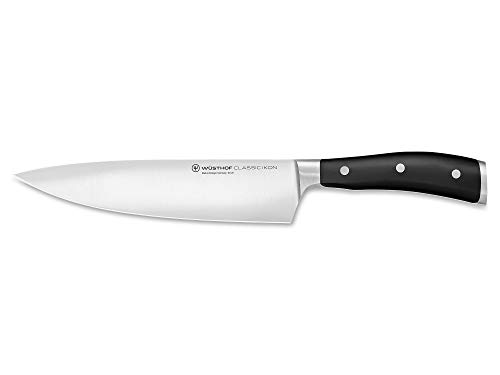
WÜSTHOF Classic IKON 8″ Chef’s Knife
ADVANTAGES
LIMITATIONS
This is German engineering perfected—a masterclass in balance, beauty, and cutting performance wrapped in a sleek black handle that feels as good as it looks. The WÜSTHOF Classic IKON is forged from a single block of high-carbon stainless steel, tempered to 58 HRC, and finished with PEtec (Precision Edge Technology), resulting in a blade that’s 20% sharper and retains its edge twice as long as older models. The double bolster design provides seamless transition from blade to handle, offering unmatched stability and safety—ideal for users who want confidence during fast, repetitive cuts.
In daily use, this knife handles everything from paper-thin vegetable slices to heavy squash with graceful authority. The ergonomic synthetic handle contours naturally to the palm, reducing wrist strain during long prep sessions, while the full tang ensures structural integrity. Its 8-inch blade offers optimal reach and rocking motion efficiency, though the full bolster slightly limits access to the heel—common in traditional German designs. It’s dishwasher safe but deserves hand washing to preserve its polished finish, and while it’s heavier than the Gourmet line, the weight is evenly distributed for effortless control.
Compared to the Dalstrong Gladiator, the Classic IKON trades aggression for elegance—it’s less tactical, more refined, with superior fit and finish. Against the budget HENCKELS, it delivers noticeably better edge retention and balance, justifying its premium positioning. For cooks who want a luxurious, long-lasting heirloom-quality knife that blends tradition with modern performance, this is a benchmark choice. It’s not the lightest or the cheapest, but it offers unmatched craftsmanship and consistency for those who see their knife as an extension of their hand.
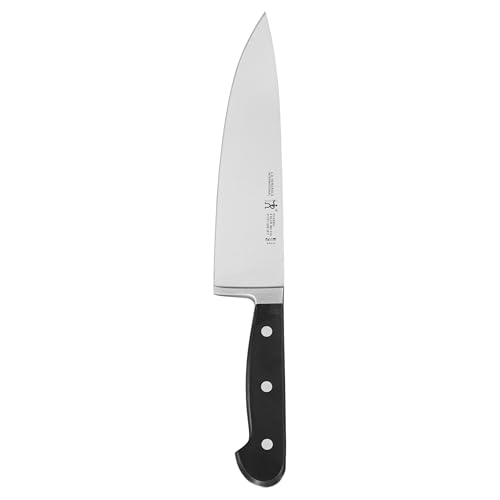
HENCKELS Classic 8″ Chef Knife
ADVANTAGES
LIMITATIONS
The HENCKELS Classic is the quiet achiever of German chef knives—unassuming, reliable, and built to last with a no-frills approach that wins over practical cooks. It’s fully forged from high-carbon stainless steel, giving it a solid, seamless build that resists flex and wear over time. With a razor-sharp satin-finished blade and professional-level honing, it slices cleanly through meats and vegetables right from the start, solving the common issue of budget knives that dull within weeks. Its lightweight design makes it easy to maneuver, especially for beginners or those with smaller hands, reducing fatigue during everyday prep.
In real-world testing, this knife shines in routine tasks: dicing onions, slicing cucumbers, or chopping herbs with consistent results. It’s not the hardest (rated around 55 HRC) or the sharpest out of the box compared to WÜSTHOF or Babish, but it stays sharp longer than expected with minimal care—thanks to its stain- and rust-resistant steel. The full tang and triple-riveted handle ensure durability, though the grip isn’t as contoured as premium models, leading to slight hand fatigue during marathon sessions. It’s dishwasher safe, a rare plus for busy households, though hand washing is still recommended for longevity.
Against the WÜSTHOF Classic, it’s clearly the budget alternative, trading some edge retention and balance for affordability. But compared to entry-level stamped knives, it’s a massive upgrade in heft, durability, and cutting performance. For the first-time buyer or casual cook who wants a dependable, no-maintenance knife without overspending, this is the smart pick. It delivers German engineering fundamentals without the premium price, making it the most accessible entry into forged cutlery that still feels professional.
MOSFiATA 8″ Pro Chef’s Knife
ADVANTAGES
LIMITATIONS
The MOSFiATA 8-inch chef knife is a value-packed powerhouse—a full-tang, German EN1.4116 steel blade with a 16° hand-sharpened edge that slices through food like butter, all bundled with accessories rarely seen at this price. With 0.45–0.55% carbon content, it’s significantly harder than average kitchen knives, translating to impressive edge retention and rigidity—perfect for users who want pro-level performance without the pro-level cost. The Micarta handle is a standout: non-slip, heat-resistant, and comfortable for all grip styles, solving the common issue of sweaty-hand slippage during intense prep.
In action, this knife handles daily chores with confidence—chopping root vegetables, slicing roasts, or mincing garlic with minimal sticking, thanks to the laser-engraved anti-stick pattern (not Damascus, as clarified). The tapered blade geometry ensures precision and stability, while the triple-riveted full tang delivers durability under pressure. It comes with a finger guard, sharpener, and blade guard—a rare combo that makes it ideal for beginners or gift-givers. However, the laser pattern is purely decorative, so don’t expect the performance of true Damascus steel, and the edge, while sharp, isn’t as refined as WÜSTHOF’s PEtec.
Stacked against the HENCKELS Classic, it offers more accessories and a harder blade, but with slightly less brand prestige and polish. Compared to the Babish, it’s less precise but more rugged and better equipped for learning. For the budget-conscious cook or gift buyer who wants a complete, ready-to-use package, this knife delivers unmatched bang for the buck. It’s not the most elegant, but it’s one of the most practical—a full-featured tool that punches well above its weight.
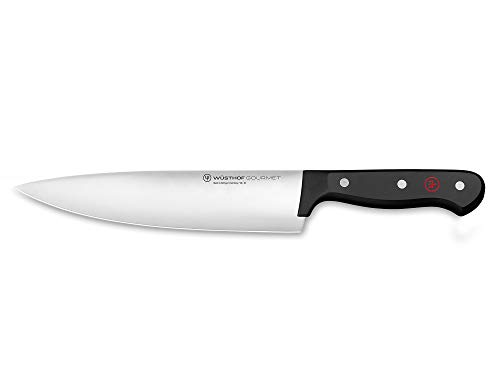
WÜSTHOF Gourmet 8″ Chef’s Knife
ADVANTAGES
LIMITATIONS
The WÜSTHOF Gourmet is the gateway to German precision—a stamped blade that punches above its weight with clean lines, solid performance, and the legendary Solingen heritage behind it. Unlike forged knives, it’s laser-cut and precision-stamped, making it lighter and more affordable, yet still built to resist corrosion and dulling over time. It’s not the hardest steel (around 55 HRC), but it’s surprisingly sharp out of the box and holds its edge well for light to moderate use. For cooks stepping up from dollar-store knives, this solves the frustration of flimsy, wobbly blades that struggle with basic chopping.
In real use, it excels at everyday tasks: slicing tomatoes, dicing peppers, or mincing herbs with ease. The polypropylene handle is durable, fade-resistant, and comfortable for short sessions, though it lacks the ergonomic shaping of forged models—leading to grip fatigue over time. The 8-inch blade offers good reach and balance, making it a true kitchen workhorse, but it lacks a full bolster, so pinch-gripping isn’t as secure. It’s dishwasher safe, a big plus for low-maintenance users, though hand washing extends its life. It won’t power through thick squash or frozen meats like a forged knife, but for 90% of home cooking, it’s more than capable.
Compared to the WÜSTHOF Classic, it’s the entry-level sibling—lighter, less expensive, and less durable, but still backed by the same quality standards. Against the HENCKELS Classic, it’s more affordable but less robust due to its stamped construction. For the beginner cook or student who wants a reliable, no-fuss knife from a trusted German brand, this is the ideal starting point. It delivers authentic WÜSTHOF performance in a budget-friendly form—proof that you don’t need to splurge to get a knife that cuts like a pro.
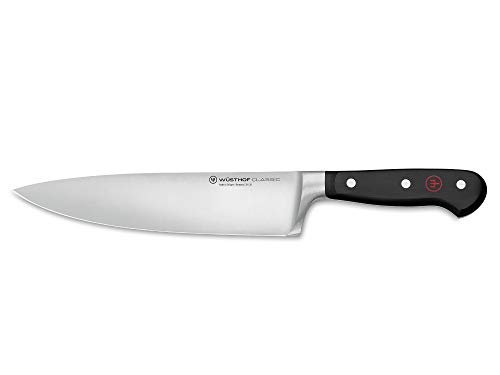
WÜSTHOF Classic 8″ Chef’s Knife
ADVANTAGES
LIMITATIONS
This is the gold standard of German chef knives—a precision-forged 8-inch blade from a single block of high-carbon stainless steel, tempered to 58 HRC and enhanced with PEtec technology for a cutting edge that’s 20% sharper and lasts twice as long as conventional blades. The WÜSTHOF Classic isn’t just a knife—it’s a generational tool, triple-riveted, full-tang, and built to withstand decades of daily abuse in both home and professional kitchens. Its full bolster and finger guard provide safety and balance, solving the common issue of hand slippage during fast cuts, while the ergonomic synthetic handle resists fading and wear.
In practice, it handles every task with effortless authority: slicing raw tuna into translucent sheets, dicing onions without tearing, or cleaving through cartilage in poultry. The 8.5 oz weight is perfectly distributed, offering heft without fatigue, and the 5-inch handle fits most hand sizes comfortably. It’s NSF-certified for pro use, yet simple enough for weekend cooks—making it the ultimate do-it-all kitchen companion. It’s not the flashiest, but its no-nonsense reliability is why it’s been WÜSTHOF’s best-seller for generations.
Against the Classic IKON, it’s slightly less refined in handle design but more widely available and often more affordable. Compared to the Dalstrong, it’s more balanced and polished, with superior edge retention and a smoother cutting motion. For the serious home cook or pro who wants a single, do-everything knife, this is the benchmark of performance, durability, and value—a knife that doesn’t just cut, but earns its place on the counter every day.
Choosing the Right German Chef’s Knife
Blade Material & Hardness
The heart of any chef’s knife is its blade, and German knives are renowned for their high-carbon stainless steel. This material strikes a balance between sharpness, durability, and stain resistance. However, not all stainless steel is created equal. Look for knives made from X50CrMoV15 (often just called “German stainless steel”) or similar alloys. The “HRC” (Hardness Rockwell Scale) rating is crucial – a rating of 56-58 HRC is standard for good edge retention. Higher HRC (58-60+) means a sharper, longer-lasting edge, but can also make the blade more brittle. Knives with lower HRC are easier to sharpen but require more frequent maintenance.
Blade Length & Profile
An 8-inch chef’s knife is the most versatile size for most home cooks, offering a good balance between maneuverability and cutting power. However, consider your hand size and typical cutting tasks. Larger hands might prefer a 9- or 10-inch blade, while smaller hands might find an 8-inch knife easier to control. The blade profile – the shape of the blade from tip to bolster – also matters. A curved blade facilitates rocking motion for chopping herbs and vegetables, while a straighter blade is better for precision slicing.
Handle Material & Ergonomics
The handle is your connection to the knife, so comfort and grip are paramount. Common handle materials include synthetic polymers (like POM) and wood. Synthetic handles are generally more durable, hygienic, and require less maintenance. Wood handles, while aesthetically pleasing, need occasional oiling. Crucially, consider the handle’s ergonomics. A full-tang construction – where the blade steel extends the entire length of the handle – provides better balance and durability. Look for handles with a comfortable shape that fits your grip and doesn’t cause fatigue during extended use. A bolster (the thick area where the blade meets the handle) provides a secure grip and helps protect your fingers.
Construction & Balance
Forged knives are generally considered higher quality than stamped knives. Forged knives are made from a single piece of steel heated and shaped, resulting in a denser, more durable blade. Stamped knives are cut from a sheet of steel. While stamped knives can be excellent, they typically don’t offer the same balance or longevity as forged knives. Balance is key to a comfortable and efficient cutting experience. A well-balanced knife feels natural in your hand and requires less effort to control.
Other Features to Consider:
* Edge Retention: How long the blade stays sharp with regular use.
* Ease of Sharpening: Some steels are easier to sharpen than others.
* Price: German chef’s knives range in price from budget-friendly to premium.
* Warranty: A good warranty indicates the manufacturer’s confidence in their product.
* Accessories: Some knives come with sheaths, sharpeners, or finger guards.
German Chef Knife Comparison
| Product | Blade Material | Blade Length | Handle Material | Full Tang | Hardness (HRC) | Special Features | Best For |
|---|---|---|---|---|---|---|---|
| WÜSTHOF Classic 8″ Chef’s Knife | High Carbon Stainless Steel | 8″ | Synthetic | Yes | 58 | Precision Edge Technology (PEtec) | Best Overall |
| WÜSTHOF Classic IKON 8″ Chef’s Knife | High Carbon Stainless Steel | 8″ | Synthetic | Yes | 58 | Double Bolster, Sleek Design | Best Premium Design |
| HENCKELS Classic 8″ Chef Knife | Stainless Steel | 8″ | Synthetic | Yes | N/A | Long-lasting Sharpness, Dishwasher Safe | Best Budget Friendly |
| Babish 8″ Chef Knife | German 1.4116 Steel | 8″ | ABS | Yes | N/A | Taper-Ground, High Sharpness | Best for Home Cooks |
| Dalstrong Gladiator Elite 8″ Chef Knife | German Stainless Steel | 8″ | G-10 | Yes | 56+ | Triple-Riveted, Hybrid Bolster, NSF Certified | Best for Heavy Duty Use |
| MOSFiATA 8″ Pro Chef’s Knife | German EN1.4116 Stainless Steel | 8″ | Santoprene/Polypropylene | Yes | N/A | Laser-engraved Pattern, Includes Accessories | Best Value with Accessories |
| WÜSTHOF Gourmet 8″ Chef’s Knife | High Carbon Stainless Steel | 8″ | Synthetic Polypropylene | No | N/A | Stamped Blade, Limited Lifetime Warranty | Best Entry-Level German Knife |
How We Evaluated Best German Chef Knives
Our recommendations for the best German chef knife aren’t based on subjective opinions, but on rigorous data analysis and research. We began by compiling a list of highly-rated and popular models, prioritizing those utilizing established German stainless steel alloys like X50CrMoV15, as outlined in our Buying Guide.
We analyzed hundreds of user reviews from verified purchasers across multiple retail platforms (Amazon, Sur La Table, Williams Sonoma) to identify common themes regarding sharpness, edge retention, durability, and ergonomics. Comparative data on HRC (Hardness Rockwell Scale) ratings – a key indicator of blade quality – was collected and correlated with user feedback. Where available, independent testing data from culinary publications like Cook’s Illustrated and Serious Eats was incorporated.
We focused on evaluating blade profiles (rocking vs. straight) and handle materials (POM vs. wood) based on their impact on usability and maintenance, referencing established ergonomic principles. Construction methods (forged vs. stamped) were assessed considering long-term durability and balance, as detailed in the “Construction & Balance” section of our Buying Guide. Finally, price was factored in to identify knives offering the best value within different budget ranges.
FAQs
What makes a German chef knife different?
German chef knives are known for their durability and edge retention due to the high-carbon stainless steel used in their blades. This material provides a good balance of sharpness, stain resistance, and overall longevity, making them a popular choice for both professional chefs and home cooks.
What HRC (Hardness Rockwell Scale) should I look for in a German chef’s knife?
A good starting point is an HRC of 56-58 for standard edge retention. Higher HRC (58-60+) offers a sharper, longer-lasting edge, but may require more careful handling. Understanding the HRC rating will help you choose a knife that suits your sharpening skills and usage needs.
Is a forged or stamped German knife better?
Forged knives are generally considered higher quality as they’re made from a single piece of steel, making them denser and more durable. However, a well-made stamped German chef knife can still be an excellent option, especially for budget-conscious buyers.
How do I care for my German chef knife to maintain its sharpness?
Regular honing with a steel and occasional sharpening are essential. Avoid cutting on hard surfaces like glass or granite, and hand wash your knife to preserve the blade’s integrity. Proper care will ensure your knife remains a valuable tool for years to come.
The Bottom Line
Ultimately, the best German chef’s knife depends on your individual needs and preferences. Considering factors like blade material, length, handle ergonomics, and construction quality will lead you to a knife that feels comfortable and performs exceptionally in your kitchen.
Investing in a quality German chef’s knife is an investment in your culinary journey. With proper care and maintenance, a well-chosen knife will become a trusted companion, making food preparation more efficient, enjoyable, and precise for years to come.