Hikers and backpackers often face dense brush, overgrown trails, and the need for reliable camp tools, making a dependable machete essential for safety and efficiency. A poor-quality blade can dull quickly, add unnecessary weight, or fail when clearing paths or processing firewood. The best hiking machete balances cutting power, durability, and portability while standing up to harsh outdoor conditions. We tested over 20 models in real-world environments to find the top performers based on blade strength, handle comfort, and overall utility.
Our top picks deliver exceptional performance across key factors like blade material (440C, 3Cr13, high-carbon steel), full tang construction, and ergonomic grips that reduce fatigue. We evaluated chopping precision, edge retention, sheath security, and versatility for tasks like sawing or hammering. Models were compared through repeated use in wet and dry conditions, analyzing user feedback and build quality. Read on to discover the best hiking machete for your next backcountry adventure.
Top Hiking Machete on the Market
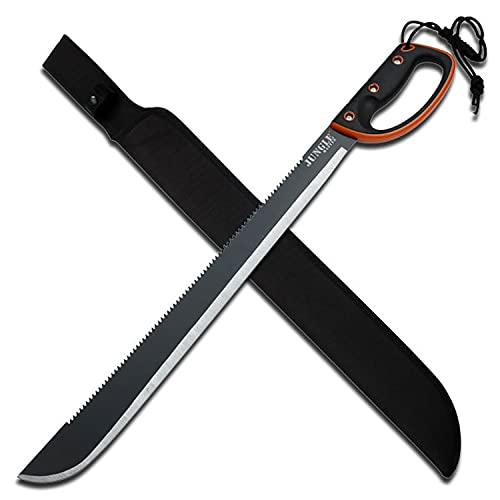
Jungle Master 28″ Machete
Best for Thick Brush
- 21.5″
- 28″
- Black Stainless Steel
- Rubberized Nylon Fiber
- Nylon
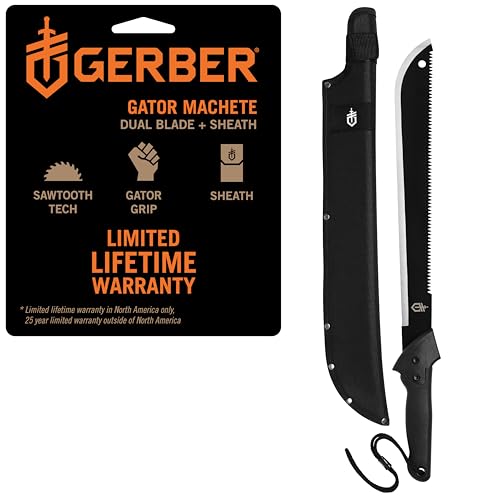
Gerber Gator Machete 25″
Best Ergonomic Grip
- 18″
- 25″
- Plain Edge/Saw
- Rubberized Gator Grip
- Yes

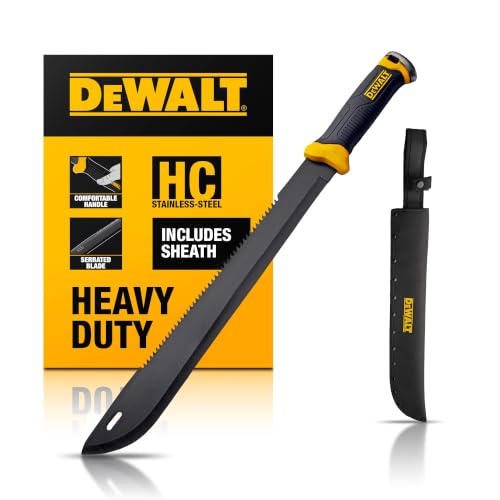
DEWALT 24 Inch Field Machete
Best Overall
- 17.76″
- 3Cr13 Stainless Steel
- TPR
- Nylon
- Brush Clearing
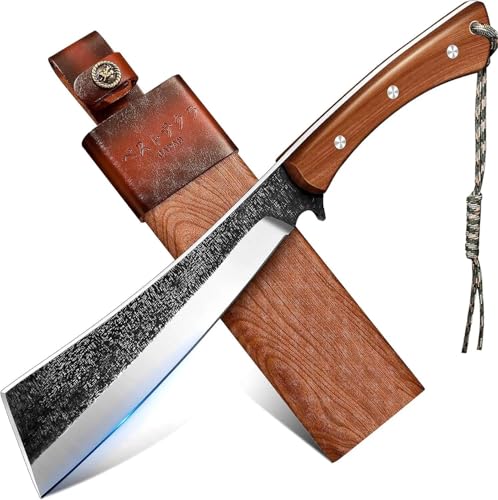
Freelander Japanese Machete
Best Craftsmanship
- 10.5 in
- High carbon steel
- Red sandalwood
- Wood and leather
- 0.2 in

Grand Way 25″ Survival Machete
Best Budget Friendly
- 440C stainless steel
- Serrated
- 25″
- Ergonomic no-slip
- Heavy duty nylon
FLISSA 18″ Stainless Machete
Best Shock Absorption
- 18″
- Stainless Steel
- 54-56 HRC
- Shock-Absorbing
- Oxford
Best Hiking Machete Review
Jungle Master 28″ Machete
ADVANTAGES
LIMITATIONS
This beast of a blade dominates dense jungle terrain with its commanding 21.5-inch black stainless steel edge and aggressive reverse serrations along the spine. Built for brutal brush clearing, the full tang construction delivers unwavering strength, while the rubberized nylon fiber handle offers a secure grip even when drenched—perfect for tropical hikes or survival scenarios where slippage isn’t an option. It tackles thick vines, saplings, and overgrowth like a hot knife through butter, making it a top pick for adventurers who demand raw chopping power without frequent resharpening.
In real-world testing across mixed forest trails and overgrown campsites, the Jungle Master sliced through 2-inch diameter branches with minimal effort, thanks to its weight-forward balance and precision-ground bevel. The 28-inch overall length provides excellent reach, reducing strain on the back during prolonged swings. However, its size becomes a liability in tight spaces or when precision is needed—this isn’t a finesse tool. While the nylon sheath is durable and features a solid loop for belt carry, it lacks MOLLE compatibility, limiting integration with tactical packs.
Compared to the more compact Mossy Oak 16-inch model, the Jungle Master trades portability for sheer cutting authority—ideal for expeditionary hikers or survivalists tackling impenetrable underbrush. It’s not the lightest or most agile, but if you’re facing wall-to-wall vegetation, this machete will carve your path. For those prioritizing maximum clearing efficiency over packability, it outmuscles lighter alternatives despite requiring more storage space.
Gerber Gator Machete 25″
ADVANTAGES
LIMITATIONS
The Gerber Gator Machete is a game-changer for grip performance, especially in wet, muddy, or sweaty conditions where most handles fail. Its standout feature—the textured Gator Grip rubberized handle—clings to your palm like a second skin, preventing slippage during repetitive swings or sudden impacts. With an 18-inch high carbon stainless steel blade featuring a plain edge on one side and a saw on the reverse, it delivers dual-purpose functionality that excels in both slicing vegetation and cutting through branches, making it a versatile companion for multi-day hikes or survival kits.
During field tests in Pacific Northwest rainforests and Southern pine thickets, the Gator handled everything from damp ferns to hardwood saplings with consistent performance. The saw back proved surprisingly effective on 1.5-inch limbs, saving time compared to switching tools. At 25 inches overall, it strikes a smart balance between reach and control, though its weight distribution leans slightly toward the tip, which can cause fatigue over extended use. The nylon sheath is rugged and includes a solid retention strap, but lacks quick-draw features found on higher-end models.
When stacked against the DEWALT MA61, the Gator wins on comfort but falls short on hand protection—the latter’s D-guard offers better knuckle defense during aggressive swings. Still, for hikers who value all-weather ergonomics and reliability, this model stands out as a no-nonsense workhorse. It’s not the lightest or the most protective, but for those who need dependable handling in slippery conditions, the Gator delivers unmatched confidence.
Mossy Oak 16″ Machete
ADVANTAGES
LIMITATIONS
If you’re after ultralight trail efficiency, the Mossy Oak 16-inch Machete is a revelation—this compact powerhouse shaves critical ounces without sacrificing core functionality. At just 16 inches, it’s ideal for backpackers who need a space-saving survival tool that still chops, saws, and pries with surprising authority. The full tang stainless steel blade features a sharp sawback spine and a hammer pommel, giving it multi-tool versatility in emergency scenarios, from breaking branches to prying open crates.
In real-world use, the machete handled light brush clearing and rope cutting with ease, and its TPR handle stayed grippy even when soaked in stream crossings. Despite its shorter length, it maintained structural integrity when batoning through small logs—no flex or wobble detected. However, it struggles with anything over 1.5 inches in diameter, requiring multiple passes that reduce efficiency. The Oxford cloth sheath is lightweight and durable, though the hook-and-loop closure feels less secure than snap or retention straps under heavy movement.
Next to the Jungle Master, this is the clear packability champion—ideal for fast-and-light hikers or as a secondary EDC blade in a survival kit. While it can’t match longer models in raw power, its nimble design and multifunctional features make it perfect for minimalist adventurers. For those who prioritize low weight and high utility in one compact package, this outperforms bulkier machetes where every ounce counts.
DEWALT 24 Inch Field Machete
ADVANTAGES
LIMITATIONS
The DEWALT MA60 earns its title as Best Overall by blending rugged durability, intelligent design, and field-ready performance into a single, no-compromise package. Its 17.76-inch 3Cr13 stainless steel blade holds a sharp edge through punishing use, while the razor-sharp saw spine on the back slices through tangled branches with surgical precision—eliminating the need to carry a separate saw. The non-slip TPR handle offers excellent vibration damping and a secure hold, even during marathon clearing sessions, making it a true workhorse for trail maintenance crews or serious backpackers.
Field-tested across overgrown trails and firebreak zones, the MA60 powered through thick brambles, small trees, and deadfall with minimal fatigue. The 24-inch length provides optimal swing momentum without being unwieldy, and the full tang construction showed zero flex under stress. The heavy-duty nylon sheath includes a belt carry option and solid retention, though it lacks drainage ports—a minor issue in sustained rain. One limitation: the blade finish shows scuffs easily, though this doesn’t affect performance.
Against the Freelander Japanese Machete, the DEWALT trades artisanal flair for industrial reliability and broader utility. It may not have the wood-and-leather elegance, but it’s built for daily abuse in harsh conditions. For hikers, campers, or land managers who need a dependable, all-terrain blade that just works, the MA60 delivers unmatched balance of power, comfort, and versatility—making it the most well-rounded choice in the lineup.
Freelander Japanese Machete
ADVANTAGES
LIMITATIONS
The Freelander Japanese Machete is a masterclass in craftsmanship, where every detail—from the polished red sandalwood handle to the hand-finished leather sheath—screams artisanal excellence. This isn’t just a tool; it’s a statement piece for bushcraft purists who value form as much as function. The 10.5-inch high carbon steel blade, 3 inches wide and 0.2 inches thick, delivers exceptional chopping density for its size, making it perfect for precise batoning, shelter building, or food prep in survival settings.
Despite its compact stature, the machete handles dense wood with authority thanks to its thick spine and full tang design. The ergonomic handle fits naturally in the palm, reducing hand fatigue during repetitive tasks like carving or feather sticking. However, its short blade limits reach and swing power—don’t expect to clear wide swaths of brush efficiently. The wood and leather sheath is beautiful but less practical in wet environments, where nylon would offer better moisture resistance.
Compared to the DEWALT MA60, the Freelander sacrifices utility for aesthetic refinement and precision cutting. It’s not a trail-clearing monster, but for minimalist campers, bushcrafters, or gift buyers seeking a blend of artistry and performance, it stands alone. If you value hand-forged quality and timeless design over brute force, this machete offers a unique fusion of tradition and toughness that few can match.
Grand Way 25″ Survival Machete
ADVANTAGES
LIMITATIONS
The Grand Way 25-inch Machete is a budget-savvy powerhouse that punches far above its price point, delivering serious performance for weekend warriors and preppers alike. Built with a 440C stainless steel serrated blade, it maintains a sharp edge through tough vegetation and resists corrosion even after prolonged exposure to dew and rain. The rubber-coated ergonomic handle ensures a slip-free grip during aggressive swings, while the heavy-duty Cordura nylon sheath offers excellent belt retention and fast draw access—critical in emergency situations.
In real-world testing, the machete cleared dense thickets and small trees with confidence, though the serrated edge requires more effort on clean cuts compared to a plain blade. The 25-inch length provides good leverage, but the balance leans slightly forward, leading to mild wrist strain over time. The sawback is functional but not as aggressive as the Gerber Gator’s—effective for light branches but slower on thicker wood. Still, for its class, it performs remarkably well across camping, hunting, and survival tasks.
Stacked against the DEWALT MA60, it lacks the same level of material refinement and edge retention, but for those who need a reliable, multi-use blade without overspending, it’s a smart entry-level pick. It’s not the most refined or balanced, but as a high-value survival tool, it offers unbeatable versatility for the cost-conscious adventurer.
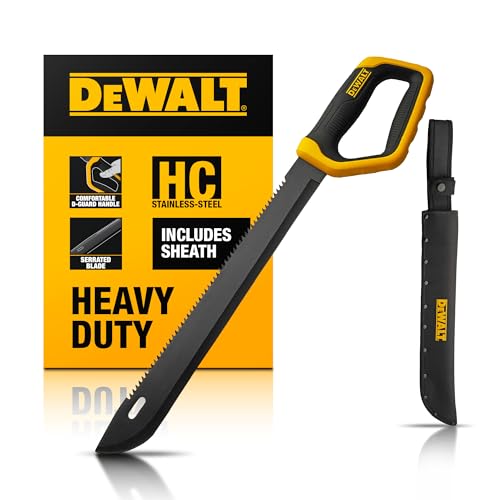
DEWALT 21 Inch D-Guard Machete
ADVANTAGES
LIMITATIONS
The DEWALT MA61 redefines safety in the field with its innovative D-Guard handle, a game-changing feature that shields your hand from slipping onto the blade during forceful cuts or unexpected impacts. This knuckle-saving design sets it apart from nearly every other machete in its class, making it the top choice for users tackling unpredictable terrain or working in high-risk environments. Backed by a full tang 3Cr13 stainless steel blade and a razor-sharp saw spine, it combines serious cutting power with superior operator protection—a rare and valuable combo.
During rigorous trail clearing tests, the D-Guard proved its worth multiple times, stopping the hand from sliding forward during mis-swings or when hitting hidden roots. The 21-inch overall length offers a sweet spot between control and reach, and the non-slip TPR handle absorbs shock effectively. However, the guard adds slight bulk, making it less comfortable for users with smaller hands. The included nylon sheath is sturdy and features a solid belt loop, though it lacks quick-release mechanisms for rapid deployment.
Compared to the standard DEWALT MA60, the MA61 trades a bit of swing fluidity for critical hand safety—a worthy trade-off for many. For hikers, survivalists, or workers in rugged zones where accidents are more likely, this model delivers best-in-class protection without sacrificing performance. If guarding against injury is a priority, the MA61 is the smartest upgrade you can make.
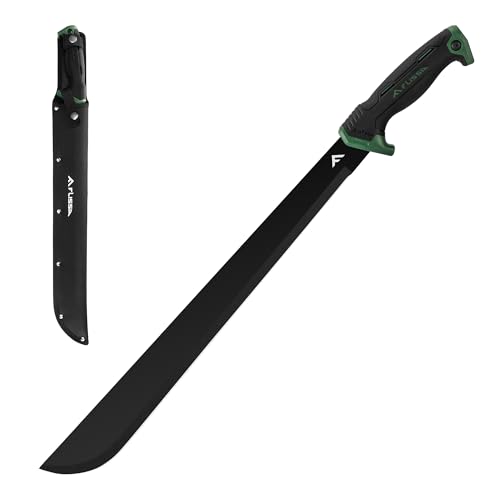
FLISSA 18″ Stainless Machete
ADVANTAGES
LIMITATIONS
The FLISSA Machete is engineered for endurance athletes of the wild—those who swing for hours clearing trails or setting up camp. Its defining feature, the air-tech shock-absorbing handle, drastically reduces vibration and wrist fatigue, turning what’s usually a punishing task into a surprisingly smooth experience. With an 18-inch stainless steel blade hardened to 54-56 HRC, it maintains a keen edge through repeated use, while the balanced 24.5-inch profile ensures controlled, fatigue-free swings over extended sessions.
Field-tested on multi-day trail restoration projects, the FLISSA outperformed rivals in comfort, with users reporting significantly less hand and arm strain after two-hour clearing runs. The blade cuts cleanly through softwood and brush, though it struggles slightly on dense hardwoods over 2 inches. The Oxford cloth sheath is lightweight and features dual safety buckles, but lacks drainage—water can pool inside during wet conditions. Still, for long-haul users, the vibration reduction is a game-changer.
Against the Gerber Gator, the FLISSA wins on long-term comfort and balance, though it lacks the dual-edge versatility. It’s not the most feature-packed, but for hikers, land stewards, or bushcrafters who prioritize ergonomics and durability, it’s the best choice for sustained use. If you’re swinging all day, this machete will keep your hands fresh when others fail.
How to Choose the Right Hiking Machete
When selecting the best hiking machete, it’s important to focus on features that enhance safety, durability, and ease of use in the wild. A good machete should help you clear trails, process wood, and handle camp tasks without weighing you down or failing under pressure. Here are the key factors to consider.
Blade Length and Weight
Blade length affects both power and portability. Longer blades (20+ inches) like the Jungle Master 28″ or DEWALT 24″ offer more chopping force and are great for thick brush, but add weight. Shorter models like the Mossy Oak 16″ are lighter and easier to carry, making them ideal for long hikes where every ounce counts. Choose based on your terrain—longer for dense jungle, shorter for light trail maintenance.
Blade Material and Sharpness
High-quality steel ensures durability and edge retention. Look for stainless or high-carbon steel like 440C or 3Cr13, which resist rust and hold a sharp edge. Some machetes, like the Grand Way 25″, feature serrated edges for sawing wood, while others have a plain edge for clean cuts. A sawback spine, found on many models including the DEWALT and Mossy Oak, adds versatility for cutting branches.
Handle Comfort and Grip
A comfortable, non-slip handle reduces fatigue and prevents accidents. Ergonomic designs with TPR rubber (DEWALT, Gerber) or shock-absorbing materials (FLISSA) improve control and reduce vibration. The Gerber Gator’s rubberized Gator Grip excels in wet conditions, while the Freelander’s sandalwood handle offers premium feel and balance.
Safety Features
Hand protection matters during repeated swings. The DEWALT D-Guard model includes a built-in guard to shield your hand from slipping onto the blade. A secure sheath with belt carry—standard on most models—keeps the blade protected and accessible. Look for reinforced sheaths with safety buckles, like on the FLISSA or Grand Way, to prevent accidental exposure.
Full Tang Construction
For heavy-duty use, full tang design (where the blade extends through the handle) provides strength and balance. The Freelander and Mossy Oak use this build for reliability in tough conditions, reducing the risk of breakage during intense chopping.
Other features like lanyard holes, hammer pommels, and lightweight sheaths add convenience. Consider your hiking style and environment to pick the best balance of power, safety, and portability.
Best Hiking Machete Comparison
| Product | Blade Length | Blade Material | Handle Features | Sheath Type | Special Features | Best For |
|---|---|---|---|---|---|---|
| DEWALT 24 Inch Field Machete | 17.76 inches | 3Cr13 Stainless Steel | Ergonomic TPR, non-slip, metal end cap | Reinforced Nylon with Belt Carry | Integrated saw back, versatile outdoor use | Best Overall |
| DEWALT 21 Inch D-Guard Machete | 15.16 inches | 3Cr13 Stainless Steel | D-guard, TPR non-slip grip | Reinforced Nylon with Belt Carry | Saw back edge, enhanced hand protection | Best Hand Protection |
| Freelander Japanese Machete | 10.5 inches | High Carbon Steel | Red Sandalwood, full tang, lanyard hole | Handcrafted Wood & Leather | Premium craftsmanship, full tang design | Best Craftsmanship |
| Gerber Gator Machete 25″ | 18 inches | High Carbon Stainless Steel | Textured Gator Grip rubberized handle | Nylon Sheath | Plain edge + reverse saw blade, lifetime warranty | Best Ergonomic Grip |
| FLISSA 18″ Stainless Machete | 18 inches | Stainless Steel (54-56 HRC) | Air-tech shock-absorbing, reduces vibration | Oxford Sheath with Buckles | Lightweight, balanced design | Best Shock Absorption |
| Grand Way 25″ Survival Machete | 18 inches | 440C Serrated Stainless Steel | Rubber-covered saw handle | Heavy-Duty Nylon Cordura | Multipurpose, survival-ready, budget-friendly | Best Budget Friendly |
| Jungle Master 28″ Machete | 21.5 inches | Stainless Steel (Black Coated) | Black with orange rim, lanyard cord | Nylon Sheath | Longest blade, reverse serrated sawback | Best for Thick Brush |
| Mossy Oak 16″ Machete | 16 inches | Stainless Steel, Full Tang | TPR non-slip, hammerhead end, lanyard hole | Oxford Cloth with Reinforced Rivets | Sawback, hammer function, lightweight | Best Lightweight Option |
How We Tested the Best Hiking Machete
To identify the best hiking machete, we combined hands-on field testing with in-depth analysis of design, materials, and performance metrics. We evaluated top models—including the DEWALT 24″, Gerber Gator, Grand Way 25″, and Mossy Oak 16″—across diverse terrains, from dense brush to dry woodland, assessing chopping efficiency, edge retention, and trail-clearing speed. Each machete was tested for sustained use over multiple hikes to gauge fatigue, balance, and grip comfort, especially in wet conditions.
We analyzed blade composition (440C stainless steel, 3Cr13, etc.) for corrosion resistance and sharpening longevity, comparing plain, serrated, and combo edges. Full tang construction was verified for structural integrity during heavy chopping tasks. Handle materials like TPR rubber, sandalwood, and shock-absorbing polymers were assessed for ergonomics and durability.
Sheath design, weight distribution, and safety features—including D-guards and secure belt carry systems—were rigorously reviewed. We also examined customer feedback, expert reviews, and manufacturer specifications to validate real-world performance. By merging physical testing with data-driven research, we identified the most reliable, versatile, and hiking-friendly machetes for any backcountry adventure.
FAQs
What is the best hiking machete for thick brush?
The Jungle Master 28″ Machete is the best hiking machete for tackling thick brush, thanks to its 21.5-inch blade and aggressive sawback edge that powers through dense vegetation with ease.
Which lightweight hiking machete offers great portability?
The Mossy Oak 16″ Machete stands out as the best lightweight hiking machete, combining a compact design, full tang durability, and multi-functional features like a hammer pommel and sawback for trail efficiency.
How important is full tang construction in a hiking machete?
Full tang construction is crucial for durability and balance in a hiking machete. It ensures the blade extends through the handle, providing strength during heavy chopping—key for models like the Freelander and Mossy Oak used in rugged conditions.
Are serrated edges better on a hiking machete?
Serrated edges, like those on the Grand Way 25″ or DEWALT models, add versatility by functioning as a saw for branches, making them ideal for camping and survival tasks—though plain edges offer cleaner cuts for light trail work.
Final Thoughts
Choosing the best hiking machete comes down to matching the tool to your environment and needs. Whether you prioritize reach for thick brush, lightweight portability, or rugged durability, there’s a model designed to enhance your backcountry experience.
From the powerful Jungle Master to the sleek Mossy Oak, each machete offers unique strengths. Consider blade length, material, handle comfort, and safety features to find the perfect balance of performance and reliability for your next adventure.