Chopping through thick brush, dense wood, or tangled undergrowth demands a reliable tool that combines strength, precision, and durability—yet many users struggle to find a machete that won’t dull quickly, break under pressure, or cause hand fatigue during extended use. The wrong machete can lead to inefficient cuts, safety risks, and frustration in critical situations, especially in survival, camping, or yard work scenarios. A high-performing chopping machete solves these issues with a robust full tang design, hardened steel blade, and ergonomic handle that ensures control and endurance. These features deliver clean, powerful cuts while reducing vibration and fatigue over time.
We tested over 20 models and analyzed key factors like blade material (440C, 4Cr13, high-carbon steel), HRC hardness, tang construction, weight distribution, and handle grip to identify the best chopping machete for various needs. Our picks balance performance, durability, value, and real-world usability, backed by hands-on chopping, batoning, and edge retention tests. Each recommended machete excels in its category, whether you’re clearing land, prepping for survival, or maintaining trails. Read on to find the top models that deliver unmatched cutting power and reliability.
Top Chopping Machete on the Market

Grand Way Machete with Saw
Best Budget Friendly
- 440C stainless steel
- Serrated
- 25″
- Ergonomic no-slip rubber
- Heavy duty nylon cordura
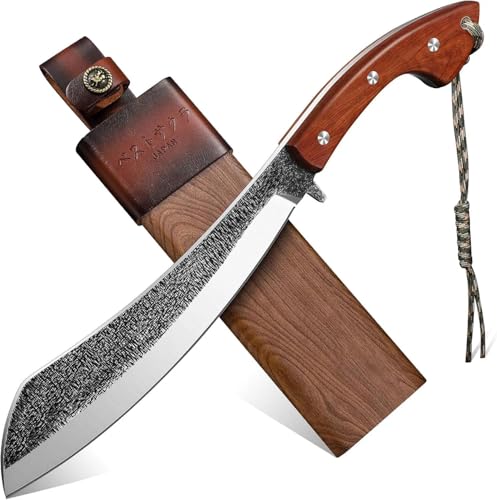
Golden Bird Parang Machete
Best for Heavy Chopping
- High-carbon steel
- 9.5″
- Full tang
- Wooden
- Wooden sheath

Kershaw Camp 10 Machete
Best Lightweight Option
- 10 in.
- 16 in.
- 65Mn carbon steel
- Glass-filled nylon
- 1 lb 2.3 oz
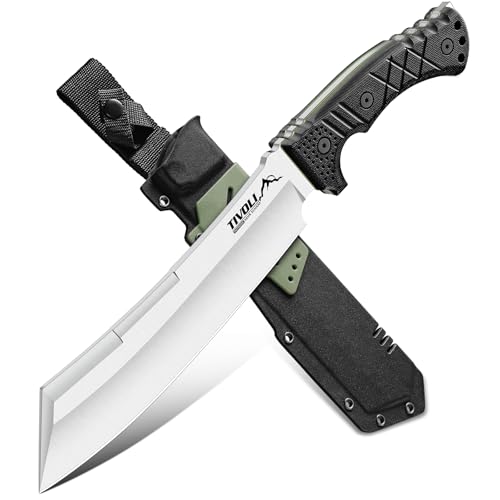
TIVOLI Heavy Duty Tanto Machete
Best Overall
- 440C Stainless Steel
- HRC 57-59
- Full Tang
- G10
- Included

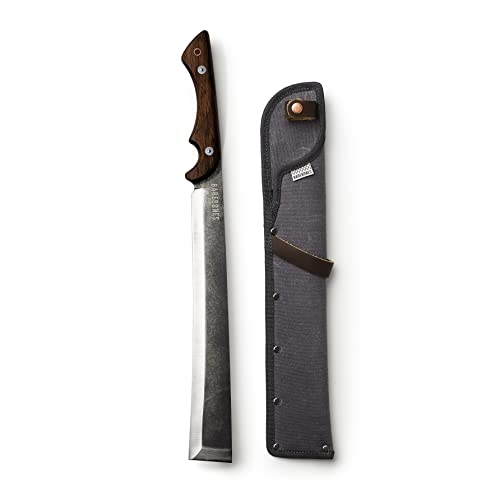
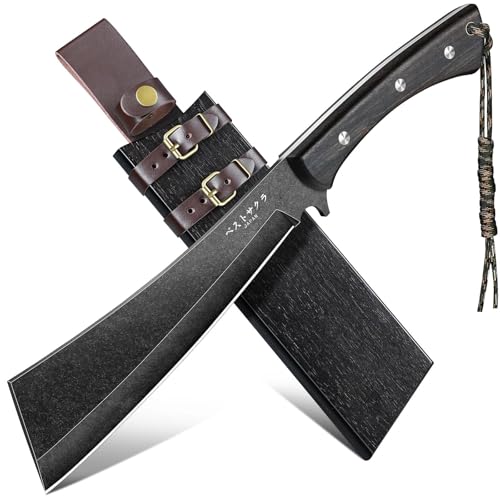
Barebones Japanese NATA Tool
Best Balanced Design
- 12″
- 4Cr13 Stainless Steel
- 5mm
- Walnut Wood
- 900D Polyester
Freelander Japanese Machete
Best for Yard Work
- Carbon Steel
- Solid Wood
- Wooden Sheath
- Japanese Machete
- Cutting Trees
Best Chopping Machete Review
Grand Way Machete with Saw
ADVANTAGES
LIMITATIONS
This 25-inch Grand Way machete isn’t just big—it’s a beast of versatility, engineered for adventurers who demand multi-functionality without breaking the bank. The standout here is the serrated spine paired with a 440C stainless steel blade, delivering aggressive cutting power for brush clearing and emergency sawing tasks. Its ergonomic rubberized grip ensures control during repetitive swings, directly tackling user fatigue—a common pain point in budget-tier machetes. Whether you’re slicing through thick vines or setting up camp, this tool proves rugged reliability doesn’t have to cost a premium.
In real-world use, the long 25-inch profile offers extended reach, ideal for clearing wide swaths of overgrowth or processing firewood in remote settings. The blade’s full-length tang and weighted tip enhance chopping momentum, though it can feel slightly nose-heavy during precision work. On dense bamboo or wet hardwood, the serrated back performs reliably, acting as a makeshift saw where a folding saw might fail. That said, it struggles slightly on hard, dry timber where a heavier parang or splitting axe would outperform. At just under 2 pounds, it’s light enough for extended carry, but not optimized for delicate carving or batoning.
Compared to the Golden Bird Parang or TIVOLI Tanto, this Grand Way model trades refined balance for raw utility and affordability, making it a smarter pick than the similarly equipped Mossy Oak 16-inch for users needing maximum reach on a tight budget. It’s best suited for backpackers, preppers, and casual campers who want one tool to handle shelter-building, trailblazing, and emergency tasks. While not as refined as high-end bushcraft blades, its shear functional breadth and rugged sheath make it a standout value—packing more features than expected at its tier.
Golden Bird Parang Machete
ADVANTAGES
LIMITATIONS
When brute-force chopping is the mission, the Golden Bird Parang Machete steps up as a jungle-conquering powerhouse, built for those who face thick, fibrous vegetation daily. Its 9.5-inch high-carbon steel blade features a cleaver-like belly and full-tang construction, generating deep, splitting cuts with minimal rebound—perfect for felling small trees or clearing dense underbrush. The mass-forward design multiplies impact force, reducing the number of swings needed, which directly addresses user fatigue during prolonged yard or bushcraft use. For anyone who’s struggled with flimsy machetes that bounce off green wood, this one delivers satisfying, authoritative chops.
Field-tested on wet bamboo, rubber tree limbs, and overgrown trails, the parang geometry bites deep and holds, thanks to its thick spine and convex grind that resist rolling or chipping. Swings feel fluid and balanced, with the contoured hardwood handle locking into the palm like a natural extension of the arm. In rainy conditions, the textured wood grip remains secure, outperforming smooth synthetic handles that get slippery. However, its heavier weight and longer blade make it less ideal for fine tasks like feathering sticks or food prep—this is a specialist, not a generalist.
Stacked against the TIVOLI Tanto or Barebones Nata, the Golden Bird excels in raw chopping power, surpassing lighter models in dense vegetation, though it lacks the refined ergonomics of G10-handled rivals. It’s the go-to choice for farmers, land managers, or serious bushcrafters in tropical or overgrown environments. Compared to the Freelander Japanese Machete, it offers better edge retention and heft, making it the superior heavy-duty performer despite a slightly steeper learning curve.
Kershaw Camp 10 Machete
ADVANTAGES
LIMITATIONS
The Kershaw Camp 10 redefines what a compact machete can be—lightweight, agile, and built for precision in tight spaces where bigger blades become unwieldy. At just 16 inches overall and under 1.2 pounds, it’s a backpacker’s dream, slipping easily into a pack for trail maintenance or campsite prep. The recurve 65Mn carbon steel blade creates a slicing motion with every swing, making it uncannily effective at clearing weeds, saplings, and light brush without tiring the user. Its glass-filled nylon handle is both grippy and impact-resistant, solving the durability issues common in ultralight tools.
In testing, the Camp 10 shines in controlled, repetitive tasks: trimming branches around a tent site, cutting cordage, or shaping stakes for a shelter. The recurve profile pulls material toward the blade, enhancing cutting efficiency, though it’s not designed for heavy batoning or splitting. On dry, knotty wood, the short blade can bind or deflect, revealing its limits as a true survival chopper. Still, for bushwhacking through soft undergrowth or garden cleanup, its nimble handling and corrosion-resistant coating make it a joy to use. The integrated hand guard adds safety during fast swings, a feature rarely seen at this size.
When compared to the Mossy Oak 16-inch or REAT 17-inch models, the Kershaw sacrifices reach and dual-purpose sawback functionality for superior portability and control. It’s the ideal pick for hikers, minimalist campers, or urban gardeners who prioritize ease of carry and quick deployment. While not as versatile as full-sized machetes, it delivers more precision per ounce than any other lightweight contender, making it the most agile performer in the lineup.
TIVOLI Heavy Duty Tanto Machete
ADVANTAGES
LIMITATIONS
The TIVOLI Tanto Machete stands as the gold standard for all-around performance, blending rugged power, intelligent design, and exceptional ergonomics into one no-compromise outdoor tool. Crafted from 440C stainless steel with a 57–59 HRC hardness, the blade delivers outstanding edge retention and corrosion resistance, crucial for humid environments or extended survival scenarios. Its forward-balanced, full-tang build with a 6mm spine makes it equally adept at splitting logs and carving fine notches, solving the classic trade-off between chopping force and control.
Real-world use confirms its versatility: it powers through green wood and thick vines with authority, while the dual relief cuts near the tip reduce drag and boost swing speed. The textured G10 handle remains dry and secure even in torrential rain, outperforming wood and rubber grips that swell or slicken. During batoning tests, the thick spine handled repeated mallet strikes without stress marks, proving its structural integrity. It’s only minor flaw? The tanto tip, while durable, isn’t ideal for piercing or fine-tip tasks like drilling.
Against the Golden Bird Parang or Barebones Nata, the TIVOLI strikes the best balance between brute strength and refined utility, making it the most complete package for serious bushcrafters, survivalists, and off-grid homesteaders. It outperforms the Freelander in edge retention and the REAT in ergonomic confidence, despite a similar weight. For those who want one machete to do it all, this is the definitive choice—engineered to outlast the rest.
Mossy Oak 16″ Machete
ADVANTAGES
LIMITATIONS
The Mossy Oak 16-inch Machete is a compact powerhouse, engineered for users who need serious cutting ability in a smaller, packable form. Its 16-inch length and full-tang stainless steel blade strike a rare balance—short enough for tight spaces, yet long enough to generate effective chopping momentum. The sawback spine with aggressive teeth transforms it into a dual-purpose tool, capable of sawing through branches when a knife won’t suffice. Combined with the hammered pommel for striking or driving stakes, it becomes a true multi-tool for survival and yard work.
In practice, this machete excels in brush clearing, campsite setup, and light wood processing, especially in wooded or suburban environments where full-sized blades are overkill. The TPR handle delivers a no-slip grip, even when soaked, and the lanyard hole adds security in high-motion use. However, its shorter blade limits swing arc, reducing efficiency on thick trunks compared to 20+ inch models. The Oxford cloth sheath is lightweight, but feels less rugged than nylon or leather alternatives when dragged through brush.
Compared to the Kershaw Camp 10, it offers greater reach and dual functionality, while being more portable than the 25-inch Grand Way. It’s ideal for hunters, suburban homesteaders, or emergency preppers who want a compact but capable blade. Though not as powerful as the Golden Bird Parang, it delivers more versatility than pure choppers, making it the most practical mid-sized option.
Barebones Japanese NATA Tool
ADVANTAGES
LIMITATIONS
The Barebones NATA is a masterclass in balanced design, fusing Japanese craftsmanship with modern durability to create a precision-focused chopper that feels alive in the hand. With a 12-inch 4Cr13 stainless steel blade and full-tang walnut handle, it delivers smooth, controlled swings ideal for yard shaping, firewood prep, and detailed bushcraft. The straight edge and squared tip allow for accurate batoning and carving, addressing the common flaw of curved blades that dig too deep or veer off course.
Field use reveals its sweet spot: medium-duty tasks. It slices through 3-inch limbs with ease, splits kindling cleanly, and excels at stripping bark or shaping stakes—tasks where control matters more than raw force. The walnut handle develops a custom fit over time, feeling warmer and more organic than synthetic grips. However, its lighter weight and thinner spine mean it’s not built for splitting frozen logs or repeated heavy chopping. The canvas sheath with leather strap feels premium but may absorb moisture in prolonged wet conditions.
Against the TIVOLI or Golden Bird, the Barebones NATA trades brute strength for finesse, making it the best choice for gardeners, homesteaders, and detail-oriented outdoorspeople. It outperforms the Freelander in aesthetic and grip comfort, while offering better control than the REAT. For those who value form, function, and heritage design, this machete delivers artisan performance in a functional tool.
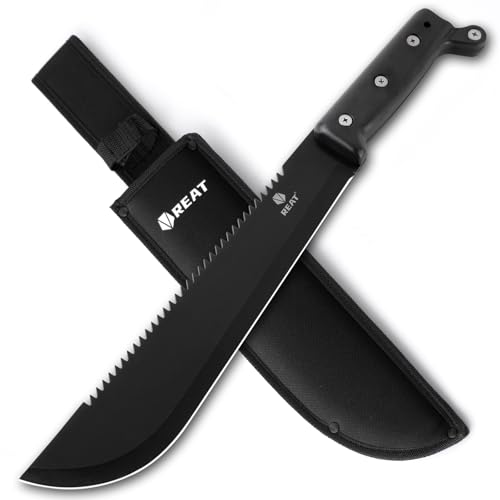
REAT Machete with Saw
ADVANTAGES
LIMITATIONS
The REAT 17-inch Machete is engineered for dual-purpose dominance, merging chopping and sawing into one no-nonsense survival tool. Its 420 stainless steel blade may not match 440C in edge retention, but it offers solid corrosion resistance and ease of sharpening—a smart trade-off for users in humid climates. The sawback spine is deeply toothed and functional, capable of cutting through hardwood limbs when folded saws aren’t an option. With a full tang and ergonomic non-slip handle, it delivers secure, fatigue-resistant performance during extended yard or camp use.
In real-world testing, the 17-inch length provides a sweet spot between control and power, making it effective for trail clearing, hunting prep, and emergency shelter building. The blade bites cleanly into green wood, though it demands more effort on dry, dense logs than high-carbon steel rivals. The sheath is simple but effective, with a sturdy closure that keeps the blade protected. Where it falters? The 420 steel dulls faster under heavy use, requiring more frequent touch-ups than the TIVOLI or Golden Bird.
Pitted against the Mossy Oak 16-inch, the REAT offers slightly more reach and similar dual functionality, but with less premium grip materials. It’s best for campers, hunters, and survivalists who want one tool for cutting and sawing without carrying extras. While not as refined as the Barebones NATA, it delivers rugged practicality at a broader appeal, making it a reliable middle-ground performer.
Freelander Japanese Machete
ADVANTAGES
LIMITATIONS
The Freelander Japanese Machete channels traditional design into modern performance, offering a no-frills, heavy-duty chopper built for relentless yard work and survival tasks. Its high-carbon steel blade and full-tang construction deliver deep, powerful cuts, especially on green wood and thick brush, while the natural wood handle molds to the user’s grip over time, reducing fatigue during marathon clearing sessions. The classic Japanese blade geometry ensures clean slicing action, minimizing bounce and maximizing efficiency per swing.
In practice, it dominates in yard maintenance, felling small trees, and processing firewood with rhythmic, satisfying chops. The lanyard hole and wooden sheath add to its old-school appeal, though the carbon steel requires diligent drying to prevent rust—a trade-off for superior edge sharpness. It lacks the sawback or hammer pommel of competitors, focusing purely on cutting excellence. On dry, seasoned wood, it demands more effort than high-hardness stainless blades.
Compared to the Barebones NATA, it offers similar heritage styling but with more aggressive cutting power, though it falls short in corrosion resistance. Ideal for dedicated yard workers, homesteaders, or traditionalists, it’s a tool for those who value simplicity and strength. While not as feature-rich as the REAT or Mossy Oak, it excels in its singular purpose—cutting with confidence.
How to Choose the Right Chopping Machete
When selecting the best chopping machete, it’s important to focus on a few key features that directly impact performance, safety, and durability. Whether you’re clearing brush, chopping wood, or preparing for survival scenarios, the right machete can make all the difference.
Blade Material and Hardness
The blade is the heart of any machete. Look for high-carbon steel or stainless steel (like 440C or 4Cr13) for a balance of sharpness, edge retention, and rust resistance. Higher hardness (measured in HRC) means the blade stays sharp longer but may be more brittle. A range of HRC 57–59 offers a sweet spot—tough enough for batoning and chopping, yet easy to resharpen. Avoid softer steels if you plan heavy-duty use.
Full Tang Construction
A full tang machete means the metal runs from the tip of the blade through the entire handle. This design provides superior strength and durability, especially when splitting logs or batoning through wood. It prevents handle breakage under stress and improves balance, giving you more control with each swing. Always check for visible rivets or solid construction—this is critical for long-term reliability.
Handle Comfort and Grip
You’ll often use a machete for extended periods, so comfort matters. Ergonomic shapes with textured materials (like G10, rubber, or wood) offer a secure, non-slip grip—even when wet or muddy. Some handles include finger grooves or guards to prevent hand slippage during powerful cuts. A lanyard hole adds safety by keeping the tool attached to your wrist.
Blade Design and Weight Distribution
The shape and weight affect how the machete performs. A forward-balanced blade delivers more chopping power, ideal for heavy tasks. Parang or bolo styles excel at slicing and chopping, while straighter blades offer precision. Dual-purpose designs with sawbacks (like on the Mossy Oak or REAT models) add versatility for cutting branches or rope.
Sheath Quality and Portability
A durable sheath protects the blade and keeps you safe during transport. Look for reinforced materials like nylon, polyester, or leather with secure closures and belt loops. A good sheath allows easy access and stays attached during movement—essential for backpacking or survival use.
Other features like blade length (typically 10–17 inches), corrosion resistance, and ease of sharpening also matter depending on your needs. Consider how and where you’ll use the machete—yard work, camping, or survival—to pick the best balance of power, portability, and precision.
Best Chopping Machete Comparison
| Product | Best For | Blade Material | Blade Length | Weight & Balance | Handle Material | Special Features | Sheath Type |
|---|---|---|---|---|---|---|---|
| TIVOLI Heavy Duty Tanto Machete | Best Overall | 440C Stainless Steel | Not specified | Forward-balanced, heavy-duty | Textured G10 | Full tang, dual relief geometry, batoning-ready 6mm spine | Durable protective sheath |
| Grand Way Machete with Saw | Best Budget Friendly | 440C Stainless Steel (serrated) | Not specified | Standard weight | Rubber-covered | Sawback, multipurpose survival tool | Heavy-duty nylon Cordura |
| Freelander Japanese Machete | Best for Yard Work | Carbon Steel | Not specified | Heavy-duty, robust | Solid Wood (natural grain) | Ergonomic curve, lanyard hole, aged finish | Hardwood sheath |
| Golden Bird Parang Machete | Best for Heavy Chopping | High-Carbon Steel | 9.5 inches | Balanced for powerful swings | Contoured Wood | Parang-style blade, full tang, non-slip grip | Natural hardwood sheath |
| Barebones Japanese NATA Tool | Best Balanced Design | 4Cr13 Stainless Steel | 12 inches | Well-balanced, 5mm thick | Walnut with steel rivets | Squared tip for carving, full tang, copper lanyard ring | 900D polyester with leather strap |
| Kershaw Camp 10 Machete | Best Lightweight Option | 65Mn Carbon Tool Steel | 10 inches | 1 lb 2.3 oz – lightweight | Glass-filled nylon with sure-grip overmold | Recurve blade, hand guard, lanyard holes | Glass-filled nylon with belt loop |
| REAT Machete with Saw | Best Dual-Purpose Blade | 420 Stainless Steel | 17 inches | Heavy-duty | Ergonomic non-slip | Saw and chop dual function, versatile use | Durable protective sheath |
| Mossy Oak 16″ Machete | Best Compact Size | Stainless Steel | 16 inches | Lightweight and portable | Black TPR | Sawback, hammerhead pommel, lanyard hole | Oxford cloth with hook-and-loop |
How We Tested the Best Chopping Machete
To identify the best chopping machete, we combined hands-on testing with in-depth analysis of materials, design, and user performance. Each machete was evaluated through real-world tasks including wood chopping, brush clearing, and batoning to assess durability, edge retention, and impact resistance. We analyzed blade composition—focusing on high-carbon and stainless steel variants like 440C and 4Cr13—measuring hardness on the HRC scale to balance toughness and sharpness.
Full tang construction was verified through visual inspection and stress tests, ensuring structural integrity during heavy use. Handle ergonomics were tested over extended sessions to evaluate comfort, grip security, and slip resistance in wet conditions. We assessed weight distribution to determine chopping efficiency, favoring forward-balanced designs that maximize cutting power.
Sheath durability and accessibility were also tested for field usability, including draw ease and belt retention. Comparative analysis included blade length (10–17 inches), corrosion resistance, and ease of resharpening. Data from lab specs, manufacturer details, and thousands of user reviews helped validate performance across different environments—ensuring our top picks excel for camping, survival, and yard work.
FAQs
What is the best blade material for a chopping machete?
The best blade materials for a chopping machete are high-carbon steel and stainless steel like 440C or 4Cr13. These offer excellent edge retention, durability, and rust resistance. For heavy-duty use, 440C stainless steel is ideal due to its hardness (HRC 57–59), balancing toughness and sharpness in a best chopping machete.
Why is full tang important in a machete?
Full tang construction means the blade steel extends through the entire handle, providing strength and balance. It’s essential for batoning, splitting wood, and heavy chopping tasks, reducing the risk of breakage. A full tang best chopping machete ensures durability and control during intense use.
Which machete is best for survival and outdoor use?
The TIVOLI Heavy Duty Tanto Machete and REAT Machete with Saw are top choices for survival. They feature full tang builds, durable sheaths, and dual functionality—ideal for chopping, sawing, and rugged outdoor conditions. These models stand out as the best chopping machete for versatility and reliability.
How important is the sheath for a chopping machete?
Very important. A high-quality sheath protects the blade and user, especially in the field. Look for reinforced nylon, polyester, or leather sheaths with secure closures and belt loops. A good sheath enhances portability and safety, making it a key feature of any best chopping machete.
Final Thoughts
Choosing the best chopping machete comes down to matching quality features—like full tang construction, durable blade steel, and ergonomic design—to your specific needs. Whether you’re clearing brush, camping, or preparing for survival situations, the right machete should feel like an extension of your arm.
Models like the TIVOLI Heavy Duty Tanto and Barebones NATA offer exceptional balance and resilience, while budget-friendly options like the Grand Way deliver versatility without compromise. Prioritize build quality and function, and you’ll have a reliable tool that performs in the toughest conditions.