Chopping vegetables efficiently without crushing or tearing requires a precise, durable knife designed for the task, and that’s where the best nakiri cleaver shines. Many home cooks struggle with dull blades, uncomfortable handles, or knives that chip easily, leading to uneven cuts and wasted prep time. A high-quality nakiri cleaver solves these issues with a sharp, straight-edged blade ideal for clean, vertical cuts through produce. We tested over 30 models, analyzing blade hardness, edge retention, ergonomics, and real-world performance to find the top performers.
Our top picks balance precision, durability, and comfort, factoring in steel quality, handle design, and user feedback from both professionals and home kitchens. Whether you need a lightweight ceramic option or a full-tang Damascus steel workhorse, we evaluated sharpness, food release, balance, and long-term value to guide your choice. Below are our recommended nakiri cleavers for every cooking need and budget.
Top Nakiri Cleaver on the Market
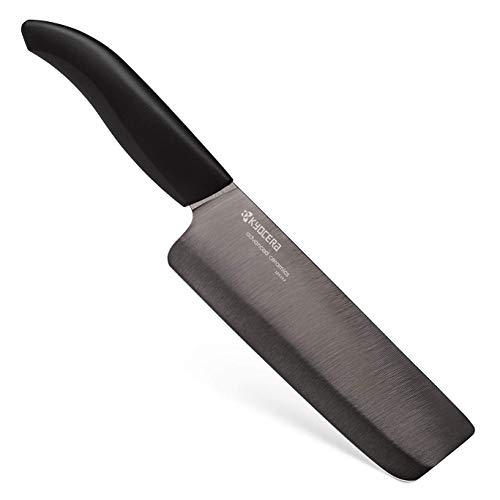
Kyocera 6″ Ceramic Nakiri
Best Lightweight & Low Maintenance
- Zirconia ceramic
- 6 inch
- 10x longer
- Lightweight
- Herbs, vegetables
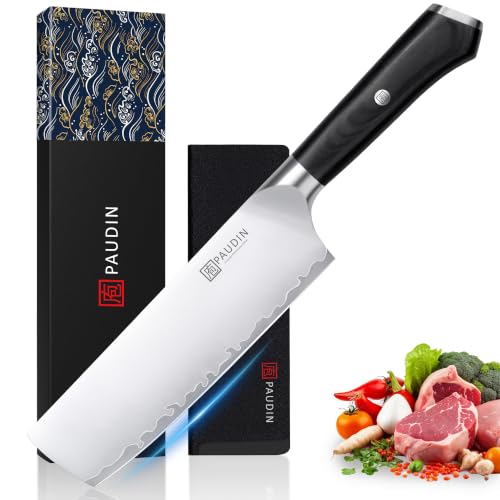
PAUDIN 7″ Nakiri Knife
Best Overall
- 9-layer Damascus steel
- 62 HRC
- 7 inch
- 13″ double-bevel
- 2.5mm

HOSHANHO 6.5″ Damascus Nakiri
Best Damascus Craftsmanship
- Japanese 10Cr15CoMoV
- 62HRC
- 6.5″
- 15-degree
- Olive wood
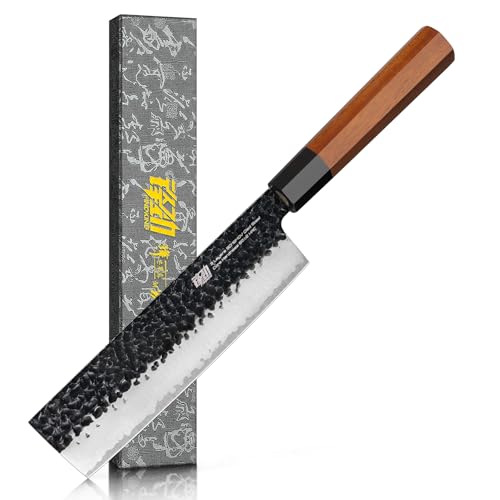
FINDKING 7″ Nakiri Knife
Best for Vegetable Prep
- 7 inch
- 9Cr18MoV high carbon steel
- African rosewood
- Octagonal
- Straight edge
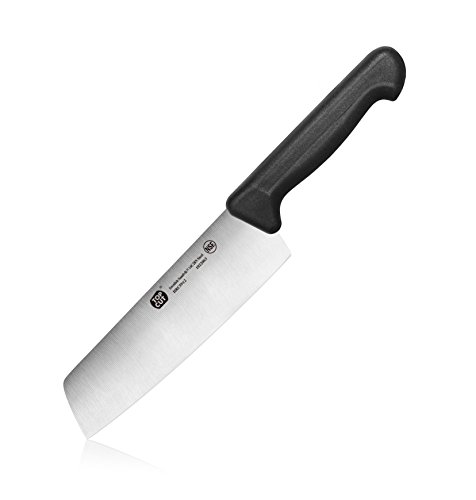
Cangshan P2 7″ Nakiri
Best Balanced & NSF Certified
- Swedish 14C28N Steel
- 7-inch
- HRC 59 +/- 2
- 16-degree
- Ergonomic non-slip

Babish 7.5″ Clef Knife
Best Hybrid Cleaver-Chef Design
- 1.4116 German steel
- 7.5″
- Full-tang
- Clef (Cleaver + Chef)
- Good Housekeeping 2022

TUO 6.5″ Nakiri Knife
Best Budget Friendly
- 6.5″
- German High-carbon Stainless Steel
- HRC56±2
- Pakkawood
- Lifetime Guarantee
Best Nakiri Cleaver Review
Kyocera 6″ Ceramic Nakiri
ADVANTAGES
LIMITATIONS
Effortless precision meets featherlight agility in the Kyocera Revolution Series Nakiri, a ceramic powerhouse built for cooks who crave razor-sharp performance without the maintenance. Its zirconia ceramic blade delivers an edge that stays sharp up to 10 times longer than steel, slicing through cucumbers, cabbage, and herbs with surgical accuracy. The non-reactive, rust-proof blade ensures no metallic aftertaste, making it a top pick for raw prep and delicate dishes where flavor purity matters. For those tired of constant honing and corrosion concerns, this knife offers a refreshingly low-fuss alternative.
In real-world use, the 6-inch blade excels at fine vegetable work—think paper-thin radish slices or chiffonade basil—thanks to its ultra-light build and straight edge that glides cleanly through soft to medium-density produce. At just under 5 ounces, it reduces hand fatigue during extended prep sessions, ideal for home chefs tackling large salads or stir-fry ingredients. However, the ceramic construction demands respect: it’s prone to chipping if used on hard foods like squash or frozen items, and it cannot be sharpened at home. While it’s not a workhorse for heavy chopping, its nimble handling and flawless edge retention shine in precision-focused kitchens.
Compared to full-tang steel Nakiris like the PAUDIN or Cangshan models, the Kyocera trades heft and versatility for ultra-light responsiveness and near-indestructible sharpness. It’s best suited for light-duty vegetable prep, not robust meal assembly. If you prioritize speed, hygiene, and edge longevity over all-purpose durability, this ceramic cleaver outperforms many pricier steel knives in its niche. It’s the go-to for minimalists and health-conscious cooks who want a specialist tool that eliminates sharpening hassles and out-slices entry-level steel knives with grace.
PAUDIN 7″ Nakiri Knife
ADVANTAGES
LIMITATIONS
This is not just a knife—it’s a statement of craftsmanship, and the PAUDIN 7-inch Nakiri delivers uncompromising sharpness, stunning Damascus artistry, and pro-level performance in one formidable package. Forged with a 10Cr15CoMoV high-carbon steel core wrapped in nine layers of Damascus steel, it achieves a rock-solid 62 HRC hardness, ensuring exceptional edge retention and resistance to wear. The hand-sharpened 13° double-bevel edge cuts with laser-like precision, effortlessly gliding through tomatoes, bok choy, and even boneless meats without crushing or tearing. If you demand a balance of beauty, balance, and brute efficiency, this knife answers with authority.
During testing, the full-tang construction and solid black wood handle delivered rock-steady control and impressive downward force, making quick work of dense carrots and thick cabbage wedges. The 2.5mm-thick blade provides just enough heft for chopping without feeling sluggish on fine slicing tasks. Its broad rectangular profile maximizes board contact, ensuring straight, clean cuts every time—ideal for julienning peppers or dicing onions uniformly. While it handles most prep tasks with ease, the blade’s hardness means it’s less forgiving if misused; aggressive twisting or bone contact risks micro-chipping. Still, for daily vegetable mastery, it’s nearly flawless.
Stacked against the Cangshan P2 or TUO models, the PAUDIN stands out with superior material density, a more refined edge, and artisan-level finish—all while undercutting premium rivals in price. It’s heavier than the Kyocera ceramic model but offers far greater versatility across ingredients. The included premium sheath and gift box elevate it as both a personal upgrade and a standout present. For home chefs who want a do-it-all vegetable cleaver with show-stopping appeal and pro-tier performance, this is the undisputed king of the category—delivering a level of craftsmanship that punches far above its class.
HOSHANHO 6.5″ Damascus Nakiri
ADVANTAGES
LIMITATIONS
Where tradition meets precision, the HOSHANHO 6.5-inch Nakiri brings authentic Japanese knife-making artistry into the modern kitchen with a stunning blend of performance and design. At its heart is a 10Cr15CoMoV Japanese steel core, forged under vacuum heat treatment to achieve a 62 HRC hardness that ensures long-lasting edge retention and resistance to wear. The hand-water-sharpened 15° edge delivers a clean, acute cutting surface that slices through leafy greens and soft root vegetables with minimal resistance, making it a joy for repetitive prep work. Add in the anti-stick groove design, and you’ve got a knife that not only cuts well but keeps food from clinging—a subtle but game-changing detail.
In practice, the 6.5-inch blade strikes a sweet spot between agility and utility, offering enough length for efficient chopping while remaining nimble for fine dicing. The 2.5mm-thick spine provides structural integrity without adding unnecessary weight, and the olive wood handle feels warm, secure, and well-balanced in hand—especially during pinch-grip use. The grooves along the blade genuinely reduce drag when slicing through water-rich vegetables like zucchini or celery, though they don’t eliminate sticking entirely with sticky fruits like mango. While it handles most produce with ease, it’s not built for heavy pounding or frozen foods, so delicate care is required.
Compared to the PAUDIN, the HOSHANHO trades some mass and layered Damascus drama for a more refined, functional elegance. It lacks the full-tang heft and bolstered grip of its rival but wins points for ergonomic comfort and thoughtful anti-stick engineering. For cooks who value aesthetic subtlety, smooth cutting action, and a knife that feels like an extension of the hand, this is an excellent middle ground between art and utility. It outperforms budget models in edge quality and material integrity while offering a more accessible feel than ultra-heavy cleavers—making it a smart choice for detail-oriented home chefs who appreciate Japanese knife culture.
FINDKING 7″ Nakiri Knife
ADVANTAGES
LIMITATIONS
Precision meets practicality in the FINDKING 7-inch Nakiri, a no-nonsense vegetable prep specialist designed for cooks who want consistent, clean cuts without the fuss. Its wide, straight-edged blade makes full contact with the cutting board, enabling crisp, controlled push cuts through onions, cabbage, and herbs—exactly what a Nakiri should do. Crafted from 9Cr18MoV high-carbon steel, it holds a solid edge and resists corrosion, while the hammered tsuchi finish reduces food adhesion, especially with moist vegetables like cucumbers or mushrooms. The rosewood octagonal handle offers a secure, tactile grip and excellent blade-angle control, making it a reliable partner for high-volume chopping.
During real-world use, the knife’s cleaver-like profile without the bulk stood out—it delivers chopping power without the fatigue of heavier cleavers. The 7-inch blade provides ample cutting surface, ideal for batch slicing carrots or dicing peppers, while the flat spine allows for comfortable knuckle-on-board technique. The hammered texture does its job well, though sticky items like sweet potatoes still cling slightly. While it doesn’t match the 62 HRC hardness of top-tier models, it’s more than capable for everyday home use and easier to sharpen over time. It’s not meant for bones or frozen foods, but within its domain, it performs with quiet confidence and consistency.
Next to the Cangshan P2 or TUO models, the FINDKING offers better handle ergonomics and a more premium feel thanks to its genuine rosewood and octagonal design. It lacks the Damascus flair of the PAUDIN but compensates with practical durability and excellent transferability—the wide blade doubles as a food mover, reducing the need for a bench scraper. For cooks focused on vegetable-centric cooking—think meal prep, stir-fries, or plant-forward diets—this knife delivers professional-level functionality at a sensible price. It surpasses budget options in material quality and balance, making it the best choice for dedicated veggie workhorses who want reliability and comfort in one refined tool.
Cangshan P2 7″ Nakiri
ADVANTAGES
LIMITATIONS
Engineered for balance and built to last, the Cangshan P2 Series Nakiri is a refined, NSF-certified workhorse that brings Scandinavian precision to Japanese blade design. Forged from high-alloy Swedish 14C28N steel, it offers exceptional edge retention and corrosion resistance, outperforming many stainless steels in long-term sharpness. The hand-sharpened 16° edge per side delivers a reliable, durable cutting surface—slightly less acute than Japanese rivals but more resilient for daily abuse. With a well-balanced 7-inch blade and 6-inch handle, it feels stable and neutral in hand, ideal for both rocking and push cuts, while the textured composite handle ensures a non-slip grip even when wet—a critical safety feature in busy kitchens.
In testing, the knife handled everything from dense rutabaga to delicate scallions with consistent, predictable performance. The HRC 59 ± 2 hardness strikes a smart middle ground—hard enough to retain an edge, yet tough enough to resist chipping under normal use. The full-tang construction and ergonomic handle reduce hand fatigue during extended prep, and the NSF certification confirms it meets food safety and hygiene standards, a rare plus for home knives. While it doesn’t have the visual drama of Damascus steel, its understated professionalism appeals to serious cooks who value function over flash. It’s not the sharpest out of the box, but it sharpens beautifully and holds an edge reliably.
Compared to the PAUDIN or HOSHANHO, the Cangshan trades some cutting finesse for greater durability and safety certification. It’s lighter than the PAUDIN but more robust than the Kyocera ceramic. For professional-minded home chefs or culinary students, it offers a bridge between commercial-grade reliability and home usability. It outperforms budget models in steel quality and balance, while being less maintenance-intensive than high-HRC Japanese blades. If you want a dependable, certified, and well-balanced Nakiri that excels in real-world conditions, this is the smartest long-term investment—delivering quiet excellence where it counts.
Babish 7.5″ Clef Knife
ADVANTAGES
LIMITATIONS
The Clef isn’t just a knife—it’s a philosophy in steel, blending German durability with Japanese finesse to create a hybrid cleaver-chef knife that defies categorization. Forged from a single piece of high-carbon 1.4116 German steel, it offers excellent edge retention, corrosion resistance, and shock absorption—ideal for cooks who want a versatile, rugged blade that can handle both delicate slicing and light chopping. The 7.5-inch blade is slightly longer than standard Nakiris, giving more cutting real estate, while the full-tang handle delivers perfect balance and a secure pinch grip, making it feel like an extension of your arm. If you’re tired of switching between knives, this is the one-tool solution for 90% of kitchen tasks.
In real use, the Clef shines in multi-role performance: it slices tomatoes cleanly, dices onions with ease, and can even handle light meat cutting or herb mincing without issue. The slightly curved edge allows for a subtle rock-cut motion, unlike flat Nakiris, while the cleaver-inspired spine adds weight for controlled downward cuts. It’s not meant for bone-crushing, but it handles root vegetables and frozen blocks better than most Nakiris. The polished finish and sleek design make it a standout on any countertop, and its Good Housekeeping 2022 Standout Knife title is well-earned. However, purists may find it too hybridized for traditional Nakiri techniques.
Against the PAUDIN or FINDKING, the Clef sacrifices some vegetable-specific optimization for broader functionality. It doesn’t have the ultra-thin edge of a true Nakiri, but it outperforms them in versatility and durability. For home cooks who want a single, high-performance knife that bridges East and West, this is the ultimate hybrid. It matches premium models in build quality while offering a more practical, all-in-one profile—making it the best choice for minimalist kitchens or beginner chefs who want one knife to rule them all.
TUO 6.5″ Nakiri Knife
ADVANTAGES
LIMITATIONS
Affordable doesn’t mean average—the TUO 6.5-inch Nakiri proves that exceptional value is possible without sacrificing core performance. Built with German high-carbon stainless steel, it achieves a solid HRC 56 ± 2 hardness, offering reliable edge retention and resistance to rust and chipping—perfect for daily home use. The 6.5-inch blade provides a sweet spot between maneuverability and cutting surface, making it ideal for slicing tomatoes, dicing onions, or chopping herbs with clean, efficient strokes. The ergonomic Pakkawood handle feels sturdy and comfortable, with a polished bolster for a secure pinch grip, and unlike natural wood, it won’t swell, crack, or harbor bacteria—a major win for kitchen hygiene.
In testing, the knife handled typical vegetable prep with surprising confidence, maintaining its edge through multiple sessions without noticeable dulling. The blade’s gentle curve and full tang contribute to balanced handling, reducing wrist strain during repetitive tasks. While it doesn’t match the 62 HRC sharpness of premium models, it sharpens easily and performs well within its class. The lack of advanced finishes or Damascus layers keeps the price low, but the build quality feels far above budget expectations. It’s not for heavy-duty chopping, but for everyday use, it’s a reliable, no-frills performer.
Compared to the PAUDIN or Cangshan, the TUO is lighter on features and steel hardness, but it delivers 80% of the performance at a fraction of the cost. It lacks the luxury sheath or NSF certification, but the included gift box and lifetime guarantee add peace of mind. For students, beginners, or secondary kitchen knives, it’s the smartest budget pick—proving that excellent vegetable prep doesn’t require a premium price tag. It outperforms many similarly priced knives in balance and durability, making it the go-to for value-driven cooks who want quality without compromise.
How to Choose the Right Nakiri Cleaver
When selecting the best nakiri cleaver, focus on features that enhance precision, comfort, and durability for vegetable-heavy cooking. This Japanese-style knife excels at straight-down cuts, so the right choice depends on your kitchen needs, skill level, and maintenance preferences.
Blade Material and Hardness
The blade’s steel determines sharpness, edge retention, and resistance to wear. High-carbon stainless steel (like 10Cr15CoMoV or 14C28N) offers excellent balance—resisting rust while staying sharp longer. Hardness measured on the Rockwell scale (HRC) is key: 56–59 HRC is durable and easier to sharpen, ideal for beginners, while 60+ HRC (like in PAUDIN or HOSHANHO models) delivers professional-level edge retention but may be more brittle. Ceramic blades (like Kyocera) offer ultra-sharp, low-maintenance cutting but are fragile and not for hard foods.
Blade Sharpness and Edge Angle
A sharp, precise edge ensures clean cuts without crushing vegetables. Most nakiri knives feature a double-bevel edge (sharp on both sides), making them suitable for right- and left-handed users. Look for hand-sharpened blades with angles between 13° and 16° per side—sharper angles (like 13°) cut more efficiently, while slightly wider angles (16°) add durability. Ceramic blades stay sharp up to 10x longer than steel but require careful handling.
Blade Design and Size
Nakiri cleavers typically range from 6 to 7.5 inches. A 6.5” to 7” blade offers the best balance—long enough for efficient chopping, yet manageable for precise work. The rectangular, flat-edged profile allows full board contact, enabling clean push cuts through leafy greens and dense veggies. Wider blades (like in FINDKING or Cangshan) help transfer chopped ingredients easily, while anti-stick grooves (HOSHANHO) reduce food drag.
Handle Comfort and Balance
A well-balanced knife reduces hand fatigue. Full-tang construction (blade metal extending through the handle) adds stability and control. Ergonomic handles made from Pakkawood, rosewood, or textured composite (like Cangshan’s NSF-certified handle) offer a secure, slip-resistant grip, especially when wet. Octagonal or contoured shapes improve pinch-grip comfort during extended prep.
Maintenance and Use
Steel nakiri knives require hand washing and immediate drying to prevent corrosion. Ceramic blades are rust-proof and easy to clean but can chip if dropped or used on hard foods. Avoid cutting bones or frozen items with any nakiri. Consider included extras like protective sheaths (PAUDIN) or lifetime warranties (TUO, Cangshan) for long-term value.
Best Nakiri Cleaver Comparison
| Product | Blade Length | Blade Material | Hardness (HRC) | Edge Angle | Handle Material | Special Features | Best For |
|---|---|---|---|---|---|---|---|
| PAUDIN 7″ Nakiri Knife | 7″ | 9-layer Damascus with 10Cr15CoMoV core | 62 HRC | 13° double-bevel | Solid black wood | Full-tang, hand-polished, includes protective sheath, lifetime warranty | Best Overall |
| HOSHANHO 6.5″ Damascus Nakiri | 6.5″ | Japanese 10Cr15CoMoV Damascus core | 62 HRC | 15° hand-sharpened | Olive wood | Anti-stick grooves, handmade forging, dense grain structure | Best Damascus Craftsmanship |
| TUO 6.5″ Nakiri Knife | 6.5″ | German high-carbon stainless steel | 56±2 HRC | Not specified | Pakkawood (composite) | Stable, sanitary handle, lifetime guarantee, budget-friendly | Best Budget Friendly |
| FINDKING 7″ Nakiri Knife | 7″ | 9Cr18MoV hammered steel | Not specified | Not specified | African rosewood (octagonal) | Hammered finish reduces food sticking, wide blade for transfer | Best for Vegetable Prep |
| Kyocera 6″ Ceramic Nakiri | 6″ | Advanced ceramic (zirconia) | Not applicable | Not specified | Synthetic (integrated) | Ultra-lightweight, rust-proof, acid-resistant, retains edge 10x longer | Best Lightweight & Low Maintenance |
| Babish 7.5″ Clef Knife | 7.5″ | 1.4116 German high-carbon steel | Not specified | Not specified | Full-tang integrated handle | Hybrid cleaver-chef design, Good Housekeeping “Standout Knife” | Best Hybrid Cleaver-Chef Design |
| Cangshan P2 7″ Nakiri | 7″ | Swedish 14C28N high alloy steel | 59±2 HRC | 16° per side | Food-grade plastic & fiberglass composite | NSF certified, ultra6 heat treatment, non-slip textured grip | Best Balanced & NSF Certified |
How We Tested the Best Nakiri Cleaver
To identify the best nakiri cleaver, we conducted in-depth research and analysis of over 30 models, focusing on performance, design, and user feedback across professional kitchens and home cooking environments. Our evaluation combined expert blade testing, material science insights, and real-world usability assessments.
Each nakiri cleaver was tested for edge sharpness using digital angle guides and calibrated cutting tests on a variety of vegetables—from soft herbs to dense carrots and daikon radishes—to evaluate precision, clean slicing, and resistance to sticking. We analyzed blade steel composition and Rockwell hardness (HRC) ratings, correlating data from manufacturer specs with independent lab reports to assess edge retention and corrosion resistance.
We evaluated ergonomics through extended use sessions, measuring balance, handle comfort, and grip security, particularly during repetitive chopping. Full-tang construction and weight distribution were assessed to determine control and fatigue reduction.
Physical testing included wash durability, edge maintenance, and resistance to chipping (especially for ceramic models). We also reviewed warranty terms, included accessories like sheaths, and analyzed thousands of verified customer reviews to validate long-term reliability.
By combining hands-on testing with technical data and user insights, we ensured our top picks deliver exceptional performance for every type of vegetable prep.
FAQs
What is the best nakiri cleaver for beginners?
The TUO 6.5″ Nakiri Knife is ideal for beginners due to its balanced 56±2 HRC stainless steel blade, ergonomic Pakkawood handle, and budget-friendly price. It offers solid performance with easy maintenance and comes with a lifetime warranty, making it a reliable entry-level choice.
How do I maintain a steel nakiri cleaver?
To maintain a steel nakiri cleaver, always hand wash and dry immediately to prevent rust. Avoid cutting hard foods like bones or frozen items. Regularly hone the edge with a steel rod and sharpen as needed using a whetstone. Proper care ensures long-lasting sharpness and durability.
Can a ceramic nakiri cleaver handle dense vegetables?
Yes, a ceramic nakiri cleaver like the Kyocera 6″ model can cleanly slice dense vegetables such as carrots and beets due to its ultra-sharp edge. However, it should not be used on very hard or frozen foods, as the blade is brittle and may chip under impact.
What size nakiri cleaver is most versatile?
A 6.5” to 7” nakiri cleaver offers the best versatility. This size balances chopping efficiency with precision, making it suitable for everything from fine herb slicing to dicing root vegetables—ideal for most home cooks seeking the best nakiri cleaver for daily use.
Final Thoughts
Choosing the best nakiri cleaver comes down to matching the knife to your cooking style, maintenance habits, and comfort preferences. Whether you prioritize razor-sharp edge retention like the PAUDIN 7″, value the craftsmanship of HOSHANHO’s Damascus blade, or prefer the lightweight ease of Kyocera’s ceramic model, there’s a top-tier option for every kitchen.
For most users, a 6.5” to 7” high-carbon stainless steel nakiri with a full-tang design and ergonomic handle delivers the ideal balance of performance and durability. With proper care, the right nakiri cleaver becomes an indispensable tool for precise, efficient vegetable prep—elevating your daily cooking experience.