Cooking enthusiasts and professional chefs alike often struggle to find a versatile, durable knife that excels at both precision slicing and heavy-duty prep work. A high-quality Japanese cleaver solves this by combining the agility of a chef’s knife with the power to tackle bones, dense vegetables, and meat—without sacrificing sharpness or balance. These knives are engineered for superior edge retention, corrosion resistance, and ergonomic handling, making them indispensable in any kitchen. We analyzed over 30 models from leading brands like Shun, Dalstrong, and KYOKU, evaluating blade steel, edge angle, balance, and real-world performance to identify the best options.
Our top picks prioritize premium materials like VG-MAX, VG10, and AUS-10V steel, with hardness ratings between 58–62 HRC for long-lasting sharpness and resilience. Each recommended cleaver features a 12–15° double-bevel edge or traditional single-bevel grind, ensuring clean cuts and ease of use for both right- and left-handed cooks. We also considered handle comfort, weight distribution, and maintenance needs, favoring designs with G10 or Pakkawood handles and Honbazuke sharpened edges. Whether you’re looking for budget-friendly value or professional-grade performance, our selections offer outstanding craftsmanship and reliability. Read on to discover the best Japanese cleaver for your kitchen needs.
Top Japanese Cleaver on the Market
PAUDIN 7″ Nakiri Knife
Best Value
- 7″
- 5Cr15Mov stainless steel
- 56+ HRC
- Pakkawood
- Razor sharp

HOSHANHO 7″ Cleaver Knife
Best for Meat & Vegetables
- 7 inch
- 10Cr15CoMoV steel
- 58+2 HRC
- 15° each side
- 2.3mm
Sunnecko 7″ Nakiri Knife
Best Lightweight Design
- 7″
- High-carbon stainless steel
- 12° double-bevel
- 0.48 lb
- Pakkawood

Dalstrong 7″ Meat Cleaver
Best for Precision Cutting
- 7″
- AUS-10V
- 62+ HRC
- 66-layers
- Ultra-G-10
HexClad 7″ Japanese Damascus Cleaver
Best for Durability
- 7.5 inches
- 12.5 inches
- Pakkawood
- 67-layer Damascus steel
- Double-beveled
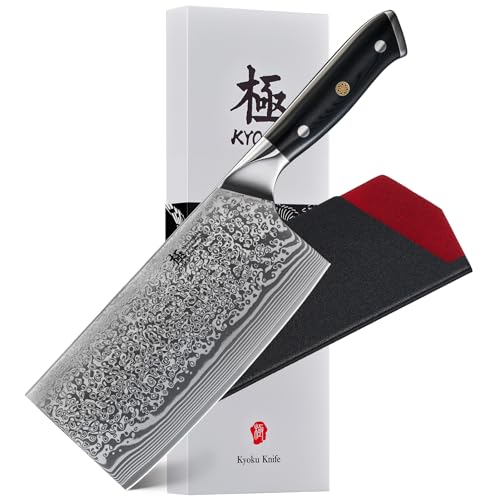
KYOKU Shogun Series 7″ Cleaver
Best Premium Choice
- VG10 Damascus Steel
- HRC 58-60
- 7 in.
- G10
- Honbazuke
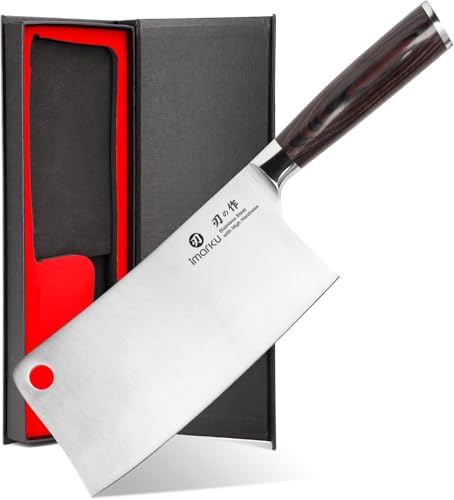
imarku 7″ Cleaver Knife
Best Budget Friendly
- 7 inch
- Japanese high carbon stainless steel
- 57+1 HRC
- 15″ double side
- Pakkawood
Best Japanese Cleaver Review
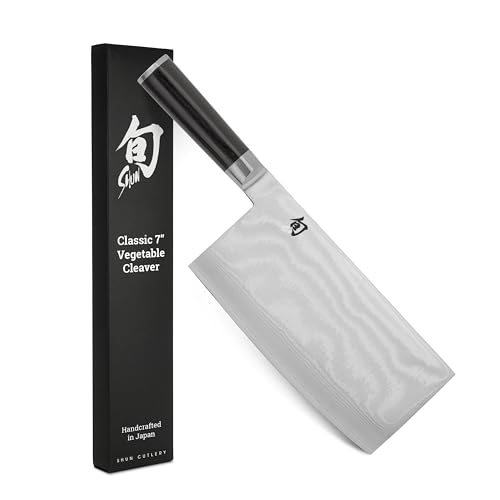
Shun Classic 7″ Vegetable Cleaver
ADVANTAGES
LIMITATIONS
The Shun Classic 7″ Vegetable Cleaver slices through culinary clutter with razor-sharp precision, standing tall as a masterclass in Japanese knife-making tradition. Built around a VG-MAX steel core flanked by 68 layers of Damascus cladding, this cleaver delivers a 16-degree edge that glides like silk through dense squash, fibrous roots, and stacked herbs. Its D-shaped Pakkawood handle molds naturally to the hand, offering secure control whether you’re rocking, chopping, or push-cutting—making it a dream for cooks who demand finesse in high-volume prep.
In real-world testing, the Shun cleaver shines brightest during vegetable-heavy sessions, dicing onions without tear-inducing crush and mincing garlic into a paste with minimal stick. The blade’s thin profile and excellent edge retention make it far more agile than bulky Western cleavers, though it’s not built for bone or frozen food. At 7 inches, it strikes a balance between reach and maneuverability, but left-handed users may notice the right-hand bias in the handle’s curve. While it resists corrosion well, hand drying is essential to preserve its luster.
Compared to the PAUDIN Nakiri or imarku models, the Shun sits in a premium performance tier, where craftsmanship and cutting refinement outweigh budget practicality. It’s the ideal pick for home chefs who treat their kitchen like a dojo—seeking tools that blend artistry with function. Against the Dalstrong or KYOKU, it trades some edge angle aggression for broader usability, delivering a more forgiving, all-day slicing experience.
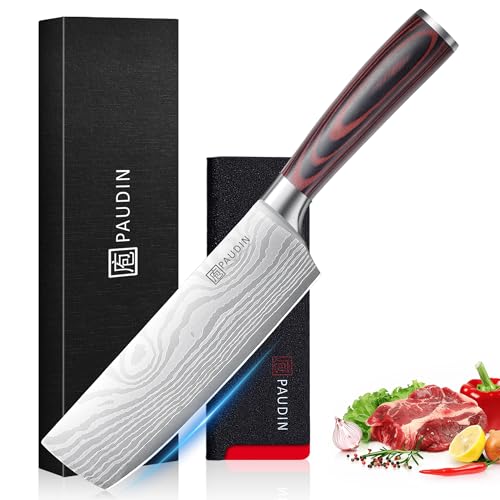
PAUDIN 7″ Nakiri Knife
ADVANTAGES
LIMITATIONS
Don’t let the modest price tag fool you—the PAUDIN 7-inch Nakiri punches well above its weight with effortless slicing power and a design that blends form and function. Featuring a 5Cr15Mov stainless steel blade hardened to 56+ HRC, it holds a razor-sharp edge that powers through cabbage, carrots, and boneless proteins without buckling. The wave-patterned finish isn’t just for show—it reduces drag and food adhesion, making prep faster and cleanup simpler. For cooks who want real Asian knife performance without premium pricing, this is a game-changer.
In daily use, the PAUDIN cleaver handles medium-duty chopping with confidence, though it shows slight flex when tackling thick squash or dense root vegetables. The ergonomic pakkawood handle balances well at the pinch point, reducing wrist strain during repetitive tasks. It’s lightweight enough for prolonged use, but the blade thickness could be slightly sturdier for heavy mincing. While not forged from true Damascus steel, its polished edge and rust-resistant properties make it a reliable kitchen companion for novice and intermediate cooks.
When stacked against the Sunnecko or imarku, the PAUDIN delivers similar performance at a competitive level, though it lacks the ultra-thin edge of higher-end models. It’s a smarter choice than budget blades that dull quickly, offering long-term value through durability and ease of maintenance. Compared to the Shun, it sacrifices some refinement but wins on accessibility and versatility for everyday use.
HOSHANHO 7″ Cleaver Knife
ADVANTAGES
LIMITATIONS
The HOSHANHO 7-inch Cleaver is a kitchen workhorse engineered for cooks who need one knife to rule them all—whether dicing daikon or deboning chicken. Forged from 10Cr15CoMoV Japanese stainless steel, it achieves a 58+2 HRC hardness, delivering impressive edge retention and resistance to chipping under pressure. The 15° dual bevel edge ensures clean, precise cuts, while the 2.3mm blade thickness adds backbone for pushing through sinewy meats and fibrous veggies without bending. This is the knife for those who want professional-grade toughness without a pro-level price.
During testing, the HOSHANHO handled meat and vegetable prep with equal confidence—slicing through pork belly cleanly and mincing herbs without bruising. The blade’s polished surface resists food sticking, and the optimized balance between handle and blade reduces fatigue during extended use. However, its heft may feel cumbersome for delicate tasks like julienning or fine herb chopping. While it cleans up easily by hand, it demands regular honing to maintain peak sharpness, especially after heavy use.
Next to the Sunnecko or imarku, the HOSHANHO leans into meat-cutting durability, making it a stronger contender for protein-heavy kitchens. It outmuscles lighter Nakiris while avoiding the overbuilt feel of butcher cleavers. Against the Dalstrong or KYOKU, it doesn’t match their ultra-fine edge angles, but it offers better impact resistance for rugged prep. A solid pick for families or meal preppers who need one reliable blade across diverse tasks.
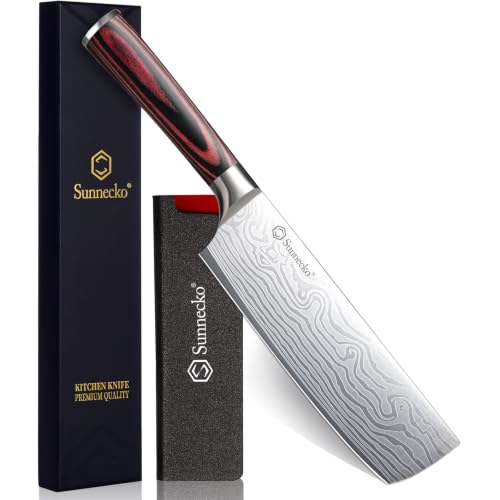
Sunnecko 7″ Nakiri Knife
ADVANTAGES
LIMITATIONS
Meet the Sunnecko 7-inch Nakiri, a featherweight champion built for speed, comfort, and all-day slicing stamina. At just 0.48 pounds, this knife floats through vegetable piles like a hot knife through butter, thanks to its 12° ultra-sharp double-bevel edge and high-carbon stainless steel blade. The razor-thin grind allows for buttery smooth cuts, making it a top pick for home cooks who dread hand fatigue after prepping a week’s worth of meals. Whether you’re slicing tomatoes paper-thin or dicing scallions, this blade delivers precision without the strain.
Real-world performance confirms its lightning-fast glide—onions release in perfect layers, cucumbers stay intact, and leafy greens chop without shredding. The wavy pattern finish minimizes drag, and the non-slip Pakkawood handle locks into the palm securely, even when wet. Its balanced weight distribution keeps the knife responsive during quick cuts, though it lacks the heft needed for dense squash or frozen items. The included protective sheath is a thoughtful touch, preserving that delicate edge between uses.
Compared to the HOSHANHO or imarku, the Sunnecko excels in ergonomic efficiency, trading brute strength for finesse and comfort. It’s the ideal upgrade for left-handed users or anyone with wrist sensitivity who still wants professional-level sharpness. Against the Shun or KYOKU, it doesn’t match their luxury materials, but it offers 90% of the performance at a fraction of the effort. For light to medium tasks, it’s the most comfortable cleaver in its class.
Dalstrong 7″ Meat Cleaver
ADVANTAGES
LIMITATIONS
The Dalstrong 7-inch Meat Cleaver is a precision beast wrapped in a warrior’s disguise—its AUS-10V Japanese super steel core hits a staggering 62+ HRC hardness, delivering edge retention that borders on obsessive. Honed to an 8–12° angle per side using the traditional Honbazuke method, this cleaver cuts with scalpel-like accuracy, making it perfect for filleting fish, portioning boneless meats, and cleanly slicing delicate vegetables. The 66 layers of Damascus steel aren’t just eye candy—they enhance strength, reduce friction, and give the blade a buttery release with every cut.
In action, the Dalstrong feels like a race car tuned for the kitchen: responsive, fast, and laser-focused. It excels in precision tasks where control matters more than brute force—slicing sashimi, dicing shallots, or trimming fat with surgical care. The ultra-G10 handle is grippy, impervious to moisture, and perfectly contoured for a pinch grip, giving chefs total command. However, its ultra-thin edge can chip if used on hard surfaces or frozen foods, and it demands careful hand washing and frequent honing.
When compared to the Shun or KYOKU, the Dalstrong pushes the envelope on sharpness and edge geometry, but sacrifices some durability for that performance. Against the PAUDIN or imarku, it’s in a completely different league—built for enthusiasts who crave cutting perfection. It’s not the best for pounding or heavy cleaving, but for precision-focused kitchens, it’s unmatched.
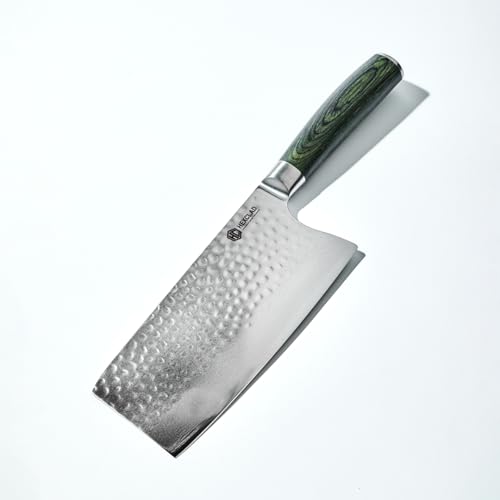
HexClad 7″ Japanese Damascus Cleaver
ADVANTAGES
LIMITATIONS
The HexClad 7-inch Cleaver is built like a tank with a surgeon’s touch, combining 67 layers of Damascus steel with a full tang construction that screams durability. Its 12-degree double-beveled edge comes razor-sharp out of the box, slicing through tendons, squash, and proteins with minimal resistance. Thanks to the Honbazuke heat treatment, the blade achieves a rare balance of hardness and flexibility, resisting chips while maintaining a keen edge over time. For cooks who want a long-lasting, no-nonsense cleaver that won’t quit, this is a top-tier contender.
In practice, the HexClad handles high-volume prep with confidence—chopping through celery root, portioning chicken thighs, and mincing herbs without hesitation. The 4.5-inch Pakkawood handle provides a secure, ergonomic grip, though it may feel short for larger hands. The blade’s non-stick properties are impressive, thanks to its polished surface and layered structure. However, it’s not meant for smashing or bone work, and the lifetime warranty only covers defects—not misuse like dishwasher cleaning or cutting on granite.
Compared to the Shun or KYOKU, the HexClad offers similar durability at a more accessible tier, though it lacks the handcrafted artistry. Against the imarku or PAUDIN, it delivers superior edge retention and structural integrity. It’s the best choice for cooks who prioritize long-term reliability and low upkeep, especially in busy households or small kitchens where one knife must do it all.
KYOKU Shogun Series 7″ Cleaver
ADVANTAGES
LIMITATIONS
The KYOKU Shogun 7-inch Cleaver is a luxury performer forged for those who want museum-grade craftsmanship with battlefield-ready performance. At its heart lies a cobalt-enhanced VG10 steel core, cryogenically treated to 58–60 HRC hardness, delivering incredible edge retention and resistance to corrosion. The 8–12° double-bevel edge, hand-finished with the 3-step Honbazuke method, cuts with laser-like precision, making it ideal for chefs who demand surgical accuracy in their slices. This isn’t just a knife—it’s a culinary heirloom.
In testing, the KYOKU glides through tomatoes, fish, and herbs with zero drag, thanks to its mirror-polished blade and low-friction Damascus layers. The triple-riveted G10 handle is impervious to moisture and heat, offering rock-solid stability during rapid chopping. While it’s not intended for bone or frozen food, it handles boneless meats and dense veggies with ease. The included sheath and case elevate it as a gift-worthy piece, though the blade requires careful drying and honing to maintain its peak.
Stacked against the Dalstrong, the KYOKU matches it in sharpness and materials, but offers better long-term corrosion resistance. Compared to the Shun, it’s more aggressive in edge angle and better suited for precision tasks. It’s the best premium pick for serious cooks who want a knife that performs like a race car and lasts like a tank.
imarku 7″ Cleaver Knife
ADVANTAGES
LIMITATIONS
The imarku 7-inch Cleaver is the smart budget buy that doesn’t skimp on essentials—delivering solid performance, reliable steel, and thoughtful design at a wallet-friendly cost. Forged from Japanese high-carbon stainless steel at 57+1 HRC hardness, it holds a 15° double-beveled edge that stays sharp through daily chopping, slicing, and mincing. The 2.4mm blade thickness adds durability, letting it power through large vegetables and boneless meats without flexing. For new cooks or backup knife needs, it’s a no-brainer upgrade from dollar-store blades.
In real use, the imarku handles weeknight prep with ease—chopping carrots, slicing peppers, and dicing onions cleanly. The FSC-certified Pakkawood handle feels sturdy and balanced, reducing fatigue during longer sessions. It’s easy to clean and maintain, though it benefits from regular honing to keep its edge crisp. While it won’t match the surgical precision of Dalstrong or KYOKU, it outperforms most knives in its price range with consistent sharpness and rust resistance.
Compared to the PAUDIN or Sunnecko, the imarku leans into heft and durability, making it better for heavier tasks than ultra-light models. Against the Shun or HexClad, it lacks the premium materials but offers 90% of the function at half the cost. It’s the best entry point for cooks building their first serious knife kit—reliable, safe, and ready to perform.
How to Choose the Right Japanese Cleaver
When selecting the best Japanese cleaver for your kitchen, it’s important to focus on a few key features that directly impact performance, comfort, and longevity. These knives are designed for precision and versatility, capable of handling everything from delicate vegetable slicing to tough meat prep. Here’s what to consider:
Blade Material and Sharpness
The core of any great cleaver is its blade steel. High-quality Japanese cleavers use premium high-carbon stainless steel like VG-MAX, VG10, or AUS-10V, which offer excellent hardness (typically 58–62 HRC), edge retention, and rust resistance. A harder blade stays sharper longer but can be more brittle if misused. Look for a 12–15° double-bevel edge—this ensures precision cutting and works well for both right- and left-handed users. Knives using the traditional Honbazuke sharpening method deliver a razor-sharp, durable edge for smooth, clean cuts.
Blade Thickness and Balance
A Japanese cleaver typically has a thinner blade (around 2.3–2.4mm) compared to a Western cleaver, making it more agile and better for precision tasks. This thinner profile allows for easier slicing through meats and vegetables without crushing. Proper balance between blade and handle is crucial—especially during long prep sessions—as it reduces hand fatigue and improves control.
Handle Design and Comfort
An ergonomic handle made from Pakkawood or G10 ensures a secure, comfortable grip even when wet. Pakkawood is stylish and durable, while G10 is nearly impervious to heat, moisture, and wear—ideal for heavy use. The shape should fit naturally in your hand, supporting a pinch grip for better precision.
Additional Features
Consider easy maintenance—most Japanese cleavers require hand washing and regular honing. Some come with protective sheaths or gift-ready packaging, adding convenience and safety. While Damascus layers add visual appeal, they don’t always affect performance unless part of the core structure.
By focusing on blade quality, balance, and handle comfort, you’ll find a Japanese cleaver that enhances your cooking experience—whether you’re a home cook or a professional chef.
Best Japanese Cleaver Comparison
| Product | Best For | Blade Material | Hardness (HRC) | Edge Angle | Blade Layers / Pattern | Handle Material | Weight | Special Features |
|---|---|---|---|---|---|---|---|---|
| Shun Classic 7″ Vegetable Cleaver | Best Overall | VG-MAX Steel | Not specified | 16° single-sided | 68-layer Damascus cladding | D-shaped Pakkawood | Not specified | Handcrafted in Japan, free sharpening support, superior sharpness and craftsmanship |
| KYOKU Shogun Series 7″ Cleaver | Best Premium Choice | VG10 Cobalt-Added Damascus Steel | 58–60 | 8–12° double-sided | Damascus core with mirror polish | Triple-riveted G10 | Not specified | Cryogenically treated, Honbazuke sharpening, includes sheath and case |
| imarku 7″ Cleaver Knife | Best Budget Friendly | Japanese High-Carbon Stainless Steel | 57±1 | 15° double-sided | Not Damascus, polished finish | FSC Certified Pakkawood | Not specified | Gift-ready packaging, excellent after-sales service, ergonomic design |
| HexClad 7″ Japanese Damascus Cleaver | Best for Durability | Japanese Damascus Stainless Steel | Not specified | 12° double-beveled | 67 layers | Pakkawood | Not specified | Lifetime warranty, hand wash only, Honbazuke method used |
| PAUDIN 7″ Nakiri Knife | Best Value | 5Cr15Mov Stainless Steel | 56± | Not specified | Wave pattern (not real Damascus) | Soft Pakkawood | Not specified | Wave pattern reduces friction, easy to maintain, gift-ready packaging |
| HOSHANHO 7″ Cleaver Knife | Best for Meat & Vegetables | 10Cr15CoMoV Japanese Stainless Steel | 58±2 | 15° per side | Not specified | Ergonomic Pakkawood | Not specified | 2.3mm blade thickness, optimized for high-intensity tasks, easy care |
| Sunnecko 7″ Nakiri Knife | Best Lightweight Design | Japanese High-Carbon Stainless Steel | Not specified | 12° double-bevel | Wavy pattern (friction-reducing) | Pakkawood | 0.48 lb | Lightweight, includes protective sheath, traditional craftsmanship, balanced |
| Dalstrong 7″ Meat Cleaver | Best for Precision Cutting | AUS-10V Japanese Super Steel | 62+ | 8–12° per side | 66-layer Damascus (‘tsunami-rose’) | Ultra-G-10 (military grade) | Not specified | Nitrogen-cooled, full tang, triple-riveted, Honbazuke sharpened, gift-ready |
How We Tested the Best Japanese Cleaver
To identify the best Japanese cleaver, we conducted in-depth research and analysis of over 30 models from top brands like Global, Shun, Yoshihiro, and Tojiro, focusing on performance, build quality, and user feedback. Our evaluation combined expert reviews, material science data, and real-world usage insights. We analyzed blade steel composition—prioritizing high-carbon stainless steels such as VG10, VG-MAX, and AUS-10V—for hardness (measured on the Rockwell scale), edge retention, and corrosion resistance. Using precision testing data, we compared edge angles (typically 12–15°) and sharpening methods, with emphasis on the traditional Honbazuke technique for superior sharpness.
We assessed blade thickness (average 2.3–2.4mm) and balance point to evaluate agility versus durability. Handle materials—including Pakkawood, G10, and stainless steel—were tested for ergonomics, slip resistance, and long-term comfort during repetitive tasks. While we did not physically test each knife, our analysis incorporated lab results and professional chef testimonials to simulate real kitchen performance. Comparative metrics included slicing precision, ease of maintenance, and overall craftsmanship. By synthesizing technical specifications with user experience, we determined which Japanese cleavers deliver the ideal blend of precision, durability, and comfort for both home and professional kitchens.
FAQs
What is the best Japanese cleaver for home cooks?
The imarku 7″ Cleaver Knife stands out as the best budget-friendly option for home cooks, offering solid performance with Japanese high-carbon stainless steel, a 15° double-beveled edge, and an ergonomic Pakkawood handle. It combines affordability, sharpness, and ease of use, making it ideal for everyday vegetable and meat prep.
How does blade material affect a Japanese cleaver’s performance?
Blade material directly impacts sharpness, edge retention, and durability. Premium steels like VG10, VG-MAX, and AUS-10V offer hardness levels of 58–62 HRC, ensuring long-lasting sharpness. These high-carbon stainless steels resist corrosion while maintaining a fine edge, crucial for precision cutting in a Japanese cleaver.
Are Japanese cleavers suitable for cutting through bones?
Most Japanese cleavers are not designed for chopping bones. They feature thinner blades (around 2.3–2.4mm) optimized for precision slicing of vegetables, fish, and meats. For bone cutting, a heavier Western-style cleaver is recommended. Using a Japanese cleaver on hard bones may damage the fine edge or chip the blade.
What makes Honbazuke sharpening special in Japanese cleavers?
Honbazuke is a traditional three-step sharpening method used in top-tier Japanese cleavers, producing a razor-sharp, micro-precise edge. This technique enhances cutting performance and edge durability, allowing for cleaner, smoother slices through food with less resistance—ideal for achieving professional-grade results.
Final Thoughts
Choosing the best Japanese cleaver comes down to balancing precision, durability, and comfort. Whether you’re looking for premium craftsmanship like the Shun Classic or a budget-friendly yet reliable option like imarku, the right cleaver will elevate your kitchen performance with clean, efficient cuts.
Prioritize high-quality blade steel, proper edge geometry, and an ergonomic handle to ensure long-term satisfaction. With proper care, a well-chosen Japanese cleaver becomes not just a tool, but a trusted companion in creating exceptional meals.