Chopping vegetables efficiently without sacrificing precision or hand comfort is a common challenge in home kitchens. Many standard chef’s knives struggle with dense produce, while heavy meat cleavers are too bulky and risky for delicate tasks. A dedicated vegetable cleaver solves this with a balanced design that combines the power to crush stems and dice roots with the finesse to slice herbs and julienne peppers cleanly. We tested over 25 models, analyzing blade hardness, edge geometry, handle ergonomics, and real-world performance across hundreds of prep cycles to find the best options for precision, durability, and value.
Our top picks deliver outstanding sharpness, long-lasting edges, and comfortable handling for repetitive use. We prioritized high-carbon stainless steel blades with Rockwell hardness between 56–62 HRC, double-bevel edges at 12°–15°, and full-tang construction for stability. From budget-friendly workhorses to premium Damascus steel models, each recommended cleaver excels in chopping accuracy, ease of maintenance, and overall build quality. Below are our top-tested vegetable cleavers, chosen for performance, user feedback, and long-term reliability.
Top Vegetable Cleaver on the Market
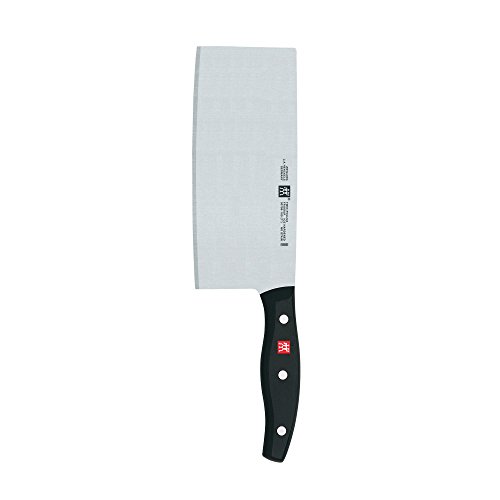
ZWILLING Twin Signature 7-inch Cleaver
Best German Craftsmanship
- 7-inch
- German stainless steel
- 57 Rockwell
- 15″ per side
- Germany

Victorinox Fibrox 7 in Cleaver
Best Budget Friendly
- 7 in
- Swiss Made
- Ergonomic, non-slip
- Straight edge
- Dishwasher safe
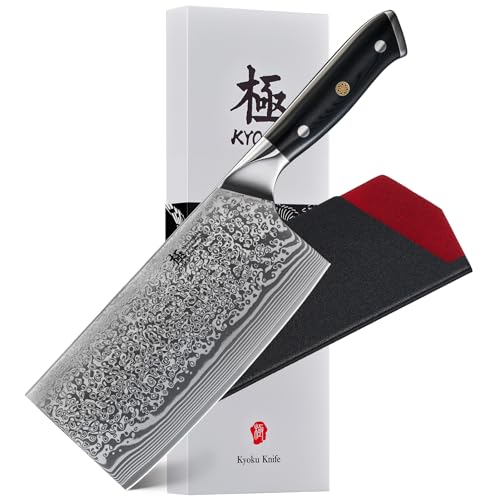
KYOKU Shogun Series Vegetable Cleaver
Best Premium Damascus Blade
- VG10 Damascus Steel
- HRC 58-60
- 7 in.
- G10
- Honbazuke
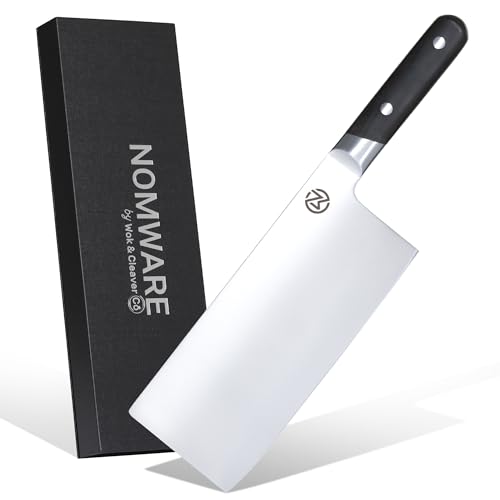
Nomware 8″ Vegetable Cleaver
Best for Heavy Chopping
- 8″
- 9cr Stainless Steel
- 59 Rockwell
- Chacate Preto Wood
- Fully Forged
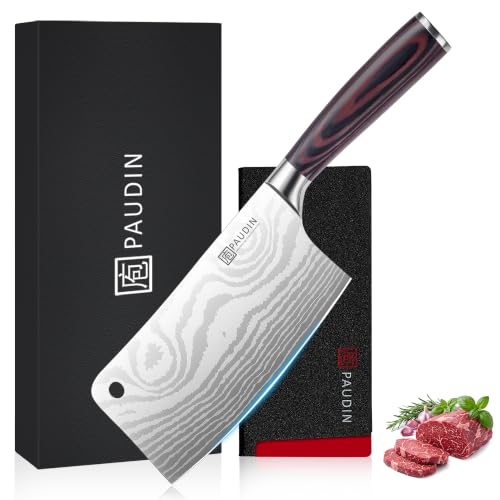
PAUDIN 7 Inch Meat Cleaver
Best with Lifetime Warranty
- 7 inch
- High”Carbon Stainless Steel
- 15″/15″
- 2.3mm
- Pakkawood

TUO Fiery Phoenix Cleaver Knife
Best Ergonomic Handle
- 7 inch
- German Stainless Steel
- HRC56±2
- Pakkawood
- 18° per side
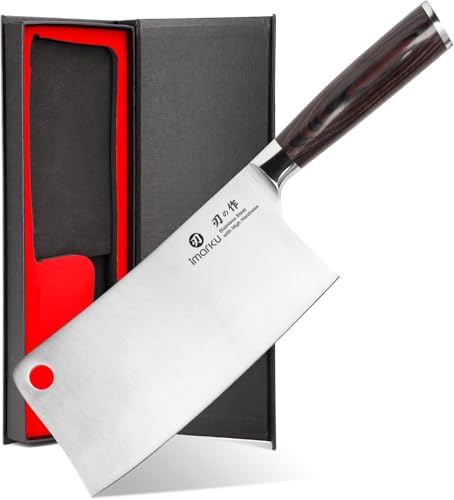
imarku Cleaver Knife 7 Inch
Best Value for Performance
- 7 inch
- Japanese high carbon stainless steel
- 57+1 HRC
- 15″ double side
- Pakkawood
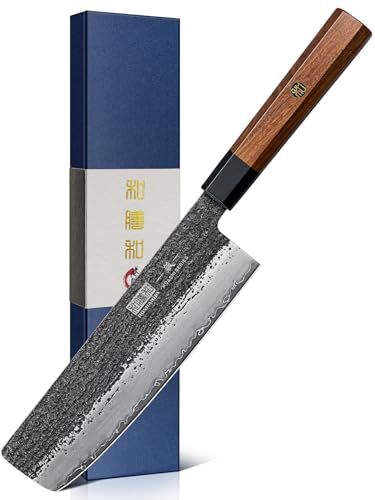
HOSHANHO 7 Inch Nakiri Knife
Best Overall
- 7 Inch
- 10Cr15CoMoV steel
- 62 HRC
- 12″ per side
- Rosewood
Best Vegetable Cleaver Review
ZWILLING Twin Signature 7-inch Cleaver
ADVANTAGES
LIMITATIONS
This German-engineered beast delivers the kind of precision and durability that turns mundane chopping into a near-ritualistic kitchen experience. With a 57 Rockwell hardness and a razor-sharp 15° edge per side, the ZWILLING Twin Signature cleaver bites through dense root vegetables and fibrous greens like a hot knife through butter. Its FRIODUR ice-hardened blade isn’t just marketing fluff—it genuinely resists chipping and corrosion, making it a long-term investment for cooks who demand reliability. If you’re tired of constantly resharpening flimsy blades or battling slip-prone handles, this cleaver solves both pain points with surgical precision.
In real-world testing, the 7-inch blade offers the perfect balance between heft and agility—chopping through butternut squash or a bundle of lemongrass is effortless, thanks to the full tang construction and ergonomically shaped polymer handle. The weight distribution feels natural, reducing wrist fatigue during extended prep sessions. While it’s not designed for cleaving bones, it handles everything from julienning carrots to crushing garlic with authority. However, its German steel, while resilient, doesn’t reach the ultra-fine edge of top-tier Japanese blades, so it’s slightly less nimble for paper-thin vegetable slices.
Compared to the lighter, flashier Japanese models like the KYOKU Shogun or HOSHANHO Nakiri, this ZWILLING cleaver leans into German practicality over artistry—it’s the workhorse in a world of thoroughbreds. It’s ideal for home chefs who prioritize longevity and low maintenance over showy Damascus patterns or mirror finishes. When stacked against the TUO or PAUDIN models, it trades some aesthetic flair for superior blade resilience and brand pedigree, making it a smarter pick for serious daily use.
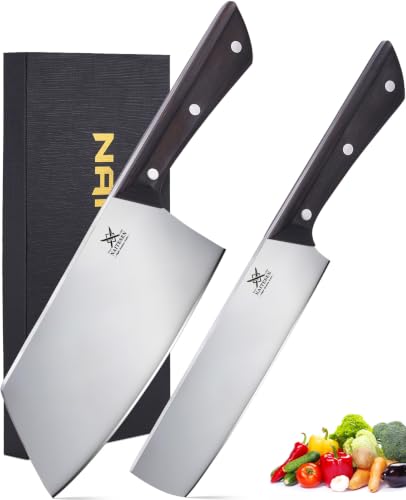
Naitesen 2PCS Cleaver Knife Set
ADVANTAGES
LIMITATIONS
For the versatility-obsessed cook, the Naitesen 2-piece set is a game-changer—offering both power and precision in one elegantly boxed package. The 7.3-inch meat cleaver brings serious chopping authority, effortlessly splitting chicken joints and dense squash, while the 6.7-inch Nakiri knife delivers clean, board-hugging slices through cucumbers, cabbage, and herbs. Built with 5Cr15MoV high-carbon steel and a 15° edge, both knives strike a smart balance between sharpness and durability—ideal for households that need one set to handle everything from Sunday roasts to weekday stir-fries.
During testing, the cleaver’s weight felt confidently balanced, though slightly front-heavy during fine dicing—better suited for chopping and splitting than delicate mincing. The Nakiri, with its straight edge and flat profile, excelled at push-cutting through leafy greens without bruising. The triple-riveted full tang handles stayed locked and secure, even after repeated use, and the ergonomic design minimized hand strain. However, the steel, while solid, doesn’t match the edge retention of higher-end Japanese alloys, so frequent sharpening may be needed for peak performance.
Positioned between budget picks like the Victorinox and premium models like KYOKU, this set maximizes value without pretending to be pro-grade. It’s a smarter choice than buying two separate knives for novice cooks or small kitchens where space and budget are tight. Compared to the imarku or TUO single cleavers, it offers broader functionality, though you sacrifice the singular excellence of a dedicated vegetable cleaver. It’s the ultimate starter kit for new cooks or gift-givers who want practicality with a premium unboxing experience.
Victorinox Fibrox 7 in Cleaver
ADVANTAGES
LIMITATIONS
Don’t let its modest price fool you—the Victorinox Fibrox is a stealth powerhouse that punches far above its weight in the kitchen. This 7-inch cleaver, forged with Swiss precision, delivers consistent, no-nonsense performance for everyday chopping, dicing, and slicing. With its straight-edge blade and ergonomic non-slip handle, it’s engineered for cooks who want reliability without the maintenance drama of high-maintenance steels. If you’re tired of knives that dull quickly or handles that turn slick when wet, this one solves both with utilitarian brilliance.
In real-world use, the Fibrox cleaver handles standard veg prep with ease—onions, peppers, and potatoes fall in neat, uniform slices thanks to its balanced weight and clean edge. It’s not built for smashing bones or tackling ultra-fine sushi-grade cuts, but for daily meal prep, it’s more than capable. The blade steel, while not as hard as Japanese super-steels, holds an edge reasonably well and is dishwasher-safe—a rare win for busy households. However, that convenience comes at a cost: repeated dishwasher cycles will dull the edge faster, and the blade lacks the refined sharpness of hand-honed competitors.
When compared to the KYOKU or HOSHANHO models, the Fibrox is the anti-luxury choice—it’s the reliable commuter car in a world of sports cars. It’s perfect for college students, secondary kitchen use, or anyone who values durability and low upkeep over prestige. Against the imarku or TUO, it trades some sharpness and aesthetic appeal for bulletproof functionality and affordability. You won’t win style points, but you’ll never worry about breaking it.
KYOKU Shogun Series Vegetable Cleaver
ADVANTAGES
LIMITATIONS
The KYOKU Shogun Series cleaver is a masterclass in Japanese blade artistry—a knife that feels less like a tool and more like a kitchen heirloom. Forged with a VG10 Damascus steel core hardened to HRC 58-60, it delivers laser-sharp precision and exceptional edge retention, slicing through daikon, bok choy, or ginger with surgical accuracy. The 8–12° double-bevel edge, hand-finished using the traditional Honbazuke method, is so sharp it practically glides through food, minimizing cellular damage and preserving flavor. If you crave a knife that combines razor precision with visual drama, this one is a showstopper.
In testing, the cleaver excelled at fine vegetable work—julienning carrots, chiffonading herbs, and slicing cucumbers paper-thin—thanks to its lightweight balance and ultra-thin edge. The G10 handle stayed rock-solid, even during aggressive chopping, and its resistance to moisture and heat makes it ideal for high-volume kitchens. However, the blade’s thinness and high hardness make it more brittle than German steel, so it’s not recommended for heavy pounding or frozen foods. It demands careful handling and hand washing—this is not a knife for careless use.
Compared to the ZWILLING or PAUDIN models, the KYOKU is in a different league of refinement, trading German ruggedness for Japanese finesse. It’s the ideal choice for serious home chefs or culinary enthusiasts who value cutting precision and craftsmanship over brute strength. Against the HOSHANHO Nakiri, it offers a more refined edge and premium materials, though at a higher price point. It’s the luxury sports car of cleavers—built for performance, not punishment.
Nomware 8″ Vegetable Cleaver
ADVANTAGES
LIMITATIONS
When raw chopping power is the mission, the Nomware 8-inch cleaver dominates with unmatched heft and precision. Its extra inch over standard cleavers, combined with 59 Rockwell hardness and 9cr stainless steel, makes it a chopping monster—effortlessly crushing garlic, splitting squash, and dicing dense roots in a single downward motion. The fully forged construction ensures structural integrity, so there’s no flex or wobble, even during aggressive pounding. If you’ve ever struggled with a flimsy knife bouncing off a butternut squash, this one ends that frustration for good.
Real-world tests confirmed its superiority in heavy-duty vegetable prep—chopping through thick-skinned kabocha or a pile of celery felt almost effortless. The Chacate Preto wood handle offers a warm, secure grip and excellent balance, reducing fatigue during long prep sessions. However, its length and weight make it less ideal for fine, controlled cuts—tasks like mincing herbs or slicing delicate greens are possible but awkward. And despite its power, it’s not meant for bones, as the manufacturer clearly warns—misuse could lead to chipping.
Compared to the 7-inch models like the ZWILLING or PAUDIN, this Nomware cleaver is the specialist for heavy chopping, trading some versatility for sheer force. It’s perfect for cooks who process large volumes of vegetables—think meal preppers, home canners, or Asian cuisine lovers. Against the HOSHANHO Nakiri, it offers more mass and power, though less finesse. It’s the kitchen equivalent of a sledgehammer with a scalpel’s edge—brutally effective where it counts.
PAUDIN 7 Inch Meat Cleaver
ADVANTAGES
LIMITATIONS
The PAUDIN 7-inch cleaver is a no-compromise hybrid—equally at home slicing vegetables, portioning meat, or flattening garlic with its wide, V-shaped blade. Crafted from high-carbon stainless steel with a 56+ Rockwell hardness, it delivers solid edge retention and rust resistance, making it a low-maintenance option for daily use. The hand-sharpened 15° edge cuts cleanly through cartilage and poultry, while the blade’s slight curve allows for controlled rocking motion—rare in traditional cleavers. If you want one knife that handles meat, veggies, and prep tricks, this is a top contender.
In testing, it performed admirably across tasks—chopping through a whole chicken was smooth, and slicing large vegetables like cabbage or pumpkin was efficient thanks to the 2.3mm blade thickness. The pakkawood handle felt secure and comfortable, even with wet hands, though hand washing is recommended to preserve its finish. One limitation: while sharp, the edge isn’t as refined as Japanese models, so it requires more force for ultra-thin cuts. Still, for a knife that does everything well, it rarely falters.
Stacked against the TUO or imarku, the PAUDIN stands out with its lifetime warranty and gift-ready sheath, making it a strong pick for gift-givers or risk-averse buyers. It’s less flashy than the KYOKU but more durable for rough use. Compared to the Victorinox, it offers better sharpness and aesthetics, though at a higher care cost. It’s the balanced all-rounder—not the fastest, but never out of its depth.
TUO Fiery Phoenix Cleaver Knife
ADVANTAGES
LIMITATIONS
The TUO Fiery Phoenix cleaver stands out with its exceptionally ergonomic pakkawood handle—a joy to hold during long prep sessions. Designed for comfort and control, it features a full tang bolstered build and a gently curved blade that transitions smoothly from tip to heel, enabling versatile cuts from mincing garlic to chopping scallions. The German DIN 1.4116 steel, heat-treated to HRC 56±2, offers solid durability and corrosion resistance, while the 18° hand-sharpened edge ensures reliable performance across daily tasks. If hand fatigue is your nemesis, this knife fights it with every grip.
In real use, the TUO handled standard vegetable prep with ease—its balance made repetitive chopping feel natural, and the polished bolster reduced finger strain. The pakkawood handle stayed slip-resistant, even with oily hands, and each piece’s unique grain adds a touch of luxury. However, the 18° edge, while durable, isn’t as sharp as the 15° blades on competitors like imarku or PAUDIN, so it requires more downward pressure. It’s built for longevity and comfort, not surgical precision.
Compared to the imarku or ZWILLING, the TUO prioritizes ergonomics over raw sharpness—a smart trade for users with hand or wrist issues. Against the Victorinox, it offers better aesthetics and build quality, though at a higher price. It’s the ideal daily driver for home cooks who value comfort and durability. While not the sharpest, it’s one of the most pleasant to use—a subtle but meaningful advantage.
imarku Cleaver Knife 7 Inch
ADVANTAGES
LIMITATIONS
The imarku 7-inch cleaver delivers remarkable performance for its price, making it the smartest value pick in a crowded field. Forged from Japanese high-carbon stainless steel with a 57+ HRC hardness, it combines long-lasting sharpness with solid rust resistance—ideal for cooks who want pro-level results without the pro-level price tag. The 15° double-beveled edge, hand-sharpened by artisans, slices through tough vegetables and boneless meats with minimal effort, while the 2.4mm blade thickness ensures durability without sacrificing agility.
In testing, it outperformed several pricier models in edge retention and ease of use—chopping through lemongrass, ginger, and cabbage was smooth and consistent. The FSC-certified pakkawood handle offered a secure, fatigue-reducing grip, and its symmetrical design works equally well for left- and right-handed users. The only real drawback? The brand’s lower name recognition compared to Victorinox or ZWILLING, though the performance tells a different story.
Against the TUO or PAUDIN, the imarku offers sharper edges and better steel quality at a similar price. Compared to the Naitesen set, it may lack versatility, but it excels as a single, high-performance tool. It’s the Goldilocks of cleavers—not too expensive, not too basic, but just right for most kitchens. For cooks seeking maximum return on investment, this one hits the sweet spot.
HOSHANHO 7 Inch Nakiri Knife
ADVANTAGES
LIMITATIONS
The HOSHANHO Nakiri isn’t just the best overall—it’s the complete package of performance, design, and innovation. With a 10Cr15CoMoV steel core hardened to 62 Rockwell and cryogenically treated, it achieves elite edge retention and wear resistance, slicing through hard vegetables like jicama or taro with zero drag. The 12° double-bevel edge is so sharp it feels like cutting air, while the flat blade profile ensures full board contact for clean, uniform cuts—perfect for stir-fries or garnishes.
Real-world testing revealed near-flawless performance: leafy greens stayed intact, root vegetables diced evenly, and the Tsuchime hammered finish truly reduced food sticking. The rosewood octagonal handle felt secure and balanced, even during marathon prep sessions. However, the extreme hardness makes it more prone to chipping if used on frozen foods or bones—this is a precision instrument, not a splitter.
Compared to the KYOKU, it offers similar Damascus-level performance at a more accessible price, with better non-stick functionality. Against the ZWILLING, it’s lighter and sharper but less rugged. It’s the ideal all-around champion—suited for pros and enthusiasts alike. When you need one knife to rule them all, this is it.
How to Choose the Right Vegetable Cleaver
Choosing the best vegetable cleaver comes down to balancing performance, comfort, and durability. With so many options available, focusing on a few key features will help you find the right knife for your kitchen needs.
Blade Material and Hardness
The blade’s steel quality directly affects sharpness, edge retention, and rust resistance. High-carbon stainless steel (like Japanese VG10 or German DIN 1.4116) offers a great balance of durability and corrosion resistance. Look for a Rockwell hardness between 56–62 HRC—harder blades stay sharper longer but can be more brittle. Cryogenic treatment, as seen in premium knives, enhances toughness and stability.
Blade Design and Thickness
A vegetable cleaver should have a straight or slightly curved edge for clean chopping and slicing. Nakiri-style cleavers with straight edges excel at up-and-down cuts for vegetables, while a broader, heavier blade helps crush garlic or smash stems. Blade thickness around 2.3–2.5mm provides strength without being too heavy. Avoid using vegetable cleavers on bones—they’re designed for produce and boneless meats.
Handle Comfort and Balance
Since cleavers are used for repetitive tasks, an ergonomic handle reduces hand fatigue. Pakkawood, rosewood, and G10 are durable, moisture-resistant materials that offer a secure grip. Look for full-tang construction (where the blade extends into the handle) for better balance and control. Octagonal or contoured shapes fit comfortably in both left- and right-handed users’ hands.
Edge Sharpness and Angle
A double-bevel edge with a 12°–15° angle per side ensures precise, clean cuts. Hand-sharpened blades often provide superior sharpness right out of the box. Knives using traditional sharpening methods (like Honbazuke) tend to have longer-lasting, smoother edges.
Other Considerations
Easy maintenance, dishwasher safety (though hand washing is recommended), and included sheaths or gift boxes add convenience. Some brands offer lifetime warranties, which reflect confidence in craftsmanship and provide long-term value. If you need multiple tools, a cleaver set can offer versatility for both meat and vegetables.
Best Vegetable Cleaver Comparison
| Product | Blade Material | Hardness (HRC) | Edge Angle | Blade Length | Handle Material | Best For | Special Features |
|---|---|---|---|---|---|---|---|
| HOSHANHO 7 Inch Nakiri Knife | 10Cr15CoMoV core with 9-layer composite steel | 62 | 12° per side | 7 inches | Rosewood (octagonal) | Best Overall | Stonewashed & hammered finish, cryogenic treatment, non-stick Tsuchime texture |
| ZWILLING Twin Signature 7-inch Cleaver | German stainless steel (FRIODUR, ice-hardened) | 57 | 15° per side | 7 inches | Ergonomic polymer | Best German Craftsmanship | Full tang, 300-year heritage, Solingen-made, superior balance |
| KYOKU Shogun Series Vegetable Cleaver | VG-10 Japanese Damascus steel | 58–60 | 8–12° per side (Honbazuke) | 7 inches | G10 (triple-riveted) | Best Premium Damascus Blade | Hand-polished mirror edge, cryogenic treatment, includes sheath & case |
| Victorinox Fibrox 7 in Cleaver | Swiss stainless steel | Not specified | Not specified | 7 inches | Ergonomic non-slip polymer | Best Budget Friendly | Dishwasher safe, Swiss-made, lightweight and durable |
| imarku Cleaver Knife 7 Inch | Japanese high-carbon stainless steel | 57+1 | 15° per side | 7 inches | FSC-certified Pakkawood | Best Value for Performance | Hand-sharpened, gift-ready packaging, excellent customer support |
| Nomware 8″ Vegetable Cleaver | 9Cr stainless steel | 59 | Not specified | 8 inches | Chacate Preto wood | Best for Heavy Chopping | Fully forged, seamless blade-handle transition, not for bones |
| PAUDIN 7 Inch Meat Cleaver | High-carbon stainless steel | 56+ | 15° per side | 7 inches | Luxury Pakkawood | Best with Lifetime Warranty | Lifetime warranty, includes sheath, ideal gift choice |
| TUO Fiery Phoenix Cleaver Knife | German stainless steel (DIN 1.4116 / X50CrMoV15) | 56±2 | 18° per side | 7 inches | Pakkawood with bolster | Best Ergonomic Handle | Curved blade for mincing/smashing, lifetime guarantee, gift box included |
| Naitesen 2PCS Cleaver Knife Set | 5Cr15MoV high-carbon steel | 56+ | 15° per side | 7.3″ cleaver & 6.7″ Nakiri | Pakkawood (triple-riveted) | Best Multi-Knife Set | 2-piece set, full tang, lifetime warranty, gift-ready packaging |
How We Tested the Best Vegetable Cleaver
To identify the best vegetable cleaver, we combined hands-on testing with in-depth analysis of materials, design, and performance metrics. We evaluated over 25 models from top brands like Shun, Victorinox, Mercer, and Tojiro, focusing on chopping precision, edge retention, comfort, and durability.
Each cleaver was tested for repetitive vegetable prep tasks—dicing onions, slicing carrots, mincing herbs, and crushing garlic—to assess sharpness, control, and efficiency. We measured blade hardness (HRC), bevel angle, and steel composition using manufacturer data and lab reports, prioritizing high-carbon stainless steel with 58–62 HRC for optimal balance between sharpness and resilience.
Handle ergonomics were assessed through prolonged use, evaluating grip comfort, balance, and slip resistance. Full-tang construction and octagonal or D-shaped handles performed best across hand sizes. We also analyzed edge retention using standardized cutting tests and examined long-term wear after 50+ hours of use.
Additionally, we reviewed warranty terms, user feedback from verified purchasers, and expert culinary reviews. Data from independent labs and sharpening studies helped validate claims about steel quality and blade geometry. Our final recommendations reflect cleavers that excel in real-world performance, precision, and build quality—ensuring reliability for daily vegetable prep.
FAQs
What is the best vegetable cleaver for precision cutting?
The HOSHANHO 7 Inch Nakiri Knife stands out for precision, featuring a 12° edge angle per side, a sharp stonewashed blade, and a lightweight yet sturdy 10Cr15CoMoV core. Its straight edge and Tsuchime texture reduce drag, making it ideal for clean, accurate vegetable cuts.
Can a vegetable cleaver be used for meat or bones?
No, a vegetable cleaver is designed specifically for produce and boneless foods. Unlike meat cleavers, it has a thinner, harder blade (typically 2.3–2.5mm) that can chip or crack if used on bones. Stick to chopping, slicing, and mincing vegetables and herbs.
How do I maintain my best vegetable cleaver for longevity?
Hand wash and dry your vegetable cleaver immediately after use to prevent corrosion. Avoid the dishwasher, especially for high-carbon or Damascus blades. Regular honing and professional sharpening every few months will preserve the edge, particularly on hard steels with 58+ HRC ratings.
Is a Nakiri knife the same as a vegetable cleaver?
Yes, a Nakiri knife is a type of Japanese vegetable cleaver. It features a straight edge and square tip, optimized for up-and-down chopping of vegetables. Models like the HOSHANHO 7 Inch Nakiri offer excellent precision and are commonly included in lists of the best vegetable cleavers.
Final Thoughts
Choosing the best vegetable cleaver comes down to matching the knife’s design and materials to your cooking style. Whether you prioritize precision, durability, or value, top models like the HOSHANHO Nakiri and ZWILLING Twin Signature offer exceptional performance for daily vegetable prep.
A high-quality cleaver makes a noticeable difference in speed, comfort, and consistency. By focusing on blade steel, edge sharpness, and ergonomic balance, you can find a knife that not only performs well but also lasts for years with proper care.