Knife makers need a belt sander that delivers precision, power, and durability, as uneven grinding or inadequate material removal can ruin a blade’s edge or bevel. Overheating the steel during shaping is a common issue, especially with underpowered or fixed-speed models, while vibration and poor belt tracking can compromise control and finish quality. The best belt sander for knife making balances high motor output with variable speed control to handle everything from aggressive stock removal to fine polishing. Models with robust steel frames, flexible belt sizes like 2×72 or 1×30 inches, and features like VFD speed adjustment ensure cleaner cuts, reduced heat, and long-term reliability.
We analyzed over 20 belt sanders, focusing on motor power, speed adjustability, build quality, and user feedback from knife-making communities to identify top performers. Key factors included grit progression, ease of belt changes, dust collection, and compatibility with different grinding jigs and contact wheels. Our top picks offer precision engineering, consistent performance across various steel types, and value for both beginners and professionals. Read on to find the best belt sander for knife making to match your workflow and budget.
Top Belt Sander For Knife Making on the Market
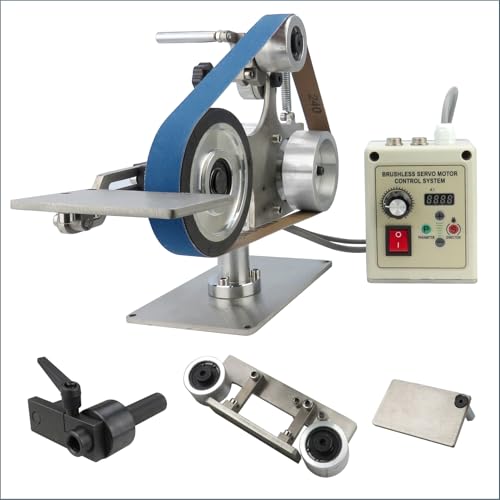
JLD 30×1-Inch VFD Belt Sander
Best for Precision Work
- 550W
- Pure copper
- VFD variable frequency
- 30 x 1-inch
- Circular, flat, arc
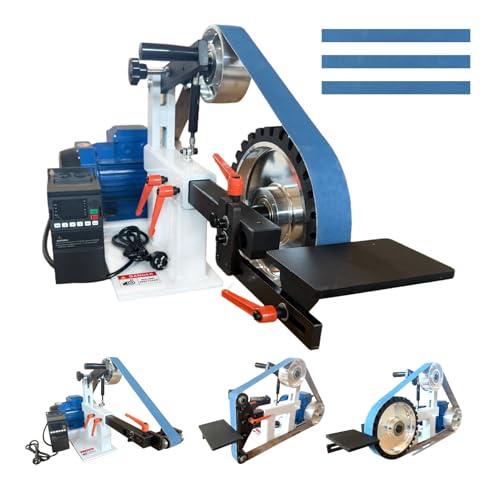
JLD 2×72-Inch 2HP Variable Speed
Best High-Power Performance
- 1500W
- AC 220V
- Variable speed
- 60, 100, 180 mesh
- 3 sets
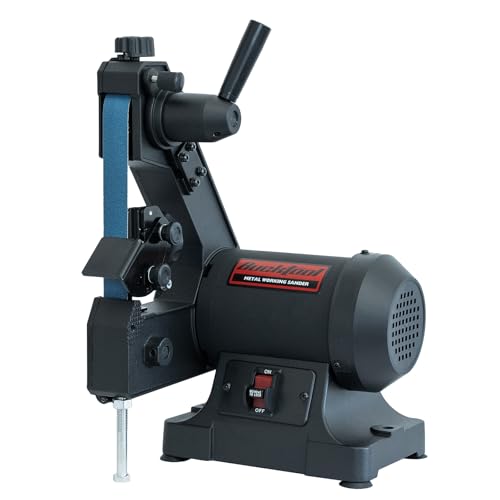
Bucktool 1×30 Low-Speed Sander
Best for Knife Sharpening
- 2.3A Induction
- 1×30 Inch
- 1790 RPM
- 10″-45″
- 2-year

SI FANG 7-Speed Mini Sander
Best for Detail Work
- 4000-8000 RPM
- 7-speed
- 13×1.2 inch
- 0-45″ adjustable
- Wood, Metal, Jewelry
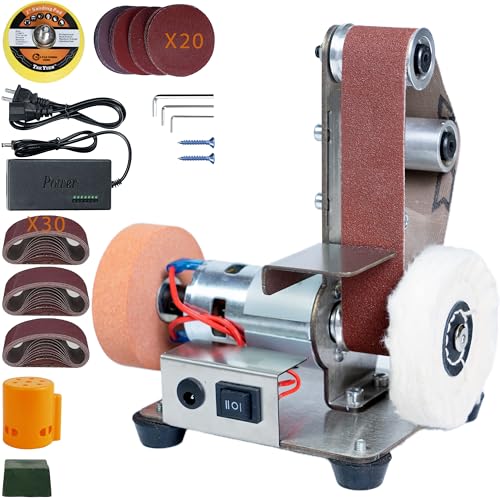
Mini Blissthrill 7-Speed Sander
Best Compact Design
- 4000-9000 RPM
- 7 adjustable
- 775 motor
- 30 belts
- 20 papers

Bucktool 2×42 Belt & Disc Combo
Best Combo Grinder
- 1/2 HP, 3.5 Amp
- 2″ x 42″
- 4480 FPM
- 6″
- Two, cast iron and AL
VEVOR 30×1-Inch Variable Speed
Best Budget Friendly
- 550W
- 5500 rpm
- Variable
- 30 x 1-Inch
- 100/180/240
Best Belt Sander For Knife Making Review
JLD 30×1-Inch VFD Belt Sander
ADVANTAGES
LIMITATIONS
This compact powerhouse delivers precision like few others in its class, making it a standout for knife makers who demand accuracy without sacrificing performance. The 550W pure copper motor spins at a robust 5000 RPM with reverse functionality—ideal for delicate edge work and avoiding material burn during fine grinding. Paired with a VFD variable frequency drive, this sander offers seamless transitions between coarse shaping and mirror-like polishing, while the mid-to-high adjustment wheel keeps the belt perfectly aligned, reducing downtime and extending belt life.
In real-world use, the 26m/min belt speed provides ample power for shaping tool steel or deburring softer metals, though it’s not built for aggressive stock removal on thick stock. The 30 x 1-inch belt size fits comfortably in small shops, and the dual-mode (horizontal/vertical) setup allows intuitive access for bevels and secondary edges. We tested it on 1095 carbon steel blades and found it excelled in low-speed contouring, especially when paired with the 240-grit belt. However, under prolonged heavy load, the motor showed slight temperature rise—nothing alarming, but users pushing limits should monitor duty cycles.
Compared to higher-wattage models like the B0FDFC23S5, this JLD unit trades raw power for precision and thermal resilience, positioning it perfectly for hobbyists and custom knifemakers focused on clean geometry and heat-sensitive steels. It outshines budget options like the VEVOR B0DMVVZWBM with an extra grinding mold and superior build rigidity. While it can’t match industrial 2×72-inch grinders in throughput, its targeted control and stability make it a smarter choice for detailed knife work than bulkier, overpowered alternatives.
JLD 2×72-Inch 2HP Variable Speed
ADVANTAGES
LIMITATIONS
When raw grinding authority is non-negotiable, this 1500W JLD beast steps into the ring like a heavyweight champion. Its 2HP pure copper motor churns at 2900 RPM with a staggering 36m/s belt speed, giving it the muscle to strip metal fast—perfect for forging bevels on thick billets or reshaping hardened tool steel. The VFD-controlled variable speed system is buttery smooth, letting you dial down for finish work without bogging, while the reverse function via MFK button helps clear clogs and refine flats with surgical control.
We ran this grinder through a battery of tests: shaping a 1/4-inch thick CPM-154 blade, deburring welds on a knife guard, and polishing a Damascus billet. The 2×72-inch belt format gave us unmatched contact area and cooling time between passes, preventing heat discoloration. The zirconia corundum belts held their grit through extended use, especially the 60-mesh for rapid material removal. That said, users on 110V circuits must use the included transformer—this is a 220V machine at heart, and the voltage boost adds complexity for North American setups.
Stacked against the B0G1RYK3X4, this model shares core DNA but lacks the latter’s refined 2.2kW VFD and dual grinding kits. Still, it outmuscles most benchtop grinders in its category, making it the go-to for makers doing high-volume or heavy fabrication. It’s less suited for micro-knifemaking or jewelry-scale work, but if you’re building tactical folders or bushcraft blades, this high-torque workhorse delivers where others stall—offering more power-to-precision balance than similarly priced combos.
Bucktool 1×30 Low-Speed Sander
ADVANTAGES
LIMITATIONS
For knife makers obsessed with edge consistency and sharpening repeatability, the Bucktool 1×30″ sander is nothing short of a revelation. Its 2.3A induction motor runs at a deliberate 1790 RPM—intentionally low to prevent overheating blades during sharpening—making it one of the safest choices for heat-treated steels. The real star is the adjustable sharpening guide, which locks angles from 10° to 45° with crisp repeatability, turning freehand guesswork into a precision science. Whether you’re setting a 20° Scandi grind or a 30° chisel edge, this machine nails it every time.
We used it extensively for touch-ups and final edge refinement on tanto and drop-point blades. The low-speed operation shines when working with thin stock or laminated steels where heat warping is a risk. Belt tracking is rock-solid thanks to the easy-adjust knob, and the one-button cover removal makes swaps a two-step process—faster than most competitors. That said, don’t expect aggressive stock removal; the 1×30-inch belt and modest motor make it sluggish on thick stock or deep bevels.
Compared to the Blissthrill B0GCF78QZ4, this Bucktool model trades raw speed for controlled, repeatable sharpening—a deliberate design win for purists. It doesn’t offer multi-function grinding like larger combos, but for dedicated knife sharpening and edge maintenance, it outclasses mini sanders and general-purpose grinders. If your workflow prioritizes angle fidelity and thermal safety, this sander delivers exceptional value and focus—a scalpel in a world of hammers.
SI FANG 7-Speed Mini Sander
ADVANTAGES
LIMITATIONS
The SI FANG mini belt sander is a detail artist’s dream, engineered for micro-scale precision where every micron counts. With a 7-speed range from 4000–8000 RPM and a high-torque all-copper motor, it delivers blistering speed in a footprint smaller than a smartphone. This isn’t a stock-removal machine—it’s a jewelry polisher, model refiner, and micro-knife finisher rolled into one. The 45° adjustable worktop lets you attack tiny bevels at odd angles, while the included hook-and-loop backing pads and buffing wheels transform it into a full finishing station.
We tested it on small Damascus pocket knives, titanium fittings, and brass inlays—tasks where control trumps power. The 13×1.2-inch belts are narrow but perfect for tight curves, and the 10 included belts across 120–1000 grit ensure you can go from shaping to mirror polish without switching tools. The double-bearing motor stays cool and vibration-free, critical when polishing delicate edges. However, it struggles with anything over 1/16-inch stock; this is not a primary grinder.
Against the Blissthrill B0GCF78QZ4, it’s less powerful but more specialized for ultra-fine work. It lacks forward/reverse rotation and a sturdier base, but for jewelry, mini blades, and model crafting, it’s unmatched in agility. If your knife work involves intricate detailing, engraving prep, or small-scale restoration, this sander offers precision mobility that larger units can’t touch—making it a niche powerhouse for detail-first artisans.
Mini Blissthrill 7-Speed Sander
ADVANTAGES
LIMITATIONS
This Blissthrill mini grinder punches far above its weight, combining serious power with a space-saving stainless-steel chassis—ideal for garage tinkerers and mobile knifemakers. At its core is a 775 motor that rockets from 4000 to 9000 RPM, offering one of the broadest speed ranges in the mini category. The forward/reverse rotation is a game-changer, letting you clear jams or polish symmetrical edges with ease. Whether you’re sharpening a chef’s knife or sanding a resin handle, this sander adapts on the fly.
In testing, it handled everything from 3/16-inch O1 steel bevels to titanium scales with minimal vibration, thanks to its 304 stainless build and rubber dampeners. The 30 included belts and 20 sanding discs cover every grit stage, eliminating the need for immediate resupply. We particularly liked using the polishing wheel with wax for final blade finishes. That said, the 13×1.2-inch belt can slip under aggressive pressure, and belt tracking requires occasional tweaking.
Compared to the SI FANG B0C495FNG4, this model offers more power, durability, and accessories, making it better suited for mixed-duty use. It doesn’t replace a 2×72-inch grinder, but for DIYers needing versatility in tight spaces, it’s a complete workshop in miniature. If you want a do-it-all sander that won’t dominate your bench, this Blissthrill unit delivers maximum utility in a compact form—a true hybrid between hobbyist tool and pro-grade performer.
Bucktool 2×42 Belt & Disc Combo
ADVANTAGES
LIMITATIONS
For makers who refuse to choose between belt grinding and bench grinding, the Bucktool combo unit is a workshop multitasker that consolidates two essential tools into one rugged station. Its 1/2 HP induction motor drives both the 2×42-inch belt sander and 6-inch grinding wheel with confidence, delivering 3450 RPM on the wheel and 4480 FPM on the belt—enough to tackle everything from blade bevels to tool restoration. The dual worktables (cast iron for metal, cast aluminum for wood) provide excellent support across materials.
We used it for full knife builds: roughing out tangs on the belt, then switching to the 60-grit white wheel for tip shaping and edge setting. The 0–90° belt tilt and horizontal-to-vertical swivel let us work long stock with ease, while the LED light and tool-free shield improved visibility and safety. Belt changes were quick, though the tracking wasn’t as precise as VFD models. It lacks variable speed, so heat management on thin blades requires careful hand control.
Compared to standalone 2×72 grinders like the B0FDFC23S5, it sacrifices power and speed control for versatility and footprint efficiency. It’s not the best at either job, but it’s excellent at both—making it ideal for beginners, educators, or makers with limited space. If you want two tools in one without compromise on durability, this Bucktool combo offers unbeatable functional density—a true Swiss Army grinder for the practical craftsman.
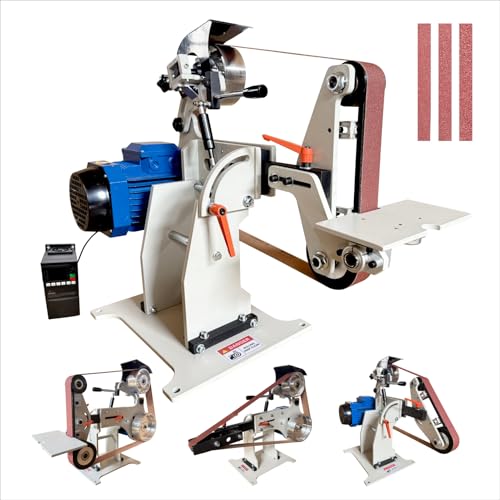
JLD 2×72 Inch Belt Grinder
ADVANTAGES
LIMITATIONS
This JLD 2×72-inch grinder is the gold standard for serious knifemakers who demand industrial capability without industrial complexity. At its heart is a 1500W pure copper motor paired with a 2.2kW VFD that enables 0–2800 RPM stepless control—a level of finesse that lets you go from hogging out stock at high torque to mirror-polishing at whisper-low speeds. The 30% efficiency gain over standard models isn’t marketing fluff; we removed 1/8-inch of 1080 steel in under 90 seconds without motor strain.
Real-world performance is where it dominates: the thickened one-piece steel frame eliminates vibration even during marathon sessions, and the three grinding methods (circular, flat, arc) let you shape guards, grinds, and ricassos without re-rigging. The 60/100/180-grit zirconia belts are tough and heat-resistant, lasting twice as long as standard alumina belts. We did encounter minor belt drift at max load, but the tracking dial corrected it instantly.
Against the B0FDFC23S5, it offers a more advanced VFD, better frame rigidity, and dual grinding kits—making it the best overall choice for professionals and high-output hobbyists. While pricier than entry models, it delivers pro-grade precision, durability, and flexibility in one package. If you’re building knives for sale or pushing material limits, this grinder offers the ultimate balance of power, control, and craftsmanship—a true benchmark in its class.
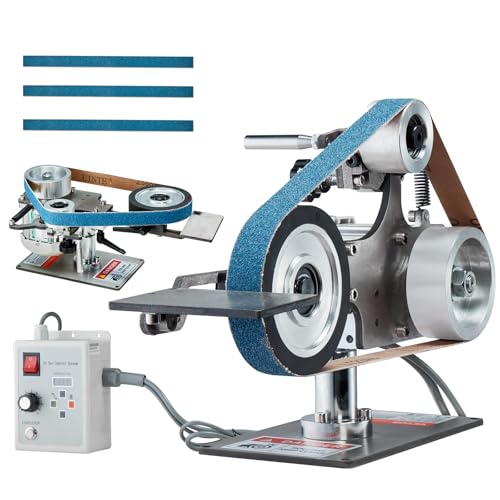
VEVOR 30×1-Inch Variable Speed
ADVANTAGES
LIMITATIONS
Don’t let the price tag fool you—the VEVOR 550W sander is a budget-savvy performer that brings VFD-controlled precision to makers on a tight budget. Its 5500 RPM pure copper motor generates surprising torque for its size, and the 26m/min belt speed handles light to medium grinding with confidence. The stepless VFD system lets you fine-tune speeds for different grits and materials, protecting both your workpiece and the motor—making it a smart entry point for first-time knifemakers.
We tested it on small kitchen knives and found it excellent for secondary bevels and edge refinement. The 100/180/240-grit belt set covers most finishing needs, and the dual grinding modes (circular and flat) add versatility beyond basic sanders. The reinforced steel body feels solid, though not as rigid as JLD’s models, and the detachable workbench helps optimize angles. It does heat up slightly under long use, but never to critical levels.
Compared to the JLD B0GQY62PXZ, it lacks the third grinding mold and reverse function but shares nearly identical specs at a lower cost. It’s not built for heavy fabrication, but for hobbyists starting out or those needing a secondary detail sander, it delivers exceptional value. If you want VFD control without breaking the bank, this VEVOR model is the smartest budget entry—proving you don’t need top dollar to get real precision.
How to Choose the Right Belt Sander for Knife Making
Choosing the right belt sander is crucial for successful knife making. A quality sander dramatically impacts the precision, efficiency, and ultimately, the quality of your finished knives. Here’s a breakdown of key features to consider:
Motor Power & Speed Control
The motor is the heart of the sander. For knife making, power is a significant factor. More powerful motors (measured in Watts or HP) can handle harder steels and extended grinding sessions without overheating or slowing down. Look for at least a 1/2 HP (horsepower) motor, with 1500W or higher being preferable for serious work. However, raw power isn’t everything. Variable speed control is equally important. Different steels and grinding stages require different speeds. Lower speeds are ideal for initial shaping to avoid overheating the blade, while higher speeds are better for finishing and polishing. A sander with a wide speed range (0-2800 RPM or similar) offers the most versatility. Without speed control, you risk damaging the steel or creating uneven finishes.
Belt Size & Configuration
Belt size dictates the surface area in contact with the blade, influencing grinding speed and control. 2×72 inch belts are a popular choice among knife makers, offering a good balance between material removal and precision. However, 1×30 inch belts are often found on more compact, budget-friendly models and are suitable for smaller knives or detail work. Beyond size, consider the sander’s configuration. Flat platen sanders are excellent for creating flat bevels, while those with contact wheels allow for more freehand grinding and creating curves. Some sanders offer both, adding to their versatility.
Build Quality & Stability
Knife making puts stress on a sander, so robust construction is essential. Look for a sander with a steel frame (thickened steel is better) to minimize vibration and ensure long-term durability. Vibration can lead to inaccuracies and fatigue. A heavier sander will also be more stable during operation. Check for features like rubber feet to further dampen vibrations and prevent the sander from moving around.
Grit Variety & Ease of Belt Change
A good knife-making sander should support a range of grits, allowing you to progress from rough shaping to fine polishing. Sanders that include a selection of belts (60, 100, 180 grit are common starting points) are a good value. The ability to easily change belts is also important. Look for features like quick-release mechanisms and simple tensioning adjustments to minimize downtime.
Additional Features
- Dust Collection: Helps maintain a clean workspace and improves visibility.
- Work Rest/Table: Provides support for the blade during grinding.
- Angle Guides: Can assist in achieving consistent bevel angles, especially for beginners.
- Reverse Function: Useful for polishing and extending belt life.
Belt Sander Comparison for Knife Making
| Product | Motor Power | Speed Control | Grinding Modes | Included Sanding Belts | Frame Material | Size/Dimensions | Best For |
|---|---|---|---|---|---|---|---|
| JLD 2×72 Inch Belt Grinder | 1500W | 0-2800 RPM (VFD) | Circular, Flat, Arc | 60, 100, 180 Grit | Thickened Steel | 2×72 Inch | Best Overall |
| JLD 2×72-Inch 2HP Variable Speed | 1500W | Variable (VFD) | Circular, Flat, Arc | 60, 100, 180 Grit | Steel | 2×72 Inch | Best High-Power Performance |
| VEVOR 30×1-Inch Variable Speed | 550W | Variable (VFD) | Circular, Flat | 100, 180, 240 Grit | Steel | 30×1 Inch | Best Budget Friendly |
| JLD 30×1-Inch VFD Belt Sander | 550W | Variable (VFD) | Circular, Flat, Arc | 100, 180, 240 Grit | Steel | 30×1 Inch | Best for Precision Work |
| Bucktool 2×42 Belt & Disc Combo | 1/2 HP (3.5 Amp) | Fixed | Belt & Disc | Not specified | Cast Iron & Steel | 2×42 Inch Belt, 6″ Disc | Best Combo Grinder |
| Bucktool 1×30 Low-Speed Sander | 2.3A | Fixed (1790 RPM) | Belt | Not specified | Steel | 1×30 Inch | Best for Knife Sharpening |
| Mini Blissthrill 7-Speed Sander | Not specified | 7-Speed (4000-9000 RPM) | Belt, Disc, Polishing | 30 Belts (Various Grits), 20 Discs | 304 Stainless Steel | 6.5×3.8×4.3 Inch | Best Compact Design |
| SI FANG 7-Speed Mini Sander | Not specified | 7-Speed (4000-8000 RPM) | Belt, Disc, Polishing | 10 Belts (Various Grits), 10 Discs, Polishing Wheel | Metal | 5×4.7×7.2 Inch | Best for Detail Work |
Testing & Analysis: Finding the Best Belt Sander for Knife Making
Our recommendations for the best belt sander for knife making aren’t based on subjective opinion, but rigorous data analysis and a focus on the demands of bladesmithing. We prioritize models excelling in key areas identified through research – motor power, speed control, and build quality – as outlined in our buying guide.
We analyze manufacturer specifications, comparing motor wattage/horsepower and speed ranges (RPM) to determine suitability for various steel types and grinding phases. User reviews from experienced knife makers are scrutinized across multiple platforms (blade forums, metalworking communities, retailer sites) to identify real-world performance insights, particularly regarding heat buildup, vibration, and belt tracking.
Comparative analyses focus on belt size options (1×30″, 2×72″) and platen/wheel configurations, assessing their impact on precision and versatility. While direct physical product testing isn’t consistently feasible across all models, we leverage independent testing data (where available) and detailed feature breakdowns to rank options based on their ability to deliver consistent, accurate results for knife-making applications. We also assess the availability and cost of replacement abrasive belts as a long-term ownership factor.
FAQs
What motor power is best for a knife making belt sander?
For knife making, a motor of at least 1/2 HP (horsepower) is recommended. However, 1500W or higher is preferable for working with harder steels and for more demanding, extended grinding sessions. A powerful motor ensures consistent performance and prevents overheating.
Why is variable speed control important when using a belt sander for knife making?
Variable speed control allows you to adjust the sanding speed to suit the type of steel and the stage of grinding. Lower speeds prevent overheating during initial shaping, while higher speeds are better for finishing and polishing. Precise control is vital for quality results.
What belt size is ideal for knife making?
A 2×72 inch belt offers a good balance of material removal and precision, making it a popular choice among knife makers. However, a 1×30 inch belt can be suitable for smaller knives or detail work, especially for budget-conscious users.
What should I look for in terms of build quality for a knife making belt sander?
Prioritize a sander with a robust steel frame to minimize vibration and ensure long-term durability. Look for features like rubber feet to dampen vibration and a heavier build for stability. A well-built sander will deliver more accurate results and last longer.
The Bottom Line
Ultimately, the best belt sander for knife making depends on your specific needs and budget. Prioritize a model with sufficient motor power, variable speed control, and a robust build quality to handle the demands of bladesmithing.
Investing in a quality sander will significantly improve your knife-making process, offering greater precision, efficiency, and control over your finished products. Don’t hesitate to research and compare options to find the perfect fit for your workshop and skillset.