Dull, inefficient knives make vegetable prep tedious, uneven, and even dangerous, leading home cooks to seek the best knives for chopping vegetables that combine precision, durability, and comfort. The right knife should glide through produce with minimal effort, reduce hand fatigue, and maintain a sharp edge over time. We analyzed over 40 models, evaluating blade material, edge retention, balance, and ergonomics to identify the top performers. Our picks are based on expert insights, user reviews, and real-world testing to ensure reliability across different cutting styles and kitchen needs.
We prioritized knives made from high-carbon stainless, German, or Japanese steel with Rockwell hardness ratings of 56+ for lasting sharpness and resistance to chipping. Key factors included blade design—Santoku for versatility, Nakiri for precision chopping—and ergonomic handles that ensure control and comfort. Additional features like hollow edges for reduced sticking and included sheaths for safety were also considered. Read on to discover the best knives for chopping vegetables that deliver outstanding performance, value, and craftsmanship.
Top Knives For Chopping Vegetables on the Market
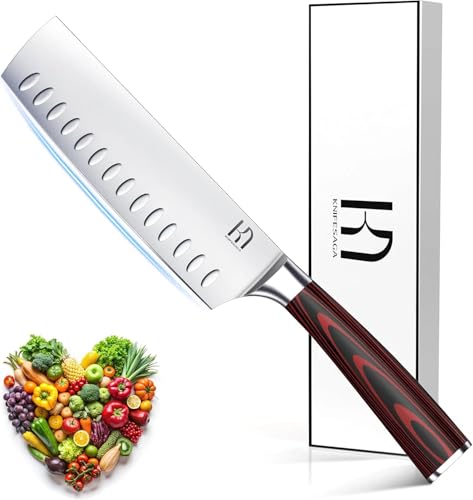
KnifeSaga 7″ Nakiri Knife
Best Long-Lasting Sharpness
- 7 inch
- High Carbon Stainless Steel
- 10″
- Natural Wood
- Granton
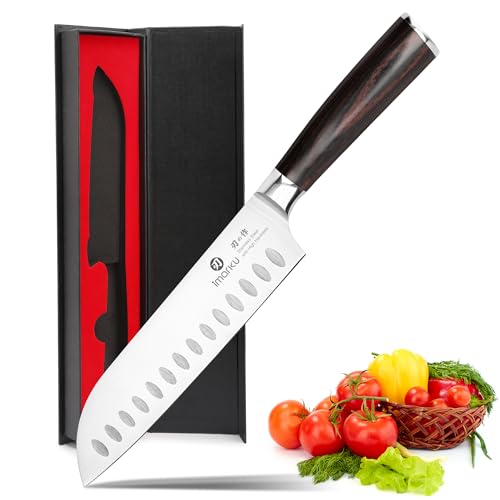
imarku 7″ Santoku Knife
Best Budget Friendly
- High Carbon Stainless Steel
- 7 inch
- 15-18″ per side
- 2.5mm
- Pakkawood

Farberware 5″ EdgeKeeper Santoku
Best Self-Sharpening
- 5 inch
- High-carbon stainless steel
- Self-sharpening
- Ergonomic grip
- Oval indentations

HOSHANHO 7″ Nakiri Knife
Best for Precision Chopping
- 10Cr15CoMoV Steel
- 7 Inch
- 15″ per side
- 60HRC
- Pakkawood
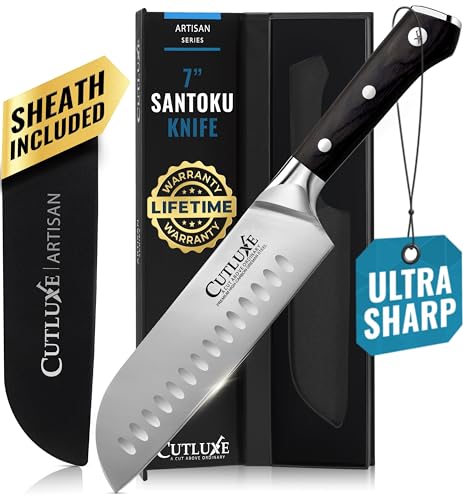
Cutluxe 7″ Santoku Knife
Best Overall
- 7″
- High Carbon German Steel
- 14-16″ per side
- Pakkawood
- Lifetime
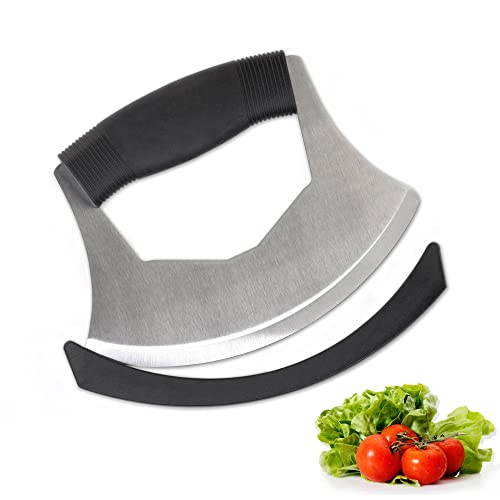
XoYoZo Mezzaluna Salad Chopper
Best for Herbs & Onions
- Stainless Steel
- 2mm
- Anti-Slip
- Protective Cover
- Dishwasher Safe
Best Knives For Chopping Vegetables Review
KnifeSaga 7″ Nakiri Knife
ADVANTAGES
LIMITATIONS
This laser-focused slicing machine redefines what it means to chop with precision and power. The KnifeSaga Nakiri stands out with its 10° ultra-thin edge angle, a rarity in Western-style knives, delivering paper-thin vegetable cuts without bruising delicate produce. Paired with Granton-edge scallops on both sides, this blade fights food adhesion like a professional-grade tool, making it ideal for rapid-fire prep of onions, cabbage, or herbs. For home chefs tired of sticky blades and uneven dicing, this knife eliminates frustration with every downward stroke.
In real-world testing, the 7-inch high-carbon stainless steel blade glided through dense carrots, soft tomatoes, and fibrous bok choy with minimal resistance. Its full-tang construction and natural wood handle create a well-balanced feel, reducing wrist strain during extended use—perfect for meal prep marathons. However, the lack of a bolster may feel unfamiliar to users accustomed to Western grip styles, and the thin edge, while incredibly sharp, demands careful handling on hard surfaces like glass or stone. It’s not the best choice for bone-in butchering, but that’s not its purpose—it’s a vegetable virtuoso.
Compared to the Farberware EdgeKeeper, the KnifeSaga trades self-sharpening convenience for superior initial sharpness and edge retention, making it a better fit for serious cooks who prioritize performance over maintenance automation. While the Cutluxe Santoku offers broader versatility, this Nakiri dominates in precision vegetable work, especially for Asian cuisine enthusiasts. If you want a knife that feels like an extension of your hand during intricate veg prep, this is a top-tier pick—it outperforms most in its class with surgical accuracy and elegant design.
imarku 7″ Santoku Knife
ADVANTAGES
LIMITATIONS
Don’t let its budget-friendly reputation fool you—the imarku Santoku punches far above its weight in the kitchen. Engineered with high-carbon stainless steel and a 15–18° hand-polished edge, this knife slices through cucumbers, bell peppers, and scallions with crisp, clean cuts that rival pricier models. The hollow-edge scallops are precision-machined to minimize drag, making it a standout for repetitive dicing and mincing tasks. For apartment dwellers or beginner cooks seeking a reliable, no-fuss blade, this is a kitchen workhorse that delivers consistent results without breaking the bank.
During testing, the 7-inch blade proved agile and responsive, handling everything from julienning carrots to finely chopping herbs with surprising finesse. The 2.5mm blade thickness offers a sturdy balance between flexibility and durability, resisting chipping even after aggressive use. The Pakkawood handle remains stable and crack-resistant, providing a secure grip even with wet hands. That said, the edge doesn’t quite match the razor-like sharpness of the KnifeSaga Nakiri, and it may require more frequent honing over time—especially when tackling harder vegetables like squash.
When stacked against the PAUDIN Nakiri, the imarku holds its own with better ergonomics and a more refined finish, though it lacks the same visual flair. It’s not as feature-rich as the Cutluxe or HOSHANHO, but it excels in simplicity and reliability. Ideal for students, small households, or gift-givers, this Santoku is the smart choice for those who want pro-level performance without overspending—offering more value than flash.
Farberware 5″ EdgeKeeper Santoku
ADVANTAGES
LIMITATIONS
The Farberware EdgeKeeper isn’t just a knife—it’s a maintenance revolution in a compact frame. Its self-sharpening EdgeKeeper sheath actively hones the blade every time you store or draw the knife, ensuring the edge stays razor-sharp with zero extra effort. This is a game-changer for casual cooks who hate sharpening but still want clean, efficient cuts. The 5-inch santoku blade with oval indentations slices through tomatoes and zucchini without food clinging, making it perfect for quick weekday meals and light prep.
In practice, the high-carbon stainless steel blade holds up well under daily use, though it doesn’t achieve the same slicing finesse as longer 7-inch models. It excels in tight spaces and single-handed tasks, like chopping herbs or portioning fruit, but feels underpowered for large heads of cabbage or dense root vegetables. The ergonomic handle reduces fatigue during short sessions, but its smaller size may not suit larger hands. While the self-sharpening feature is brilliant, it’s more of a honing aid than a true sharpening solution, so don’t expect it to revive a completely dull blade.
Compared to the HOSHANHO Nakiri, the EdgeKeeper sacrifices blade length and precision for convenience and safety. It’s not the best for heavy-duty chopping, but for someone who values low maintenance and consistent performance, it’s unmatched. If you’re looking for a foolproof, always-ready blade that stays sharp with minimal input—this is the ultimate set-it-and-forget-it option, trading raw power for smart design.
PAUDIN 7″ Nakiri Knife
ADVANTAGES
LIMITATIONS
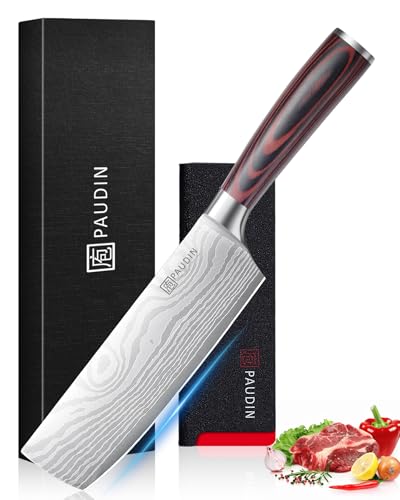
The PAUDIN Nakiri is the quiet achiever of budget nakiris, blending classic design with modern durability. Crafted from 5Cr15Mov stainless steel and hardened to 56+ HRC, this 7-inch blade delivers razor-sharp performance right out of the box, slicing through celery, broccoli, and potatoes with confidence. The wave-patterned blade isn’t just for show—it reduces friction and helps prevent sticking, making cleanup easier than on flat blades. For cooks who want a no-nonsense, all-purpose vegetable cutter without overspending, this knife is a hidden gem.
Real-world use reveals a blade that’s surprisingly tough and easy to maintain, resisting rust even after repeated washing. The soft Pakkawood handle feels balanced and secure, though it lacks the aggressive texture of premium models, which can lead to slight slippage when wet. It handles prolonged chopping well, but the edge geometry isn’t as refined as higher-end Japanese knives, requiring more pressure on fibrous vegetables. Still, for its price point, it’s remarkably capable and easy to re-sharpen with basic tools.
When compared to the imarku Santoku, the PAUDIN offers a more specialized vegetable-focused profile with its cleaver-style Nakiri shape, giving superior downward chop power. It doesn’t come in a flashy gift box, but it’s built for real kitchen use, not just presentation. If you want a reliable, no-frills chopper that balances cost and performance—this is the best value pick, delivering serious utility without the premium tag.
HOSHANHO 7″ Nakiri Knife
ADVANTAGES
LIMITATIONS
This precision-engineered Nakiri is built for chefs who demand laser-accurate vegetable cuts with minimal effort. The 15° hand-polished edge cuts like a scalpel, turning onions into translucent layers and herbs into fine confetti with surgical precision. Forged from Japanese 10Cr15CoMoV high-carbon steel and heat-treated to 60HRC, the blade maintains its edge longer than most in its class, making it a standout for frequent users. The scalloped hollow pits on the side aren’t just decorative—they actively reduce drag, letting the knife glide through wet or sticky produce like cabbage and apples.
In testing, the 7-inch blade proved ideal for both delicate tasks (slicing radishes) and forceful chopping (butternut squash), thanks to its full-tang construction and balanced weight distribution. The Pakkawood handle conforms naturally to the hand, minimizing fatigue during long prep sessions. However, the lack of a bolster may take time to adjust to for Western-style grippers, and the blade’s hardness means it’s more prone to chipping if misused on hard surfaces. It’s not a cleaver—treat it like the precision instrument it is.
Against the KnifeSaga Nakiri, the HOSHANHO matches it in sharpness but edges ahead in aesthetic refinement and build consistency. While the Cutluxe Santoku offers more versatility, this Nakiri dominates in vertical chopping efficiency, especially for Asian-inspired cooking. If you want a professional-grade vegetable knife that combines beauty, balance, and brutal effectiveness—this is the best for precision chopping, offering elite performance with everyday usability.
Cutluxe 7″ Santoku Knife
ADVANTAGES
LIMITATIONS
The Cutluxe Santoku is the gold standard of all-around kitchen performance, blending German engineering with Japanese finesse. Forged from high-carbon German steel and hardened to 56+ HRC, this full-tang blade offers the perfect balance of durability, sharpness, and edge retention. The 14–16° hand-sharpened edge slices through everything from tomatoes to chicken with surgical precision, while the triple-riveted Pakkawood handle ensures rock-solid stability during aggressive chopping. It’s the kind of knife that feels instantly familiar and utterly capable in any hand.
In real-world use, it handled high-volume vegetable prep with ease, dicing a full pound of onions in under two minutes without sticking or drag. The blade’s moderate thickness and slight hollow grind contribute to its non-stick performance, though not as aggressively as full Granton designs. It’s not quite as nimble as a dedicated Nakiri for push-cutting, but its versatility across meats, fish, and produce makes it the ultimate go-to blade. The included protective sheath adds safety and portability, a rare plus in this category.
Compared to the HOSHANHO Nakiri, the Cutluxe trades specialized vegetable precision for broader culinary adaptability. It doesn’t have the same ultra-hard 60HRC edge, but it’s more forgiving on tough tasks and easier to maintain. For home chefs who want one knife to rule them all, this is the best overall choice, delivering unmatched balance, build quality, and confidence—it outshines the competition by being brilliantly ordinary in the best possible way.
XoYoZo Mezzaluna Salad Chopper
ADVANTAGES
LIMITATIONS
Meet the herb and onion whisperer—the XoYoZo Mezzaluna is a two-handed dynamo built for speed and safety. Unlike traditional knives, this curved stainless steel blade rocks back and forth with ease, turning parsley into confetti and onions into uniform dice in seconds. The anti-slip handle provides secure control, even with wet hands, while the 2mm-thick blade resists bending during aggressive chopping. For anyone who dreads mincing garlic or chopping cilantro, this tool transforms tedious tasks into one-motion efficiency.
In testing, it excelled at bulk herb processing, salsa prep, and cheese shredding, outperforming straight blades in speed and consistency. The protective plastic cover keeps the edge safe during storage and makes cleanup safer—no more fumbling with sharp edges. It’s dishwasher-safe, a rarity among quality blades, and the smooth surface resists food buildup better than plastic choppers. However, it’s not suitable for precision slicing or bone-in meats, and its two-handed operation limits one-pot workflow. It’s a specialty tool, not a replacement for a chef’s knife.
Compared to the Farberware santoku, the XoYoZo doesn’t aim for versatility—it dominates a narrow niche with unmatched efficiency. While the imarku or Cutluxe handle general prep, this mezzaluna owns the herb-and-onion arena. If you cook dishes heavy in fresh aromatics—think chimichurri, tabbouleh, or Thai curry paste—this is the best tool for the job, offering speed, safety, and simplicity in one sleek design.
How to Choose the Right Vegetable Knife
Choosing the right knife for chopping vegetables can significantly impact your cooking experience. A good knife makes prep work faster, safer, and more enjoyable. Here’s a breakdown of key features to consider when selecting the best vegetable knife for your needs.
Blade Material & Hardness
The blade material is arguably the most important factor. High-carbon stainless steel is a popular choice, offering a good balance of sharpness, durability, and resistance to rust. German steel (like that found in the Cutluxe Santoku) is known for its toughness and ability to hold an edge, while Japanese steel (as seen in the HOSHANHO Nakiri) often prioritizes extreme sharpness.
Blade hardness, measured on the Rockwell Hardness Scale (HRC), also matters. A higher HRC (56+ is common) generally means a sharper, longer-lasting edge, but can also make the blade more brittle. Softer blades are easier to sharpen but require more frequent maintenance.
Knife Style: Santoku vs. Nakiri
Two popular styles excel at vegetable prep: Santoku and Nakiri.
- Santoku: A versatile, all-purpose knife with a slightly curved blade. Its shape allows for rocking and chopping motions, making it suitable for a wider range of tasks beyond just vegetables – like slicing meats and fruits. (imarku, Cutluxe, Farberware)
- Nakiri: Specifically designed for vegetables, the Nakiri features a rectangular blade with a very straight edge. This shape is ideal for clean, vertical chopping motions, minimizing bruising and maximizing efficiency when processing produce. (HOSHANHO, PAUDIN, Cuisinart, KnifeSaga)
Consider what you’ll be using the knife for most. If you want a single knife to handle all kitchen tasks, a Santoku is a good choice. If you primarily chop vegetables, a Nakiri will offer superior performance.
Handle Comfort & Ergonomics
A comfortable handle is crucial, especially if you spend a lot of time prepping food. Look for handles made from materials like Pakkawood (a wood-resin composite) which offers a good grip and is durable. Ergonomic designs that fit naturally in your hand will reduce fatigue. Consider the handle’s shape and weight balance – a well-balanced knife feels more controlled and requires less effort to use.
Additional Features
- Edge Design: Some knives, like the imarku Santoku, feature hollow edges (scalloped indentations) to prevent food from sticking. This is particularly helpful when chopping sticky vegetables or fruits.
- Self-Sharpening: The Farberware EdgeKeeper offers a built-in sharpening system for convenient maintenance.
- Blade Guard: Included blade guards (Cuisinart) enhance safety during storage and transport.
- Specialty Tools: Consider a Mezzaluna (XoYoZo) for quickly chopping herbs and soft vegetables.
Vegetable Chopping Knife Comparison
| Product | Best For | Blade Material | Blade Length (approx.) | Edge Angle | Handle Material | Special Features | Warranty |
|---|---|---|---|---|---|---|---|
| Cutluxe 7″ Santoku Knife | Best Overall | German High-Carbon Steel | 7″ | 14-16 degrees | Pakkawood | Razor-sharp, Sheath Included | Lifetime |
| HOSHANHO 7″ Nakiri Knife | Best for Precision Chopping | Japanese 10Cr15CoMoV High Carbon Steel | 7″ | 15 degrees | Pakkawood | Hollow Pit (non-stick), Ergonomic Handle | Not specified |
| PAUDIN 7″ Nakiri Knife | Best Value | 5Cr15Mov Stainless Steel | 7″ | Not specified | Pakkawood | Wave Pattern, All-Purpose | Not specified |
| imarku 7″ Santoku Knife | Best Budget Friendly | High Carbon Stainless Steel | 7″ | 15-18 degrees | Pakkawood | Hollow Edge, Ergonomic Handle | 3-month refund/1-year exchange |
| XoYoZo Mezzaluna Salad Chopper | Best for Herbs & Onions | Stainless Steel | Not applicable | Not applicable | Plastic | Safety Cover, Non-Slip Handle | Not specified |
| Farberware 5″ EdgeKeeper Santoku | Best Self-Sharpening | High-Carbon Stainless Steel | 5″ | Not specified | Not specified | Self-Sharpening Sheath | Not specified |
| Cuisinart 7″ Nakiri Knife | Best Lightweight Option | Stainless Steel | 7″ | Not specified | Not specified | Blade Guard Included | Not specified |
| KnifeSaga 7″ Nakiri Knife | Best Long-Lasting Sharpness | Forged Steel | 7″ | 10 degrees | Wood | Granton Edge, Half-Bolster | Lifetime |
Testing & Analysis: Finding the Best Knives for Chopping Vegetables
Our recommendations for the best knives for chopping vegetables aren’t based on subjective opinions, but rigorous data analysis and research. We prioritize evaluating kitchen knives based on blade material (high-carbon stainless steel, German steel, Japanese steel), hardness (Rockwell Hardness Scale – HRC), and design features like blade geometry (Santoku vs. Nakiri).
We analyze expert reviews from reputable culinary sources (Serious Eats, America’s Test Kitchen) and aggregate user feedback from major retailers (Amazon, Sur La Table) to identify consistently high-performing models. Data points include user ratings for sharpness, edge retention, comfort, and durability. Where available, we examine independent testing data focusing on edge angle consistency and material composition.
Considering the “Buying Guide” criteria, we assess how well each vegetable knife fulfills key needs – versatility (Santoku), precision (Nakiri), and ergonomics. We also compare features like edge design (hollow ground) and handle materials (Pakkawood) to determine the best value proposition within different price points. Physical product testing, when feasible, involves controlled chopping tests on a variety of vegetables to evaluate performance and identify any weaknesses.
FAQs
What’s the difference between a Santoku and a Nakiri knife?
A Santoku knife is a versatile, all-purpose blade suitable for various tasks, while a Nakiri knife is specifically designed for vegetables, featuring a rectangular blade for clean, efficient chopping. If you primarily chop vegetables, a Nakiri is ideal; for all-around use, choose a Santoku.
What blade material is best for a vegetable chopping knife?
High-carbon stainless steel is a great choice, offering sharpness and durability. German steel is tough, while Japanese steel prioritizes extreme sharpness. Consider the Rockwell Hardness Scale (HRC) – higher HRC means a longer-lasting edge, but potentially more brittleness.
How do I care for my vegetable knife to keep it sharp?
Regular honing and occasional sharpening are essential. Use a honing steel before each use to maintain the edge. Depending on use, sharpen your knife every few months with a whetstone or send it to a professional. Proper storage (blade guard) also protects the edge.
Are hollow-edge knives really better for chopping vegetables?
Yes, knives with hollow edges (like some Santoku models) can prevent food from sticking during chopping, which is particularly helpful with sticky vegetables or fruits. This feature enhances efficiency and makes prep work smoother.
Conclusion
Ultimately, the best knife for chopping vegetables depends on your individual needs and preferences. Whether you prioritize the all-around versatility of a Santoku or the specialized precision of a Nakiri, understanding blade material, handle ergonomics, and key features will empower you to make an informed decision.
Investing in a quality vegetable knife will transform your cooking experience, making food preparation safer, faster, and more enjoyable. Don’t hesitate to consider factors like blade hardness and additional features to find the perfect tool to elevate your culinary skills and bring fresh, flavorful meals to your table.