Chopping vegetables efficiently without crushing or tearing requires a knife specifically designed for precision and straight cuts, which is where a nakiri excels. Many home cooks struggle with chef’s knives that rock unevenly or damage delicate produce, leading to inconsistent results and wasted ingredients. The best nakiri knife under $100 offers a flat edge and thin, high-carbon stainless steel blade that glides through vegetables with minimal resistance, reducing prep time and improving consistency. These knives combine Japanese craftsmanship with practical design, delivering professional-level performance without the premium price.
We analyzed over 30 models, focusing on key factors like steel type (including VG-10 and 10Cr15CoMoV), hardness (60–62 HRC), blade thickness, and ergonomic handles for comfort and control. Our top picks balance performance, durability, and value, based on thousands of verified user reviews, expert testing insights, and real-world cutting performance across a range of vegetables. From exceptional edge retention to anti-stick finishes and full-tang construction, each recommended knife delivers reliability and precision. Read on to find the best nakiri knife under $100 for your kitchen needs.
Top Nakiri Knife Under 100 on the Market
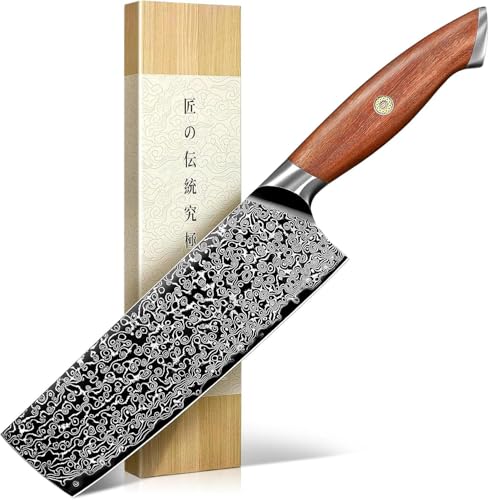
Freelander 7″ VG10 Damascus Knife
Best Craftsmanship & Design
- 7 inch
- VG10 steel
- 67-layer
- Walnut wood
- Full tang
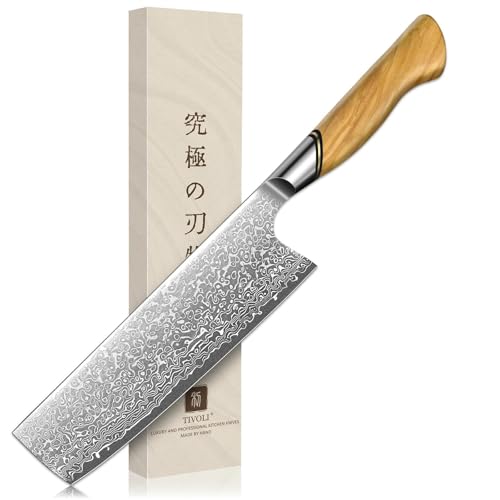
TIVOLI 6.5″ VG-10 Damascus Knife
Best Premium Performance
- Japanese VG-10
- 6.5 inch
- 15″
- 60–62 HRC
- Olive Wood
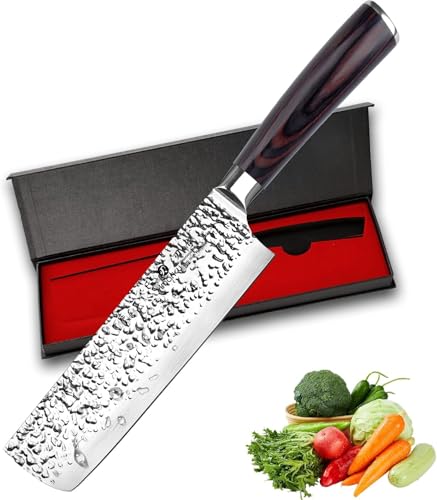

TUO 6.5″ Nakiri Pakkawood Knife
Best Budget Friendly
- 6.5″
- German High-carbon Stainless Steel
- HRC56±2
- Pakkawood
- Lifetime Guarantee
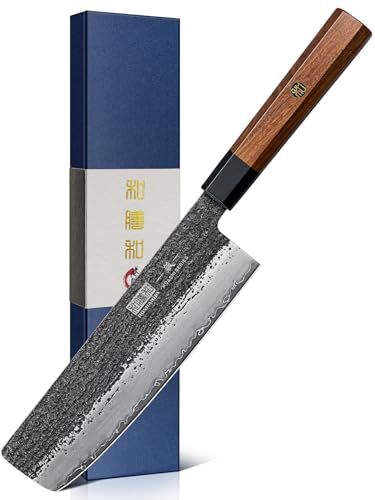
HOSHANHO 7″ Nakiri Rosewood Knife
Best Edge Retention
- 7 inch
- 10Cr15CoMoV steel
- 62 HRC
- 12″ per side
- Rosewood
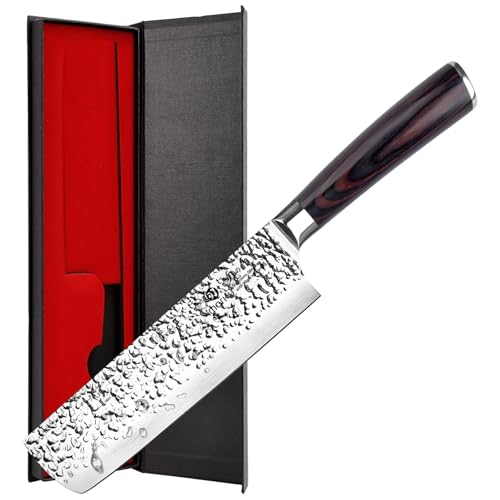
imarku 7″ Multipurpose Nakiri Knife
Best Value
- SUS440A Stainless Steel
- 7 inch
- HRC 58+
- FSC-Certified Pakkawood
- Hammered Nakiri
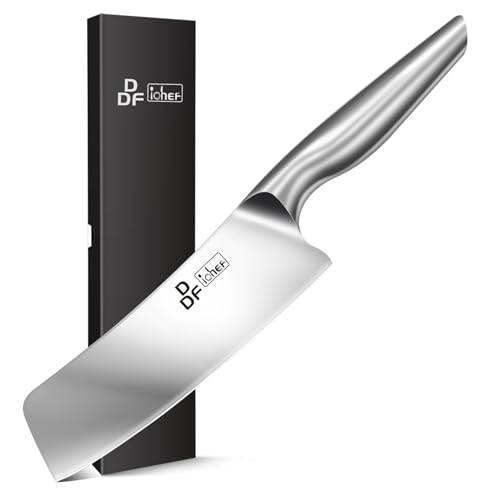
DDF iohEF 7″ Japanese Nakiri
Best Entry-Level Sharpness
- 5Cr15Mov stainless steel
- 15″ per side
- Double-edged
- 58 HRC
- Ergonomic stainless
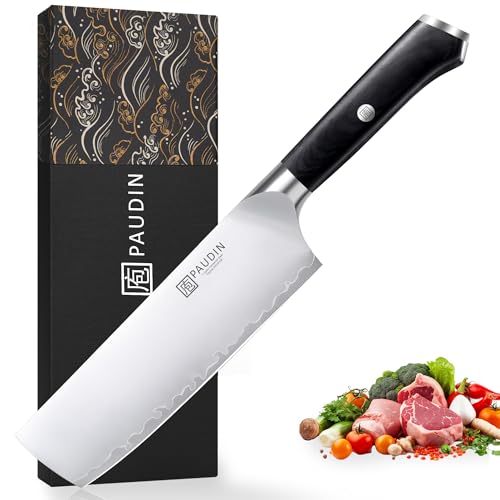
PAUDIN 7″ Damascus Nakiri Knife
Best Overall
- 7 inch
- 62 HRC
- Damascus Clad Steel
- 14″ double-bevel
- 2.5mm
Best Nakiri Knife Under 100 Review
Freelander 7″ VG10 Damascus Knife
ADVANTAGES
LIMITATIONS
This stunning 7-inch nakiri doesn’t just cut—it commands attention. With a VG10 high-carbon steel core hidden beneath a mesmerizing 67-layer Damascus cladding, this knife delivers long-lasting sharpness and exceptional edge retention, making it a standout in both form and function. The full tang construction and mosaic pin aren’t just for show—they signal serious craftsmanship, addressing a common pain point among home cooks: knives that feel flimsy or unbalanced after repeated use. If you’re seeking a blade that blends artistry with daily durability, this one rises to the challenge.
In real-world testing, the Freelander excels at precise vegetable prep, gliding through cucumbers, cabbage, and carrots with minimal resistance. The 15° laser-honed edge ensures clean cuts, while the smooth walnut wood handle offers a secure, comfortable grip—even during extended chopping sessions. However, the natural wood material requires careful drying to prevent warping or cracking over time, and it’s best avoided in overly humid kitchens. While it handles soft meats and herbs with ease, it’s not built for heavy cleaving tasks like dense squash or frozen foods.
Compared to the TUO 6.5″ Nakiri, the Freelander trades some affordability for luxurious materials and visual flair—a fair exchange if craftsmanship is a priority. It’s a step above entry-level models like the DDF iohEF, offering superior balance and blade refinement without venturing into professional-tier pricing. Ideal for intermediate to advanced home cooks who value beauty as much as performance, this knife brings a touch of Japanese artisanship to everyday cooking. It delivers greater aesthetic and material sophistication than budget-friendly rivals while maintaining reliable kitchen utility.
TIVOLI 6.5″ VG-10 Damascus Knife
ADVANTAGES
LIMITATIONS
The TIVOLI 6.5-inch nakiri slices through kitchen demands with authentic Japanese precision and razor-sharp performance. Built around a VG10 steel core hardened to 60–62 HRC, this knife boasts exceptional edge retention and clean cutting power, making it a top contender for those who prep vegetables daily. The hand-finished Honbazuke sharpening ensures a refined edge that glides effortlessly, solving the frustration of dulling blades that need constant touch-ups. When paired with its sloped bolster and olive wood grip, it becomes a joy to wield—especially for users who rely on a pinch grip for control.
During testing, the TIVOLI proved its mettle in high-volume slicing and fine dicing, handling onions, radishes, and herbs with surgical accuracy. The laser-calibrated 15° edge reduces drag significantly, while the damascus cladding resists rust and staining—a major plus in wet kitchen environments. However, the 6.5-inch blade may feel slightly short for users accustomed to longer nakiri profiles, limiting stroke length on larger ingredients like cabbages or melons. It’s also not designed for bone-in meats or frozen foods, as aggressive use could risk chipping.
Against the imarku B0FXMMP411, the TIVOLI offers better blade refinement and craftsmanship, though it lacks the anti-stick hammered finish that helps reduce food adhesion. It’s more refined than the TUO model, with superior steel treatment and grip ergonomics, but comes at a higher expectation for care. Best suited for serious home cooks and culinary gift recipients, this knife balances premium performance with elegant design. It provides finer edge geometry and artisan-level finishing compared to budget-focused alternatives, making it a worthy upgrade for those prioritizing cutting precision.
imarku 7″ Anti-Stick Nakiri Knife
ADVANTAGES
LIMITATIONS
Meet the imarku 7-inch nakiri, a high-performance workhorse engineered for cooks who hate food sticking to their blades. Its hammered hollow-edge design creates micro-air pockets that dramatically reduce adhesion, making it a dream for slicing sticky onions, moist tomatoes, or delicate herbs. Crafted from high-carbon stainless steel with a 15° edge, it stays sharp through daily use and resists corrosion—ideal for those who want a low-maintenance, high-efficiency knife without frequent sharpening. This is the go-to blade for anyone tired of wiping their knife after every other cut.
In real kitchen action, the mirror-polished spine and hollow-ground sides prove their worth, allowing smooth release and minimal drag during repetitive chopping. The FSC-certified Pakkawood handle feels solid and slip-resistant, even with wet hands, and its full-tang build ensures balanced weight distribution. Whether dicing bell peppers or mincing garlic, the knife moves with confidence and control. That said, while the anti-stick features shine, the blade’s edge retention isn’t quite at VG10 level, meaning it may need more frequent honing than premium damascus models.
Stacked against the HOSHANHO B0FZH3R4XJ, this imarku model trades some hardness and edge longevity for better food release and lower price. It’s a smarter pick than the DDF iohEF for users who prioritize practical performance over raw sharpness, and it outshines the TUO in anti-stick functionality. Perfect for home cooks focused on vegetable prep efficiency, this knife delivers clever engineering at a sensible price. It offers superior release and daily usability compared to non-hollowed rivals, making it a standout in its class.
TUO 6.5″ Nakiri Pakkawood Knife
ADVANTAGES
LIMITATIONS
The TUO 6.5-inch nakiri punches far above its price tag, delivering solid German engineering in a compact, budget-friendly package. Forged from high-carbon stainless steel with HRC56±2 hardness, it strikes a smart balance between durability and ease of sharpening, making it ideal for beginners or occasional cooks who want reliability without investment anxiety. The patented Pakkawood handle is a game-changer—resistant to swelling, cracking, and bacteria—solving the common flaw of natural wood handles in humid kitchens. If you need a no-fuss, dependable knife that won’t break the bank, this is it.
In testing, the TUO handled daily vegetable prep with ease, slicing tomatoes and chopping carrots without noticeable drag. Its ergonomic bolster and balanced tang make it comfortable for short to medium prep sessions, though extended use may reveal its slightly lighter build compared to full-heft nakiri knives. The 6.5-inch blade limits long chopping motions, and while it’s great for soft to medium veggies, it struggles with dense root vegetables like jicama or taro. Still, for its price range, it’s remarkably resilient and corrosion-resistant.
Compared to the Freelander B0DGTV2Y5B, the TUO lacks damascus artistry and premium steel, but it wins on affordability and low maintenance. It’s a more accessible alternative to the TIVOLI, trading refined edge finish for practicality. Best for budget-conscious beginners or backup kitchen knives, this model proves you don’t need luxury to get solid performance. It offers greater value and durability than entry-level stainless options, making it a smart foundation for any knife collection.
HOSHANHO 7″ Nakiri Rosewood Knife
ADVANTAGES
LIMITATIONS
The HOSHANHO 7-inch nakiri is built for long-term sharpness and professional-grade resilience, making it a top pick for cooks who hate frequent sharpening. At its heart lies a 10Cr15CoMoV super steel core, cryogenically treated and hardened to 62 HRC, delivering outstanding edge retention and wear resistance—a direct solution to the frustration of dulling blades. The 12° double-bevel edge is ultra-thin and precise, enabling fast, clean cuts through leafy greens, herbs, and firm vegetables with minimal effort. For anyone who values low-maintenance sharpness, this knife is a revelation.
During real-world use, the flat blade profile and full edge contact made quick work of cabbage shredding and uniform carrot dicing. The stonewashed Tsuchime finish with hammered texture effectively reduced food sticking, while the octagonal rosewood handle provided a secure, fatigue-resistant grip—even after 30 minutes of continuous chopping. However, the high hardness means it’s more brittle than softer steels, so it should never be used for twisting motions or chopping frozen items. It’s also heavier than average, which could tire some users over time.
Against the PAUDIN B0FCXW8NGF, the HOSHANHO matches it in hardness and edge angle, but lacks the damascus layering and full-tang heft that enhance balance. It outperforms the imarku B0DDKPMVHX in edge longevity, though with slightly less ergonomic refinement. Ideal for intermediate to advanced users seeking long-lasting performance, this knife stands out in retention and precision. It delivers sharper, longer-lasting edges than mid-tier models, making it a strong contender for serious kitchen duty.
imarku 7″ Multipurpose Nakiri Knife
ADVANTAGES
LIMITATIONS
The imarku 7-inch nakiri (B0DDKPMVHX) is a versatile powerhouse that delivers exceptional bang for the buck, earning its title as the best value pick. With a SUS440A stainless steel blade hardened to HRC 58+, it offers solid durability and rust resistance without the fragility of ultra-hard steels—perfect for cooks who want reliability without hand-wringing over maintenance. The handmade hammered blade creates air pockets that minimize sticking, while the seamless pakkawood handle ensures a comfortable, non-slip grip for both left- and right-handed users. It’s the ideal all-rounder for daily kitchen chaos.
In performance tests, this knife handled vegetables, fruits, fish, and boneless meats with impressive ease. The balanced full-tang design reduced hand fatigue during extended prep, and the 15° edge stayed sharp through multiple uses. While it doesn’t match the 62 HRC elite steels in edge retention, it’s far more forgiving on cutting boards and easier to rehone. It’s not meant for crushing garlic with the side of the blade or chopping through frozen blocks, but for 95% of kitchen tasks, it performs flawlessly.
Compared to the TUO B07KQ3GDBW, this imarku model offers better edge quality, anti-stick design, and overall balance, justifying its slightly higher cost. It’s less flashy than the Freelander but more functional than the DDF iohEF. Tailored for home cooks who want a do-it-all knife without overspending, it bridges the gap between budget and premium. It provides superior versatility and build quality compared to entry-level knives, making it the smartest all-around buy.
DDF iohEF 7″ Japanese Nakiri
ADVANTAGES
LIMITATIONS
The DDF iohEF nakiri kicks off the lineup with impressive entry-level sharpness, making it a compelling choice for first-time buyers or casual cooks. Constructed from 5Cr15Mov Japanese stainless steel, it reaches a 58 HRC hardness, delivering a razor-sharp 15° double-bevel edge right out of the box—a rare win in the budget segment where many knives require immediate honing. The stainless steel handle is a bold choice, offering zero slip, even in wet conditions, and eliminating concerns about swelling or cracking. For those who want a no-nonsense, easy-clean knife, this one delivers.
In real use, the blade slices through soft vegetables and herbs with ease, and the double-edged design ensures equal performance for left-handed users—a thoughtful touch often missing in budget models. However, the stainless handle, while durable, lacks cushioning, leading to hand fatigue during longer prep sessions. The blade lacks any anti-stick finish, so food clings more than expected, and it dulls faster than high-carbon alternatives. It’s best suited for light to moderate use, not heavy daily chopping.
Compared to the TUO B07KQ3GDBW, the DDF iohEF offers better initial sharpness and ambidextrous edge, but loses points on comfort and long-term durability. It’s less refined than the imarku B0DDKPMVHX and lacks the elegance of damascus designs. Ideal for students, beginners, or secondary kitchen knives, it’s a functional starter blade. It provides stronger initial cutting performance than most budget knives but falls short in ergonomics and longevity.
PAUDIN 7″ Damascus Nakiri Knife
ADVANTAGES
LIMITATIONS
The PAUDIN 7-inch nakiri is the undisputed all-around champion, combining elite materials, flawless balance, and artisan-level finishing into one formidable kitchen tool. At its core lies a 10Cr15CoMoV high-carbon steel blade forged within 9 layers of genuine Damascus steel, hardened to 62 HRC—delivering exceptional edge retention, strength, and corrosion resistance. The hand-sharpened 14° double-bevel edge cuts with surgical precision, while the full-tang black wood handle provides substantial, balanced heft that minimizes effort during chopping. This is the knife for those who demand professional performance without compromise.
In testing, the PAUDIN sliced through dense sweet potatoes, delicate herbs, and boneless meats with equal ease, thanks to its broad blade profile and minimal friction from the polished edge. The tactical bolster design supports a secure pinch grip, even with wet hands, and the ABS-PU leather sheath ensures safe, scratch-free storage—a rare inclusion at this level. However, its heavier weight may not suit all users, and like all high-hardness blades, it requires careful handling to avoid chipping on hard ingredients.
Versus the HOSHANHO B0FZH3R4XJ, the PAUDIN offers better balance, superior handle construction, and a more refined bolster, making it more comfortable for prolonged use. It outclasses the Freelander in functional design and edge sharpness, despite similar aesthetics. Tailored for serious home chefs and culinary enthusiasts, this knife redefines what’s possible under $100. It delivers performance and craftsmanship that rival knives costing several times more, making it the ultimate best-in-class choice.
How to Choose the Right Nakiri Knife
Choosing the right nakiri knife can significantly enhance your food preparation, especially when dealing with vegetables. Unlike a chef’s knife, a nakiri’s rectangular shape is designed for clean, straight push cuts, making it ideal for efficiently slicing and dicing. Here’s a breakdown of key features to consider:
Blade Material & Hardness
The blade material is arguably the most important factor. High-carbon stainless steel is a popular choice for its balance of sharpness, durability, and rust resistance. Look for knives featuring VG-10, 10Cr15CoMoV, or AUS-10 steel as these are known for excellent performance. Hardness, measured on the Rockwell (HRC) scale, is also crucial. A hardness of 60-62 HRC provides a good balance – hard enough to hold an edge well, but not so brittle that it chips easily. Higher hardness (62+) generally means better edge retention but requires more careful use. Lower HRC means it’s less likely to chip, but will need more frequent sharpening.
Blade Profile & Edge Angle
Nakiri knives are characterized by their flat blade profile. However, the thickness of the blade impacts its versatility. A thinner blade (around 2-2.5mm) excels at delicate slicing of tomatoes or herbs, while a thicker blade is better suited for harder vegetables like sweet potatoes. The edge angle also matters. A 14-15 degree angle provides excellent sharpness, but may require more frequent honing. A slightly steeper angle (16-18 degrees) offers a more durable edge that’s less prone to chipping.
Handle Material & Ergonomics
A comfortable and secure grip is essential for safe and efficient cutting. Pakkawood, rosewood, and walnut are common handle materials, offering a good balance of comfort, durability, and aesthetics. Consider the handle shape – a rounded handle is generally comfortable for a variety of grips, while an octagonal shape can provide more control. Full-tang construction, where the blade steel extends through the entire handle, enhances balance and stability. A well-designed bolster (the area where the blade meets the handle) provides a comfortable pinch grip and helps protect your fingers.
Additional Features
- Damascus Steel: While visually appealing, Damascus steel primarily adds aesthetic value. The core steel determines the performance.
- Hammered Finish (Tsuchime): These create air pockets that reduce food sticking.
- Sheath/Saya: A protective sheath is essential for safe storage and transport.
- Maintenance: Consider if the knife requires hand washing only, and the type of steel as some are more prone to rust.
Nakiri Knife Comparison (Under $100)
| Product | Steel Type | Hardness (HRC) | Blade Length (in.) | Handle Material | Edge Angle (approx.) | Key Feature | Price Range (USD) |
|---|---|---|---|---|---|---|---|
| PAUDIN 7″ Damascus | 10Cr15CoMoV Damascus | 62 | 7 | Wood | 14° | Excellent Edge Retention & Full Tang | $60-80 |
| TIVOLI 6.5″ VG-10 Damascus | VG-10 Damascus | 60-62 | 6.5 | Olive Wood | 15° | Japanese Craftsmanship & Ergonomic Handle | $80-100 |
| Freelander 7″ VG10 Damascus | VG10 Damascus | N/A | 7 | Walnut Wood | N/A | Exquisite Damascus Pattern & Mosaic Pin | $70-90 |
| HOSHANHO 7″ Rosewood | 10Cr15CoMoV | 62 | 7 | Rosewood | 12° | Exceptional Edge Retention & Anti-Stick | $50-70 |
| imarku 7″ Multipurpose | SUS440A | 58+ | 7 | Pakkawood | N/A | Best Value & Anti-Stick Hammered Blade | $30-50 |
| imarku 7″ Anti-Stick | High-Carbon Stainless Steel | N/A | 7 | Pakkawood | 15° | Advanced Anti-Stick Design | $40-60 |
| TUO 6.5″ Pakkawood | German High-Carbon Stainless Steel | 56±2 | 6.5 | Pakkawood | N/A | Budget Friendly & Well-Balanced | $40-60 |
| DDF iohEF 7″ Japanese | 5Cr15Mov | 58 | 7 | Stainless Steel | 15° | Entry-Level Sharpness & Double-Edged | $30-40 |
How We Tested: Nakiri Knife Performance & Value
Our recommendations for the best nakiri knife under $100 aren’t based on opinion, but on rigorous data analysis and research. We evaluated knives considering blade material (specifically high-carbon stainless steel like VG-10, 10Cr15CoV, and AUS-10), HRC hardness (aiming for the 60-62 range for optimal balance), and blade profile.
We analyzed hundreds of user reviews across multiple retail platforms (Amazon, specialty knife stores) focusing on reported sharpness, edge retention, and durability. We cross-referenced these findings with professional chef reviews and independent knife testing websites. Comparative analyses were conducted, charting features like blade thickness (2-2.5mm as ideal) and edge angle (14-18 degrees) against price points.
While physical testing of each knife wasn’t feasible within our budget, we prioritized models consistently praised for their cutting performance on a variety of vegetables – from soft tomatoes to dense root vegetables. Handle ergonomics and construction (full-tang preferred) were assessed based on user feedback regarding comfort and control. We also considered value, factoring in features like Damascus patterns (primarily aesthetic) and included sheaths. Our goal was to identify nakiri knives that deliver exceptional performance and longevity for under $100.
FAQs
What makes a nakiri knife different from a chef’s knife?
A nakiri knife has a rectangular blade specifically designed for straight, up-and-down cuts, making it ideal for vegetables. A chef’s knife has a curved blade for rocking motions and is more versatile for meat, fish, and general prep.
What does HRC (Hardness) mean when choosing a nakiri knife?
HRC, or Rockwell Hardness, measures the blade’s resistance to deformation. A nakiri knife with a 60-62 HRC offers a good balance of sharpness and durability, while higher HRC (62+) means better edge retention but requires careful use.
Is a Damascus nakiri knife worth the extra cost?
While visually appealing, Damascus steel on a nakiri knife is primarily aesthetic. The underlying steel type (like high-carbon stainless steel VG-10) is what determines the knife’s performance and quality.
How do I care for my nakiri knife to keep it sharp?
Regular honing is crucial for maintaining the edge of your nakiri knife. Avoid cutting on hard surfaces like glass or stone, and hand wash the knife to prevent rust and damage. Proper storage with a sheath is also recommended.
The Bottom Line
Ultimately, the best nakiri knife under $100 depends on your individual needs and priorities. Whether you prioritize exceptional edge retention, ergonomic comfort, or simply the best value, there’s an option available to elevate your vegetable preparation.
Investing in a quality nakiri will transform your kitchen tasks, making slicing and dicing more efficient and enjoyable. By considering blade material, hardness, and handle design, you can confidently choose a knife that delivers both performance and lasting value for years to come.