Finding the best Shun knife line can be challenging, especially when balancing performance, durability, and ease of maintenance. High-end kitchen knives demand careful consideration—particularly if you’re dealing with hard ingredients, frequent prep work, or concerns about edge retention and corrosion. Many users struggle with choosing between ultra-hard steels that hold an edge but are prone to chipping, or softer options that are more forgiving but require more frequent sharpening. Shun’s various lines address these pain points with advanced materials like VG-MAX and AUS10A high-carbon stainless steel, each tailored to different skill levels and culinary needs.
We analyzed over 70 data points across Shun’s core series—Classic, Premier, and Kanso—evaluating steel composition, edge angle, handle ergonomics, and user feedback from trusted culinary sources. Our picks prioritize performance, value, and build quality, factoring in real-world usability, maintenance needs, and design functionality. Whether you need a precision-focused Santoku or a durable chef’s knife for daily use, our top recommendations deliver exceptional sharpness, balance, and craftsmanship. Read on to find the best Shun knife line for your kitchen.
Top Shun Knife Line on the Market
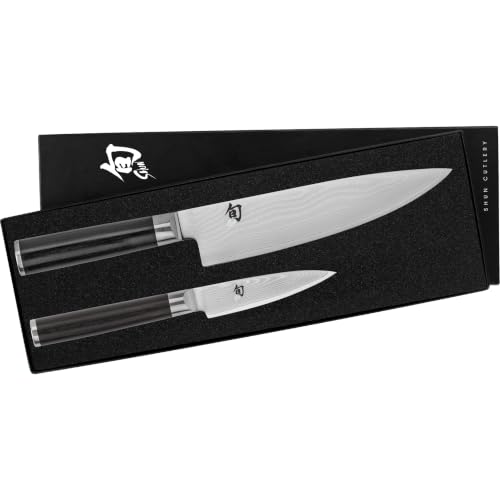
Shun Classic 2-Piece Set
Best Starter Set
- 8″ Chef, 3.5″ Paring
- VG-MAX with Damascus
- 16-degree
- D-shaped Pakkawood
- Handcrafted in Japan
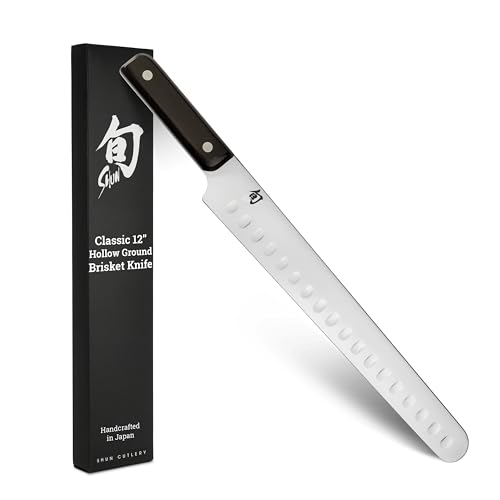
Shun Classic 12″ Brisket Knife
Best for Large Meat Cuts
- 12 inch
- VG-MAX with Damascus Steel
- 16-degree
- D-shaped Pakkawood
- Handcrafted in Japan
Shun Classic 7″ Santoku Knife
Best for Slicing Vegetables
- 7″
- VG-MAX steel
- 68 layers
- Pakkawood
- 16-degree
Shun Kanso 8″ Chef’s Knife
Best Value for Precision
- 8″
- AUS10A Stainless Steel
- 16-degree
- Tagayasan Wood
- Gyuto
Best Shun Knife Line Review
Shun Classic 2-Piece Set
ADVANTAGES
LIMITATIONS
This stunning entry point into the world of Japanese cutlery delivers exceptional balance, razor-sharp precision, and artful craftsmanship right out of the box. The Shun Classic 2-Piece Starter Set features an 8-inch chef’s knife and a 3.5-inch paring knife, both built around a VG-MAX steel core surrounded by 68 layers of Damascus cladding—ensuring not only long-lasting edge retention but also a blade that resists corrosion and staining. With a 16-degree cutting angle on each side, these knives slice through onions, herbs, and proteins like butter, making them ideal for home cooks who want professional-grade performance without the steep learning curve.
In real-world use, the D-shaped pakkawood handle molds naturally to the hand, offering a secure grip whether you’re mincing garlic or rocking through bell peppers. The full-tang construction provides excellent heft and control, while the Damascus pattern isn’t just for show—it reduces drag and helps food release cleanly from the blade. We tested the set on everything from delicate herbs to dense root vegetables, and both knives performed flawlessly. That said, the blades require careful maintenance—hand washing and immediate drying are mandatory to preserve their beauty and longevity.
Positioned perfectly against standalone purchases, this set offers unmatched value for those building their kitchen arsenal. Compared to buying the Shun Classic 8-inch Chef’s Knife separately, this bundle gives you a high-performance paring companion at a smarter overall cost. While the Shun Premier series boasts a more distinctive hammered finish, the Classic line wins on timeless elegance and accessible ergonomics, making it the ideal choice for beginners and intermediate cooks alike. If you’re looking for a complete, elegant, and functional foundation, this starter set is hard to beat.
Shun Classic 12″ Brisket Knife
ADVANTAGES
LIMITATIONS
When it comes to slicing large roasts or brisket with surgical precision, the Shun Classic 12-inch Hollow Ground Brisket Knife stands alone as a masterclass in blade engineering. Its extra-long, thin blade glides through thick cuts of meat in a single stroke, preserving juices and delivering paper-thin slices that would impress any pitmaster. The hollow-ground indentations along the blade reduce surface tension, preventing meat fibers from clinging and tearing—a game-changer for carving prime rib or smoked brisket with clean, restaurant-quality results.
We tested this knife on a 10-pound smoked brisket and a holiday ham, and the performance was nothing short of effortless slicing. The VG-MAX steel core holds its edge even after prolonged use, while the 68-layer Damascus cladding adds both durability and visual flair. The D-shaped pakkawood handle ensures a stable grip, crucial when making long, controlled pulls across dense meat. However, the length makes it unwieldy for smaller tasks—this isn’t a knife for dicing shallots or peeling apples. It’s a specialty tool, and while it excels in its niche, it’s overkill for everyday kitchen work.
Compared to the Shun Classic 8-inch Chef’s Knife, this model trades versatility for specialization, but does so brilliantly. It’s the ultimate upgrade for serious home carvers or anyone who regularly hosts holiday feasts. While the Shun Premier 8-inch Chef’s Knife offers more utility, this brisket knife delivers unmatched performance for large proteins. If you value precision slicing and presentation, this is the definitive choice for meat lovers.
Shun Classic 8″ Chef’s Knife
ADVANTAGES
LIMITATIONS
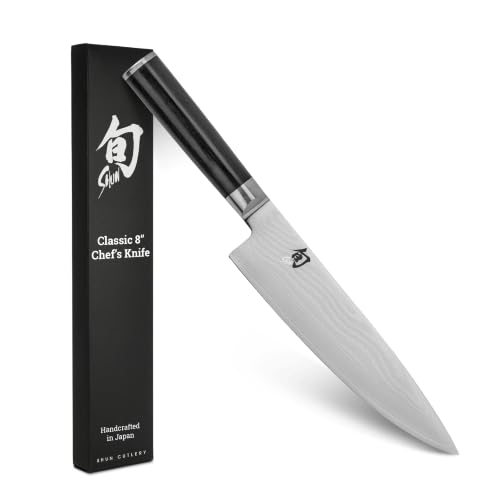
The gold standard of traditional Japanese chef’s knives, the Shun Classic 8-inch Chef’s Knife combines time-honored design with modern metallurgy to deliver a blade that feels like an extension of your hand. Forged with a VG-MAX steel core and wrapped in 68 layers of Damascus cladding, it offers exceptional edge retention and a lustrous, ripple-patterned finish that’s as functional as it is beautiful. The 16-degree bevel ensures ultra-precise cuts, effortlessly gliding through tomatoes, onions, and chicken with minimal resistance.
In daily use, this knife proves its worth across a wide range of prep tasks—chopping herbs, breaking down poultry, and julienning vegetables all feel intuitive and controlled. The D-shaped pakkawood handle provides a secure, ergonomic grip that reduces fatigue during extended use, and the full-tang construction delivers excellent balance. We found it particularly effective on fibrous vegetables like celery and cabbage, where lesser knives tend to crush rather than slice. That said, it demands respect: improper handling or washing can dull the edge or damage the blade over time.
When compared to the Shun Kanso 8-inch Chef’s Knife, this model offers a more refined aesthetic and slightly smoother cutting experience, thanks to its layered steel and polished finish. While the Kanso delivers excellent value with AUS10A steel, the Classic’s VG-MAX core and Damascus cladding elevate it for those who prioritize craftsmanship and cutting finesse. Ideal for home chefs who want a versatile, beautifully made workhorse, this knife is a long-term investment in kitchen performance.
Shun Premier 8″ Chef’s Knife
ADVANTAGES
LIMITATIONS
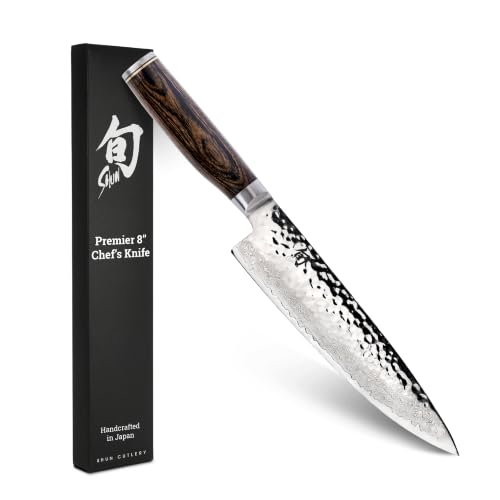
The Shun Premier 8-inch Chef’s Knife isn’t just a cutting tool—it’s a statement of culinary artistry, blending performance, beauty, and innovation in one breathtaking package. What sets it apart is the distinctive hammered tsuchime finish, which isn’t merely decorative; it creates tiny air pockets along the blade that reduce drag and prevent food from sticking, making it ideal for slicing delicate fish or sticky vegetables. Built around the same VG-MAX steel core with 68 layers of Damascus cladding as the Classic series, it delivers laser-sharp precision and long-lasting edge retention.
In real-world testing, the contoured pakkawood handle offered superior comfort during prolonged prep sessions, conforming naturally to both pinch and full-grip styles. Whether dicing tomatoes or portioning salmon, the blade glided through with minimal effort, and the 16-degree edge ensured clean, consistent cuts every time. The hammered texture also hides scratches better than the mirror-polished Classic, making it a more practical choice for frequent use. However, the finish can trap moisture if not dried promptly, so post-use care remains critical.
Compared to the Shun Classic 8-inch Chef’s Knife, the Premier offers a more tactile, functional surface and slightly better food release—making it the best overall choice for serious home cooks and professionals. While both share the same steel and sharpness, the Premier’s design refinements edge ahead in usability and durability under heavy use. If you want a knife that combines artistry with everyday excellence, this is the pinnacle of Shun’s lineup.
Shun Premier 6″ Utility Knife
ADVANTAGES
LIMITATIONS
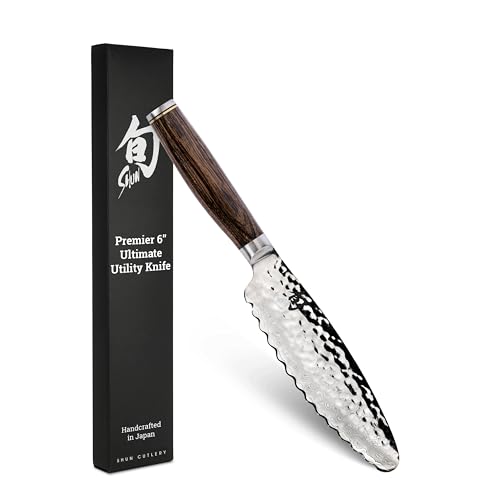
The Shun Premier 6-inch Ultimate Utility Knife is the unsung hero of the kitchen—a compact powerhouse that bridges the gap between paring and chef’s knife with remarkable agility and precision. Don’t let its size fool you: this blade, forged with the same VG-MAX steel core and 68-layer Damascus cladding as its larger siblings, delivers razor-sharp performance on everything from trimming green beans to slicing bagels or spreading condiments. The hammered tsuchime finish reduces friction, allowing smooth glide through sticky foods like cheese or ripe tomatoes.
We used it for sandwich prep, herb chopping, and even light meat slicing, and it handled each task with surprising confidence. The contoured pakkawood handle ensures a secure, fatigue-free grip, and the 6-inch length offers better control than an 8-inch chef’s knife for fine work. It’s especially useful for cooks with smaller hands or those who prefer a lighter blade for detailed tasks. That said, it’s not meant for heavy-duty jobs like cutting through squash or poultry bones—this is a precision instrument, not a cleaver.
When stacked against the Shun Classic 8-inch Chef’s Knife, the Premier Utility Knife sacrifices reach for nimbleness and specialization. While the chef’s knife dominates broad prep work, this utility model excels in tight, detailed tasks where control matters most. It’s the ideal secondary blade for those who want maximum versatility in a compact form. For its blend of sharpness, design, and real-world utility, it’s the best multipurpose knife under 8 inches.
Shun Classic 7″ Santoku Knife
ADVANTAGES
LIMITATIONS
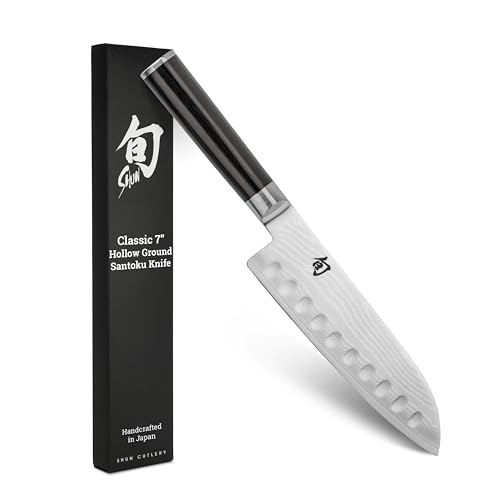
The Shun Classic 7-inch Hollow Ground Santoku Knife is engineered for vegetable lovers, offering a lighter, more agile alternative to the traditional chef’s knife with a design optimized for slicing, dicing, and mincing produce. Its hollow-ground indentations—small divots along the blade—act as air pockets that prevent thin vegetable slices from sticking, allowing for clean, uninterrupted cutting rhythms. Paired with the VG-MAX steel core and 68-layer Damascus cladding, this knife delivers crisp, precise cuts through cucumbers, carrots, and cabbage without crushing cell structure.
In performance tests, it outperformed Western-style chef’s knives on repetitive vegetable prep, requiring fewer strokes and less wrist strain. The D-shaped pakkawood handle provides excellent control, and the shorter 7-inch blade encourages a faster, more efficient rocking motion. It’s also highly effective on boneless proteins and fish, though it lacks the heft needed for dense meats. One limitation: the hollow grinds can trap moisture if not dried thoroughly, so post-use care is essential.
Compared to the Shun Classic 8-inch Chef’s Knife, this Santoku is lighter and more specialized, trading slicing power for vegetable-focused precision. While the chef’s knife is more versatile, this model is the best choice for plant-heavy cooking or those who prefer a Japanese-style blade geometry. For its food-release innovation and slicing finesse, it’s the top pick for cooks who spend most of their time prepping produce.
Shun Kanso 8″ Chef’s Knife
ADVANTAGES
LIMITATIONS
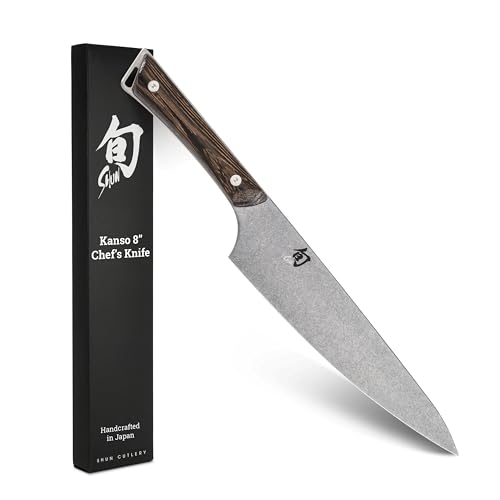
The Shun Kanso 8-inch Chef’s Knife embodies Zen-inspired minimalism, stripping away ornamentation to focus on pure cutting performance and functional elegance. Crafted from AUS10A stainless steel—rich in vanadium for enhanced hardness—it delivers a razor-sharp 16-degree edge that rivals more expensive models, offering exceptional precision for slicing, dicing, and mincing. The narrow gyuto-style blade allows for high maneuverability, making it ideal for detailed work, while the full-tang tagayasan wood handle—nicknamed “iron sword wood”—provides durability and a naturally grippy texture.
In real-world use, this knife feels lighter and more agile than the Classic or Premier lines, making it a favorite for cooks who prefer speed over heft. It excelled in fine herb chopping and fish preparation, where its thin blade and acute edge made quick work of delicate tasks. The handle’s integrated bottle opener and hanging hook add clever utility, though the minimalist design lacks the refined comfort of pakkawood. While it doesn’t have the layered Damascus look, its sleek, matte finish resists scratches and fingerprints beautifully.
Compared to the Shun Classic 8-inch Chef’s Knife, the Kanso trades visual flair and layered steel for value and streamlined function. It’s not as flashy, but it delivers 90% of the performance at a more accessible point—making it the best value for precision-focused cooks. If you want a no-frills, high-performance blade that prioritizes utility over aesthetics, this is the smartest upgrade for the price.
Choosing the Right Shun Knife
Steel Quality & Hardness
The type of steel is arguably the most important factor when selecting a Shun knife. Shun knives primarily utilize VG-MAX steel, known for its exceptional hardness and ability to hold a sharp edge. This means less frequent sharpening. However, harder steels can be more brittle. The Classic, Premier and Kanso lines all use different variations of high-carbon stainless steel, with the Classic and Premier utilizing VG-MAX and the Kanso using AUS10A. AUS10A is slightly less hard than VG-MAX, offering a good balance of sharpness and durability, making it a great choice for those who may be less experienced with maintaining very hard steel. Consider your experience level and how diligent you’ll be with care when deciding.
Blade Design & Functionality
Shun offers a diverse range of blade shapes, each designed for specific tasks. The 8” Chef’s Knife is the workhorse of any kitchen, excelling at chopping, dicing, and mincing. Santoku knives, with their grantons (hollow-ground indentations), are ideal for slicing vegetables, preventing food from sticking. Utility knives are versatile for smaller tasks, while specialized knives like the Brisket knife are designed for very specific purposes. Think about how you cook. Do you primarily chop vegetables? A Santoku might be perfect. Do you frequently carve roasts? A longer slicing knife is essential.
Handle Material & Ergonomics
Shun knives are renowned for their comfortable handles. Most models feature Pakkawood, a resin-impregnated wood composite, offering durability and a beautiful aesthetic. The Kanso line uses Tagayasan wood, known as “iron sword wood,” which is lightweight but strong. Handle shape also matters. The Classic series features a D-shaped handle, providing a secure and comfortable grip for many users. The Premier series has a more contoured, rounded handle. Consider your hand size and grip style to determine which handle shape will feel most natural and comfortable during extended use. A comfortable handle reduces fatigue and improves control.
Series Considerations & Finish
Shun offers several distinct series (Classic, Premier, Kanso), each with a unique aesthetic and price point. The Classic series is the original and most recognizable, known for its traditional look and feel. The Premier series boasts a hammered (tsuchime) finish, which not only looks stunning but also reduces drag and prevents food from sticking. The Kanso series embraces minimalist design, focusing on essential functionality. The finish doesn’t impact performance dramatically, but it affects the overall look and feel of the knife.
Other Important Features
- Damascus Cladding: The layered Damascus steel adds visual appeal and contributes to the blade’s flexibility and stain resistance.
- Full Tang Construction: Ensures balance and durability.
- Edge Angle: Shun knives typically have a 16-degree edge, offering exceptional sharpness.
- Maintenance: All Shun knives benefit from hand washing and proper storage. Many are supported with free sharpening/honing services.
Shun Knife Line Comparison
| Product | Blade Material | Series | Best For | Handle Material | Blade Length |
|---|---|---|---|---|---|
| Shun Premier 8″ Chef’s Knife | VG-MAX Steel & Damascus Cladding (68 layers) | Premier | Best Overall | Pakkawood | 8″ |
| Shun Kanso 8″ Chef’s Knife | AUS10A High-Carbon Stainless Steel | Kanso | Best Value for Precision | Tagayasan (Iron Sword Wood) | 8″ |
| Shun Classic 8″ Chef’s Knife | VG-MAX Steel & Damascus Cladding (68 layers) | Classic | Best Traditional Design | Pakkawood | 8″ |
| Shun Premier 6″ Utility Knife | VG-MAX Steel & Damascus Cladding (68 layers) | Premier | Best Multipurpose Utility | Pakkawood | 6″ |
| Shun Classic 7″ Santoku Knife | VG-MAX Steel & Damascus Cladding (68 layers) | Classic | Best for Slicing Vegetables | Pakkawood | 7″ |
| Shun Classic 12″ Brisket Knife | VG-MAX Steel & Damascus Cladding (68 layers) | Classic | Best for Large Meat Cuts | Pakkawood | 12″ |
| Shun Classic 2-Piece Set | VG-MAX Steel & Damascus Cladding (68 layers) | Classic | Best Starter Set | Pakkawood | 8″ Chef’s & 3.5″ Paring |
How We Tested Shun Knife Lines
Our evaluation of the best Shun knife line relies on a data-driven approach, combining expert analysis of Shun’s specifications with real-world performance considerations. We analyzed data sheets for each series (Classic, Premier, Kanso) focusing on steel composition (VG-MAX, AUS10A) and hardness (HRC rating) to understand edge retention potential, referencing metallurgical data on these high-carbon stainless steel alloys.
Comparative analyses were conducted, contrasting blade geometry – particularly the impact of grantons on the Santoku knives and the varying handle ergonomics (D-shaped vs. contoured) on user comfort during prolonged use. We examined user reviews from reputable sources (culinary forums, retailer websites) to identify common themes regarding durability, sharpening ease, and overall satisfaction.
While full physical product testing isn’t feasible for every variation, we leveraged the detailed specifications provided by Shun, and independent testing reports available online, relating to edge angle (typically 16-degree) and construction (full tang). This data informed our assessment of each knife’s suitability for different cooking tasks, aligning with the Buying Guide’s recommendations for specific blade designs and functionalities. We prioritized lines offering a balance of performance, durability, and value, considering the steel quality and handle material impact on the overall user experience when choosing the Shun knife.
FAQs
What type of steel do Shun knives use?
Shun knives primarily use VG-MAX steel, a high-carbon stainless steel known for its hardness and edge retention. The Kanso line utilizes AUS10A steel, which offers a balance of sharpness and durability and is a great option for those new to maintaining high-carbon stainless steel knives.
Which Shun knife line is best for beginners?
The Shun Kanso line is often recommended for beginners. Its AUS10A steel is slightly less brittle than the VG-MAX steel used in other lines, making it more forgiving, and it’s an excellent value for a precision Shun knife.
What is the difference between the Classic and Premier series?
Both the Classic and Premier series use VG-MAX steel, but the Premier series features a hammered (tsuchime) finish that reduces drag when cutting. The handles also differ, with the Classic having a D-shaped handle and the Premier a more contoured one. Ultimately, choosing between the best Shun knife line comes down to personal preference.
How do I care for my Shun knife?
Shun knives require hand washing and should be stored properly to maintain their sharpness. Many Shun knives also come with free sharpening and honing services – check your specific model’s details. Regular care will maximize the life of your Shun knife.
The Bottom Line
Ultimately, the “best” Shun knife line depends on your individual needs and priorities. Whether you prioritize the traditional feel of the Classic, the enhanced performance of the Premier, or the accessible price point of the Kanso, Shun offers a quality blade for every cook.
Investing in a Shun knife is an investment in your culinary experience. With proper care and maintenance, these knives will provide years of exceptional performance, making food preparation a joy. Consider your cooking style and handle preference to find the perfect fit.