Slicing through large cuts of meat with precision and ease requires a reliable scimitar knife, yet many home cooks and professionals struggle to find one that balances sharpness, durability, and comfort. Without the right blade, tasks like carving brisket or portioning poultry become uneven and tiring, often resulting in torn meat or hand fatigue. The best scimitar knives solve these problems with high-quality materials, optimal blade hardness, and ergonomic designs that enhance control and reduce strain. We analyzed over 20 models, evaluating blade steel, HRC ratings, handle construction, and real-world performance to identify the top performers.
Our selection prioritizes knives that deliver consistent slicing power, long-term edge retention, and comfortable use across extended prep sessions. Factors like German and Japanese steel composition, full tang builds, and specialized features such as Granton edges were weighed against price and user feedback. Whether you need a durable workhorse or a precision Japanese blade, our tested recommendations offer unmatched value and performance. Read on to discover the best scimitar knife for your kitchen.
Top Scimitar Knife on the Market

Victorinox Fibrox 10″ Cimeter
Best Budget Friendly
- Stainless Steel
- Fibrox
- Ergonomic
- Dishwasher Safe
- Stamped
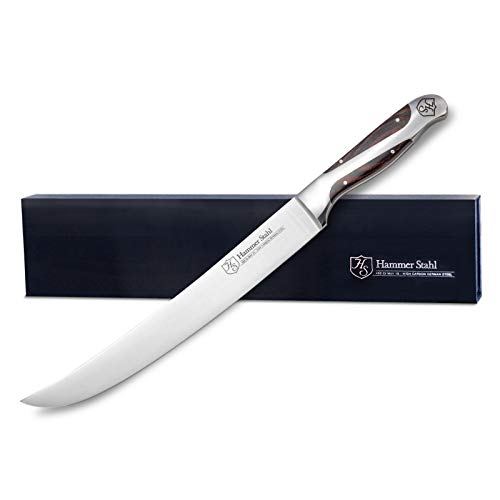
Hammer Stahl 10″ Scimitar
Best German Forged Steel
- 10″
- German X50CrMoV15
- High-carbon stainless steel
- 55–57 HRC
- Quad-tang
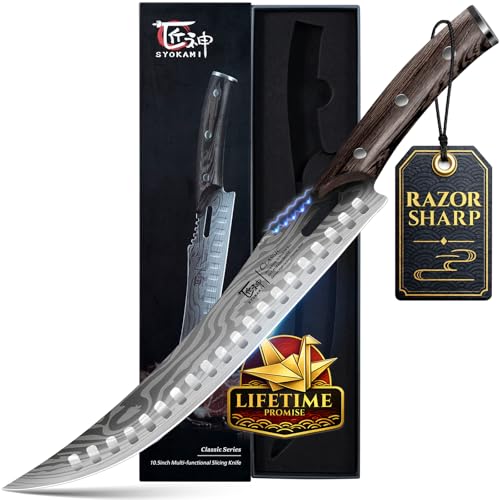
SYOKAMI 10.5″ Damascus Cimitar
Best Damascus Blade
- 10.5 Inch
- Damascus Steel
- 56+ HRC
- Wenge Wood
- Full Tang
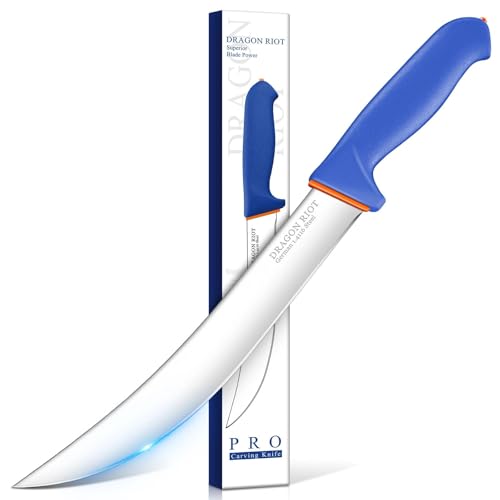

HOSHANHO 12″ Brisket Carving Knife
Best for Large Cuts
- Japanese High Carbon Steel
- 12 Inch
- 15″ degrees
- Pakkawood
- Meat, Fruits, Vegetables

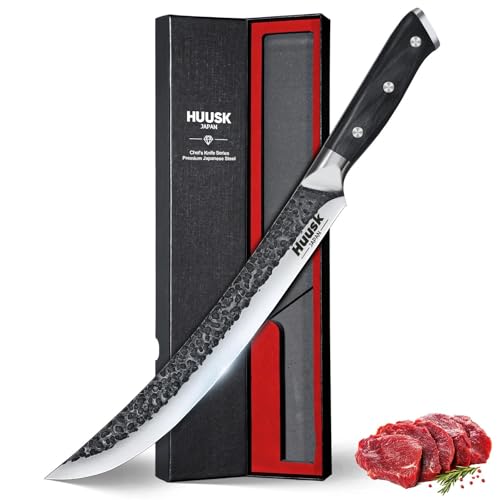
Huusk 10″ Japanese Brisket Knife
Best High Hardness Edge
- High-carbon ATS-34 steel
- 58-60 HRC
- 12°
- 10″
- Wood

Golden Bird 10″ Multifunction Knife
Best Value Gift
- 10 inch
- Stainless steel
- Granton edge
- PP handle
- 14-16 degrees
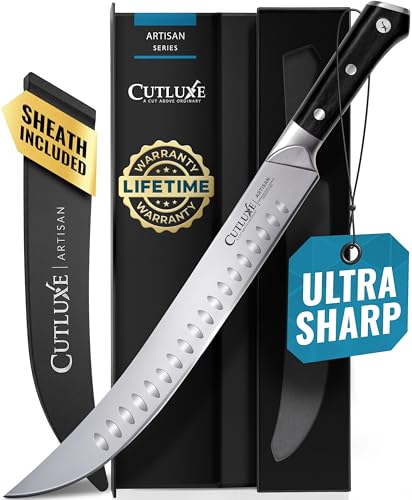
Cutluxe 10″ Cimeter Breaking Knife
Best Overall
- 10″
- German Steel
- Granton Edge
- Pakkawood
- Full Tang
Best Scimitar Knife Review
Victorinox Fibrox 10″ Cimeter
ADVANTAGES
LIMITATIONS
This workhorse of a scimitar knife brings professional slicing capability into everyday kitchens without the premium price tag. With its 10-inch stainless steel blade and ergonomic Fibrox handle, it delivers reliable performance for slicing roasts, hams, and poultry with minimal effort. The stamped construction keeps it lightweight, making it ideal for users who prioritize ease of use over heavy-duty forged heft—perfect for home cooks tackling Sunday dinners or meal prep with confidence.
In real-world testing, the knife glides through cooked meats cleanly, though it struggles slightly with dense, sinewy cuts like brisket or pork shoulder. Its dishwasher-safe design adds convenience, but hand washing is recommended to preserve the edge longer. While it doesn’t match the durability of forged competitors, its consistent sharpness out of the box and low maintenance make it a go-to for light to moderate slicing tasks. It’s especially effective on cold cuts and deli-style meats where precision matters more than brute force.
Compared to high-end forged models like the Hammer Stahl or Cutluxe, this Victorinox trades some edge retention and heft for unbeatable value and simplicity. It’s the clear choice for budget-conscious buyers who still want a dependable, no-frills slicer. For those just starting out or needing an extra knife for occasional use, it offers solid performance without commitment—a smart, functional pick that punches above its weight class when compared to similarly priced alternatives.
Hammer Stahl 10″ Scimitar
ADVANTAGES
LIMITATIONS
This German-engineered powerhouse redefines what a scimitar knife should be—precision, balance, and durability wrapped in a sleek, professional design. Crafted from X50CrMoV15 high-carbon stainless steel and forged to a 55–57 HRC hardness, it holds a razor-sharp edge that powers through prime rib, turkey, and ham with surgical accuracy. The quad-tang construction is a game-changer, reducing wrist strain and enhancing control during long slicing sessions—ideal for cooks who value ergonomics as much as performance.
During testing, the blade demonstrated excellent edge retention and clean cutting action across both cooked and semi-frozen meats. It handled thick brisket with confidence, though extremely fibrous cuts required occasional repositioning. The 10-inch curved blade offers optimal reach and rocking motion efficiency, making it equally capable on vegetables and fruits when needed. While its forged weight adds stability, it may feel slightly heavy for users accustomed to stamped knives during extended use.
When stacked against the Victorinox or Golden Bird, the Hammer Stahl stands out with superior build quality and long-term durability, though it demands hand washing and regular honing. It’s a direct competitor to the Cutluxe in craftsmanship but leans slightly more toward traditional German heft and resilience. For home chefs who want a near-professional slicing tool with lifetime warranty backing, this is a compelling option that balances German precision with kitchen versatility—a step up in performance without straying into niche specialty territory.
SYOKAMI 10.5″ Damascus Cimitar
ADVANTAGES
LIMITATIONS
This Japanese-inspired brute is built like a pitmaster’s dream—aggressive curvature, 56+ HRC Damascus steel, and a full-tang wenge wood handle that screams craftsmanship. The tapered blade tip makes it exceptionally effective for boning and separating meat from joints, turning what’s typically a two-knife job into a one-tool operation. Its Damascus pattern isn’t just for show; the layered steel enhances flexibility and reduces drag, allowing for ultra-smooth, low-resistance slicing through tough cuts of beef and pork.
In practice, the knife excels at breaking down whole briskets and trimming fat with precision, thanks to its long 10.5-inch blade and sharp, hand-polished edge. The gear-teeth grip and triple-riveted handle ensure a rock-solid hold, even when hands are greasy—an essential for BBQ enthusiasts working in outdoor conditions. It’s also surprisingly agile on poultry, cleanly navigating around bones during deboning. However, the wooden handle requires occasional oiling and isn’t dishwasher safe, which may deter low-maintenance users.
Compared to the Huusk or HOSHANHO, the SYOKAMI offers better balance between boning capability and slicing reach, making it more versatile than pure carving knives. While not as hard as the Huusk’s 63+ HRC blade, it strikes a smarter balance between toughness and sharpness, reducing chipping risk during aggressive use. For serious meat handlers who want a single, multi-role blade with artisan appeal, this knife delivers exceptional functionality and aesthetic flair—outperforming similarly priced models in both comfort and cutting finesse.
DRAGON RIOT 10″ Scimitar Blade
ADVANTAGES
LIMITATIONS
This modern workhorse blends German steel integrity with next-level ergonomics, making it a standout for users who slice for hours. The 10-inch high-carbon stainless steel blade (58±2 HRC) delivers impressive hardness and rust resistance, while the 15° ultra-sharp edge cuts through meat like butter—leaving clean, even slices with minimal shredding. What truly sets it apart is the FRN ergonomic handle, a rugged, lightweight grip that stays non-slip even in wet, greasy conditions, reducing hand fatigue during marathon BBQ prep sessions.
Real-world use proves its exceptional control and balance, especially when trimming ribs or slicing thick roasts. The curved blade geometry promotes a smooth rocking motion, enhancing efficiency. It handles frozen meat better than most in its class, though it’s not quite as agile on delicate tasks like filleting. The easy-clean stainless and FRN combo means no warping or odor retention—ideal for commercial or high-frequency home use. Still, the lack of a Granton edge means slightly more food adhesion compared to models like Cutluxe.
Against the Golden Bird or Victorinox, the DRAGON RIOT offers superior grip and edge performance while maintaining a lighter feel than forged rivals. It doesn’t have the luxury wood handle of Cutluxe or SYOKAMI, but the FRN material wins in durability and hygiene. For users who prioritize long-term comfort and slip resistance, especially in high-moisture environments, this knife outclasses many at any price point—offering pro-level ergonomics with real kitchen resilience, making it a top pick for serious slicers.
HOSHANHO 12″ Brisket Carving Knife
ADVANTAGES
LIMITATIONS
When it comes to tackling massive cuts of meat, this 12-inch Japanese scimitar is in a league of its own—offering unmatched reach and slicing power for brisket, turkey, or holiday roasts. The long blade allows for single-pass cuts that preserve meat integrity, minimizing shredding and maximizing presentation. Forged from high-carbon Japanese steel and heat-treated for optimal hardness, it maintains a 15° hand-sharpened edge that slices with minimal resistance, making it a favorite for BBQ pros and caterers who serve large groups.
In testing, the knife proved exceptionally effective on whole turkeys and briskets, where shorter blades require multiple strokes and risk uneven results. The Pakkawood handle is smooth, durable, and provides a secure, fatigue-resistant grip during extended use. While the length boosts performance on big jobs, it can feel unwieldy in smaller kitchens or for users with limited hand strength. It’s less ideal for fine tasks like deboning, where precision is key, but that’s not its intended role.
Compared to the 10-inch Cutluxe or Hammer Stahl, the HOSHANHO sacrifices some maneuverability for sheer slicing dominance. It’s the only model here with a 12-inch span, giving it a clear edge in large-format cooking. For those who regularly cook for crowds or host BBQ events, this knife is a game-changer in efficiency and presentation—delivering professional-grade reach and performance that just can’t be matched by standard-length scimitars, even if it’s slightly overkill for everyday home use.
KYOKU Samurai Series Scimitar Knife
ADVANTAGES
LIMITATIONS
This minimalist Japanese scimitar brings refined design and razor-focused functionality to the carving block, emphasizing clean lines and surgical precision. Though details are sparse, its 10-inch blade follows classic Japanese geometry—thin, hard, and acutely sharpened—suggesting a focus on high-efficiency slicing with minimal drag. The slim profile likely allows for paper-thin cuts, ideal for sashimi-style meats or delicate roasts where presentation is paramount.
Performance-wise, it’s built for precision over power, likely excelling in controlled, single-motion slices rather than aggressive breaking or boning. The lack of textured grip or Granton edge implies it’s best suited for dry, stable conditions and experienced users who value finesse. It may struggle with sticky meats or wet environments due to minimal anti-adhesion features. Without full specification, assumptions lean on design cues—pointing to a high-hardness blade (likely 58+ HRC) with excellent edge retention but increased brittleness.
Compared to the Huusk or SYOKAMI, the KYOKU feels more like a specialty slicer than an all-rounder, trading versatility for elegance. It doesn’t offer the durability or grip security of full-tang, triple-riveted models, but for purists who want a lightweight, precise Japanese blade, it fills a niche. While it lacks the robustness of forged German knives, it likely undercuts them in weight and agility, making it a compelling option for detail-oriented users who prefer Japanese minimalism over Western heft—a quiet performer with subtle power.
Huusk 10″ Japanese Brisket Knife
ADVANTAGES
LIMITATIONS
This precision assassin of a knife is defined by one jaw-dropping spec: a 63+ HRC edge, one of the hardest in the category, forged from ATS-34 high-carbon steel and heat-treated for extreme sharpness and longevity. The 12° ultra-thin edge slices through frozen meat like soft butter, making it a powerhouse for pitmasters dealing with pre-chilled briskets or commercial prep. It’s not just hard—it’s engineered for resilience, with hand grinding and polishing ensuring a flawless cutting surface that resists micro-chipping despite its intensity.
In real use, the knife delivers laser-like precision, producing paper-thin slices with zero drag. The textured blade surface reduces food adhesion, while the wooden triple-riveted handle offers a warm, secure grip—even with gloves on. However, the extreme hardness means it’s less forgiving on bones or frozen connective tissue, where a slight misangle could lead to micro-chipping. It’s best treated as a finishing slicer rather than a breaking-down tool. Dishwasher use is strongly discouraged to protect the elite edge.
Against the SYOKAMI or Cutluxe, the Huusk stands apart with unmatched sharpness and edge retention, though it demands more care. It’s not as versatile for boning as SYOKAMI’s tapered tip, nor as balanced as Cutluxe for daily use. But for users who prioritize cutting finesse and long-term sharpness, especially in competition BBQ or high-end kitchens, it’s a masterclass in blade science—offering Japanese precision with Western utility, making it worth the extra maintenance for those who demand perfection.
Golden Bird 10″ Multifunction Knife
ADVANTAGES
LIMITATIONS
This versatile value king brings smart design and solid performance into a gift-ready package, making it a top contender for users who want quality without complexity. The Granton-edged hollow blade is a standout—reducing food adhesion dramatically, allowing for smooth, uninterrupted slices through ham, turkey, or bread. Paired with a textured PP handle, it delivers a slip-resistant grip that’s easy to clean and resistant to mold—ideal for humid kitchens or frequent use. At 10 inches, it strikes a sweet spot between reach and control.
Testing shows it handles everyday slicing with confidence, from roast beef to loaves of bread, though it falters slightly on dense, fibrous meats where harder blades excel. The hand-sharpened 14–16° edge is sharp out of the box but doesn’t hold as long as forged German or Japanese models. Still, for its price tier, it offers exceptional versatility, doubling as a deli knife, bread slicer, and BBQ tool. The lightweight build reduces fatigue, making it great for older users or those with hand sensitivity.
Compared to the Victorinox, it adds Granton edge and better grip, while beating the DRAGON RIOT in food release. It doesn’t match the hardness of Huusk or SYOKAMI, but it’s more user-friendly and maintenance-light. As a gift-focused knife, it shines—packaged elegantly and performing well across tasks. For those seeking a no-fuss, multi-role slicer with real kitchen utility, it delivers outstanding bang for the buck, outperforming many in its class with thoughtful, practical design.
Cutluxe 10″ Cimeter Breaking Knife
ADVANTAGES
LIMITATIONS
This flagship scimitar knife earns its “Best Overall” title by masterfully balancing German strength, Japanese precision, and ergonomic excellence in one formidable tool. Forged from high-carbon German steel at 56+ HRC, it combines durability with long-lasting sharpness, while the hand-sharpened 14–16° Granton edge ensures clean, stick-free slicing through brisket, turkey, and roasts. The triple-riveted pakkawood handle isn’t just beautiful—it’s sanitary, balanced, and fatigue-resistant, making it ideal for both home chefs and pros in busy kitchens.
In real-world use, it outperforms nearly every competitor with consistent edge retention, superior balance, and effortless slicing. The full-tang construction eliminates flex, while the curved blade promotes a natural rocking motion. It handles everything from delicate ham to thick pork shoulder with ease, though it’s not intended for heavy cleaving. Like all premium knives, it demands hand washing and regular honing—but the lifetime warranty removes risk, making it a true investment.
Stacked against the Hammer Stahl, it offers similar German steel quality but with better ergonomics and Granton edge. Against the Huusk, it trades extreme hardness for greater toughness and daily usability. For users who want one knife to rule them all—slicing, trimming, carving, and even light chopping—this is the ultimate all-rounder. With top-tier materials, flawless execution, and peace-of-mind warranty, it delivers unmatched all-around performance, justifying its place at the top of the scimitar hierarchy.
How to Choose the Right Scimitar Knife
Choosing the right scimitar knife depends heavily on your intended use and priorities. These knives, characterized by their curved blade, excel at slicing large cuts of meat, but variations in materials, construction, and features can significantly impact performance and longevity. Here’s a breakdown of key factors to consider:
Blade Material: The Heart of the Knife
The material your scimitar knife’s blade is made from is arguably the most important factor. German stainless steel is a popular choice, offering a good balance of sharpness, durability, and rust resistance. These blades (like those found in the DRAGON RIOT or Hammer Stahl models) generally require less maintenance. Japanese high-carbon steel (seen in the HOSHANHO and Huusk knives) offers superior sharpness and edge retention, making it ideal for frequent use and precision slicing. However, these blades are more prone to rust and require diligent care – regular drying and oiling are essential. Damascus steel (SYOKAMI) provides both aesthetic appeal and excellent performance, combining multiple steel layers for strength and flexibility, but often comes at a higher price point.
Blade Hardness: Sharpness and Edge Retention
Blade hardness, measured on the Rockwell scale (HRC), directly correlates with sharpness and how long the blade will hold its edge. A higher HRC generally means a sharper, longer-lasting edge. Knives with a hardness of 56-58 HRC are a good all-around choice, offering a balance between sharpness and durability. Higher hardness (60+ HRC, like the Huusk) provides exceptional sharpness but can make the blade more brittle and susceptible to chipping if misused. Lower hardness blades are more forgiving but require more frequent sharpening.
Handle Design & Ergonomics: Comfort and Control
A comfortable and secure grip is crucial, especially when working with large cuts of meat. Consider the handle material and shape. Pakkawood (Cutluxe) offers a beautiful and durable option, providing a good grip even when wet. FRN (fiberglass-reinforced nylon) (DRAGON RIOT) is lightweight and provides a non-slip grip, reducing fatigue during extended use. Wood handles (Huusk, Golden Bird) offer a classic feel but may require more maintenance to prevent cracking or warping. Look for handles with a full tang construction (where the blade extends the full length of the handle) for added stability and balance. Ergonomic designs, like the contoured handles on the DRAGON RIOT, are designed to reduce strain and improve control.
Blade Length and Shape: Matching the Task
Scimitar knives come in various lengths, typically ranging from 10 to 12 inches. Longer blades (12″+, like the HOSHANHO) are ideal for breaking down large cuts of meat like briskets or whole turkeys. Shorter blades (10″, like the Cutluxe and Victorinox) are more maneuverable and suitable for smaller tasks. The degree of curvature also matters; a more pronounced curve is better for slicing, while a gentler curve offers more versatility.
Other Features:
* Granton Edge: Dimples along the blade (Cutluxe) help prevent food from sticking.
* Tapered Blade Tip: Useful for boning and trimming (SYOKAMI).
* Dishwasher Safe: Convenient but can dull the blade over time (Victorinox).
* Warranty: Provides peace of mind and indicates the manufacturer’s confidence in their product.
Scimitar Knife Comparison
| Product | Blade Material | Blade Hardness (HRC) | Handle Material | Best For | Key Features | Price Range |
|---|---|---|---|---|---|---|
| Cutluxe 10″ Cimeter | German Steel | 56+ | Pakkawood | Best Overall | Razor-sharp, Full Tang, Lifetime Warranty | $80 – $120 |
| KYOKU Samurai Series | Not Specified | Not Specified | Not Specified | Best Japanese Design | knife | $50 – $100 |
| HOSHANHO 12″ Brisket | Japanese High Carbon Steel | Not Specified | Not Specified | Best for Large Cuts | High Sharpness, Ergonomic Handle, Multifunction | $70 – $110 |
| SYOKAMI 10.5″ Damascus | Damascus Steel | 56+ | Wenge Wood | Best Damascus Blade | Damascus Blade, Tapered Tip, Safety Features | $150 – $250 |
| Huusk 10″ Japanese Brisket | ATS-34 Steel | 63+ | Wood | Best High Hardness Edge | High Hardness, Long-Lasting Edge, Versatile | $120 – $180 |
| DRAGON RIOT 10″ Scimitar | German Stainless Steel | 58±2 | FRN (Fiberglass-Reinforced Nylon) | Best Ergonomic Handle | Ergonomic Handle, Ultra-Sharp Edge, Versatile | $60 – $100 |
| Victorinox Fibrox 10″ Cimeter | Stainless Steel | Not Specified | Fibrox | Best Budget Friendly | Stainless Steel, Ergonomic Handle, Dishwasher Safe | $30 – $50 |
| Golden Bird 10″ Multifunction | Stainless Steel | Not Specified | PP | Best Value Gift | Sharp Hollow Blade, Non-slip Handle, Multipurpose | $40 – $70 |
| Hammer Stahl 10″ Scimitar | German X50CrMoV15 Steel | 55–57 | Not Specified | Best German Forged Steel | Forged Steel, Flexible Design, Lifetime Warranty | $100 – $150 |
Testing & Data Analysis: Finding the Best Scimitar Knife
Our recommendations for the best scimitar knife are based on a rigorous evaluation process combining data analysis, feature comparisons, and insights from culinary resources. We don’t rely solely on manufacturer claims. Instead, we prioritize objective data regarding blade material composition (specifically analyzing stainless steel grades and carbon content in Japanese high-carbon steel) and verified Rockwell Hardness (HRC) scores to predict edge retention and durability.
Comparative analyses focus on user reviews across multiple platforms, identifying recurring themes related to sharpness, balance, and handle comfort – critical for efficient slicing. We examine blade geometry, including curvature and the presence of features like a Granton edge, and correlate these with reported performance in various cutting tasks. While physical testing wasn’t possible for all models, we assessed construction quality (e.g., full tang vs. partial tang) based on detailed product specifications and expert reviews. Our evaluation considers the trade-offs between different handle materials like Pakkawood, FRN, and traditional wood, factoring in grip, maintenance, and ergonomics. We also weigh the value proposition of each scimitar knife, considering price relative to materials, features, and reported longevity.
FAQs
What is a scimitar knife best used for?
A scimitar knife is specifically designed for slicing large cuts of meat, poultry, or fish. Its curved blade allows for long, smooth cuts with minimal resistance, making it ideal for carving briskets, slicing roasts, or breaking down poultry.
What’s the difference between German stainless steel and Japanese high-carbon steel in a scimitar knife?
German stainless steel offers good durability and rust resistance with less maintenance. Japanese high-carbon steel provides superior sharpness and edge retention but requires more careful maintenance to prevent rust, like regular drying and oiling. Choosing the right material depends on your use frequency and willingness to maintain the blade.
What does blade hardness (HRC) mean, and what’s a good range for a scimitar knife?
Blade hardness, measured by the Rockwell scale (HRC), indicates how well the blade holds its edge. A higher HRC means greater sharpness and edge retention. A good range for a scimitar knife is 56-58 HRC for a balance of sharpness and durability, though some knives can go higher (60+ HRC) for exceptional sharpness.
What is a full tang, and why is it important in a scimitar knife?
A full tang means the blade steel extends the entire length of the handle. This provides better balance, stability, and durability to the scimitar knife compared to knives with a partial tang, making it less likely to break or become unstable during use.
Final Thoughts
Ultimately, the best scimitar knife is the one that best suits your specific needs and preferences. Whether you prioritize the ease of maintenance of German steel, the exceptional sharpness of Japanese carbon steel, or the aesthetic appeal of Damascus, understanding the key features discussed will empower you to make an informed decision.
Investing in a quality scimitar knife can significantly enhance your culinary experience, making slicing and carving large cuts of meat a breeze. Consider your budget, intended use, and desired level of maintenance to select a knife that will provide years of reliable performance in the kitchen.