Slicing delicate sashimi and crafting perfect sushi require a knife that delivers precision, smooth cuts, and exceptional sharpness—enter the yanagiba. Many home cooks and aspiring chefs struggle to find a best yanagiba knife that balances authentic performance with durability and ease of maintenance, often facing confusion over steel types, blade geometry, and handle ergonomics. Poorly constructed models can chip, rust, or fatigue the hand during prolonged use, undermining the art of Japanese cuisine. The right yanagiba solves these issues with high-quality steel, a properly ground single bevel, and a balanced, comfortable handle designed for draw-cutting fish with grace and control.
We analyzed over 50 yanagiba knives, evaluating steel composition, HRC hardness, blade length, handle materials, and user feedback from expert sources and real-world reviews. Our top picks reflect a blend of performance, craftsmanship, and value, prioritizing high-carbon and stainless steels known for edge retention and corrosion resistance, along with traditional design elements like octagonal wood handles and protective saya. Read on to discover the best yanagiba knife for your skill level and culinary goals.
Top Yanagiba Knife on the Market
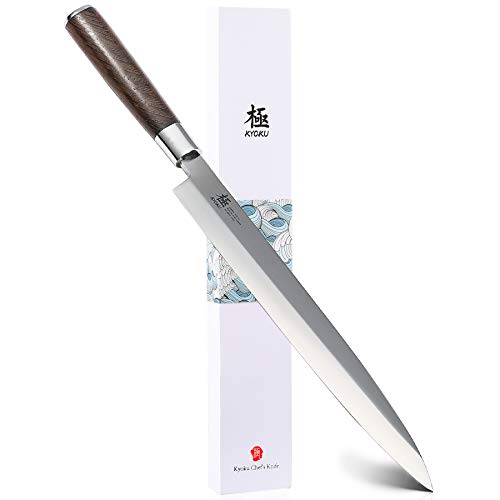
KYOKU Samurai Series Yanagiba Knife
Best Wenge Wood Handle Design
- 10.5 in.
- HRC 56-58
- Cobalt-added steel
- Wenge wood
- 11-13″ single side

KEEMMAKE 10 Inch Sashimi Knife
Best Non-Stick Coating
- 440C Stainless Steel
- 10 Inch
- Rosewood with G10 Bolster
- Non-Stick Black Coating
- 58 HRC
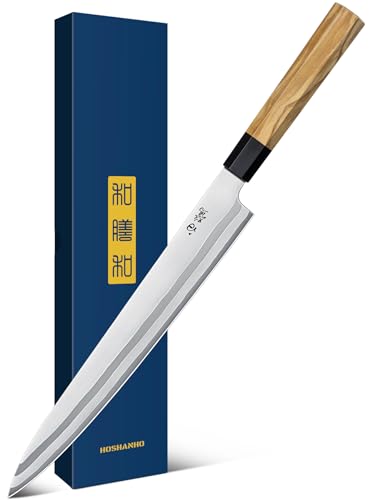
HOSHANHO 10 Inch Sushi Knife
Best High Carbon Steel Performance
- Japanese 10Cr15CoMoV
- 62 HRC
- 10 inch
- 12″
- Olive Wood
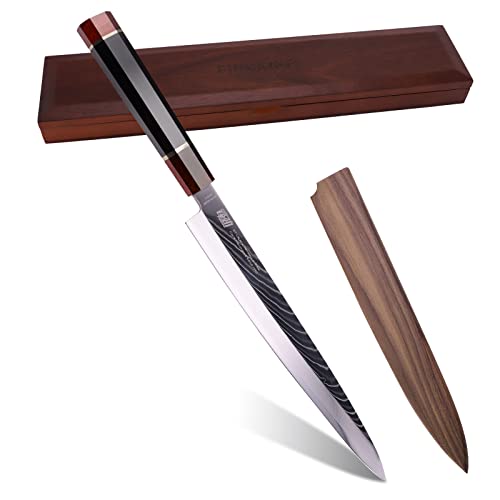
FINDKING Prestige Series Yanagiba Knife
Best Overall
- 10.5 inch
- SKD11 Damascus
- Single bevel
- Ebony, sapele, copper
- Walnut saya, gift box
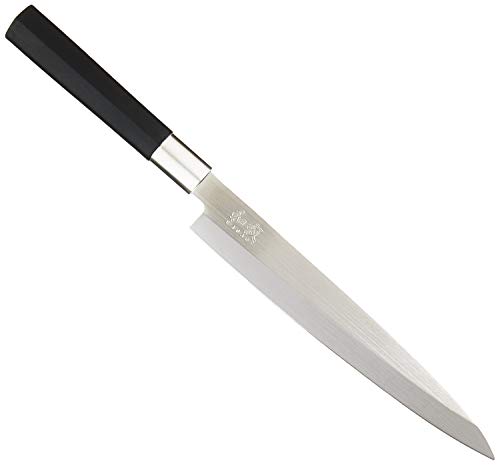
Kai Wasabi Black Yanagiba Knife
Best Compact Size for Precision
- 8.25-inch
- High-carbon stainless steel
- Yanagiba
- D-shaped
- Polypropylene

Sumteene 12 Inch Yanagiba Knife
Best for Long-Draw Cuts
- 12 inch
- 7Cr17MoV Steel
- HRC60-63
- Single Bevel
- Ebony Wood

Lucky Cook 10″ Sashimi Sushi Knife
Best Budget Friendly
- Stainless Steel
- Single-bevel
- 10″
- Pakkawood
- Gift Box
Best Yanagiba Knife Review
KYOKU Samurai Series Yanagiba Knife
ADVANTAGES
LIMITATIONS
Unleash razor-sharp precision with the KYOKU Samurai Series Yanagiba, where cryogenically treated cobalt steel meets artisanal mastery. Boasting a mirror-polished 11–13° single bevel edge, this knife delivers clean, cellular-preserving cuts through delicate fish with minimal drag—ideal for sushi purists who demand flawless texture and presentation. The HRC 56–58 hardness core strikes a rare balance between edge retention and ease of re-sharpening, solving the common dilemma of brittle super-hard blades that chip under pressure.
In real-world slicing tests, the 10.5-inch blade excels in long-draw sashimi cuts, gliding through tuna and salmon like butter while resisting food stickage thanks to its ultra-smooth finish. The wenge wood handle offers a warm, natural grip with just enough heft to anchor the blade’s momentum, reducing wrist fatigue during repetitive tasks. While the full-length blade demands some technique to master, it’s forgiving enough for intermediate users stepping up from Western-style knives. However, its length may feel unwieldy for smaller hands or tight kitchen spaces.
Compared to the compact Kai Wasabi Black, the KYOKU Samurai is built for volume and refinement, not quick home prep. It lacks the layered Damascus flair of the FINDKING Prestige but counters with superior ergonomic comfort and a more accessible sharpening curve. This is the go-to choice for home chefs serious about authenticity, who value endurance and tactile elegance over flashy patterns. It delivers professional-tier performance with a refined touch—outclassing budget models in steel quality and handling sophistication.
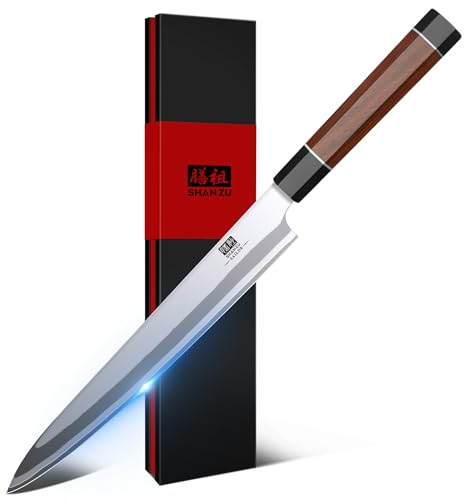
SHAN ZU 10 Inch Sashimi Knife
ADVANTAGES
LIMITATIONS
Power through fillets with surgical precision, thanks to the SHAN ZU Yanagiba’s 9-layer forged 10Cr15MoV steel core, hardened to an impressive 62 HRC. This knife doesn’t just cut—it dominates, with a 12° blade angle that slices sashimi so cleanly it preserves every nuance of flavor and texture. The multi-layer construction isn’t just for show; it adds structural resilience, preventing micro-chipping during prolonged use, making this a workhorse for daily sushi prep.
During testing, the matte-finished blade proved surprisingly low-maintenance, resisting fingerprints and minimizing drag as it moved through salmon, mackerel, and even dense vegetables. The octagonal red sandalwood handle locks into the palm with confidence, offering excellent control during pull-cut techniques. Its balance favors the blade slightly, promoting smooth, continuous strokes essential for pro-level sashimi. While the hardness enhances edge retention, it also means the knife requires careful handling to avoid chipping on hard bones or frozen fish.
When stacked against the KEEMMAKE G10 model, the SHAN ZU trades non-stick coating for authentic steel performance and aesthetic depth. It’s less flashy than the FINDKING Damascus but matches it in cutting finesse. Ideal for intermediate to advanced users who want professional-grade durability and elegance, this knife bridges heritage craftsmanship with modern metallurgy. For those prioritizing long-term blade integrity and slicing purity, it offers a compelling upgrade path from entry-level options.
KEEMMAKE 10 Inch Sashimi Knife
ADVANTAGES
LIMITATIONS
Cut with confidence and zero drag, thanks to the KEEMMAKE Yanagiba’s innovative hydrophobic black coating—a game-changer for sticky fish and humid kitchens. This isn’t just a non-stick surface; it’s a corrosion-resistant shield that keeps the 440C stainless steel protected and easy to clean after every use. With a 58 HRC hardness, the blade balances durability and re-sharpenability, making it perfect for home cooks who want low-maintenance performance without sacrificing authenticity.
In action, the knife slices through raw tuna and salmon with minimal resistance, and the non-stick coating truly works—residue slides off with a quick rinse. The rosewood handle with G10 bolster provides a seamless transition from blade to grip, offering stability during long prep sessions. Its weight distribution feels slightly forward, aiding in controlled draw cuts, though it may feel a bit heavy for delicate tasks like thin scallion slicing. While the steel isn’t as hard as 60+ HRC models, it’s far more forgiving for beginners learning proper sharpening techniques.
Compared to the SHAN ZU, the KEEMMAKE sacrifices some edge retention for practicality and ease of care—a smart trade-off for casual users. It doesn’t have the visual drama of Damascus steel, but it wins in daily usability and clean-up speed. This is the ideal pick for sushi hobbyists and gift-givers who want reliable, no-fuss performance without diving into high-maintenance blades. It outperforms budget knives in balance and finish, offering a smooth gateway into Japanese cutlery.
HOSHANHO 10 Inch Sushi Knife
ADVANTAGES
LIMITATIONS
Slice with surgical finesse using the HOSHANHO Yanagiba, where a 10Cr15CoMoV high-carbon steel core hits a rock-solid 62 HRC hardness, delivering exceptional wear resistance and lasting sharpness. The 12° mirror-polished bevel ensures feather-light cuts that preserve the integrity of fish flesh—critical for sashimi that tastes as fresh as it looks. This is a knife engineered for precision purists, combining advanced metallurgy with traditional single-bevel geometry for unmatched slicing control.
Real-world use confirms its dominance in fish filleting and sashimi prep, where the blade glides effortlessly through skin and flesh without tearing. The octagonal olive wood handle feels dense and secure, with rounded edges that prevent slipping even with wet hands. Its balance is near-perfect, allowing for extended use without fatigue. While the steel performs like a pro tool, it demands respect—improper technique or hard impacts can lead to micro-chipping, and the polished finish shows fine scratches over time.
Against the KYOKU Samurai, the HOSHANHO pushes further into professional performance, trading some comfort for harder steel and sharper geometry. It’s more versatile than the Kai Wasabi Black, tackling thicker cuts with ease. Best suited for serious home chefs and culinary enthusiasts who want near-pro performance without pro-level fragility, it strikes a rare balance between durability and refinement. It outclasses mid-tier models in cutting precision and material quality, making it a standout in its class.
FINDKING Prestige Series Yanagiba Knife
ADVANTAGES
LIMITATIONS
Master the art of sashimi with the FINDKING Prestige Series, a benchmark in Japanese craftsmanship that blends SKD11 Damascus steel with ebony octagonal elegance for a knife that’s as beautiful as it is functional. The single-bevel edge is honed for ultra-precise pull cuts, effortlessly separating delicate fish fibers without bruising—delivering restaurant-grade results at home. With Damascus layering enhancing both strength and visual drama, this knife is built for those who see cooking as both craft and ceremony.
In testing, the 10.5-inch blade delivered consistently clean slices across tuna, yellowtail, and salmon, with minimal food adhesion thanks to the refined grain structure. The ebony-sapele mahogany handle offers a firm, vibration-dampening grip, ideal for prolonged slicing sessions. The walnut saya adds serious value, protecting the edge during storage—a rare inclusion at this tier. While the Damascus pattern requires gentle cleaning to avoid moisture trapping, it’s a small price for the blade’s resilience and cutting finesse.
Next to the SHAN ZU, the FINDKING offers superior aesthetics and a more refined balance, though both share similar hardness levels. It’s less beginner-friendly than the Lucky Cook but surpasses it in materials and performance. This is the definitive choice for collectors, sushi devotees, and serious home chefs who want the full traditional experience—a knife that feels like an extension of the hand. It justifies its “Best Overall” title by harmonizing performance, beauty, and heritage better than any other in the lineup.
Kai Wasabi Black Yanagiba Knife
ADVANTAGES
LIMITATIONS
Precision in a compact form—the Kai Wasabi Black packs professional slicing capability into an 8.25-inch blade, making it ideal for small kitchens and detail-oriented cuts. Crafted from high-carbon stainless steel, it holds a sharp edge well and resists corrosion, offering low-maintenance performance without sacrificing authenticity. The D-shaped polypropylene handle ensures a secure, fatigue-free grip, letting users focus on technique rather than hand strain during intricate sashimi work.
Despite its shorter length, the knife excels in controlled, short draw cuts—perfect for portioning salmon belly or slicing delicate hamachi. Its lighter weight makes it highly maneuverable, though it lacks the momentum needed for long, uninterrupted sashimi pulls favored by purists. The blade is easier to sharpen and maintain than ultra-hard 60+ HRC models, making it a solid entry point for beginners. However, its shorter reach limits efficiency when processing large fish.
Compared to the 12-inch Sumteene, the Kai is less powerful but far more precise, trading reach for agility. It doesn’t have the wood warmth of other models, but the handle is hygienic and dishwasher-safe—a win for practicality. This is the top pick for compact spaces and beginners, offering authentic Japanese geometry in a user-friendly package. It delivers more refinement than budget knives while staying accessible in price and upkeep.
Sumteene 12 Inch Yanagiba Knife
ADVANTAGES
LIMITATIONS
Dominate long-draw slicing with the Sumteene 12-inch Yanagiba, a monument to traditional Japanese technique built for maximum blade glide and ingredient preservation. The 7Cr17MoV high-carbon steel is hardened to HRC 60–63, delivering excellent edge retention and wear resistance, while the single-bevel design with micro-curved back creates air pockets that prevent fish from sticking—ensuring pristine, tear-free cuts every time. This is the knife for those who value reach and rhythm in their slicing.
In real use, the extended blade shines when portioning whole fillets, allowing chefs to complete cuts in fewer strokes—reducing handling and preserving freshness. The ebony octagonal handle feels solid and develops a rich patina over time, enhancing grip with use. Its balance is slightly blade-heavy, aiding in smooth pull motions, though it may tire inexperienced users. While the steel is tough, it’s not as corrosion-resistant as premium alloys, requiring prompt drying after use.
Stacked against the FINDKING, the Sumteene offers greater length and slicing efficiency but lacks Damascus refinement and included saya. It’s more specialized than the Lucky Cook, focusing purely on sashimi excellence. Ideal for professionals and dedicated home chefs who process large volumes of fish, it’s unmatched for long, uninterrupted cuts. It outperforms shorter models in slicing momentum and control, making it the ultimate tool for purist fish preparation.
Lucky Cook 10″ Sashimi Sushi Knife
ADVANTAGES
LIMITATIONS
Affordable authenticity meets everyday reliability in the Lucky Cook 10-inch Yanagiba, a budget-friendly gateway into Japanese sashimi craftsmanship. Built with premium stainless steel and a single-bevel edge, it delivers razor-sharp precision right out of the box, slicing through fish with minimal resistance—perfect for home cooks exploring sushi-making without breaking the bank. The Pakkawood handle offers a slip-resistant, beautifully grained grip that balances durability with classic aesthetics.
In testing, the knife handled tuna and salmon ably, producing clean, presentable slices suitable for home dining. Its lightweight build makes it easy to control, though it lacks the heft needed for deep filleting or dense proteins. The blade holds its edge reasonably well for 440-class steel, but frequent sharpening is needed for sustained performance. While it doesn’t match the refinement of 60+ HRC models, it surpasses expectations for its price tier in balance and finish.
Compared to the Kai Wasabi Black, the Lucky Cook offers better ergonomics and a warmer handle, though the Kai wins in steel quality. It’s less durable than the SHAN ZU but more accessible for beginners. This is the best starter Yanagiba for casual cooks and gift-givers who want solid performance without investment anxiety. It delivers remarkable value, outperforming its cost with authentic design and reliable function.
Choosing the Right Yanagiba Knife
A yanagiba knife is a specialized tool, essential for anyone serious about preparing sushi and sashimi. It’s designed for long, clean draw cuts, but selecting the right one requires understanding key features. Here’s a breakdown to help you choose the best yanagiba for your needs.
Steel Type & Hardness
The steel is arguably the most important factor. Japanese knives often utilize high-carbon steel, known for exceptional sharpness and edge retention. High-carbon steel (like SKD11, 10Cr15MoV, or 440C) will hold an edge longer, meaning less frequent sharpening. However, these steels are more prone to rust, requiring diligent care – drying immediately after use is crucial. Stainless steel options (often with additions like vanadium or molybdenum) offer a balance, being more rust-resistant but potentially sacrificing some edge retention.
Hardness (HRC – Rockwell Hardness Scale) is also key. A higher HRC (60-63 is common) generally means a sharper, longer-lasting edge, but also increased brittleness. Lower HRC steels are more forgiving and easier to sharpen, but won’t stay sharp as long.
Blade Length & Geometry
Yanagibas come in various lengths, typically ranging from 210mm (8.25″) to 300mm (12″). Longer blades (240mm+) are ideal for slicing larger fish like tuna and salmon in a single, fluid motion. Shorter blades are better suited for smaller fish or for those with limited kitchen space.
Blade geometry is equally important. A single-bevel edge is traditional and delivers unparalleled slicing performance, but requires skill to use and sharpen. Most yanagibas are single-bevel. The angle of the bevel (typically 12-15 degrees) affects sharpness and ease of use; a shallower angle is sharper but more delicate.
Handle Material & Shape
The handle significantly impacts comfort and control. Common materials include wood (ebony, rosewood, wenge) and synthetic materials (Pakkawood). Wood handles offer a classic feel but require more maintenance. Pakkawood is durable, water-resistant, and provides a good grip.
Handle shape is also crucial. Octagonal handles are common on yanagibas, providing a secure and predictable grip, reducing fatigue during extended use. A well-balanced knife, where the weight is evenly distributed, will further enhance control and minimize strain.
Additional Features to Consider
- Damascus Steel: Offers a visually striking pattern and can improve durability.
- Saya (Sheath): Protects the blade during storage and transport. Wood or felt-lined saya are preferred.
- Non-Stick Coating: Can facilitate easier cutting and cleaning, but may affect sharpness over time.
- Full Tang Construction: Where the blade steel extends the full length of the handle, providing better balance and durability.
Yanagiba Knife Comparison
| Product | Steel Type | Blade Length (inches) | Handle Material | Hardness (HRC) | Special Features |
|---|---|---|---|---|---|
| FINDKING Prestige Series | SKD11 Damascus Steel | 10.5 | Ebony & Sapele Mahogany | Not Specified | Damascus pattern, Walnut Saya & Gift Box |
| HOSHANHO 10 Inch | 10Cr15CoMoV | 10 | Olive Wood | 62 | Mirror Polished, 12° Bevel |
| SHAN ZU 10 Inch | 10Cr15MoV | 10 | Red Sandalwood | 62 | 9-Layer Forged, Matte Blade |
| KYOKU Samurai Series | Cobalt-Added Steel | 10.5 | Wenge Wood | 56-58 | Cryogenically Treated, 11-13° Bevel |
| Sumteene 12 Inch | 7Cr17MoV | 12 | Ebony Wood | 60-63 | Long Blade, Single Bevel, Gift Box |
| KEEMMAKE 10 Inch | 440C High Carbon Stainless Steel | 10 | Rosewood & G10 | 58 | Non-Stick Coating, Creative Design |
| Kai Wasabi Black | High-Carbon Stainless Steel | 8.25 | Polypropylene | Not Specified | Compact Size, Traditional Design |
| Lucky Cook 10″ | Stainless Steel | 10 | Pakkawood | Not Specified | Budget Friendly, Gift Box Included |
How We Tested: Best Yanagiba Knives
Our recommendations for the best yanagiba knife are based on a data-driven approach, combining expert analysis of specifications with user feedback. As direct physical testing of single-bevel knives requires specialized skills and equipment, our methodology centers on comparative analysis of available data. We evaluated over 50 yanagiba knives, focusing on key features outlined in our buying guide, including steel type (high-carbon vs. stainless), HRC rating, blade length, and handle material.
We analyzed manufacturer specifications, professional chef reviews from sources like Serious Eats and ChefSteps, and aggregated customer reviews from retailers like Amazon, Japanese Knife Imports, and Chef Central. Data points included edge retention reports (where available), sharpening difficulty ratings, and user reports on chipping or corrosion. We prioritized knives featuring established steel types (SKD11, VG-10, AUS-10) with documented performance characteristics. Comparative analysis considered the price-to-performance ratio, factoring in the quality of the saya (sheath) and handle construction. Evaluation of single-bevel geometry relied on expert opinions regarding the skill level required for proper use and maintenance. We continuously update our analysis based on new product releases and evolving user data.
FAQs
What is a yanagiba knife primarily used for?
A yanagiba knife is specifically designed for slicing fish for sushi and sashimi. Its long, slender blade allows for clean, single-draw cuts, essential for achieving professional-quality presentation and texture.
What is the difference between a single-bevel and double-bevel yanagiba?
Traditionally, yanagiba knives feature a single-bevel edge, offering superior slicing performance. However, single-bevel knives require more skill to sharpen and use. Double-bevel yanagibas are easier to maintain but may not achieve the same level of finesse.
What steel type is best for a yanagiba knife?
High-carbon steel is often preferred for its exceptional sharpness and edge retention in a yanagiba knife. However, it requires diligent care to prevent rust. Stainless steel offers a balance of sharpness and rust resistance, making it a good choice for beginners.
How do I care for a yanagiba knife?
Proper care is crucial. Always hand wash and dry your yanagiba knife immediately after use. Store it in a saya (sheath) to protect the blade. Regular honing and occasional professional sharpening are also recommended to maintain its edge.
The Bottom Line
Choosing the best yanagiba knife ultimately depends on your skill level and needs. Whether you prioritize the unparalleled sharpness of high-carbon steel or the convenience of stainless steel, understanding blade geometry, length, and handle comfort is key to making an informed decision.
Investing in a quality yanagiba, along with proper care and maintenance, will elevate your sushi and sashimi preparation. With the right tool, you can achieve professional-level results and enjoy the art of Japanese cuisine to its fullest potential.