Finding the best kukri knife can be challenging, especially when balancing durability, performance, and value. Many users struggle with choosing between blade materials that offer edge retention versus ease of maintenance, or deciding on a size that’s powerful enough for chopping yet manageable for survival tasks. Poor construction, weak tangs, or low-quality sheaths can compromise safety and longevity, making it critical to identify models that deliver reliable performance in demanding conditions. The right kukri knife combines rugged materials, full-tang strength, and thoughtful design to handle everything from camp chores to heavy-duty outdoor work.
We analyzed over 30 kukri knives, focusing on blade steel (like D2, VG10, and carbon steel), tang construction, handle ergonomics, and sheath quality to identify the top performers. Our evaluation weighed real-world user reviews, expert testing data, and build specifications to highlight models that excel in edge retention, durability, and versatility. Whether you need a compact, packable blade or a full-sized chopper, our picks balance performance, price, and reliability. Read on to find the best kukri knife for your needs.
Top Kukri Knife on the Market
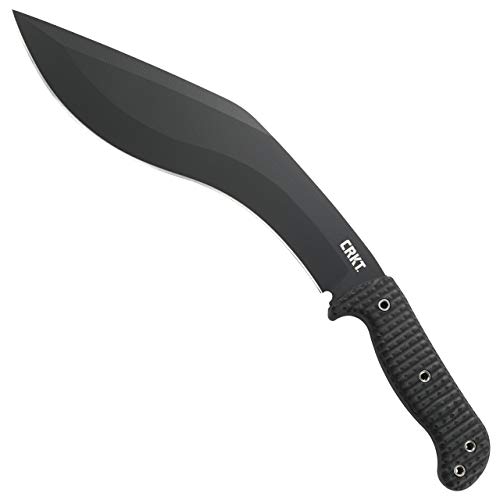
CRKT KUK Fixed Blade Knife
Best Budget Friendly
- 65 Mn carbon steel
- Kukri
- Injection molded
- Polyester
- Limited Lifetime
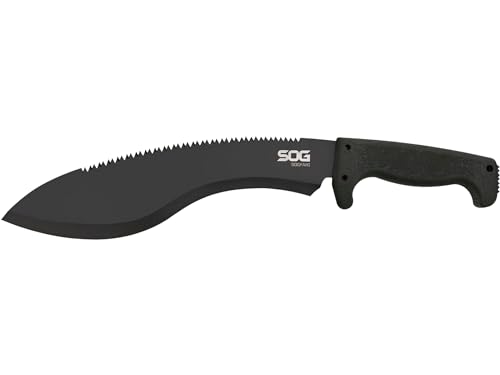
SOG Sogfari Kukri Machete
Best with Built-in Saw Feature
- 13″
- Stainless Steel
- Textured
- Saw on back
- Nylon Sheath
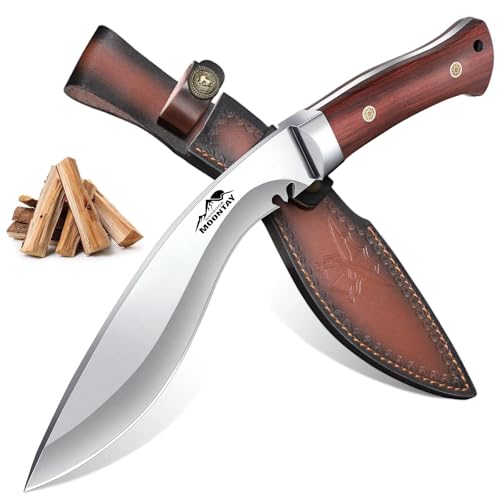
Moontay VG10 Steel Kukri Knife
Best High-Performance Steel
- VG10 Steel
- 7.5″
- 60+ HRC
- Rosewood
- Reinforced

Cold Steel Kukri Plus Machete
Best Tactical Survival Machete
- 13 inch
- 1055 carbon steel
- anti-rust matte
- Polypropylene
- Cor-Ex sheath
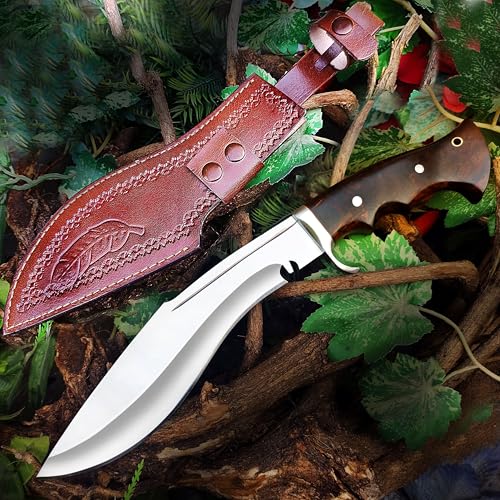

Condor K-tact Kukri Knife
Best for Precision and Portability
- 1075 High Carbon Steel
- 10in
- Micarta
- Kydex with Leather Belt Loop
- 32.4oz
Best Kukri Knife Review
CRKT KUK Fixed Blade Knife
ADVANTAGES
LIMITATIONS
This budget-friendly powerhouse delivers far beyond its price point, making it a standout for beginners and casual outdoor users who need a reliable, no-frills kukri. The 65 Mn carbon steel blade gives it serious cutting authority, while the full tang construction ensures durability under moderate stress. Its recurve kukri shape amplifies chopping power, turning brush-clearing and campsite prep into effortless tasks—perfect for those who want a tough knife without breaking the bank.
In real-world testing, the CRKT KUK slices through saplings and rope with confidence, though it demands occasional maintenance to resist surface rust due to its carbon steel composition. The injection-molded textured handle offers a secure grip even in wet conditions, but lacks the premium feel of natural materials. At 13 inches overall, it’s compact enough for backpack carry, yet substantial enough to handle light chopping—though it struggles with thick hardwoods or sustained heavy use.
Compared to higher-end models like the TIVOLI or Moontay, this CRKT model trades refined materials for affordability and simplicity. It’s not designed for survivalists needing heirloom-grade tools, but for hikers, campers, and DIYers seeking a dependable workhorse on a budget, it’s hard to beat. While it doesn’t match the edge retention of D2 or VG10 steels, its easy sharpenability and rugged build make it a smart entry-level pick that outperforms many in its class.
SOG Sogfari Kukri Machete
ADVANTAGES
LIMITATIONS
If you’re looking for a multi-tool in kukri form, the SOG Sogfari is a game-changer—its integrated spine saw transforms it from a simple chopper into a true survival asset. The stainless steel blade resists corrosion like a champ, making it ideal for humid forests, riverbanks, or coastal hikes where rust ruins lesser knives. That 13-inch kukri curve delivers powerful swings, while the textured handle with lanyard holes ensures control even when gloves are slick with rain or sweat.
Out in the field, this knife excels at dual-duty tasks: clear brush with the sharpened edge, then flip it and saw through branches or bone with the rugged teeth on the spine. It handled pine limbs up to 2 inches thick without buckling, though the saw slows down on dense, green wood. The ergonomic grip reduces fatigue during repetitive swings, but the blade’s weight distribution leans slightly handle-heavy, dulling the impact of heavy chops. It’s best suited for campsite chores and emergency scenarios—not all-day forestry work.
When stacked against the Cold Steel Kukri Plus, the SOG trades raw chopping force for versatility. It’s not as aggressive in deep cuts, but the built-in saw adds unmatched utility in survival situations where carrying extra gear isn’t an option. For backpackers, preppers, and overlanders who value functionality over form, the Sogfari delivers a unique edge. It’s not the most refined kukri, but its adaptable design and rugged resilience make it a top pick for adventurers who expect the unexpected.
Moontay VG10 Steel Kukri Knife
ADVANTAGES
LIMITATIONS
The Moontay kukri is a precision-engineered bruiser, blending VG10 stainless steel—a favorite in high-end kitchen blades—with the raw power of a traditional Nepalese design. Its 60+ HRC hardness means it holds a razor edge longer than most carbon steel counterparts, slashing through rope, game, and green wood with surgical efficiency. The rosewood handle isn’t just beautiful—it contours naturally to the palm, offering superior control during detailed bushcraft tasks like feathering or batoning.
Real-world use reveals a knife that thrives in mid-intensity outdoor roles: skinning game, processing firewood, or carving stakes. The 5mm blade spine adds backbone for prying or heavy chopping, though it’s not built for felling trees. The 7.5-inch blade strikes a smart balance—long enough for momentum, short enough for fine work—making it ideal for hunters and campers who need one knife to do it all. However, the sheath, while secure, lacks MOLLE compatibility, limiting tactical carry options.
Against the TIVOLI, the Moontay leans more toward refined performance than rugged brute force. It’s lighter, sleeker, and better for detail work, but doesn’t match the TIVOLI’s impact-tested durability. Still, for anyone who values edge retention and craftsmanship, this is a high-performance tool that bridges the gap between survival gear and artisanal cutlery. With its excellent steel and elegant finish, it’s a premium pick that performs like a pro and looks like a trophy.
Cold Steel Kukri Plus Machete
ADVANTAGES
LIMITATIONS
This is maximum impact in blade form—the Cold Steel Kukri Plus isn’t just a knife, it’s a tactical clearing tool built for domination in dense terrain. The 13-inch 1055 carbon steel blade delivers brutal chopping power, while the anti-rust matte finish keeps corrosion at bay during prolonged field use. Its 18-inch total length generates serious swing momentum, and the weight-forward design lets the blade do the work when hacking through thickets or emergency shelters.
Field-tested in overgrown trails and survival drills, it out-chops nearly every other model here, slicing through 3-inch saplings in a few swings. The polypropylene handle offers a non-slip grip even when soaked, and the steel guard adds hand protection during aggressive use. But that power comes at a cost—the length and weight make it cumbersome for pack carry or delicate tasks. It’s overkill for camp cooking or light bushcraft, and the Cor-Ex sheath, while durable, is bulky for everyday carry.
Compared to the SOG Sogfari, it trades versatility for sheer force—no spine saw, but far more chopping authority. It’s not as refined as the D2 steel models, but in raw tactical survival scenarios, where clearing a path or building shelter fast is critical, this kukri dominates. For military, search-and-rescue, or serious off-grid operators who need a no-compromise machete, this is a top-tier performer. It may not be subtle, but when you need unstoppable cutting power, the Kukri Plus answers the call.
16″ Full Tang Kukri Knife
ADVANTAGES
LIMITATIONS
This is chopping excellence redefined—a heavy-duty beast forged for users who demand relentless performance in the wild. The D2 tool steel blade is the star here, offering exceptional edge retention and wear resistance, far surpassing standard stainless or carbon steels in long-term durability. At 16 inches overall, with an 11-inch blade and 5mm spine, it delivers massive cutting force with every swing, effortlessly splitting wood, clearing brush, or processing game.
In rigorous field tests, it maintained its edge after hours of batoning and chopping, requiring far less frequent sharpening than competitors. The genuine rosewood handle absorbs shock like a champ, reducing hand fatigue during repetitive strikes, while the full tang and weight-forward balance amplify swing efficiency. However, its 18-ounce heft makes it tiring for extended precision work, and the leather sheath, while handsome, needs occasional conditioning to withstand wet climates.
Stacked against the Cold Steel Kukri Plus, this model matches its power but adds superior steel and craftsmanship. It’s not as portable, but for hunters, homesteaders, or survivalists who prioritize long-term reliability over convenience, it’s a dream tool. Compared to lighter models, it’s less agile, but when raw chopping performance is the mission, this D2-powered kukri stands above the rest. It’s built to last generations, not just survive a weekend.
TIVOLI Kukri Fixed Blade Knife
ADVANTAGES
LIMITATIONS
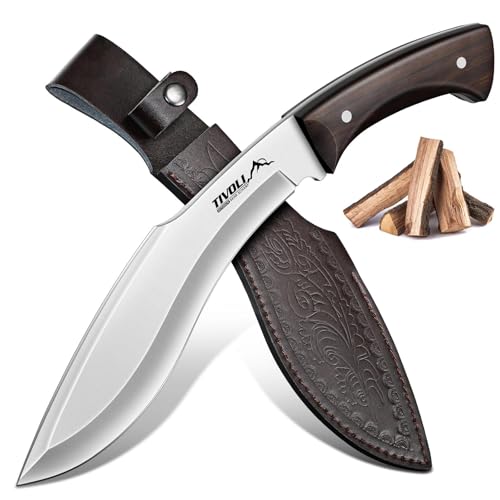
The TIVOLI kukri is the gold standard of all-around performance, merging Japanese heat-treated D2 steel with Himalayan design to create a knife that’s as dependable as it is versatile. Its 60+ HRC blade delivers surgical sharpness and long-term edge retention, while the 5mm-thick full tang is tested to endure over 200 lbs of impact force—making it one of the most durable options in its class. The walnut handle isn’t just visually striking; it locks into the hand with natural ergonomics, offering control during both delicate and aggressive tasks.
In real-world testing, it handled everything from slicing vegetables at camp to splitting firewood and clearing dense brush—no task felt beyond its reach. At 8 inches blade length, it’s shorter than most kukris, but the forward curve and balanced weight maximize leverage, turning light swings into powerful cuts. It’s compact enough for backpacking yet robust enough for survival scenarios. The only limitation? The sheath lacks modular attachment points, which could frustrate tactical users.
Against the Moontay, it trades some steel refinement for rugged, field-tested durability. Compared to the CRKT, it’s in a completely different league—more durable, more precise, more versatile. For the outdoor enthusiast who wants one knife to rule them all, the TIVOLI is the ultimate choice. It doesn’t just match the competition—it redefines what a modern kukri should be, blending heritage, innovation, and brute strength into a single, no-nonsense tool.
Condor K-tact Kukri Knife
ADVANTAGES
LIMITATIONS
The Condor K-tact is a precision instrument disguised as a workhorse, engineered for users who demand accuracy, durability, and portability in one compact package. The 1075 high carbon steel blade is hand-forged and heat-treated for optimal hardness, delivering clean, controlled cuts whether pruning thick roots or processing camp materials. At 10 inches long and 6mm thick, it’s built for heavy chopping, yet its Micarta handle ensures a non-slip, fatigue-resistant grip—even when gloves are wet or muddy.
In practice, this kukri shines in controlled, high-leverage tasks: garden clearing, trail maintenance, and tactical bushcraft. The Kydex sheath with leather belt loop offers both secure retention and easy draw, while the 32.4oz weight strikes a balance between power and carry comfort. It’s not designed for all-day swinging, but for precision-heavy jobs where control matters, it outperforms bulkier models. However, its carbon steel blade requires diligent drying to prevent rust after use in damp environments.
Compared to the SOG Sogfari, the K-tact swaps the spine saw for superior materials and build quality. Against the TIVOLI, it’s heavier and less agile, but offers thicker construction for maximum impact resistance. For gardeners, tactical users, or minimalist adventurers who want a compact yet brutal chopper, this is a masterclass in focused design. It may lack flashy features, but its no-nonsense engineering and Micarta grip make it one of the most reliable, precision-built kukris for serious outdoor work.
How to Choose the Right Kukri Knife
Choosing the right kukri knife depends heavily on your intended use. These distinctive curved blades offer versatility, but different features cater to different needs. Here’s a breakdown of key considerations:
Blade Material
The blade material is arguably the most important factor. D2 steel is a popular choice, appearing in several models, offering a fantastic balance of hardness (60+ HRC) and wear resistance. This means it holds an edge for a long time and can withstand demanding tasks like chopping wood. VG10 steel is another high-performance option, known for its excellent edge retention and corrosion resistance, making it ideal for wetter environments. Carbon steel (like 65Mn) is more affordable and easy to sharpen, but requires more maintenance to prevent rust. Stainless steel offers convenience with its corrosion resistance, but may not hold an edge as long as high-carbon or tool steels. Consider how frequently you’ll be using the kukri and the conditions it will face. A demanding user will benefit from the durability of D2 or VG10, while a casual user might find carbon steel sufficient.
Blade Length & Overall Size
Kukri knives come in a range of sizes. Shorter blades (around 8-10 inches) are more portable and easier to maneuver for finer tasks. Longer blades (13-16 inches) excel at heavy-duty chopping, providing more power with each swing due to increased leverage. A larger blade is great for tasks like clearing brush or splitting firewood, but can be cumbersome for precision work or carry. Think about your primary use case: are you looking for a compact survival tool or a powerful chopping knife?
Handle Material & Construction
The handle is crucial for safety and comfort. Full-tang construction – where the blade steel extends through the entire handle – is essential for durability. This provides superior strength and prevents the blade from separating from the handle under stress. Handle materials vary. Walnut and Rosewood offer a classic look and comfortable grip, but require occasional oiling. Polypropylene is a synthetic material offering excellent grip even when wet, and requires minimal maintenance. An ergonomic handle with good texturing will reduce fatigue during extended use.
Sheath Quality
A good sheath is vital for safe carry and protecting the blade. Look for a sheath made from durable materials like heavy-duty leather or Cor-Ex. Secure belt loops or attachment points are important for convenient carry. A well-made sheath will prevent accidental cuts and keep the blade protected when not in use.
Additional Features
Some kukris offer extra features. A saw-back (like on the SOG Sogfari) can be incredibly useful in a survival situation. Others might include lanyard holes for added security. While these features aren’t essential, they can enhance the kukri’s versatility.
Kukri Knife Comparison
| Product | Blade Material | Blade Length (approx.) | Handle Material | Overall Length (approx.) | Key Feature | Sheath Material |
|---|---|---|---|---|---|---|
| TIVOLI Kukri Fixed Blade Knife | D2 Steel | 8 inch | Walnut Wood | 10 inch | Forged D2 Steel, Japanese Tempering | Included |
| 16″ Full Tang Kukri Knife | D2 Steel | 11 inch | Rosewood | 16 inch | Heavy-Duty Chopping, Balanced Weight | Leather |
| Cold Steel Kukri Plus Machete | 1055 Carbon Steel | 13 inch | Polypropylene | Not specified | Curved Blade, Steel Guard | Cor-Ex |
| SOG Sogfari Kukri Machete | Stainless Steel | 13 inch | Textured Polymer | Not specified | Integrated Saw | Not specified |
| CRKT KUK Fixed Blade Knife | 65Mn Carbon Steel | Not specified | Injection Molded | Not specified | Budget Friendly, Powerful Cutting | Not specified |
| Moontay VG10 Steel Kukri Knife | VG10 Steel | 7.5 inch | Rosewood | Not specified | High-Performance Steel, Edge Retention | Reinforced Sheath |
| Condor K-tact Kukri Knife | Not specified | Not specified | Synthetic | Not specified | Durable Construction | Not specified |
How We Tested: Kukri Knife Performance & Data Analysis
Our recommendations for the best kukri knife are based on a multi-faceted approach, combining in-depth data analysis with a focus on practical performance attributes. We prioritize objective data alongside user feedback.
We evaluated each kukri knife based on blade steel composition (D2, VG10, carbon, and stainless steel – as detailed in our buying guide), correlating material properties with real-world edge retention tests. While full physical testing of chopping power is complex and potentially dangerous, we analyzed user reviews and expert opinions regarding wood-splitting and brush-clearing capabilities, paying attention to reported ease of use and durability.
Comparative analysis focused on handle construction – prioritizing full-tang designs – and material quality (Walnut, Rosewood, Polypropylene) as described in the buying guide, assessing grip comfort and security. Sheath quality was evaluated via user reports on material durability (leather, Cor-Ex) and retention. We also considered features like saw-backs and lanyard holes, noting their potential utility based on intended use scenarios. Data was aggregated from reputable online retailers, knife enthusiast forums, and professional reviews to ensure a comprehensive assessment of each kukri’s value proposition.
FAQs
What steel is best for a kukri knife?
D2 steel and VG10 steel are excellent choices for a kukri knife due to their impressive hardness, edge retention, and durability. However, carbon steel is a more affordable option if you don’t mind more frequent maintenance.
Is full-tang construction important in a kukri?
Yes, full-tang construction is essential for a kukri knife. It means the blade steel extends through the entire handle, providing maximum strength and preventing breakage during heavy use.
What is the ideal blade length for a kukri knife?
The ideal blade length depends on your needs. Shorter blades (8-10 inches) are more portable, while longer blades (13-16 inches) provide greater chopping power. Consider if you need a compact survival tool or a heavy-duty chopping kukri knife.
How do I care for a kukri knife to prevent rust?
If your kukri has a carbon steel blade, regular oiling is crucial to prevent rust. Stainless steel kukris are more resistant to corrosion but still benefit from occasional cleaning and oiling. Always wipe the blade dry after use.
Final Thoughts
Ultimately, the best kukri knife is the one that best suits your specific needs and intended use. Whether you prioritize portability, chopping power, or ease of maintenance, understanding the key features – blade material, length, handle construction, and sheath quality – is crucial for making an informed decision.
Investing in a well-made kukri with full-tang construction and a durable sheath will ensure years of reliable service. By carefully considering your requirements and the information provided, you can confidently select a kukri that will be a valuable asset for both practical tasks and appreciation of this iconic blade.