Carrying a knife in New York is a legally risky decision—one that can turn a practical tool into a criminal charge in seconds. Whether you’re a tradesperson needing a utility knife, an outdoor enthusiast, or just someone who likes to be prepared, knowing the law is critical. While some knives are legal under state law, New York City enforces some of the strictest knife restrictions in the country, and even lawful knives can land you in legal trouble if carried improperly or with the wrong intent.
The answer to “Can you carry a knife in New York?” isn’t a simple yes or no—it depends on where you are, what type of knife you have, how it’s carried, and what you say to police. A 3-inch folding knife may be perfectly legal outside NYC, but if the clip sticks out of your pocket in the city, it could result in a citation. Worse, telling an officer “I carry this for protection” can transform a legal tool into evidence of a crime.
This guide breaks down exactly what’s allowed, where, and how to stay compliant—so you avoid fines, arrest, or a criminal record.
Banned Knives in New York: What You Can’t Own
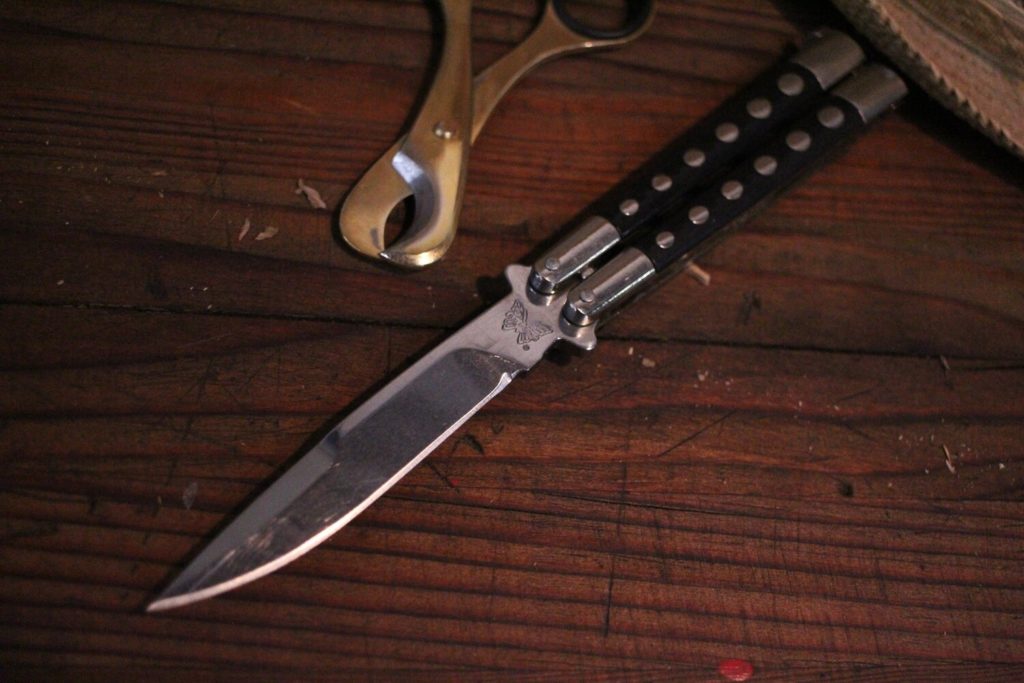
Certain knives are illegal to possess anywhere in New York, regardless of blade length, location, or intent. Under New York Penal Law § 265.01(1), these include:
- Switchblades (knives that open automatically via a button or spring in the handle)
- Ballistic knives (capable of being launched as a projectile)
- Metal knuckle knives (with brass knuckles built into the handle)
- Cane swords (hidden blades concealed in a walking cane)
- Throwing stars (Kung Fu stars)
Possession of any of these is a Class A misdemeanor, punishable by up to one year in jail and a criminal record.
Exception: Active-duty military, law enforcement officers, and licensed hunters may legally possess switchblades while on duty or during authorized activities.
These knives are considered “per se” weapons—illegal by design. Even if you never intend to use them, simply having one in your possession can lead to arrest.
Legal Knives in New York: What You Can Carry
Many common knives are legal to own and carry—but only under specific conditions. These include:
- Manual folding pocket knives
- Utility knives (e.g., box cutters)
- Chef’s knives
- Hunting and fishing knives
- Fixed-blade knives (with a legitimate purpose)
However, any knife can become illegal if authorities believe it was carried with intent to use it unlawfully. Even a Swiss Army knife could be considered a weapon under the wrong circumstances.
Gravity Knives: Decriminalized But Still Risky
Once the target of mass arrests—especially in NYC—gravity knives were decriminalized statewide on May 30, 2019. A gravity knife is one whose blade is released by gravity or a flick of the wrist, then locked open.
While no longer banned under Penal Law § 265.01(1), you can still be charged under § 265.01(2) if police believe you intended to use it as a weapon. The 2019 repeal didn’t eliminate enforcement risk—many NYPD officers still treat gravity knives as illegal, leading to stops, summonses, or confiscation.
Assisted-Opening Knives: A Legal Gray Area
Assisted-opening knives—where a spring helps open the blade after manual pressure—is not explicitly banned, but often mistaken for switchblades.
The key difference:
– Switchblade: Opens automatically via a spring in the handle
– Assisted opener: Requires manual pressure on the blade, then a spring assists
Despite this, courts have upheld convictions for assisted openers (People v. Berrezueta, 2018), signaling that prosecutors may treat them as illegal. In NYC, it’s safest to avoid them entirely.
NYC Knife Laws: Blade Length and Visibility Rules
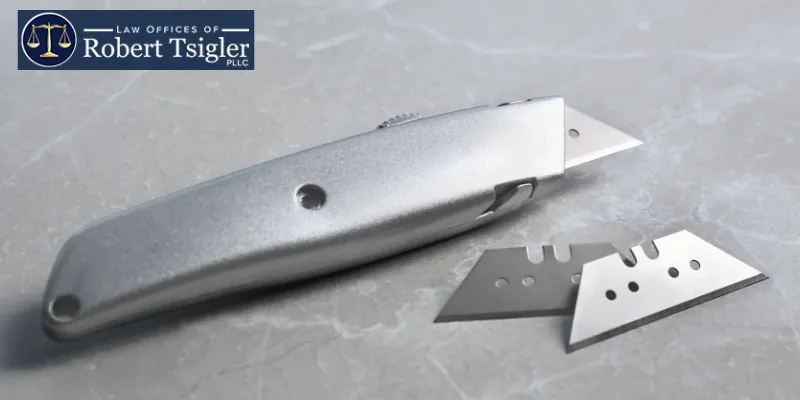
New York City imposes two strict, independent rules under NYC Administrative Code § 10-133:
1. 4-Inch Blade Limit
It is illegal to carry any knife with a blade 4 inches or longer in public. This applies to:
- Folding knives
- Fixed-blade knives
- Utility knives
- Chef’s knives
There are no exceptions for intent or occupation—if the blade is 4 inches or more, it’s illegal in public. The violation is a non-criminal offense, punishable by a fine or up to 15 days in jail via a “pink” summons.
Tip: Measure from the tip to where the blade meets the handle—not just the cutting edge. Many 3.5-inch blades exceed 4 inches when fully extended.
2. Full Concealment Required
Even if your knife is under 4 inches, no part of it can be in public view. That includes:
- Pocket clip
- Handle
- Hinge
- Sheath
If any portion is visible, you’re in violation. This rule exists to prevent “brandishing” and reduce weapon visibility in public spaces.
Example: A 3-inch pocket knife with the clip peeking above your pants is illegal in NYC, even if the blade is short and manually operated.
Exception: On-duty workers like chefs, EMTs, construction workers, and law enforcement may carry knives visibly as part of their job.
Intent Matters: When a Legal Knife Becomes a Crime
Under Penal Law § 265.01(2), any knife can be considered a “dangerous knife” if carried with intent to use it unlawfully. This applies even if the knife is legal in type and size.
In Matter of Jamie D. (1983), the court established a three-part test to determine if a knife is dangerous:
- Was it designed primarily as a weapon?
- Was a utility knife modified to be more dangerous?
- Was an unmodified tool carried in suspicious circumstances?
If any apply, the knife may be deemed illegal.
Presumption of Unlawful Intent
New York law creates a legal presumption: If you possess a dagger, dirk, stiletto, or other dangerous knife, it’s assumed you intended to use it unlawfully. The burden shifts to you to prove otherwise.
This makes carrying even a legal knife risky if it looks tactical or intimidating.
Self-Defense Claims Backfire
Never tell an officer, “I carry this for protection.” In People v. Richards (2008), a man was convicted for carrying a 3-inch knife after stating it was “for my protection.” His words became direct evidence of criminal intent.
Safe response: Say “It’s for work” or “I use it daily as a tool.”
Where Knives Are Banned: Location-Based Restrictions

Even legal knives are prohibited in certain places.
No Knives on MTA Transit
Under 21 NYCRR 1050.8, all knives are banned on:
- Subways
- Buses
- Stations
- Transit facilities
Enforced by the NYPD Transit Bureau, this rule applies regardless of blade length or intent. Even a legal pocket knife in your backpack can result in a fine or summons.
Workers (e.g., chefs, electricians) must find alternate transportation or leave tools at work.
Schools and Campuses: Zero Tolerance
Penal Law § 265.06 prohibits any weapon, including knives, on school grounds—public, private, or charter.
Applies to:
– Students
– Staff
– Parents
– Visitors
Even a box cutter for a work project can lead to suspension or arrest. The rule also covers school events and buses.
Government and Secure Facilities
Knives are banned in:
– Courthouses
– Jails
– Airports
– Federal buildings
Security screenings will detect and confiscate knives. Violation may result in trespassing charges or federal penalties.
Who Can Carry Legally? Exemptions and Age Rules
Exempt Occupations
Certain professionals may carry knives as part of their job:
- Law enforcement
- Active-duty military
- EMTs (on duty)
- Licensed hunters, trappers, fishermen
- Chefs, electricians, construction workers
Key: You must be able to demonstrate a work-related need. Carrying a knife in a toolkit is safer than on your belt at a bar.
Age Restrictions
- Minimum age to carry: 16 years old
- Selling “dangerous knives” to minors under 18 is a misdemeanor
- Proposed law (A1169): Would ban selling machetes to minors
Penalties for Knife Violations
| Offense | Charge | Penalty |
|---|---|---|
| Possess switchblade or ballistic knife | Criminal Possession of a Weapon 4th Degree | Up to 1 year in jail |
| Carry any knife with unlawful intent | Same charge | Up to 1 year in jail |
| Blade ≥4 inches in NYC | NYC Admin Code § 10-133 | Fine or 15 days jail |
| Knife in public view in NYC | Same | Fine or 15 days jail |
| Prior conviction + knife | Criminal Possession 3rd Degree | Felony: Up to 7 years |
| Knife on school grounds | Unlawful Possession on School Property | Misdemeanor or felony |
Warning: Even a minor prior conviction (e.g., disorderly conduct) can turn a knife charge into a felony.
Real-World Risks: Police Discretion and Enforcement
Stops Based on Appearance
Officers have wide discretion. A visible clip, tactical look, or location (e.g., late at night) can justify a stop. Historically, 85% of gravity knife arrests involved Black and Latino men, raising concerns about racial profiling.
User Experiences
- Man stopped for 3.5-inch knife with clip visible—officer claimed it was “over 4 inches”
- Chef fined $100 on subway for utility knife in bag
- Construction worker cited for gravity knife despite 2019 decriminalization
Reality: What’s legal on paper may not protect you in practice.
Federal Update: Knife Owners’ Protection Act (KOPA)
H.R. 60 – KOPA 2025 would allow interstate transport of legal knives through states like New York.
- Status: Passed House Judiciary Committee, awaiting full vote
- Protects: Travelers driving between two states where the knife is legal
- Requirement: Knife must be in a closed container (e.g., locked case in trunk)
- Limitation: Does not allow carry or possession in NY—only protects transport
How to Carry Safely in New York
In NYC: Follow These Rules
- Blade under 4 inches—aim for 3 inches or less
- Fully concealed—use deep-carry clips or inside-waistband holsters
- Avoid gravity knives and assisted openers
- Never carry on MTA transit
- Have a story—be ready to explain a work or utility purpose
Outside NYC
- No blade length limit, but avoid large or tactical-looking knives
- Carry with clear purpose (camping, hunting, work)
- Keep in bag or sheath when not in use
- Never mention self-defense
If Police Stop You
- Stay calm and polite
- Say: “I use this for work” or “It’s a tool I need daily”
- Do not say: “I carry it for protection”
- Show ID if you’re a worker (e.g., chef’s badge)
- Do not resist—even if you believe the stop is unjust
Summary: What You Can Carry
| Knife Type | NYC Legal? | State Legal? | Notes |
|---|---|---|---|
| Switchblade | ❌ | ❌ | Only for military, cops, hunters |
| Gravity knife | ❌ (high risk) | ✅ (but risky) | Still often seized |
| Assisted opener | ❌ (gray area) | ⚠️ (risky) | May be treated as switchblade |
| Folding knife <4″ | ✅ (if concealed) | ✅ | Best option for NYC |
| Fixed-blade knife | ❌ (if visible) | ✅ (with purpose) | Not for urban carry |
| Box cutter | ❌ (in public) | ✅ (for work) | Banned on MTA |
| Chef’s knife | ❌ (in public) | ✅ (at work) | Carry in bag, not on person |
Final Advice: Stay Safe, Stay Legal
New York’s knife laws are among the strictest in the U.S. While reforms have improved fairness, enforcement remains unpredictable.
- In NYC: Carry only a small, manual-opening pocket knife under 4 inches, fully concealed, and never on transit
- Outside NYC: Legal to carry most knives with a legitimate purpose, but avoid urban areas with large blades
- Workers: Keep tools in work bags. Carry ID or employer documentation
- Collectors: Store prohibited knives at home—never carry
- When in doubt: Leave it at home. A lawyer costs thousands; a criminal record lasts forever.
Carry smart, stay informed, and prioritize compliance over convenience.