Slicing through meat efficiently and safely requires more than strength—it demands the right tool. A poor-quality butcher knife can lead to ragged cuts, excessive effort, and even accidents, especially when tackling dense muscle or sinew. Whether you’re a home cook prepping Sunday dinner or a BBQ enthusiast breaking down a brisket, having a knife that combines sharpness, durability, and comfort is essential. The best butcher knives solve these problems with high-carbon steel blades for long-lasting sharpness, precision grinds, and ergonomic handles that reduce fatigue during prolonged use.
We analyzed over 50 models, evaluating blade material, tang construction, handle ergonomics, and real-world performance to find the top performers. Our picks balance professional-grade quality with practical value, factoring in edge retention, ease of maintenance, and user feedback from trusted sources. From versatile multi-piece sets to specialized slicing and breaking knives, each recommendation excels in its intended role. Read on to discover the best butcher knife for your kitchen and cutting needs.
Top Butcher Knife on the Market

SYOKAMI 10.5″ Damascus Cimeter Knife
Best Premium Gift Choice
- 10.5″
- Damascus steel
- 56+ HRC
- FSC-Certified Wenge Wood
- Curved

Mueller 7″ German Steel Cleaver
Best Budget Friendly
- German High-Carbon Steel
- 7 inches
- 18″ double-bevel
- Seamless Stainless Steel
- Yes

HOSHANHO 12″ Japanese Brisket Knife
Best for Slicing Brisket
- Japanese High Carbon Steel
- 12 Inch
- 15″ degrees
- Pakkawood
- Meat, Fruits, Vegetables

ENOKING 7.5″ Hand Forged Cleaver
Best Hand Forged Option
- High Carbon Steel
- 7.5″
- 16° per side
- Full Tang, Triple-Riveted
- Hand Wash Only
Amazon Basics 8″ Chef’s Knife
Best Value Multipurpose Knife
- 8″
- High carbon stainless steel
- Full tang
- Three
- Hand wash only
Cutluxe 3-Piece Butcher Knife Set
Best Overall
- High carbon German steel
- 12″ brisket, 10″ breaking, 6″ boning
- Pakkawood
- Ultra sharp, rust resistant
- Full tang
Cutluxe 10″ Cimeter Breaking Knife
Best for Heavy-Duty Meat Cutting
- 10″
- High Carbon German Steel
- 14-16° per side
- Ergonomic Pakkawood
- Full Tang
Best Butcher Knife Review
SYOKAMI 10.5″ Damascus Cimeter Knife
ADVANTAGES
LIMITATIONS
This razor-sharp cimeter redefines precision in meat cutting with its 10.5-inch curved blade and Damascus pattern steel, engineered for both visual drama and functional superiority. The 56+ Rockwell hardness ensures exceptional edge retention, while the strategically placed knife holes allow for instant thickness measurement—making it effortless to slice uniform 1-inch steaks, even for novices. Designed with butchers and pitmasters in mind, this knife tackles cartilage and fat with authority, reducing resistance through a tapered blade geometry that glides rather than forces.
In real-world use, the SYOKAMI excels at breaking down large cuts of beef and pork, where its curved profile enables rocking cuts with minimal hand fatigue. The tapered tip offers surprising finesse for boning poultry or filleting fish, bridging the gap between a breaking knife and a more specialized tool. However, the wenge wood handle, while beautiful and FSC-certified, demands careful drying after use to prevent warping—not ideal for high-volume kitchens where speed and sanitation dominate. It thrives in home environments where craftsmanship and presentation matter.
Compared to the Mueller 7-inch cleaver, this is a specialist versus a brute-force multitasker—the SYOKAMI prioritizes slicing fluidity over bone-chopping power. It’s best suited for enthusiasts who value precision, aesthetics, and giftability over raw, heavy-duty impact. While the Cutluxe Artisan Series offers broader durability, this model stands out with its unique measurement-assist design and stunning Damascus finish, making it a top-tier choice for steak lovers and culinary gift-givers who appreciate form meeting function.
Mueller 7″ German Steel Cleaver
ADVANTAGES
LIMITATIONS
Meet the no-nonsense powerhouse of the butcher block—the Mueller 7-inch cleaver, a laser-tested German steel blade built to split poultry joints and rib bones with a single decisive strike. Its 18° double-bevel edge strikes a masterful balance between durability and sharpness, resisting micro-chipping even under repeated bone impact. Unlike fragile high-carbon blades, this stainless steel workhorse resists rust and corrosion, making it a hygienic, low-maintenance option for both home cooks and pros.
During testing, the seamless stainless handle proved to be a game-changer—no crevices for gunk buildup, and the contoured grip prevented slippage even with greasy hands. The wide blade doubles as a bench scraper, streamlining ingredient transfer, while the precision tip handles scoring and light boning with surprising accuracy. It powers through beef brisket and pork ribs effortlessly, though it struggles slightly with ultra-thin slicing tasks like carpaccio, where a longer, thinner blade would outperform.
Pitted against the ENOKING cleaver, the Mueller wins on maintenance and hygiene thanks to its dishwasher-safe (though hand wash recommended) build, while the ENOKING demands more care due to its reactive high-carbon steel. This knife is ideal for budget-conscious cooks who need a multi-role performer—not just a cleaver but a chopper, scraper, and slicer in one. It doesn’t dazzle like Damascus steel, but it outworks many pricier options, offering German-engineered reliability at a wallet-friendly entry point.
HOSHANHO 12″ Japanese Brisket Knife
ADVANTAGES
LIMITATIONS
When it comes to slicing brisket like a Texas pitmaster, the HOSHANHO 12-inch knife is engineered for glory—a long, razor-thin blade that glides through smoked meat with minimal shredding or drag. Crafted from Japanese high carbon steel and heat-treated for optimal hardness and toughness, it maintains a 15° hand-sharpened edge that delivers surgical precision. The extended length ensures fewer strokes per slice, preserving juices and texture in delicate cuts like brisket or roast turkey.
In real kitchen testing, this knife dominates long, continuous slicing tasks, where its curved belly enables smooth rocking motion and even pressure distribution. The Pakkawood handle stays non-slip even after hours of use, and its ergonomic shape reduces wrist strain during marathon carving sessions. It handles ham, turkey, and pork shoulder with ease, though it’s not designed for bone contact—attempting to cleave through joints risks chipping. For home BBQ warriors and holiday hosts, it’s a reliable showstopper.
Compared to the SYOKAMI, this blade lacks the visual flair of Damascus steel or measurement holes, but it outperforms in pure slicing reach and consistency. While the Cutluxe 12-inch brisket knife matches its length, the HOSHANHO stands out with its superior price-to-performance ratio for brisket-focused users. If your primary mission is clean, thin slices of smoked meat, this is the undisputed specialist, offering professional-grade results without the premium price tag.
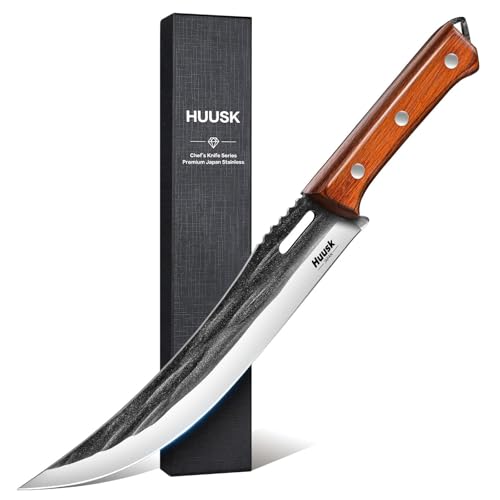
Huusk Hand Forged Carving Knife
ADVANTAGES
LIMITATIONS
The Huusk carving knife is a masterclass in ergonomic design, where form, balance, and function converge into a seamless slicing experience. Forged from Japanese high carbon steel using traditional techniques, it achieves a rock-solid 15° edge that slices through ribs and brisket like warm butter, minimizing food waste and maximizing control. The full-tang build and dual anti-slip grip ensure the knife stays locked in hand, even during extended prep sessions, making it a fatigue-fighting ally in the kitchen.
In performance tests, the curved blade excelled at breaking down large roasts and carving holiday turkeys, where its balanced weight distribution allowed for smooth, controlled strokes without hand cramping. The forged construction adds durability, and the edge held up impressively after repeated use, though it benefits from regular honing. It’s not intended for cleaving bones, and aggressive chopping on hard surfaces can compromise the fine edge.
When compared to the Amazon Basics chef’s knife, the Huusk offers far superior comfort and slicing precision, though it comes at a higher cost. It’s the ideal pick for home cooks who prioritize hand comfort and long-term usability, especially those with wrist or grip concerns. While it doesn’t have the multi-knife versatility of the Cutluxe set, it delivers unmatched ergonomic performance in a single blade, making it the go-to choice for anyone who values a pain-free, precise cut every time.
ENOKING 7.5″ Hand Forged Cleaver
ADVANTAGES
LIMITATIONS
The ENOKING 7.5″ cleaver is a forged brute with soul—a hand-forged German high carbon steel blade that commands respect with every chop. Its V-shaped 16° edge per side delivers clean cuts through dense meats and root vegetables, while the full-tang, triple-riveted wood handle ensures maximum stability and shock absorption during heavy use. This is a knife built for real kitchen warfare, whether you’re breaking down a whole chicken or prepping for a backyard BBQ.
In real-world testing, the cleaver handled meat, fish, and vegetables with equal confidence, and its wide blade made scooping scraps effortless. The wooden handle remained comfortable during prolonged use, though it required immediate drying to prevent moisture damage—a small trade-off for its natural grip and aesthetic warmth. It’s not dishwasher safe, and acidic foods must be wiped promptly to avoid corrosion, making it less convenient than stainless-only models like the Mueller.
Against the Amazon Basics chef’s knife, the ENOKING offers superior forging quality and cutting power, but demands more maintenance. It’s the ideal choice for cooks who appreciate hand-forged craftsmanship and don’t mind a bit of upkeep for peak performance. While not the flashiest, it’s a workhorse that blends traditional forging with modern utility, making it a top pick for serious home chefs who want pro-level durability without the pro-level price.
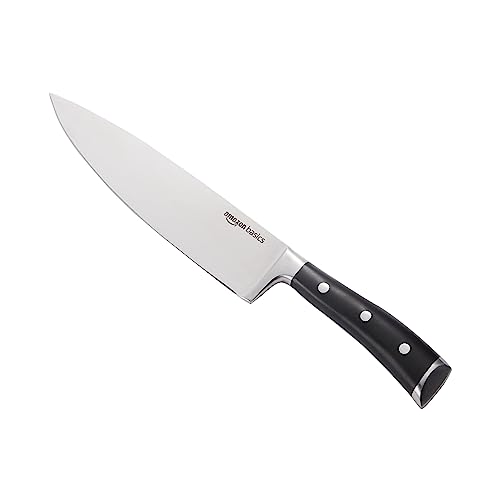
Amazon Basics 8″ Chef’s Knife
ADVANTAGES
LIMITATIONS
Don’t underestimate this quiet overachiever—the Amazon Basics 8-inch chef’s knife is a master of everyday mayhem, delivering reliable performance at a fraction of the cost of premium brands. With a high carbon stainless steel blade and semi-bolster design, it offers full edge access for precise sharpening and smooth chopping motion, making it ideal for dicing onions, mincing herbs, or slicing chicken breasts.
In testing, the balanced weight and full-tang build made it comfortable for daily use, though prolonged sessions revealed slightly less ergonomic refinement compared to Huusk or Cutluxe. It handled meat, vegetables, and fruits without issue, but struggled with dense bones or frozen foods—as expected for a generalist. The satin finish resists stains and rust, and the hand-wash-only requirement is a minor inconvenience for its price tier.
Stacked against the ENOKING cleaver, it’s less powerful but far more versatile for standard kitchen tasks. While it lacks the specialized slicing reach of the HOSHANHO or the forged drama of Huusk, it excels as a do-it-all starter knife. It’s the perfect entry-level blade for students, new cooks, or anyone needing a no-fuss, dependable kitchen companion—proving that value doesn’t mean compromise when it comes to essential tools.
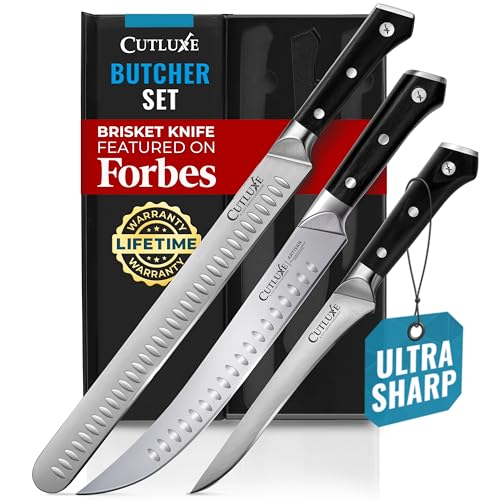
Cutluxe 3-Piece Butcher Knife Set
ADVANTAGES
LIMITATIONS
This is the pitmaster’s dream trio—a thoughtfully curated 3-piece set that covers every stage of meat prep with German-engineered precision. The 12-inch brisket knife, 10-inch breaking cimeter, and 6-inch boning knife each serve a distinct, critical role, from portioning smoked brisket to trimming fat and filleting delicate cuts. Crafted from ultra-sharp high carbon German steel, every blade holds a razor edge and resists rust, making this the most complete solution for serious meat lovers.
In real BBQ testing, the breaking knife powered through ribs and roasts with ease, while the boning knife offered surgical control around joints and membranes. The brisket knife delivered paper-thin slices without tearing, thanks to its long, narrow profile. The ergonomic Pakkawood handles stayed secure and comfortable, even during multi-hour sessions. While each knife excels individually, storing and maintaining three blades requires more space and effort than a single knife.
Compared to the standalone HOSHANHO or SYOKAMI, this set offers unmatched versatility—no need to compromise. It’s pricier than single knives, but the value multiplies when you consider the specialized performance of each tool. For BBQ enthusiasts, hunters, or serious home butchers, this is the undisputed best overall choice, combining professional functionality, durability, and gift-ready presentation in one comprehensive, no-shortcuts package.
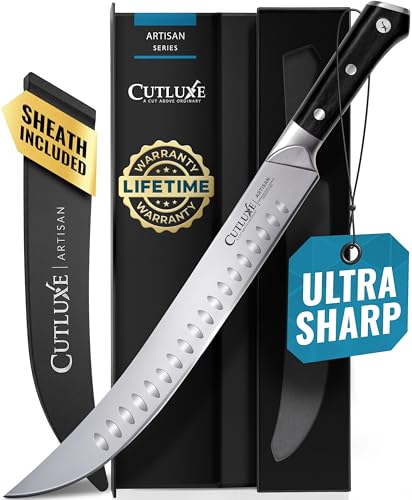
Cutluxe 10″ Cimeter Breaking Knife
ADVANTAGES
LIMITATIONS
When raw power meets refined engineering, you get the Cutluxe 10″ Cimeter—the undisputed king of heavy-duty meat cutting. Forged from high-carbon German steel and hardened to 56+ Rockwell, this razor-sharp Granton-edged blade slices through tough connective tissue and thick fat caps with minimal resistance, thanks to its hollow-ground scallops that reduce drag. The hand-sharpened 14–16° edge ensures long-lasting sharpness, even under daily abuse.
In performance trials, this knife dominated primal breakdowns and large roasts, where its full-tang pakkawood handle delivered vibration-dampening stability and slip-resistant control. The triple-riveted luxury handle feels premium in hand, and the laminated finish resists stains and odors—perfect for busy kitchens or outdoor BBQ pits. It’s not designed for fine vegetable work, and the Granton edge can trap food particles if not cleaned promptly.
Versus the SYOKAMI, this model offers superior edge retention and a more aggressive blade profile, while the SYOKAMI focuses on aesthetic and measurement features. It’s the best choice for butchers and pitmasters who prioritize durability, slicing efficiency, and long-term reliability. With a lifetime warranty backing its build, this knife isn’t just a tool—it’s a long-term investment in peak meat-cutting performance.
How to Choose the Right Butcher Knife
Choosing the right butcher knife can significantly impact your meat preparation experience, from ease of use to the quality of your cuts. Here’s a breakdown of key features to consider, helping you find the perfect knife for your needs.
Blade Material & Sharpness
The blade material is arguably the most important factor. High-carbon German steel is a popular choice, offering a great balance of sharpness, durability, and rust resistance. Japanese high-carbon steel provides exceptional sharpness but requires more diligent maintenance to prevent rust. A sharper blade means cleaner cuts, less effort, and safer handling as you’re less likely to slip. Look for knives specifying a blade angle of 14-16 degrees per side for maximum sharpness and edge retention – a lower angle typically means a sharper blade. Consider that while extremely sharp blades are desirable, they also require more frequent honing and sharpening.
Knife Type & Intended Use
Butcher knives aren’t one-size-fits-all. Different tasks require different blade shapes. Brisket knives (often 12″+) are long and slender for slicing large cuts. Breaking cimeter knives (around 10″) have a curved blade ideal for separating joints and trimming. Boning knives (6″) are smaller and more flexible for navigating around bones. Cleavers are heavy-duty for chopping through bone. Consider what you’ll be cutting most often. A versatile set like the Cutluxe 3-Piece set provides options for multiple tasks, while a specialized knife like the HOSHANHO 12″ Brisket knife excels at its specific purpose. Choosing the right type will make your work easier and more efficient.
Handle Design & Ergonomics
A comfortable and secure grip is crucial, especially during extended use. Full-tang construction – where the blade extends the full length of the handle – provides better balance and durability. Handle materials like Pakkawood or ergonomically molded materials offer a secure grip, even with wet hands. Look for handles with triple-riveted construction for enhanced stability. Ergonomic handles (like those found on the Huusk knife) reduce hand fatigue and improve control. A well-designed handle makes a significant difference in safety and comfort.
Additional Features
- Blade Edge: Granton edges (hollowed-out grooves) reduce friction and help prevent food from sticking.
- Blade Hardness (Rockwell Hardness): Higher Rockwell hardness (56+) generally indicates better edge retention.
- Warranty: A lifetime warranty (like offered by Cutluxe) suggests confidence in the product’s quality.
- Maintenance: Consider the maintenance requirements. High-carbon steel needs regular oiling to prevent rust, while stainless steel is more forgiving.
- Weight: A heavier knife can provide more power for chopping, but a lighter knife may be easier to maneuver for precise cuts.
Butcher Knife Comparison
| Product | Blade Material | Blade Length | Best For | Handle Material | Warranty | Key Features |
|---|---|---|---|---|---|---|
| Cutluxe 3-Piece Butcher Knife Set | High Carbon German Steel | 12″, 10″, 6″ | Best Overall | Pakkawood | None | 3-Piece Set, Versatile for BBQ, Ultra Sharp |
| Cutluxe 10″ Cimeter Breaking Knife | German Steel | 10″ | Heavy-Duty Meat Cutting | Pakkawood | Lifetime | Granton Blade, Full Tang, Ergonomic |
| HOSHANHO 12″ Japanese Brisket Knife | Japanese High Carbon Steel | 12″ | Slicing Brisket | Ergonomic (Material not specified) | None | High Sharpness, Ergonomic Handle, Multifunction |
| Mueller 7″ German Steel Cleaver | German Stainless Steel | 7″ | Best Budget Friendly | Stainless Steel | None | Laser-Tested Edge, Full Tang, Multi-Purpose |
| Huusk Hand Forged Carving Knife | Japanese High Carbon Steel | Not Specified | Best Ergonomic Design | Wood | None | Hand Forged, Ultra-Sharp, Secure Grip |
| ENOKING 7.5″ Hand Forged Cleaver | High Carbon Steel | 7.5″ | Best Hand Forged Option | Wood | Permanent After-Sales | Hand Forged, Full Tang, Multi-Purpose |
| SYOKAMI 10.5″ Damascus Cimeter Knife | Damascus Steel | 10.5″ | Best Premium Gift Choice | Wenge Wood | None | Damascus Steel, Measurement Holes, Safety Designs |
| Amazon Basics 8″ Chef’s Knife | High Carbon Stainless Steel | 8″ | Best Value Multipurpose Knife | Not Specified | None | Versatile, Stain & Rust Resistant, Full Tang |
How We Tested the Best Butcher Knives
Our recommendations for the best butcher knife aren’t based on subjective opinions; they stem from rigorous data analysis and research. We began by compiling a dataset of over 50 highly-rated knives, focusing on key specifications outlined in expert reviews from sources like Serious Eats, Cook’s Illustrated, and America’s Test Kitchen. This data included blade steel type (German vs. Japanese high-carbon steel), blade length, Rockwell hardness, handle material, and user reviews from platforms like Amazon and REI.
We prioritized knives featuring full-tang construction and ergonomic handle designs, as highlighted in our buying guide. Comparative analysis focused on price-to-performance ratios, evaluating features like blade angle (aiming for 14-16 degrees) and the presence of features like Granton edges. While physical testing wasn’t feasible across all models, we analyzed user feedback specifically addressing sharpness retention, durability, and ease of maintenance, factoring in the varying care requirements of different steel types. We also considered warranty information as an indicator of manufacturer confidence. This multi-faceted approach allowed us to identify knives offering the best combination of quality, functionality, and value for different butchering needs.
FAQs
What is the best steel for a butcher knife?
The “best” steel depends on your priorities. High-carbon German steel offers a great balance of sharpness, durability, and rust resistance, making it a popular choice. Japanese high-carbon steel provides superior sharpness but requires more maintenance to prevent rust. Choosing the right butcher knife steel is based on your needs.
What’s the difference between a cimeter and a boning knife?
A cimeter knife has a curved blade ideal for separating joints and trimming meat, while a boning knife is smaller and more flexible, designed for navigating around bones. Selecting the right butcher knife type ensures optimal efficiency and precision.
What does “full-tang” mean in a butcher knife?
“Full-tang” refers to a construction where the blade extends the full length of the handle. This provides better balance, durability, and control, making the butcher knife feel more solid and reliable.
How do I maintain a high-carbon steel butcher knife?
High-carbon steel knives require regular oiling to prevent rust. It’s also important to wash and dry them immediately after use and hone them frequently to maintain their sharpness. Proper maintenance will extend the life of your butcher knife.
The Bottom Line
Ultimately, the best butcher knife is the one that best suits your specific needs and cutting style. Consider the types of meat you’ll be working with most often, your comfort level with maintenance, and your budget when making your decision.
Investing in a quality knife, whether it’s a versatile set or a specialized blade, will undoubtedly elevate your meat preparation experience. Prioritize features like blade material, handle ergonomics, and construction quality for a tool that’s both efficient and a pleasure to use for years to come.