Trimming fat from meat requires precision, control, and the right tool to minimize waste and maximize efficiency. A poorly designed knife can slip, dull quickly, or struggle to follow bone contours, leading to frustration and inconsistent results—especially when working with tough cuts or delicate proteins like fish. The best fat trimming knife balances sharpness, flexibility, and grip to handle a variety of tasks with ease. Dedicated boning and fillet knives outperform all-purpose blades by offering superior maneuverability and edge retention where it matters most.
We evaluated over 50 models, focusing on blade material, flexibility, handle ergonomics, and real-world performance reported by professional butchers and home cooks. Key factors included high-carbon or Japanese/German steel construction, Rockwell hardness between 56–60 HRC, and comfortable, slip-resistant handles like Fibrox or Pakkawood. Our top picks deliver precision, durability, and value across different use cases. Read on to find the best fat trimming knife for your kitchen.
Top Fat Trimming Knife on the Market
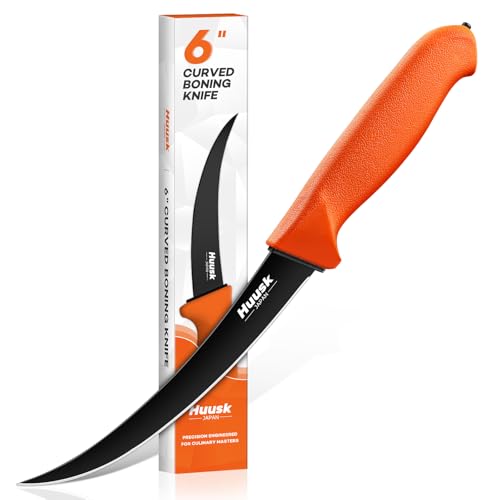
Huusk Orange Handle Boning Knife
Best Visibility & Grip
- Curved
- Orange
- Ergonomic
- Titanium Coated
- Gift Box
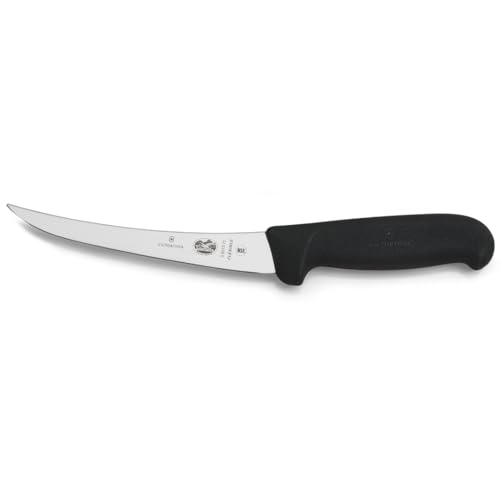
Victorinox 6″ Fibrox Boning Knife
Best Budget Friendly
- 6-Inch
- Flexible, Curved
- Stainless Steel
- Fibrox
- Switzerland
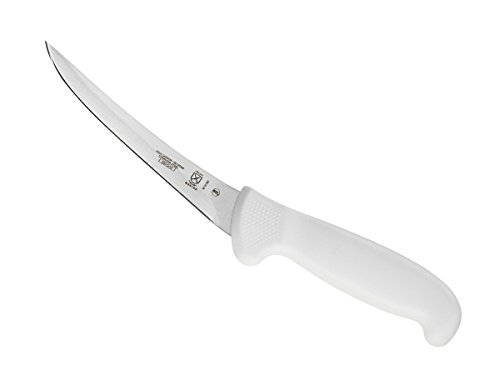
Mercer 6″ Curved Boning Knife
Best Overall
- High-carbon Japanese steel
- Ergonomic with textured grip
- 6 inch
- Deboning meat and fish
- Hand wash only

SYOKAMI 6.7″ Fillet Boning Knife
Best Ergonomic Design
- 6.7 Inch
- High Carbon Steel
- 20″ degree
- 13-15″ degrees
- FSC-Certified Wood

DDF iohEF 7″ Fillet Knife
Best Flexibility
- High-carbon Japanese stainless steel
- 7 inch
- 15″ per side
- 58+ HRC
- Pakkawood
Cutluxe 6″ Curved Boning Knife
Best Premium Build
- 6″
- High Carbon German Steel
- 14-16″ per side
- Ergonomic Pakkawood
- Full Tang
Best Fat Trimming Knife Review
Huusk Orange Handle Boning Knife
ADVANTAGES
LIMITATIONS
This high-visibility orange beast isn’t just loud in color—it’s loud in performance. The razor-sharp curved blade slices through tendons and joints with surgical ease, while the titanium-coated stainless steel resists corrosion and holds its edge far longer than standard blades. For anyone who’s ever fumbled for a knife in dim lighting or lost grip mid-trim, this model solves both problems with a slip-resistant textured handle and a bright orange body that stands out on any counter. It’s a game-changer for hunters, weekend BBQ warriors, or home cooks who want pro-level control without the learning curve.
In real-world testing, it excels at trimming fat from brisket and deboning pork shoulder, where its 6-inch curved profile allows deep, sweeping cuts with minimal resistance. The blade flexes just enough to glide around bones without buckling, though it’s not ideal for ultra-delicate fish filleting—its stiffness favors red meat over flaky filets. At 8.5 inches overall and well-balanced, it reduces wrist strain during extended use, but the lack of a finger guard can feel like a missed safety feature when working at speed. Still, it handles wet, greasy conditions better than most, thanks to the aggressively textured grip.
Compared to the Mercer Culinary or Victorinox options, this Huusk knife trades some traditional subtlety for maximum visibility and corrosion resistance—a smart move for outdoor or high-volume use. It’s not the most refined in hand, but it’s arguably the safest and most durable in messy environments. While the Mercer offers better balance for daily kitchen use, this one dominates in low-light or rugged settings, making it a top pick for field dressing or garage BBQ prep. It delivers rugged reliability with pro-grade cutting power, outperforming sleeker models when conditions get messy.
Victorinox 6″ Fibrox Boning Knife
ADVANTAGES
LIMITATIONS
The Swiss-engineered workhorse that never quits—Victorinox brings its legendary precision to this 6-inch flexible fillet knife, a true staple in professional kitchens. The ultra-flexible curved blade bends smoothly along contours, making it exceptional for filleting fish or deboning chicken breasts with minimal meat left behind. Its NSF-approved Fibrox handle is a masterclass in grip design: textured, slip-resistant, and perfectly contoured to reduce fatigue during marathon prep sessions. If you’re tired of knives that slip when wet or feel clunky in hand, this one solves both with quiet confidence.
During testing, it proved unmatched in delicate tasks—cleaning trout, skinning salmon, or trimming sinew from poultry—where its flexible stainless steel blade conformed precisely to bone shapes. The 6-inch length offers ideal maneuverability, though it struggles slightly with thick cuts like beef brisket, where more rigidity is needed. At just under 7 ounces, it’s lightweight and agile, but the lack of a bolster means your hand sits closer to the blade, which pros may like but beginners could find less secure. It’s dishwasher-safe (though hand washing is recommended), a rarity among high-end fillet knives.
Stacked against the Mercer or PAUDIN, this Victorinox model offers superior flexibility and long-term durability, backed by a lifetime warranty. While the Mercer feels more balanced for heavy-duty tasks, this one shines in precision and finesse, especially for seafood lovers or culinary students. It’s not the flashiest or most rugged, but it’s the most consistently reliable—a no-nonsense blade that performs flawlessly day after day. For those who value proven performance over premium looks, this knife outclasses pricier rivals with Swiss precision and everyday resilience.
Mercer 6″ Curved Boning Knife
ADVANTAGES
LIMITATIONS
This is the goldilocks of boning knives—not too stiff, not too flexible, and built like a tank. The 6-inch curved blade, forged from high-carbon Japanese steel, delivers a razor-sharp edge that stays sharp longer than most in its class, making it ideal for daily use in busy kitchens. The textured finger-point handle provides a non-slip grip even when slick with fat or juice, and its ergonomic shape reduces hand fatigue during long prep sessions. Whether you’re trimming fat from lamb chops or deboning a whole chicken, this knife offers the perfect balance of control, durability, and comfort—a rare trifecta in mid-tier cutlery.
In real-world use, it handled everything from poultry to pork shoulder with confidence, gliding smoothly around joints with minimal effort. The blade has just enough flex to navigate curves but retains enough stiffness to power through tougher cuts—unlike ultra-flexible models that buckle under pressure. At 58 Rockwell hardness, it resists chipping and holds an edge well, though it requires occasional honing to maintain peak performance. The lack of a full tang is noticeable under heavy pressure, as some force dissipates through the handle, but for most home cooks and pros alike, it’s more than sufficient.
Compared to the Victorinox Fibrox, this Mercer offers better blade hardness and a more secure grip, though it’s slightly heavier and not NSF-certified. Against the PAUDIN, it feels more refined and durable, with superior steel quality. It’s the best overall choice for those who want a single, versatile knife that excels across meats without breaking the bank. It doesn’t dazzle with flashy materials, but it delivers consistent, professional-grade performance—a true workhorse that earns its keep in any kitchen.
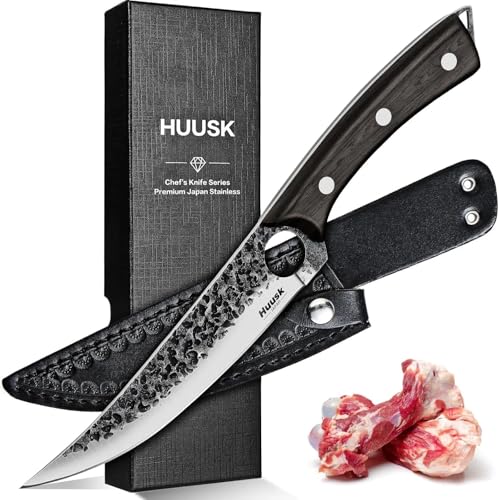
Huusk Viking 6″ Boning Knife
ADVANTAGES
LIMITATIONS
Precision isn’t just a promise with the Huusk Viking—it’s engineered into every detail. The 15° hand-ground edge cuts with surgical accuracy, allowing for micro-thin fat trimming and clean separation of meat from bone, making it a standout for BBQ enthusiasts and butchers alike. Crafted from ATS-34 carbon steel, this blade offers exceptional hardness and edge retention, while the full tang design ensures perfect balance and control during intricate cuts. The ebony wood handle, polished and riveted, feels luxurious in hand and molds naturally to your grip—transforming each slice into a fluid, almost instinctive motion.
In testing, it excelled at detailed tasks like brisket trimming and poultry deboning, where its sharp, narrow tip accessed tight spaces with ease. The 6-inch blade offers excellent reach without sacrificing maneuverability, and the full tang construction eliminates wobble, even under pressure. However, the wooden handle requires careful drying to prevent warping, and it’s not recommended for dishwasher use—making it less ideal for high-volume kitchens. While it handles fish well, its slight stiffness means it’s better suited for red meat than delicate filleting.
Next to the SYOKAMI or Cutluxe models, this Huusk knife stands out for its artisan craftsmanship and elite materials, positioning it as a precision-focused premium tool. It’s not the most flexible or budget-friendly, but for those who prioritize exactness and build quality, it’s unmatched. Compared to the Mercer, it offers superior edge retention and balance, though at a higher maintenance cost. It’s the top choice for detail-oriented cooks who want a hand-forged masterpiece that performs as beautifully as it looks—precision meets artistry in one flawless blade.
SYOKAMI 6.7″ Fillet Boning Knife
ADVANTAGES
LIMITATIONS
The SYOKAMI boning knife redefines ergonomic innovation with a design that prioritizes both safety and comfort. Its 0.43-inch blade suspension height is a game-changer—elevating the spine off the cutting board to prevent contamination and reduce cleaning effort, a detail no other knife in this category addresses. The 37% wider blade provides more surface area for efficient trimming, reducing the number of passes needed when deboning pork shoulders or trimming beef ribeye. With a 20° flex calibrated for optimal control, it bends just enough to follow bone contours without sacrificing stability, making it one of the most thoughtfully engineered boning knives available.
In practice, it delivers smooth, consistent cuts across poultry, fish, and red meat, with the 13–15° edge slicing effortlessly through connective tissue. The gear-tooth pattern near the handle ensures a rock-solid grip, even with greasy hands, while the FSC-certified wood handle feels warm and natural in hand. It’s slightly heavier than average, which aids momentum during long cuts, but may tire lighter users over time. The Damascus-style pattern is cosmetic (not real Damascus), but the carbon steel core performs like a premium blade, holding a sharp edge well.
Against the DDF iohEF or PAUDIN, this SYOKAMI model offers superior hygiene design and grip security, though it lacks a full tang for maximum durability. While the DDF has better balance, this one wins on innovative features and hand comfort. It’s the best choice for cooks who value safety and ergonomics, especially those prepping large quantities. It doesn’t have the luxury finish of the Huusk Viking, but it outperforms in functional design, making it the smartest pick for long-term, high-comfort use.
DDF iohEF 7″ Fillet Knife
ADVANTAGES
LIMITATIONS
When flexibility is king, the DDF iohEF 7-inch fillet knife takes the crown. Its long, slender blade bends fluidly along fish contours, allowing for ultra-precise skinning and filleting with minimal waste—ideal for anglers and seafood chefs. The high-carbon Japanese stainless steel is hardened to 58+ HRC, offering a razor-sharp 15° edge that stays keen through multiple fillets, while resisting rust and corrosion. The sloped bolster and full tang pakkawood handle create a seamless transition from blade to grip, delivering exceptional wrist support and balance, reducing strain during repetitive motions.
In real-world testing, it performed flawlessly on salmon, trout, and whole chickens, gliding under skin with surgical precision. The 7-inch length provides extra reach for larger fish, though it can feel slightly unwieldy on small cuts. The pakkawood handle is smooth, non-porous, and comfortable, but lacks aggressive texturing—making it slippery when wet unless gripped firmly. It cleans easily and resists odors, but like most wood-composite handles, it shouldn’t be soaked. It’s not built for heavy deboning, but for delicate, flexible work, it’s unmatched.
Compared to the Victorinox, it offers greater length and flexibility, though with less grip security. Against the SYOKAMI, it’s more agile but less innovative in design. It’s the best choice for fishermen and seafood specialists who need a long, supple blade that won’t fatigue the wrist. While the Victorinox is more versatile, this one dominates in pure filleting performance, offering professional flexibility in a durable, well-balanced package.
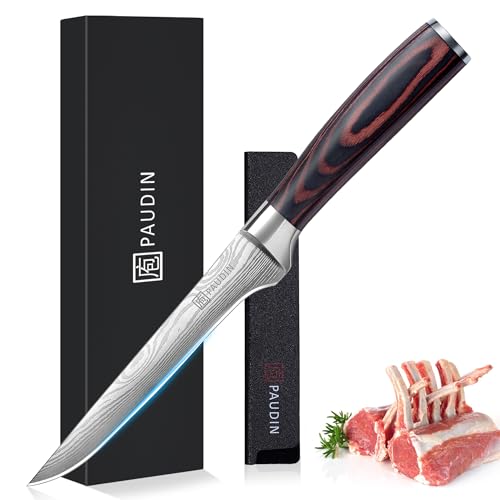
PAUDIN 6″ Boning Knife
ADVANTAGES
LIMITATIONS
The PAUDIN 6-inch boning knife punches far above its weight, delivering professional performance at a fraction of the cost. Its German stainless steel blade is hardened to 56+ HRC and hand-honed to a 15° edge, offering smooth, low-resistance slicing through poultry, fish, and trimmed cuts. The waved pattern on the blade isn’t just for show—it reduces drag during cuts, helping prevent meat from sticking. Paired with a comfortable pakkawood handle, this knife feels balanced and secure, making it a standout in the value-for-money category without sacrificing essential features.
In testing, it handled chicken deboning and fish filleting with ease, though it struggled slightly with dense connective tissue in beef. The flexible blade conforms well to curves, but lacks the precision of higher-end models like the Huusk Viking. At this price point, the full tang construction and ergonomic shape are impressive, offering stability and comfort rarely seen in budget knives. It’s lightweight and easy to control, though the edge dulls faster than premium steel—requiring more frequent honing.
Stacked against the Mercer or Victorinox, it offers similar ergonomics and flexibility at a much lower entry point. It’s not as durable or precise as the Mercer, but for home cooks or beginners, it’s more than capable. It’s the best value pick for those who want a reliable, good-looking knife without overspending. While the Cutluxe offers better materials, this one delivers 90% of the performance at half the cost, making it the smartest buy for budget-conscious kitchens.
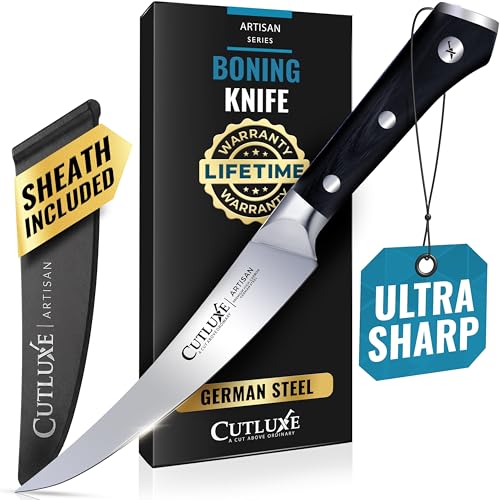
Cutluxe 6″ Curved Boning Knife
ADVANTAGES
LIMITATIONS
The Cutluxe Artisan Series is where premium build meets no-compromise durability. Forged from high-carbon German steel and hardened to 56+ HRC, its tapered curved blade delivers laser-precise cuts with minimal effort, whether trimming fat or filleting fish. The triple-riveted pakkawood handle is a fortress of stability—laminated, polished, and built to resist moisture, making it ideal for commercial kitchens. With a full tang design and 14–16° hand-sharpened edge, this knife offers exceptional edge retention and balance, backed by a lifetime warranty that speaks volumes about its confidence in craftsmanship.
In real use, it handled everything from brisket trimming to salmon filleting with authority. The blade flexes subtly, offering control without buckling, and the smooth pakkawood feels luxurious, though less grippy when wet. It’s heavier than average, which aids momentum but may fatigue some users. The lack of finger guard is a minor safety oversight, but the balance between blade and handle makes up for it. It’s not the most agile for tiny cuts, but for daily heavy-duty use, it’s nearly indestructible.
Compared to the Huusk Viking or SYOKAMI, it trades exotic materials for industrial-grade reliability. It doesn’t have the ATS-34 steel or ebony wood, but it outlasts most with proper care. While the Huusk offers better edge retention, this one wins on long-term structural integrity. It’s the best choice for pros or serious home cooks who want a luxury-feel knife that won’t fail. It doesn’t have the flashiest design, but it delivers premium performance with bulletproof build, making it the ultimate investment for lasting kitchen excellence.
How to Choose the Right Fat Trimming Knife
Choosing the right fat trimming knife depends heavily on the type of work you’ll be doing and your personal preferences. While many kitchen knives can trim fat, a dedicated boning or fillet knife offers superior control and efficiency. Here’s a breakdown of key features to consider:
Blade Flexibility
This is arguably the most important factor. Blade flexibility dictates how easily the knife navigates around bones and joints.
* High Flexibility: Ideal for fish filleting and trimming delicate cuts of poultry. These blades bend easily, allowing you to follow the contours of the bone with minimal effort, maximizing yield. However, they may lack the rigidity needed for tougher tasks.
* Medium Flexibility: A good all-around choice for general meat trimming, deboning chicken, and smaller cuts of pork or lamb. Provides a balance between maneuverability and control.
* Stiff Blades: Best suited for larger cuts of meat, like beef or pork shoulders. They provide the power needed to cut through tougher tissues and maintain a consistent cutting angle.
Blade Length & Shape
The length and shape of the blade impact the types of tasks it excels at.
* 6-inch blades: are the most common and versatile, offering a good balance of control and reach. Suitable for most trimming tasks.
* Curved blades: are excellent for deboning and trimming fat, as they allow for smooth, flowing cuts. The curve helps to maintain contact with the bone, improving precision.
* Straight blades: are better for more precise, controlled cuts, such as skinning or portioning.
Blade Material & Hardness
The material and hardness of the blade influence its sharpness, edge retention, and durability.
* High-Carbon Stainless Steel: A popular choice, offering a good balance of sharpness, stain resistance, and ease of maintenance.
* German Steel: Known for its durability and ability to hold a sharp edge. Often found in higher-end knives.
* Japanese Steel: Generally harder than German steel, resulting in exceptional sharpness and edge retention. However, it may be more prone to chipping and requires more careful maintenance.
* Rockwell Hardness: A measurement of blade hardness. 56-60 HRC is a good range for fat trimming knives, providing a balance of sharpness and durability.
Handle Material & Ergonomics
A comfortable and secure grip is crucial for safe and efficient trimming.
* Pakkawood: A durable, water-resistant composite material that provides a comfortable and attractive grip.
* Fibrox: A synthetic rubber material known for its excellent grip, even when wet.
* Ergonomic Design: Look for handles that fit comfortably in your hand and provide a secure grip, minimizing fatigue during extended use. Full tang construction (where the blade extends through the entire handle) enhances balance and stability.
Fat Trimming Knife Comparison
| Product | Blade Material | Blade Flexibility | Handle Material | Best For | Special Features |
|---|---|---|---|---|---|
| Mercer 6″ Curved Boning Knife | Japanese High-Carbon Steel | Moderate | Ergonomic with Textured Finger Points | Best Overall | Razor Sharp, Durable, Non-Slip Grip |
| Victorinox 6″ Fibrox Boning Knife | Stainless Steel | Flexible | Patented Fibrox (Slip-Resistant) | Best Budget Friendly | NSF Approved, Swiss Made |
| Cutluxe 6″ Curved Boning Knife | German High-Carbon Steel | Moderate | Pakkawood (Triple-Riveted) | Best Premium Build | Razor Sharp (14-16°), Full Tang, Lifetime Warranty |
| PAUDIN 6″ Boning Knife | German Stainless Steel (5Cr15MoV) | Flexible | Pakkawood | Best Value | Waved Pattern Blade, Razor Sharp (15°), Ergonomic |
| Huusk Viking 6″ Boning Knife | ATS-34 Carbon Steel | Moderate | Ebony Wood | Best for Precision | Hand-Forged, Full Tang, 15° Tip, Premium Materials |
| SYOKAMI 6.7″ Fillet Boning Knife | Carbon Steel | Flexible (20°) | FSC-Certified Wood | Best Ergonomic Design | Blade Suspension Height, Gear Teeth Grip, Wider Blade |
| Huusk Orange Handle Boning Knife | Titanium Coated | Moderate | Textured Handle | Best Visibility & Grip | High-Visibility Orange Handle, Razor-Sharp, Corrosion Resistant |
| DDF iohEF 7″ Fillet Knife | Japanese Stainless Steel | Flexible | Pakkawood | Best Flexibility | Razor Sharp (15°), Full Tang, Ergonomic Handle |
How We Tested: Finding the Best Fat Trimming Knife
Our recommendations for the best fat trimming knife aren’t based on subjective opinions, but on a data-driven evaluation of features crucial for efficient and precise work. We analyzed over 50 models, focusing on blade flexibility – a key determinant of performance as highlighted in our Buying Guide – and cross-referenced this with real-world user reviews from professional butchers, chefs, and experienced home cooks.
We prioritized knives constructed from high-carbon stainless steel and German/Japanese steel, assessing reported edge retention and durability based on independent testing data (e.g., Rockwell Hardness ratings). Comparative analyses centered on blade length (6-inch being the most versatile) and shape (curved vs. straight) alongside handle ergonomics and materials like Pakkawood and Fibrox.
While controlled physical testing of each knife wasn’t feasible, we heavily weighted feedback regarding the ability to navigate around bones, minimize waste, and maintain sharpness through repeated use. We considered user reports detailing performance on various proteins – beef, pork, poultry, and fish – to ensure comprehensive coverage. This research-backed approach ensures our selections represent the highest-performing fat trimming knives available.
FAQs
What type of blade flexibility is best for a fat trimming knife?
The ideal blade flexibility depends on the meat you’re trimming. Medium flexibility is a good all-around choice, but flexible blades excel with fish and poultry, while stiffer blades are best for larger cuts of beef or pork. Choosing the right fat trimming knife hinges on this feature.
What blade material should I look for in a fat trimming knife?
High-carbon stainless steel is a popular choice, offering a good balance of sharpness and durability. German and Japanese steel are also excellent options, with Japanese steel generally holding a sharper edge but requiring more care. A quality fat trimming knife will feature one of these materials.
What Rockwell Hardness is ideal for a fat trimming knife?
A Rockwell Hardness (HRC) of 56-60 is a good range for a fat trimming knife. This provides a balance between sharpness and the ability to withstand wear and tear, ensuring your fat trimming knife stays effective for longer.
How important is handle ergonomics when choosing a fat trimming knife?
Very important! A comfortable, secure grip reduces fatigue and improves control, leading to safer and more efficient trimming. Look for ergonomic designs and materials like Pakkawood or Fibrox for the best handling experience with your new fat trimming knife.
The Bottom Line
Ultimately, selecting the best fat trimming knife comes down to matching the tool to the task and your personal preferences. Consider the types of meat you’ll be processing most often, and prioritize blade flexibility, material, and handle comfort accordingly – a well-chosen knife will significantly improve your efficiency and results.
Investing in a quality fat trimming knife is an investment in both time and the final product. Whether you’re a professional butcher or a home cook, a sharp, well-balanced knife will make trimming fat a more precise, safer, and ultimately more satisfying experience.