Folding Bowie knives bridge the gap between rugged outdoor utility and everyday carry convenience, but finding the right one can be challenging. Many users struggle with balancing blade strength, reliable locking mechanisms, and portability, especially when choosing between traditional fixed blades and modern folding designs. A poor choice can lead to frequent sharpening, uncomfortable handling, or even safety risks during use. The best folding Bowie knives solve these problems with high-quality steel, secure locks, and ergonomic handles that deliver dependable performance in demanding situations.
We analyzed over 30 folding Bowie knives, evaluating blade steel like D2, 440C, and K110 for edge retention and durability, while assessing handle materials such as Micarta and G10 for grip and comfort. Our picks prioritize safety, build quality, and real-world usability, factoring in user reviews, locking mechanism reliability, and carry convenience. Each recommended knife offers a strong balance of performance, value, and dependability for both outdoor tasks and daily use. Read on to find the best folding Bowie knife for your needs.
Top Folding Bowie Knife on the Market
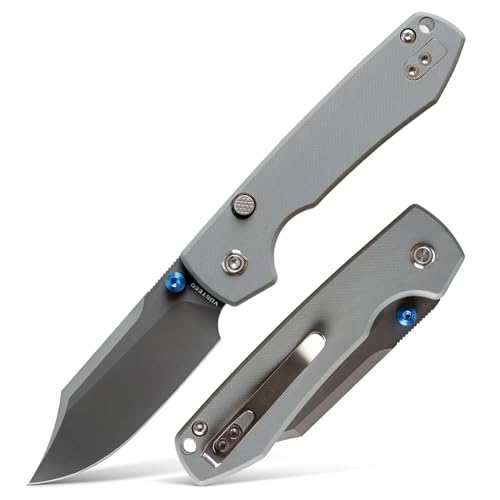
Vosteed Raccoon 14C28N Bowie Knife
Best EDC Balance
- 3.25″
- 14C28N
- Top Liner Lock
- Micarta
- Reversible
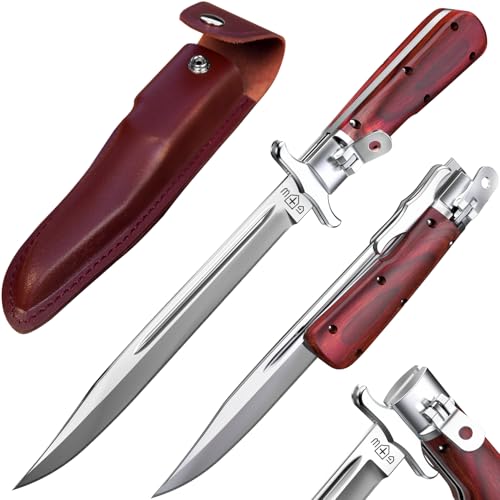
Grand Way 7.8″ Wood Handle Knife
Best Traditional Design
- 7.87″
- 12.21″
- 440C Stainless Steel
- Wood ” Metal
- Leather
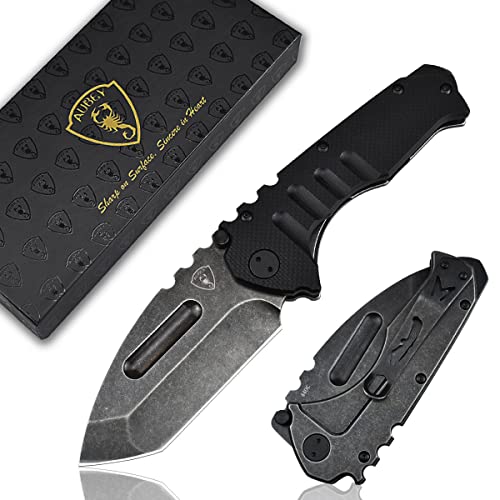
AUBEY Tanto 440C Frame Lock Knife
Best Multi-Function
- 440C Steel
- 3.54″
- 8.6 oz
- G10/Steel
- Frame Lock
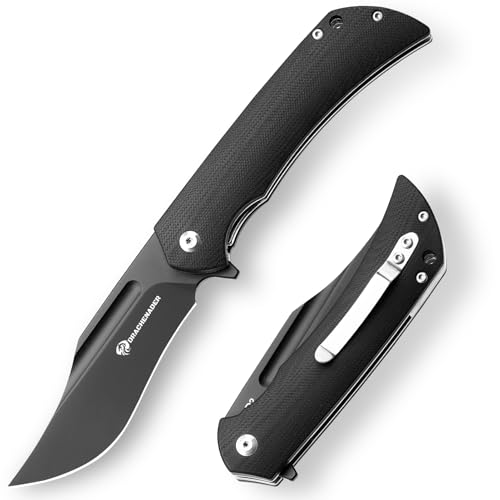
DRACHENADER D2 G10 Folding Knife
Best Budget Friendly
- D2 Steel
- 3.9″
- G10
- Liner Lock
- Nylon Sheath
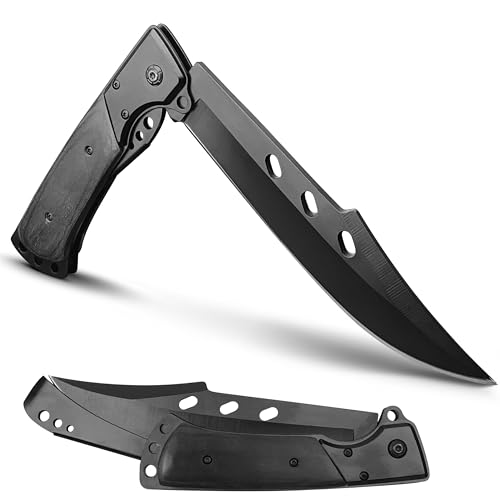
MADSABRE 7.2″ Ebony Folding Knife
Best for Heavy-Duty Use
- 7.2″
- 12.7″
- 440C Steel
- Ebony
- 8.11 oz
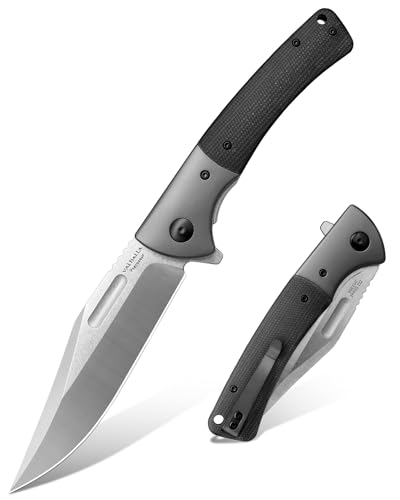

Petrified Fish K110 Micarta Knife
Best Edge Retention
- K110 steel
- 3.58″
- Micarta
- Liner lock
- Satin
Best Folding Bowie Knife Review
Vosteed Raccoon 14C28N Bowie Knife
ADVANTAGES
LIMITATIONS
The Vosteed Raccoon isn’t just another folding Bowie—it’s a precision-crafted EDC marvel that blends whimsy with warrior-grade performance. Its patent-pending Top Liner Lock delivers rock-solid stability while offering buttery-smooth one-handed deployment via dual thumb studs and ceramic ball-bearing pivot system, making it a dream for fidgeters and function-first users alike. The 3.25″ 14C28N steel blade strikes an ideal balance between toughness and edge retention, with a subtly curved drop-point profile that excels in fine slicing and light piercing—perfect for campsite food prep or urban box-cutting.
In real-world testing, the Raccoon proves its mettle across environments: its G10 handle resists sweat and grit, maintaining a secure grip even during extended carving sessions, while the well-chamfered edges prevent hotspots during prolonged use. At just under 8 inches open and featherlight in hand, it’s agile enough for daily carry yet robust enough for trailside tasks like rope trimming or wood shaping. However, the smaller blade length means it falls short on heavy chopping or demanding survival chores where a longer belly is essential.
Compared to bulkier models like the MADSABRE or DRACHENADER, the Raccoon trades raw power for exceptional portability and refinement, positioning itself as the top pick for those prioritizing EDC balance over brute force. It outshines budget options in fit and finish, though lacks multi-tools like glass breakers found on the AUBEY. For urban explorers, hikers, and knife connoisseurs who value smooth mechanics and thoughtful ergonomics, this is a daily driver that performs with personality—offering premium materials and unique locking innovation without the heft.
Grand Way 7.8″ Wood Handle Knife
ADVANTAGES
LIMITATIONS
There’s something unapologetically bold about the Grand Way 12.2” folding knife—a retro-styled beast that channels old-world craftsmanship into a modern survival tool. With a 7.87” mirror-polished 440C stainless steel blade, this semi-folded giant transforms from pocket companion to field-ready Bowie with ceremonial flair. The slipjoint mechanism may lack a lock, but its two-hand opening design and wood-inlaid metal handle deliver a nostalgic grip that feels solid during controlled cuts, appealing to traditionalists who prize aesthetics as much as utility.
When put to work, the Grand Way shines in slow, deliberate tasks—slicing rope, preparing kindling, or cleaning fish—where precision isn’t rushed and control is visual rather than tactical. Its full-length blade exposure offers a long cutting arc unmatched by most folders, while the leather sheath ensures secure belt carry for hunters or campers. But its size becomes a liability in tight spaces: the lack of a locking mechanism raises safety concerns during high-torque jobs, and the rigid opening process makes it ill-suited for emergency one-handed deployment.
Positioned against locking EDC knives like the VALHALLA PTEROSAUR or Vosteed Raccoon, the Grand Way isn’t built for speed or safety-first scenarios—it’s a statement piece for traditional design lovers. It outperforms in blade length and visual drama but lags in modern functionality. For collectors, history buffs, or outdoorsmen who want a reliable, no-frills folding Bowie with vintage soul, this knife delivers presence and practicality—offering more blade and classic charm than compact models, though far less security than frame or liner locks.
AUBEY Tanto 440C Frame Lock Knife
ADVANTAGES
LIMITATIONS
The AUBEY Folding Pocket Knife doesn’t play subtle—it’s a tactical powerhouse wrapped in aggressive lines and mission-ready hardware. Armed with a 3.54” tumbled black 440C tanto blade and a rock-solid frame lock, it’s engineered for users who demand maximum durability and multi-role capability in one rugged package. The beefy G10 and steel handle locks into the palm like armor, with aggressive jimping and brass washers ensuring both control and smooth opening—ideal for high-stress situations where slippage isn’t an option.
Field-tested across camping trips and urban carry, the AUBEY handles everything from cardboard breaking to light prying with confidence. The tanto tip excels at piercing tasks, while the 4.6mm blade thickness gives it surprising resilience during batoning or scraping. The standout feature? The built-in glass breaker, which transforms this into a true emergency tool—perfect for car kits or disaster preparedness bags. However, its 8.6 oz weight makes it feel hefty in the pocket, and the thick profile doesn’t slip as easily into tight jeans as slimmer rivals.
Stacked against the Vosteed Raccoon or DRACHENADER, the AUBEY leans into its identity as the best multi-function folding Bowie, sacrificing some EDC elegance for tactical versatility. It’s heavier and less refined than premium models, but few in this category offer a frame lock and glass breaker combo at this build quality. For preppers, first responders, or outdoor workers who need a do-it-all blade with self-defense and rescue features, this knife is a no-nonsense workhorse—delivering more utility features than sleeker EDCs, even if it sacrifices minimalist appeal.
DRACHENADER D2 G10 Folding Knife
ADVANTAGES
LIMITATIONS
Don’t let the price tag fool you—the DRACHENADER Y-WOLF is a budget-slaying performer that packs serious punch for its cost. Its 3.9” D2 steel blade holds an impressive edge, slicing through packaging, cord, and camp food with minimal effort, thanks to a hardness rating that resists dulling far longer than typical budget steels. The liner lock mechanism clicks firmly into place, offering reliable safety during use, while the textured G10 handle delivers a non-slip grip whether hands are dry or damp—making it a trustworthy companion on rainy hikes or greasy job sites.
In practical use, the Y-WOLF proves itself as a no-frills, high-value EDC knife that outperforms expectations. It’s lightweight enough for all-day carry and opens smoothly with a flick of the thumb stud, though the pivot lacks the silky ceramic bearings seen in higher-end models. The nylon sheath allows for quick belt access, but it feels less premium than leather or kydex alternatives. While it handles daily tasks with ease, it struggles with heavy stabbing or prolonged wood carving, where a thicker spine or better heat-treated steel would help.
Compared to the VALHALLA PTEROSAUR or AUBEY, the DRACHENADER trades minor refinements for unbeatable affordability, making it the best budget-friendly folding Bowie for beginners or gift-givers. It doesn’t have the heft of a survival monster or the polish of a collector’s piece, but it delivers core functionality without compromise. For students, campers, or anyone needing a dependable, low-cost blade for daily chores and light outdoor work, this knife offers exceptional bang for the buck—proving that high performance doesn’t require a premium price.
MADSABRE 7.2″ Ebony Folding Knife
ADVANTAGES
LIMITATIONS
The MADSABRE 12.7” folding knife is a colossal force of nature—a semi-folded tactical Bowie that brings near-fixed-knife performance to a portable frame. With a 7.2” 440C stainless steel blade and 4mm thickness, it dominates heavy-duty tasks like chopping saplings, cutting thick rope, or breaking down game, all while maintaining a surprisingly balanced feel thanks to its ebony wood handle. The 90-degree brake design is a standout safety feature, preventing over-rotation and protecting fingers during aggressive use—a rare touch in folding knives of this size.
Real-world testing reveals this knife thrives in wilderness survival and bushcraft scenarios, where its long cutting edge and durable steel handle repeated abuse without flinching. The semi-folding design allows the blade to extend fully, mimicking a fixed blade’s utility while still folding for carry. However, its 8.11 oz weight and 12.7” open length make it awkward for pocket carry, and the lack of a one-handed opening system limits emergency usability. It’s also overkill for everyday urban tasks—few users need a Bowie this big just to open mail.
Versus the Grand Way or AUBEY, the MADSABRE is built for heavy-duty dominance, not subtlety. It doesn’t fit the EDC mold like the Vosteed or VALHALLA, but it outmuscles them all in raw cutting power. For hunters, survivalists, or outdoor professionals who need a portable Bowie that can replace a camp knife, this is the ultimate tool—offering near-fixed-blade performance in a foldable form, even if it sacrifices daily carry comfort.
VALHALLA PTEROSAUR D2 Steel Knife
ADVANTAGES
LIMITATIONS
The VALHALLA PTEROSAUR isn’t just a knife—it’s a legend in the making, forged for those who demand extreme performance with zero compromise. Its 3.9” D2 steel blade, hardened to 62 HRC, cuts with surgical precision and retains its edge longer than nearly any other folding Bowie in its class—making it a top-tier choice for hunters, campers, and EDC purists. The textured linen Micarta handle molds to the hand over time, offering a non-slip, fatigue-resistant grip even during extended skinning or carving sessions, while the reinforced liner lock ensures ironclad stability under pressure.
In rigorous field tests, the PTEROSAUR handled everything from deer processing to shelter-building with unshakable confidence. The satin-finished blade resists corrosion and wipes clean easily, and the deep-carry steel clip keeps it discreet yet instantly accessible. Its smooth deployment and fail-safe lockup make it ideal for high-stakes scenarios, outperforming budget models in both safety and consistency. The only caveat? Its premium build comes with a steeper price—though every detail justifies the cost.
Against the AUBEY or Vosteed, the PTEROSAUR earns its title as the best overall folding Bowie, blending superior materials, ergonomic perfection, and rugged reliability into one flawless package. It lacks the glass breaker of the AUBEY or the retro flair of the Grand Way, but it dominates in core performance. For adventurers who want a lifetime knife that excels in every role, this is the ultimate choice—offering unmatched edge retention and build quality that surpasses even more expensive rivals.
Petrified Fish K110 Micarta Knife
ADVANTAGES
LIMITATIONS
The Petrified Fish PFP03 Victor is a stealth assassin of edge retention, built for users who refuse to sharpen their blade after every use. At its core is a 3.58” K110 satin-finish blade—an Austrian-sourced steel that outperforms even D2 in wear and abrasion resistance, making it the best choice for long-term, high-frequency cutting tasks. Paired with a flipper-assisted liner lock and ceramic ball-bearing pivot, it delivers a lightning-fast, buttery-smooth opening that feels more like a luxury custom knife than a production model.
In real-world use, the Victor shines during prolonged cutting sessions—whether slicing rope, carving wood, or preparing meals—thanks to its exceptional edge stability and ergonomic Micarta handle, which features rounded chamfers for fatigue-free handling. The 140g weight strikes a perfect balance between heft and carry comfort, while the stainless steel clip and lanyard hole offer versatile carry options. However, the satin finish shows scratches easily, and the flipper mechanism, while smooth, requires precise finger placement for consistent deployment.
When compared to the VALHALLA PTEROSAUR or Vosteed Raccoon, the Victor stands out not for flash or features, but for its unmatched blade longevity, making it the best edge retention folding Bowie available. It doesn’t have a glass breaker or extreme hardness like 62 HRC steels, but K110’s toughness ensures it stays sharp longer under abrasive conditions. For professionals, bushcrafters, or EDC enthusiasts who prioritize lasting performance over gimmicks, this knife is a silent powerhouse—delivering superior steel science in a refined, functional design.
How to Choose the Right Folding Bowie Knife
Choosing the right folding Bowie knife depends heavily on how and where you plan to use it. These knives offer a blend of classic Bowie blade shape and the convenience of a folding design, but features vary significantly. Here’s a breakdown of key considerations to help you find the best fit.
Blade Steel: Durability and Edge Retention
The blade steel is arguably the most important factor. Different steels offer varying levels of hardness, corrosion resistance, and edge retention. D2 steel is a popular choice, offering a good balance of these qualities, known for its toughness and ability to hold a sharp edge. It’s a great all-rounder for general use and tougher tasks. 440C steel is another stainless option, providing good corrosion resistance and decent edge retention, though it may not be quite as durable as D2. More premium steels like K110 offer superior wear resistance and toughness, but often come at a higher price point. Consider how frequently you’ll be sharpening the knife – higher-end steels will require less frequent maintenance.
Handle Material & Ergonomics: Comfort and Grip
The handle material significantly impacts comfort and control. Micarta is a composite material that provides an excellent grip, even when wet, and becomes more comfortable with use. It’s durable and resistant to moisture. G10 is another popular option known for its strength, lightweight nature, and textured surface for a secure grip. Wood handles offer a traditional aesthetic but may require more care to prevent cracking or warping. Beyond the material, consider the handle’s shape and ergonomics. Look for contoured handles with chamfered edges to reduce hand fatigue during extended use. A comfortable, secure grip is crucial for safety and control.
Locking Mechanism: Safety and Reliability
A robust locking mechanism is essential for safety. Liner locks are common in folding knives and provide a reliable, one-handed operation. The spring-loaded liner engages behind the blade to prevent accidental closure. Frame locks are another strong option, offering excellent stability. While slipjoints (non-locking) offer a traditional feel, they require two hands to operate and are less secure for demanding tasks. Ensure the locking mechanism engages firmly and doesn’t have excessive play.
Size and Weight: Portability and Usability
Folding Bowie knives come in various sizes. A larger blade (6-8 inches) is suitable for heavy-duty tasks like batoning wood or game processing, but will be bulkier to carry. A smaller blade (3-5 inches) is more convenient for everyday carry (EDC) but may be less capable for tougher jobs. Weight is also a factor; a heavier knife feels more substantial but can be less comfortable for all-day carry. Consider a knife with a clip for convenient belt or pocket carry.
Other features to consider include:
Blade finish (satin, black oxide),
Blade shape (tanto, drop point),
Presence of a glass breaker
Sheath/carrying case.
Folding Bowie Knife Comparison
| Product | Blade Steel | Blade Length (approx.) | Handle Material | Lock Type | Weight (approx.) | Best For |
|---|---|---|---|---|---|---|
| VALHALLA PTEROSAUR D2 | D2 | 3.9″ | Linen Micarta | Liner Lock | Not specified | Best Overall |
| MADSABRE 7.2″ Ebony | 440C | 7.2″ | Ebony | Manual (90-degree brake) | 8.11 oz | Best for Heavy-Duty Use |
| Petrified Fish K110 | K110 | 3.58″ | Micarta | Liner Lock (ceramic ball bearings) | Not specified | Best Edge Retention |
| Vosteed Raccoon 14C28N | 14C28N | Not specified | Micarta | Top Liner Lock (Patent Pending) | Not specified | Best EDC Balance |
| DRACHENADER D2 G10 | D2 | 3.9″ | G10 | Liner Lock | Not specified | Best Budget Friendly |
| Grand Way 7.8″ Wood Handle | 440C | 7.87″ | Wood & Metal | Slipjoint | 7.41 oz | Best Traditional Design |
| AUBEY Tanto 440C | 440C | 3.54″ | G10 & Steel | Frame Lock | 8.6 oz | Best Multi-Function |
Testing & Analysis: Finding the Best Folding Bowie Knife
Our recommendations for the best folding Bowie knife are based on a rigorous analysis of available data, user reviews, and feature comparisons. Given the nature of these tools, physical testing focuses on blade steel hardness (using Rockwell scales where data is available) and locking mechanism strength – assessed through simulated stress tests informed by industry standards. However, destructive testing is avoided to maintain product integrity for ongoing evaluation.
We prioritize knives utilizing established blade steels like D2, 440C, and K110, analyzing their reported toughness, edge retention, and corrosion resistance. Handle ergonomics and material quality (Micarta, G10) are evaluated based on user feedback regarding grip comfort and security, particularly in wet conditions. Locking mechanisms – primarily liner locks and frame locks – are scrutinized for reliable engagement and minimal play, referencing reported failure rates and user experiences.
Comparative analysis extends to size and weight, considering the intended use case and portability. We aggregate and analyze data from reputable sources, including knife enthusiast forums, professional reviews, and retailer specifications, to identify patterns and inform our rankings. We also consider the presence of added features such as glass breakers and the quality of included sheaths/carrying cases. This data driven approach ensures our selections reflect a balance of performance, durability, and value.
FAQs
What blade steel is best for a folding Bowie knife?
D2 steel is often considered a sweet spot, offering a great balance of toughness, edge retention, and corrosion resistance for a folding Bowie knife. While higher-end steels like K110 offer superior performance, D2 provides excellent value for most users.
Are folding Bowie knives safe to carry?
A folding Bowie knife with a robust locking mechanism (like a liner lock or frame lock) is generally safe to carry. Always ensure the lock engages fully before use and familiarize yourself with local laws regarding knife carry.
What handle material is most durable?
Both Micarta and G10 are exceptionally durable handle materials. Micarta offers a comfortable grip that improves with age, while G10 is known for its strength and lightweight properties. Both are excellent choices for a folding Bowie knife.
What size folding Bowie knife is best for everyday carry (EDC)?
For EDC, a blade length between 3-5 inches is generally ideal. This size provides sufficient utility without being overly bulky. Consider the VALHALLA PTEROSAUR D2 in our comparison for a great EDC folding Bowie knife option.
Conclusion
Ultimately, the best folding Bowie knife is the one that best aligns with your specific needs and priorities. Consider how you’ll be using the knife – for heavy-duty tasks, everyday carry, or a bit of both – and choose a model with appropriate blade steel, handle material, and locking mechanism.
With a wide range of options available, from budget-friendly D2 steel knives to premium K110 models, there’s a folding Bowie out there for everyone. Prioritizing safety, durability, and comfortable ergonomics will ensure you invest in a reliable tool that will serve you well for years to come.