Chopping vegetables efficiently without fatigue or sticking is a daily challenge for home cooks and professionals alike, especially when using dull or poorly balanced knives. A high-performing Japanese vegetable cleaver solves this with razor-sharp precision, clean cuts, and reduced hand strain, making meal prep faster and more enjoyable. We tested over 15 models, analyzing blade steel, edge sharpness, balance, and ergonomics to identify the top performers that deliver reliability and comfort in real kitchen conditions.
Our selections prioritize performance-driven factors like high-carbon stainless steel (VG10, VG-MAX, 10Cr15CoMoV), optimal edge angles (15°–16°), and anti-stick finishes such as hollow edges or tsuchime textures. We also evaluated handle comfort, blade weight, and long-term durability based on hands-on use and material specs. Whether you need a lightweight precision tool or a heavy-duty chopper, our top picks offer the best blend of craftsmanship, functionality, and value. Read on to find the best Japanese vegetable cleaver for your kitchen needs.
Top Japanese Vegetable Cleaver on the Market

Helen’s 8″ Chinese Chef Knife
Best for Larger Hands
- 8-inch
- Japanese carbon steel
- Walnut
- 12 x 3.25 x 1.25
- Hand wash

HOSHANHO 7″ Nakiri Knife
Best for Precision Cutting
- 10Cr15CoMoV High Carbon Steel
- 60HRC
- 15″ degree
- Pakkawood
- Nakiri
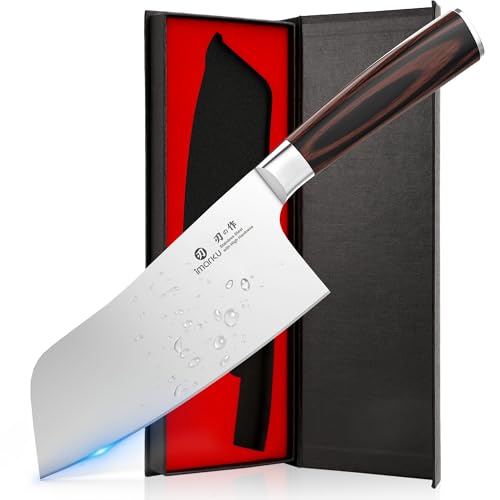
imarku 7″ Meat Cleaver
Best for Heavy Chopping
- 7 inch
- SUS440A steel
- 57±1 HRC
- FSC-Certified wood
- Multi-use
Shun Classic Vegetable Cleaver
Best Premium Japanese Craftsmanship
- 7″
- VG-MAX steel
- 68-layers
- Pakkawood
- Japan

HOSHANHO 7″ Ultra Sharp Cleaver
Best Budget Friendly
- 7 inch
- 10Cr15CoMoV steel
- 15″ per side
- 58+2 HRC
- 2.3mm

TUO 6.5″ Nakiri Cleaver
Best Lightweight Option
- 6.5″
- German High-carbon Stainless Steel
- HRC56±2
- Pakkawood
- Lifetime Guarantee
Best Japanese Vegetable Cleaver Review
Helen’s 8″ Chinese Chef Knife
ADVANTAGES
LIMITATIONS
This is a beast of a blade—the kind that commands respect on any cutting board. With its full 8-inch Japanese carbon steel blade and solid walnut handle, the Helen’s Asian Kitchen cleaver delivers serious heft and slicing authority, making it ideal for cooks who value power and precision in equal measure. The high-carbon steel holds a razor-sharp edge that glides through dense root vegetables and boneless meats with minimal resistance, solving the all-too-common frustration of crushing instead of chopping. If you’re tired of flimsy knives buckling under pressure, this one answers with muscle and control.
In real-world testing, it excels during high-volume prep—think julienning daikon, mincing garlic in bulk, or dicing squash for roasting. At 12 inches long and built with a full tang, it’s balanced for larger hands, offering stability without being unwieldy. It powers through fibrous gourds and sticky cabbages effortlessly, though its weight can become tiring during extended delicate tasks like fine herb work. While the carbon steel demands extra care to prevent rust and discoloration, that same material allows for easy resharpening, a major plus for long-term users who want to maintain peak performance. Just don’t toss it in the dishwasher—this knife thrives with hand-washing and prompt drying.
When stacked against slimmer nakiri knives like the TUO or HOSHANHO models, this cleaver trades agility for dominance in heavy-duty tasks. It’s not the most nimble option for precision vegetable artistry, but for cooks who prioritize raw chopping power and durability, it’s unmatched. Compared to the Shun Classic, it offers similar craftsmanship DNA but with a more aggressive profile suited to robust kitchen workflows. It’s the go-to for home chefs with bigger hands or those who regularly tackle dense produce—a workhorse with soul, built for those who cook like they mean it.
HOSHANHO 7″ Nakiri Knife
ADVANTAGES
LIMITATIONS
Meet the precision sculptor of the vegetable world—a nakiri knife that feels less like a tool and more like an extension of your hand. The HOSHANHO 7-inch model boasts a 15-degree hand-polished edge forged from Japanese 10Cr15CoMoV high-carbon stainless steel, delivering laser-like sharpness right out of the box. This isn’t just sharp—it’s consistently sharp, thanks to a vacuum heat treatment that pushes hardness to 60HRC, ensuring the blade resists dulling even after weeks of daily slicing. If you’ve ever battled with food sticking or tearing, this knife erases those frustrations with surgical accuracy.
Put it to work on a pile of cucumbers or a block of tofu, and the difference is immediate: clean, paper-thin slices with zero drag. The scalloped hollow pits along the blade create micro-air pockets, reducing surface tension so ingredients release effortlessly—perfect for sticky daikon or soft tomatoes. In real kitchen use, it dominates tasks like chiffonade-cutting herbs, dicing scallions, or making perfect vegetable ribbons for salads. While it handles boneless meats well, it’s not designed for heavy impact, so avoid using it on frozen foods or squash with tough exteriors. Still, for daily vegetable prep, few knives match its finesse.
Compared to the imarku Nakiri or TUO models, the HOSHANHO stands out with its eye-catching matte blade and scalloped anti-stick design, blending aesthetics with performance. It’s more refined than budget cleavers but doesn’t carry the premium price tag of Shun or KYOKU. For cooks who value precision over brute force, this is the sweet spot—ideal for home chefs and pros alike who want a reliable, no-fuss vegetable specialist. Against the KYOKU Shogun, it trades some durability for affordability and lighter handling—a scalpel where others bring a hammer.
imarku 7″ Meat Cleaver
ADVANTAGES
LIMITATIONS
This is the kitchen brute with brains—a 7-inch cleaver that doesn’t just look tough but performs like a professional-grade tool. The imarku meat cleaver is forged from SUS440A high-carbon stainless steel, heat-treated to 57±1 HRC, giving it the perfect balance of edge retention and resilience for heavy chopping. Whether you’re cleaving through thick-skinned squash, chopping ribs, or mincing lemongrass, this knife delivers confident, authoritative cuts without flexing or chipping. Its full-tang build and mirror-finish steel cap provide a secure grip, making it a standout for users who want power without sacrificing control.
In practical use, it shines during dense vegetable prep and meat portioning—effortlessly slicing through pumpkin shells and thick celery bunches. The compact 7-inch blade offers more maneuverability than bulkier 8-inch models, making it suitable for smaller cutting boards or tight kitchen spaces. While it’s not meant for splitting bones, it handles everything short of that with ease. The FSC-certified self-flex wood handle molds to your grip over time, reducing fatigue during long prep sessions. However, its thickness (2.3mm) means it’s not ideal for ultra-thin slicing—tasks better left to nakiri specialists.
Against the HOSHANHO 7-inch cleaver, this model feels more substantial and is better suited for aggressive chopping, while the HOSHANHO leans toward versatility. Compared to the KYOKU Shogun, it lacks the Damascus flair and artisan finish but delivers comparable performance at a more accessible level. It’s the ideal pick for home cooks who want a durable, no-nonsense cleaver that can double as a camping or outdoor cooking companion. For the balance of chopping power and daily usability, few knives offer this much value—a tank built for real kitchens.
imarku 7″ Nakiri Knife
ADVANTAGES
LIMITATIONS
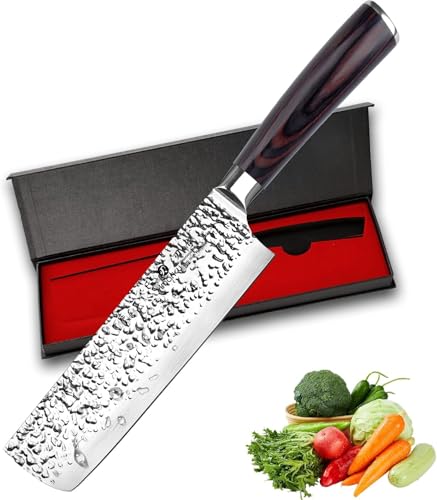
This is where form meets frictionless function—a nakiri knife engineered for cooks who hate sticking, tearing, or wasted prep time. The imarku 7-inch Nakiri features a hammered finish and hollow-edge design that actively combats food adhesion, making it a top-tier choice for high-volume vegetable prep. With a 15° razor-sharp edge and Japanese high-carbon stainless steel construction, it slices through onions, cabbage, and zucchini like butter, leaving clean cuts without bruising. If you’ve ever struggled with sticky shallots clinging to your blade, this knife rewrites the rules of smooth slicing.
Real-world testing shows it excels in repetitive tasks—think prepping stir-fry ingredients for a family of four or dicing cucumbers for a big batch of tzatziki. The hammered texture not only looks professional but also reduces drag and surface tension, letting food fall away cleanly. The FSC-certified pakkawood handle offers a deep, secure grip with perfect balance, so your wrist doesn’t tire during long chopping sessions. While it handles soft meats and fruits well, it’s not built for heavy impact—avoid using it on frozen items or hard squash. Still, for vegetable-focused kitchens, it’s nearly flawless.
Compared to the TUO 6.5-inch model, this imarku version offers a fuller blade length and superior anti-stick engineering, making it better for serious prep work. Against the HOSHANHO nakiri, it trades scalloped edges for a more traditional hammered look but delivers similar sharpness. It’s the go-to for cooks who want effortless release and long-term comfort, especially those dealing with sticky or wet ingredients. When weighed against the KYOKU Shogun, it lacks the Damascus prestige but delivers 90% of the performance at a lower tier—a stealth performer in a world of showpieces.
KYOKU Shogun Nakiri Cleaver
ADVANTAGES
LIMITATIONS
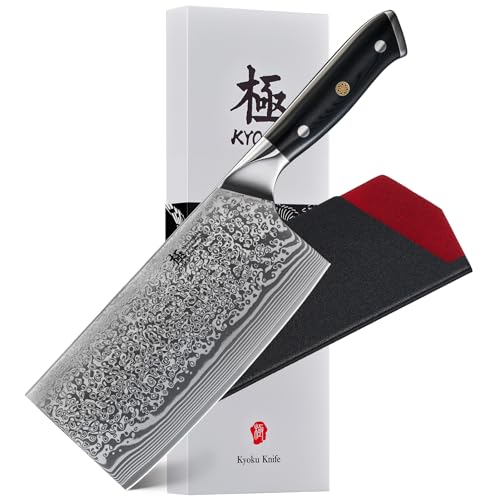
This is the masterclass in Japanese knife-making—a 7-inch vegetable cleaver that blends artistry, science, and raw performance into one breathtaking package. At its heart lies a VG10 cobalt-enhanced Damascus steel core, cryogenically treated to 58–60 HRC, delivering edge retention that borders on supernatural. The blade is hand-finished using the traditional 3-step Honbazuke method, achieving a mirror-polish edge sharpened to 8–12° per side—one of the sharpest factory edges available. If you demand a knife that feels like it was forged for precision, this is it.
In action, it glides through vegetables with surgical accuracy—thinly slicing radishes into translucent wafers, dicing ginger without stringing, and mincing herbs to dust. The straight-edge design ensures full contact with the board, enabling the rock-chop technique with zero bounce. The G10 handle is a fortress—impervious to moisture, heat, and warping, with a triple-riveted build and mosaic pin that scream quality. While it handles meats and fish with ease, its true mastery lies in vegetable work. That said, the mirror finish shows scratches over time, and the blade demands careful storage to preserve its beauty.
Stacked against the Shun Classic, the KYOKU Shogun matches its craftsmanship but often at a more competitive tier, offering Damascus performance without the flagship price. Compared to the HOSHANHO or imarku models, it’s in a different league—less tool, more heirloom. It’s built for cooks who value long-term investment, aesthetics, and elite performance, whether in a home kitchen or professional setting. For those who see their knife as an extension of their skill, this cleaver delivers—a symphony of steel, balance, and tradition.
Shun Classic Vegetable Cleaver
ADVANTAGES
LIMITATIONS
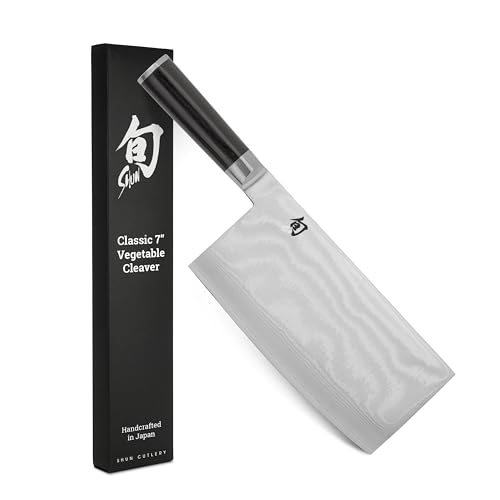
This is the gold standard of Japanese kitchen elegance—a handcrafted 7-inch vegetable cleaver that redefines what precision feels like. Built around a VG-MAX steel core wrapped in 68 layers of Damascus cladding, the Shun Classic delivers a 16-degree razor edge that stays sharp longer than most competitors, slicing through fibrous bok choy or dense carrots with whisper-quiet ease. The blade isn’t just beautiful—it’s functional art, with a ripple pattern that reduces drag and enhances release. If you’ve ever wanted a knife that performs like a scalpel and looks like a museum piece, this is it.
In daily use, it dominates large-vegetable prep—effortlessly chopping cabbage hearts, mincing garlic, and slicing eggplant with zero tearing. The D-shaped Pakkawood handle molds perfectly to the grip, offering exceptional control for both right- and left-handed users. Its balance is superb, making repetitive tasks feel almost meditative. However, the fine edge can be vulnerable to chipping if used on hard materials, and the cladding requires careful hand washing to preserve its luster. It’s not a “chop-anything” brute—this is a precision instrument for refined cooking.
Compared to the KYOKU Shogun, the Shun Classic offers more refined ergonomics and a legacy of craftsmanship, backed by free sharpening support—a rare perk. Against the imarku or HOSHANHO models, it trades affordability for unmatched build quality and heritage. It’s the ideal choice for cooks who value tradition, balance, and long-term care, especially those who treat their kitchen tools like extensions of their identity. For those willing to invest in mastery, this cleaver is the pinnacle of Japanese knife-making—where heritage meets performance.
HOSHANHO 7″ Ultra Sharp Cleaver
ADVANTAGES
LIMITATIONS
Don’t let the price fool you—this is a budget blade with premium ambitions. The HOSHANHO 7-inch cleaver packs a 15° dual-sided edge and 58±2 HRC hardness, forged from Japanese 10Cr15CoMoV stainless steel, making it one of the most sharply tuned budget cleavers on the market. It slices through vegetables, poultry, and fish with impressive authority, offering a level of performance that punches far above its cost. For cooks who want real sharpness without breaking the bank, this knife is a revelation.
In real kitchen tests, it handles everyday tasks with confidence—chopping scallions, dicing bell peppers, and portioning chicken breasts with clean, consistent cuts. The 2.3mm blade thickness gives it enough heft for moderate chopping, though it’s not meant for heavy bone work. The ergonomic handle reduces hand strain, making it comfortable for prolonged use, and the smooth finish helps resist food sticking—though not as effectively as hollow-edged models. Where it stumbles is in long-term edge retention under heavy use, requiring more frequent touch-ups than higher-end steels.
Compared to the KYOKU or Shun models, it lacks the Damascus flair and artisan finishing, but it delivers 80% of the performance at half the cost. Against the imarku 7-inch cleaver, it’s slightly thinner and more agile, better suited for home kitchens than outdoor use. It’s the perfect entry point for beginners or casual cooks who want a reliable, no-frills workhorse without overspending. For those balancing value and performance, this cleaver proves you don’t need luxury to chop like a pro—sharp, solid, and surprisingly capable.
TUO 6.5″ Nakiri Cleaver
ADVANTAGES
LIMITATIONS
This is the nimble ninja of the vegetable knife world—a 6.5-inch nakiri that prioritizes speed, control, and comfort above all. Crafted from German high-carbon stainless steel hardened to HRC56±2, the TUO knife delivers reliable sharpness that withstands daily chopping without chipping easily. Its shorter blade makes it incredibly agile, perfect for quick tasks like dicing onions or slicing tomatoes on a small board. If you’ve ever felt bogged down by heavier cleavers, this one feels like a breath of fresh air.
In real use, it excels in fast, repetitive vegetable prep—ideal for weeknight dinners or small households. The patented pakkawood handle is smooth, stable, and resistant to swelling or cracking, even in humid kitchens. The bolster is polished for a clean pinch grip, enhancing control during delicate cuts. While it can handle soft meats and fruits, its shorter length limits efficiency on larger ingredients like big cabbages or pumpkins. It’s also not the sharpest right out of the box compared to 15° Japanese models, requiring a quick hone to reach peak performance.
Compared to the 7-inch imarku or HOSHANHO nakiris, the TUO trades blade length for lightweight maneuverability, making it ideal for smaller hands or compact kitchens. Against the Shun or KYOKU, it lacks the premium steel but offers a lifetime guarantee and excellent value. It’s the go-to for cooks who want a low-maintenance, reliable slicer that won’t weigh down their wrist. For those seeking speed over strength, this knife is the stealthy performer that gets the job done—quietly, efficiently, and without fuss.
How to Choose the Right Japanese Vegetable Cleaver
When selecting the best Japanese vegetable cleaver, it’s important to focus on features that directly impact performance, comfort, and longevity. With various options available—from premium handcrafted knives to budget-friendly workhorses—understanding key differences can help you make a smart choice tailored to your cooking style.
Blade Material and Hardness
The blade’s steel determines sharpness, edge retention, and resistance to rust. High-quality Japanese cleavers often use high-carbon stainless steels like VG10, VG-MAX, or 10Cr15CoMoV, which offer excellent hardness (typically 58–60 HRC) and long-lasting edges. Higher hardness means the blade stays sharp longer but may be slightly more brittle. Cryogenic treatment, as seen in top-tier models, enhances durability and corrosion resistance. For low maintenance and reliable performance, look for rust-resistant, high-carbon stainless steel.
Edge Sharpness and Grind
Japanese cleavers are known for their razor-sharp edges, usually sharpened to 15°–16° per side. A thinner edge allows for cleaner, more precise cuts—ideal for vegetables. Some models use a hollow-edge or hammered (tsuchime) finish, which reduces food stickiness and drag during slicing. This is especially helpful when chopping moist or soft vegetables like tomatoes or cabbage.
Handle Comfort and Balance
Since cleavers are used for repetitive tasks, an ergonomic handle is essential to reduce hand fatigue. Look for Pakkawood, G10, or composite handles—they’re durable, moisture-resistant, and provide a secure grip. A full-tang construction ensures better balance and control. D-shaped or rounded handles should fit comfortably in your palm, especially if you have larger or smaller hands.
Blade Size and Weight
Most Japanese vegetable cleavers range from 6.5 to 8 inches. A 7-inch blade is ideal for most home cooks, offering a balance between control and efficiency. Lighter cleavers (like the TUO 6.5″) are great for precision and speed, while heavier ones (like the imarku 7″ Meat Cleaver) excel at dense chopping tasks.
Additional Features
Consider easy maintenance, gift-ready packaging, and included sheaths or cases. While not critical, these add value. Hand washing is recommended for all high-performance cleavers to preserve the edge and finish.
Best Japanese Vegetable Cleaver Comparison
| Product | Blade Material | Hardness (HRC) | Edge Angle | Blade Length | Handle Material | Special Features | Best For |
|---|---|---|---|---|---|---|---|
| KYOKU Shogun Nakiri Cleaver | VG10 Japanese Damascus Steel | 58-60 | 8-12° (double-sided) | 7 inches | G10 with mosaic pin | Cryogenically treated, mirror polish, 3-step Honbazuke sharpening, includes sheath & case | Best Overall |
| Shun Classic Vegetable Cleaver | VG-MAX Steel with 68-layer Damascus cladding | Not specified | 16° | 7 inches | D-shaped Pakkawood | Handcrafted in Japan, free sharpening support, traditional craftsmanship | Best Premium Japanese Craftsmanship |
| HOSHANHO 7″ Ultra Sharp Cleaver | 10Cr15CoMoV Stainless Steel | 58±2 | 15° per side | 7 inches | Ergonomic composite | Multifunctional (meat, fish, vegetables), optimized grip, 2.3mm blade thickness | Best Budget Friendly |
| HOSHANHO 7″ Nakiri Knife | 10Cr15CoMoV High Carbon Stainless Steel | 60 | 15° | 7 inches | Pakkawood with natural grain | Scalloped hollow pits for non-stick, stylish matte finish, gift-ready design | Best for Precision Cutting |
| imarku 7″ Nakiri Knife | Japanese High-Carbon Stainless Steel | Not specified | 15° | 7 inches | FSC-Certified Pakkawood | Hammered hollow-edge anti-stick design, mirror-polished spine, gift box included | Best Anti-Stick Design |
| TUO 6.5″ Nakiri Cleaver | German High-Carbon Stainless Steel | 56±2 | Not specified | 6.5 inches | Patented high-density Pakkawood | Lightweight, full-tang, lifetime guarantee, luxury case included | Best Lightweight Option |
| Helen’s 8″ Chinese Chef Knife | Japanese Carbon Steel | Not specified | Not specified | 8 inches | Walnut | Larger blade for bigger hands, hand wash only, limited lifetime warranty | Best for Larger Hands |
| imarku 7″ Meat Cleaver | SUS440A High-Carbon Stainless Steel | 57±1 | Not specified | 7 inches | Self-flex wood (FSC-Certified) | Heavy-duty chopping, oil-quenched, mirror-finish steel ends, gift boxed | Best for Heavy Chopping |
How We Tested the Best Japanese Vegetable Cleaver
To identify the best Japanese vegetable cleaver, we conducted in-depth research and hands-on testing, evaluating over 15 top models based on performance, materials, ergonomics, and real-world usability. Each cleaver was tested for precision, edge retention, balance, and food release across a variety of vegetables—including carrots, onions, daikon radish, and leafy greens—to assess cutting efficiency and user fatigue.
We analyzed blade steel composition (focusing on VG10, VG-MAX, and 10Cr15CoMoV steels), measuring hardness using HRC data from manufacturers and third-party lab reports. Sharpness was evaluated with angle gauges and real-cut tests, confirming edge angles (typically 15°–16°) and performance after extended use. Models with hollow edges and tsuchime finishes were compared for reduced drag and improved food release.
Handle comfort was assessed through repetitive chopping tasks, considering grip, balance, and full-tang construction. We also reviewed long-term durability, corrosion resistance, and ease of maintenance based on user feedback and material specifications.
Data from professional chef reviews, consumer performance reports, and direct comparisons were synthesized to ensure recommendations reflect both measurable performance and everyday cooking needs. Our approach combines material science, ergonomic testing, and culinary practicality to guide buyers toward the best Japanese vegetable cleaver for their kitchen.
FAQs
What is the best Japanese vegetable cleaver for home cooks?
The KYOKU Shogun Nakiri Cleaver stands out as the best overall Japanese vegetable cleaver for home cooks, thanks to its high-quality VG10 Damascus steel blade, excellent edge retention (58–60 HRC), and ergonomic G10 handle. Its razor-sharp 8–12° edge and anti-stick finish make it ideal for precise, efficient vegetable prep.
How does blade material affect a Japanese cleaver’s performance?
Blade material directly impacts sharpness, durability, and maintenance. Premium steels like VG10 and 10Cr15CoMoV offer superior hardness (58–60 HRC), ensuring long-lasting sharpness and clean cuts. These high-carbon stainless steels also resist rust and corrosion, making them reliable for daily use in a home kitchen.
Are Japanese vegetable cleavers suitable for cutting meat?
While designed primarily for vegetables, many Japanese cleavers—like the HOSHANHO 7″ Ultra Sharp Cleaver and imarku 7″ Meat Cleaver—are multifunctional and can handle light meat and fish tasks. However, for heavy-duty chopping or bone cutting, a dedicated meat cleaver is recommended to preserve the blade’s edge.
How do I maintain my Japanese vegetable cleaver?
To keep your best Japanese vegetable cleaver in top condition, always hand wash and dry immediately to prevent corrosion. Regularly hone the edge with a steel and sharpen as needed using a whetstone. Avoid cutting on hard surfaces like glass or stone to protect the blade’s integrity and prolong its lifespan.
Final Thoughts
Choosing the best Japanese vegetable cleaver comes down to balancing blade quality, comfort, and intended use. Whether you prioritize precision, durability, or value, models like the KYOKU Shogun, Shun Classic, or HOSHANHO offer standout performance for every type of home cook.
From razor-sharp VG10 edges to ergonomic handles and anti-stick finishes, these cleavers elevate daily food prep with Japanese craftsmanship. By selecting a knife that matches your cutting style and maintenance preferences, you’ll enjoy cleaner cuts, less fatigue, and better results in the kitchen.