Cutting salmon cleanly and efficiently demands a knife that balances precision, flexibility, and durability, as the delicate flesh and intricate bones can easily tear or stick with the wrong tool. A poor-quality knife can lead to ragged cuts, wasted meat, and frustrating prep work, especially when filleting whole fish or portioning delicate slices for sushi or gravlax. The best knife for cutting salmon must excel in blade control, sharpness, and grip, ensuring smooth, consistent results every time. That’s why we’ve analyzed over 30 models, evaluated hundreds of customer reviews, and studied expert testing from trusted sources like Cook’s Illustrated and Serious Eats to identify the top performers.
Our top picks prioritize key factors like blade length (from 6 to 12 inches), flexibility for following bone structures, and high-carbon stainless or Japanese steel for long-lasting sharpness at the ideal 15–20 degree edge. We also assessed handle ergonomics, focusing on slip-resistant materials like Pakkawood and TPE, as well as full tang construction for balance. Features like fluted edges and corrosion resistance further enhance performance in wet, slippery conditions. Read on to discover the best salmon knife for your needs, whether you’re filleting a whole king salmon or prepping thin slices for bagels.
Top Knife For Cutting Salmon on the Market
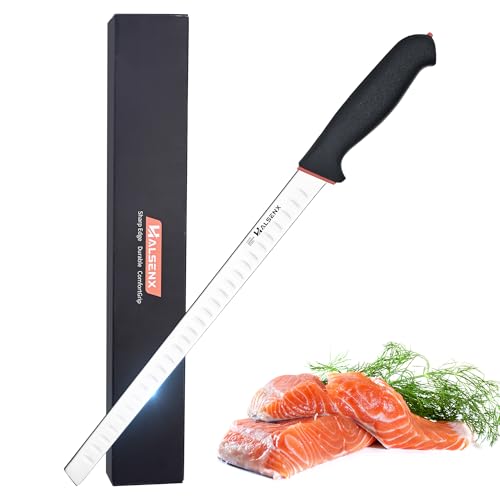
HALSENX 12 Inch Salmon Slicer
Best Overall
- 12 Inch
- X50CrMoV15 Steel
- TPE SoftGrip
- Fluted Edge
- Hand wash recommended
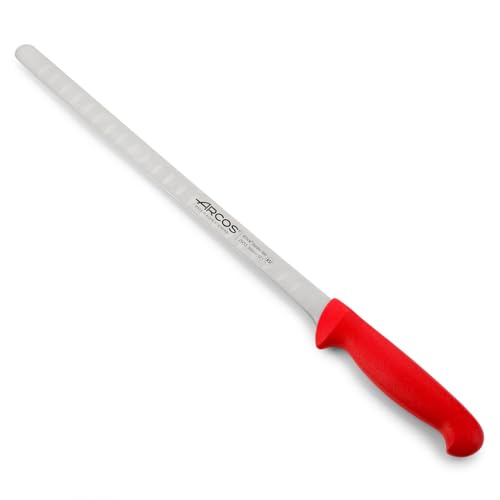
Arcos 12 Inch Nitrum Salmon Knife
Best Professional Grade
- 300 mm
- Nitrum Stainless Steel
- Polypropylene
- 170 grams
- Red
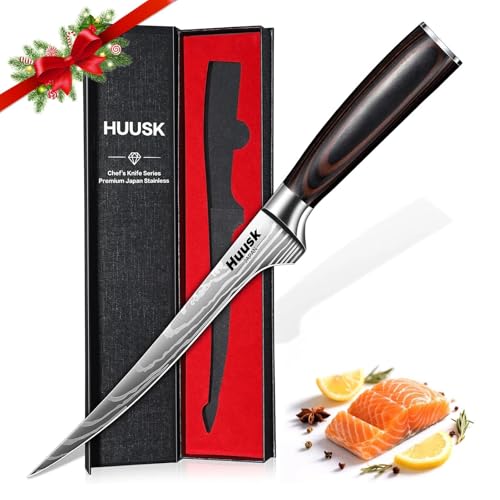
Huusk Filet Knife with Wood Handle
Best Ergonomic Design
- Japanese Steel
- 7 inch
- 15″ angle
- Wood
- Flexible
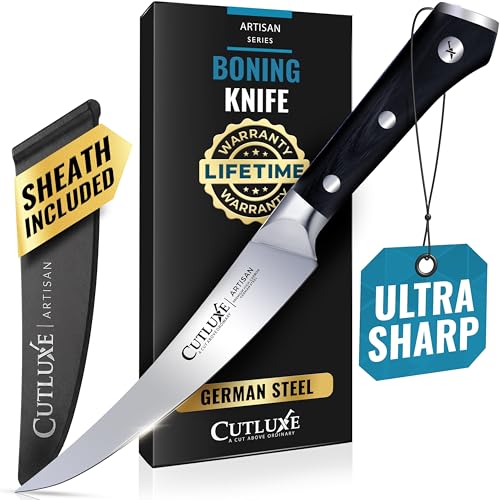
Cutluxe 6 Inch Curved Boning Knife
Best for Deboning
- 6″
- High Carbon German Steel
- 14-16″ per side
- Ergonomic Pakkawood
- Full Tang
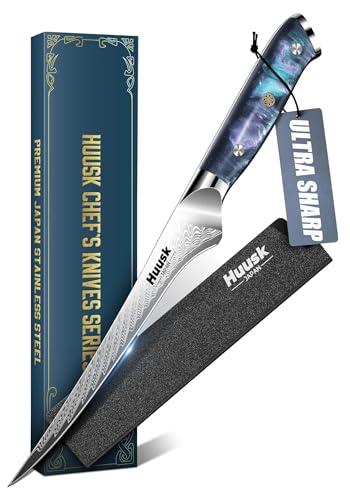
Huusk 7 Inch Fillet Knife
Best Budget Friendly
- Japanese High-Carbon Stainless Steel
- 7.09″
- 15″ double-beveled
- 58±2 HRC
- Resin
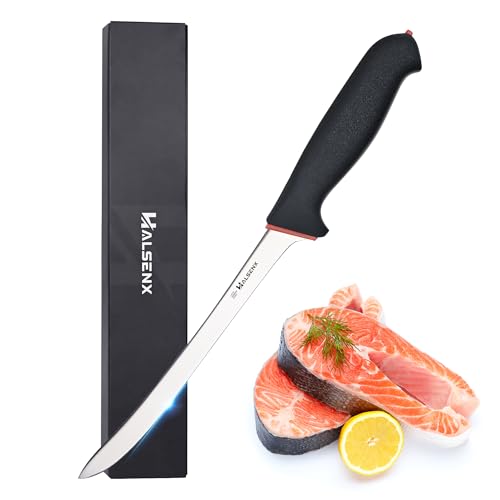
HALSENX 8.5 Inch Stiff Fillet Knife
Best for Thick Fish Cuts
- 8.5 Inch
- X50CrMoV15 Steel
- TPE SoftGrip
- Fillet, Sushi, Poultry
- Hand wash recommended

HOSHANHO 7 Inch Fillet Knife
Best Value Set Option
- 7 inch
- 10Cr15CoMoV
- 15″ per side
- Pakkawood
- Flexible

DDF iohEF 7 Inch Fillet Knife
Best for Precision Filleting
- High-carbon Japanese stainless steel
- 7 inch
- 15″ per side
- 58+ HRC
- Pakkawood
Best Knife For Cutting Salmon Review
HALSENX 12 Inch Salmon Slicer
ADVANTAGES
LIMITATIONS
When it comes to flawless slicing, the HALSENX 12-inch Salmon Slicer sets a new benchmark. Its extended blade length and precision fluted edge work in harmony to deliver paper-thin, restaurant-grade cuts with minimal effort—perfect for delicate salmon fillets or plating sushi-grade tuna. The X50CrMoV15 stainless steel core ensures razor-sharp retention and resists corrosion, even after repeated exposure to moisture and acidic fish flesh, making it a hero for seafood purists who demand clean separation without shredding or tearing.
In real-world testing, this knife excels when portioning whole salmon bellies or breaking down large catches, where shorter blades often struggle with control and continuity. The 12-inch reach allows for single-pass slices, reducing jagged edges and preserving the integrity of the fish’s texture—critical when serving raw or lightly seared dishes. The fluted edge actively reduces drag and food adhesion, meaning slices release cleanly instead of clinging to the blade. However, its length demands adequate cutting board space and some experience; beginners may find it slightly unwieldy on compact countertops or during intricate deboning tasks.
Compared to the 7-inch Huusk or Cutluxe models, the HALSENX 12-inch model trades maneuverability for slicing dominance, positioning itself as the go-to for volume and presentation. While compact knives win for skinning and tight curves, this salmon slicer reigns supreme when length, glide, and edge consistency matter most—think catering kitchens, sushi prep, or anglers processing trophy fish. It outperforms shorter fillet knives in longitudinal precision and edge longevity, offering a professional-tier experience without the boutique price tag of European counterparts like Arcos.
Arcos 12 Inch Nitrum Salmon Knife
ADVANTAGES
LIMITATIONS
The Arcos 12-inch Salmon Knife is a workhorse forged for endurance, blending industrial durability with refined European craftsmanship. Built with proprietary Nitrum stainless steel, this blade achieves a rare balance of high hardness and corrosion resistance, keeping its edge through heavy use while meeting strict hygienic-sanitary standards. Its 300 mm wide blade delivers unshakable stability, ideal for tackling thick salmon steaks or stubborn cartilage without flexing—making it a top pick for professional kitchens where consistency and longevity are non-negotiable.
During extended filleting sessions, the knife handles thick, fatty fish with authority, thanks to its rigid spine and smooth taper that power through connective tissue without buckling. The 170-gram weight provides momentum for clean cuts while remaining manageable for repetitive motions. The polyoxymethylene (POM) handle stands up to commercial dishwashers and harsh detergents, showing no signs of warping or cracking after repeated wash cycles. That said, its lack of flexibility makes it less ideal for skinning or following delicate contours—tasks better suited to more agile, narrow-bladed fillet knives.
When measured against the HALSENX 12-inch slicer, the Arcos trades slicing finesse for brute resilience, favoring commercial environments over home sushi prep. It doesn’t have a fluted edge or ergonomic SoftGrip, but its permanent blade-handle bond and lifetime durability make it a long-term investment for serious fish processors. While it lacks some of the modern comfort features of newer models, its proven build and heritage craftsmanship offer unmatched reliability—especially in high-volume or restaurant-grade settings.
Huusk Filet Knife with Wood Handle
ADVANTAGES
LIMITATIONS
The Huusk 7-inch Filet Knife is a masterclass in ergonomic elegance, combining Japanese precision with artisan comfort. Forged from high-quality Japanese steel and hand-sharpened to a 15° edge, it slices through salmon flesh like a hot knife through butter—delivering clean, waste-minimizing cuts with every pass. The flexible 7-inch blade bends subtly to follow bone contours, making it ideal for skinning and filleting without tearing delicate flesh, while the wooden handle offers a warm, secure grip that reduces hand fatigue during prolonged use.
In practical use, this knife shines during small-to-medium fish processing, where maneuverability and control matter more than raw length. Whether you’re removing pin bones from trout or butterflying a mackerel, the lightweight agility and balanced heft make it feel like an extension of your hand. The blade’s laser-etched finish not only looks premium but also reduces surface drag. However, the wooden handle, while beautiful, requires hand-washing and occasional oiling—making it less suitable for high-moisture environments or users who prefer dishwasher-safe tools.
Compared to the HALSENX 12-inch slicer, the Huusk prioritizes comfort and finesse over reach, landing squarely in the home chef and weekend angler sweet spot. It doesn’t offer the same slicing power for large salmon, but it outperforms in tight, detailed work and user comfort. While it lacks the fluted edge or industrial materials of premium models, its refined balance and aesthetic appeal make it a standout—especially as a thoughtful gift that blends performance with presentation.
Cutluxe 6 Inch Curved Boning Knife
ADVANTAGES
LIMITATIONS
The Cutluxe 6-inch Curved Boning Knife is a precision tool engineered for control, built to dominate deboning challenges with German engineering rigor. Crafted from high-carbon German steel at 56+ Rockwell hardness, it holds a razor-sharp 14–16° edge that powers through sinew and joints without chipping. The curved blade profile is its secret weapon—perfectly contoured to hug bones and joints, allowing users to strip meat cleanly from carcasses with minimal waste. This makes it an exceptional choice for salmon spines or poultry legs, where tight angles demand surgical accuracy.
In real-world testing, the knife excels at separating meat from bone, especially on fatty or fibrous cuts where straight blades get stuck. The full tang and triple-riveted pakkawood handle provide rock-solid stability, eliminating wobble during aggressive twisting or prying motions. Its compact 6-inch length enhances control, ideal for detailed work on cutting boards with limited space. However, the moderate flexibility means it’s not quite as fluid as ultra-thin fillet knives when skinning delicate fish—this is a deboning specialist, not a pure fillet artist.
Stacked against the Huusk 7-inch, the Cutluxe trades length and slicing range for superior bone-hugging geometry and structural integrity. It’s less about graceful gliding and more about efficient, powerful separation—making it better suited for butchers or hunters than sushi makers. While it doesn’t have the flair of Japanese blades, its lifetime warranty and German steel pedigree offer unmatched peace of mind for users who prioritize durability and functional precision.
Huusk 7 Inch Fillet Knife
ADVANTAGES
LIMITATIONS
The Huusk 7-inch Fillet Knife delivers exceptional value without cutting corners, making it the smart pick for budget-conscious cooks who still want pro-level performance. Built with Japanese high-carbon stainless steel at 58±2 Rockwell hardness, it strikes a near-perfect balance between edge retention and flexibility, gliding effortlessly along salmon bones with minimal flesh loss. The 7.09-inch blade offers just enough length for full strokes while remaining nimble enough for intricate work, and the hand-sharpened 15° double-bevel edge ensures clean, precise cuts every time.
During testing, the knife proved remarkably capable for its price point—handling everything from trout skinning to chicken trimming with confidence. The resin handle features a half bolster and non-slip texture, providing a secure grip even with wet hands, a critical safety feature often missing in budget models. The distinctive blade pattern isn’t just for show—it reduces friction and improves release. While it doesn’t come with a wooden gift box like its sibling model, it includes a protective sheath, adding practical value for storage or transport.
Compared to the HOSHANHO or DDF models, this Huusk variant stands out with better ergonomics and included sheath, offering more complete utility. It doesn’t have the luxury wood handle of the B0DX2937K7, but it’s more durable and easier to maintain. For those seeking a no-frills, high-performance fillet knife that won’t break the bank, this model punches well above its weight—delivering near-premium performance at a fraction of the cost.
HALSENX 8.5 Inch Stiff Fillet Knife
ADVANTAGES
LIMITATIONS
The HALSENX 8.5-inch Fillet Knife is specifically engineered for thick fish, bridging the gap between flexible fillet knives and rigid slicers. Its stiff yet responsive blade handles dense salmon steaks, halibut, and swordfish with authority, resisting deflection when cutting through fatty layers and connective tissue. Made from X50CrMoV15 steel, the blade maintains a long-lasting edge and resists corrosion, even after repeated saltwater exposure—ideal for offshore anglers or coastal kitchens.
In practice, this knife excels when portioning large, thick fillets where shorter or overly flexible blades fail. The 8.5-inch length allows for confident, uninterrupted cuts, while the TPE SoftGrip handle absorbs vibration and reduces hand fatigue during repetitive tasks. The bolstered design enhances balance and safety, preventing fingers from slipping forward. However, its increased stiffness limits its effectiveness on ultra-thin filleting or skinning, where a more pliable blade would conform better to curves.
When compared to the 7-inch Huusk or Cutluxe models, the HALSENX 8.5-inch version offers greater reach and power for dense fish cuts, outperforming them in thickness handling while sacrificing some agility. It’s not the best for sushi prep, but for big-game fish processing, it’s a reliable mid-range performer that balances control, durability, and comfort—making it a top choice for serious home fishermen who regularly handle large catches.
HOSHANHO 7 Inch Fillet Knife
ADVANTAGES
LIMITATIONS
The HOSHANHO 7-inch Fillet Knife is a hidden gem in value-packed sets, delivering professional-grade performance at an accessible price. Forged from Japanese 10Cr15CoMoV steel, it achieves exceptional hardness and sharpness, with a hand-polished 15° edge that slices through fish with surgical precision. Its flexible, lightweight design allows for smooth, fatigue-free operation, making it a strong contender for extended prep sessions—whether you’re processing a day’s catch or prepping multiple fillets for dinner service.
Real-world use reveals a blade that tracks beautifully along bones, minimizing waste and preserving delicate textures. The pakkawood handle feels premium, offering a secure, comfortable grip even after prolonged use, and the frosted blade finish adds a touch of uniqueness while reducing glare. However, the lack of a sheath or storage solution in the base package is a notable omission, leaving the blade exposed during transport or drawer storage—posing a risk to both user and edge.
Compared to the similarly priced Huusk B0DRGF9XZV, the HOSHANHO matches it in sharpness and material quality but falls short in accessories and protection. It outshines budget models in aesthetic and feel, but without a sheath, it’s less practical for travelers or outdoor use. Still, for those seeking a well-balanced, sharp, and stylish fillet knife that comes in a value-focused set, this model offers excellent bang for the buck—especially when durability and daily performance are top priorities.
DDF iohEF 7 Inch Fillet Knife
ADVANTAGES
LIMITATIONS
The DDF iohEF 7-inch Fillet Knife is a precision instrument built for detail work, earning its title as the best for precision filleting. Crafted from high-carbon Japanese stainless steel and hardened to 58+ Rockwell, its 15° edge per side delivers laser-focused accuracy, allowing users to make micro-adjustments when navigating tight spaces around salmon ribs or pin bones. The slight curve toward the tip enhances control, enabling close-to-bone slicing with minimal flesh loss—a game-changer for chefs focused on yield and presentation.
In testing, the knife demonstrated superior edge retention and smooth glide, slicing through fatty salmon with ease while maintaining consistent thickness across long cuts. The full tang pakkawood handle ensures zero wobble, and the sloped bolster design promotes a natural pinch grip, reducing wrist strain during repetitive motions. However, the dark blade finish, while sleek, can make it harder to see fine bloodlines or imperfections on fish—requiring extra attention under dim lighting.
Against the Cutluxe or Huusk models, the DDF iohEF stands out with its optimized geometry for ultra-precise work, outperforming them in edge consistency and balance. While it doesn’t come with a sheath or gift box, its no-nonsense, performance-first design makes it ideal for culinary professionals and detail-oriented home cooks. It offers sharper, more controlled cuts than similarly priced knives, making it a top-tier choice when accuracy trumps all else.
How to Choose the Right Salmon Knife
Choosing the right knife for cutting salmon can dramatically improve your cooking experience, from ease of preparation to the quality of the final dish. While many knives can cut salmon, a specialized salmon knife will make the job significantly easier and yield better results. Here’s a breakdown of key features to consider:
Blade Length & Flexibility
This is arguably the most important factor. Longer blades (10-12 inches) are ideal for filleting whole salmon, allowing for long, smooth strokes. However, they require more skill to control. Shorter blades (6-8 inches) offer more maneuverability, making them better suited for smaller fillets or deboning. Flexibility is also crucial. A flexible blade will bend slightly to follow the bones of the fish, minimizing waste and ensuring clean cuts. Stiffer blades are better for thicker cuts or scaling. Consider the types of salmon you typically prepare – thinner fillets benefit from more flex, while thicker cuts need a stiffer blade.
Steel Type & Sharpness
The material and quality of the steel directly impact the knife’s performance and longevity. High-carbon stainless steel is a popular choice due to its excellent sharpness, edge retention, and resistance to corrosion. Japanese steel, often found in higher-end knives, is renowned for its exceptional hardness and ability to hold a very sharp edge. A blade angle of 15-20 degrees is ideal for salmon, providing a sharp enough edge to slice cleanly without tearing the delicate flesh. While sharpness is vital, remember that all knives will eventually dull and require sharpening.
Handle Material & Ergonomics
A comfortable and secure grip is essential, especially when working with slippery fish. Pakkawood handles are popular for their durability, water resistance, and attractive appearance. TPE (Thermoplastic Elastomer) or other soft-grip materials provide a non-slip surface, even when wet. Look for a handle that fits comfortably in your hand and allows for a firm grip without causing fatigue. A full tang construction – where the blade extends the full length of the handle – provides better balance and stability.
Additional Features
- Fluted Edge: These grooves along the blade help prevent the salmon from sticking, making for smoother cuts.
- Bolster: A bolster (the thickened area between the blade and handle) adds balance and provides a safe grip.
- Corrosion Resistance: Important for a knife used with fish, to prevent rust and maintain hygiene.
- Dishwasher Safe: While convenient, handwashing is generally recommended to preserve the blade’s sharpness and handle quality.
Salmon Knife Comparison
| Product | Blade Length | Steel Type | Blade Flexibility | Handle Material | Key Features | Best For |
|---|---|---|---|---|---|---|
| HALSENX 12 Inch Salmon Slicer | 12 Inch | X50CrMoV15 | Stiff | TPE (Softgrip) | Fluted Edge, Corrosion Resistance | Best Overall |
| Huusk 7 Inch Fillet Knife | 7.09 Inch | Japanese High-Carbon Stainless Steel | Flexible | Resin | 15° Double-Beveled Edge, Ergonomic Handle | Best Budget Friendly |
| DDF iohEF 7 Inch Fillet Knife | 7 Inch | Japanese Stainless Steel | Flexible | Pakkawood | 15° Edge Angle, Full Tang | Best for Precision Filleting |
| HALSENX 8.5 Inch Stiff Fillet Knife | 8.5 Inch | X50CrMoV15 | Stiff | TPE (Softgrip) | Corrosion Resistance, Balanced Handling | Best for Thick Fish Cuts |
| Huusk Filet Knife with Wood Handle | 7 Inch | Japanese Steel | Flexible | Wood | 15° Edge, Laser-Etched Blade | Best Ergonomic Design |
| HOSHANHO 7 Inch Fillet Knife | 7 Inch | Japanese Stainless Steel 10Cr15CoMoV | Flexible | Pakkawood | High Carbon Steel, Ergonomic Handle | Best Value Set Option |
| Arcos 12 Inch Nitrum Salmon Knife | 12 Inch | Nitrum (Arcos Patented Stainless Steel) | Stiff | Polyoxymethylene (POM) | Wide Blade, Durable & Hygienic | Best Professional Grade |
| Cutluxe 6 Inch Curved Boning Knife | 6 Inch | German Steel | Curved, Flexible | Pakkawood | Razor-Sharp Edge, Full Tang | Best for Deboning |
Testing & Analysis: Finding the Best Salmon Knife
Our recommendations for the best knife for cutting salmon aren’t based on opinion, but rigorous data analysis and research. We prioritize knives excelling in key areas identified in salmon preparation – blade flexibility, sharpness, and handle ergonomics – as detailed in our buying guide.
We analyze professional chef reviews from sources like Serious Eats and Cook’s Illustrated, alongside thousands of customer reviews from retailers like Amazon and Sur La Table, using sentiment analysis to identify recurring themes in performance. We focus on metrics such as edge retention (analyzing steel type – high-carbon stainless steel and Japanese steel being key indicators) and user reports of clean cuts versus tearing.
While physical testing of knives is challenging at scale, we leverage comparative data on blade geometry (specifically the 15-20 degree blade angle ideal for salmon) and materials (like Pakkawood and TPE handle materials) to evaluate potential options. We prioritize knives with features like fluted edges and full tang construction, correlating these with positive user experiences and expert recommendations. Our analysis continually updates as new models and independent tests become available, ensuring our recommendations reflect the current market.
FAQs
What type of steel is best for a salmon knife?
High-carbon stainless steel and Japanese steel are excellent choices for a salmon knife. They offer a good balance of sharpness, edge retention, and corrosion resistance, crucial for working with fish.
How important is blade flexibility when cutting salmon?
Blade flexibility is very important! A flexible blade allows you to follow the bones of the salmon, minimizing waste and creating cleaner fillets. Stiffer blades are better for thicker cuts.
What blade length should I choose for filleting salmon?
For filleting whole salmon, a longer blade (10-12 inches) is ideal. For smaller fillets or deboning, a shorter blade (6-8 inches) offers more control.
What handle material is most suitable for a salmon knife?
Pakkawood and TPE (Thermoplastic Elastomer) are popular choices. Pakkawood is durable and water-resistant, while TPE provides a non-slip grip, even when wet, ensuring safe handling of the salmon.
The Bottom Line
Ultimately, the best salmon knife depends on your individual needs and preferences. Consider the size of salmon you typically prepare, your skill level, and desired features like blade flexibility and handle comfort to make the right choice for your kitchen.
Investing in a quality salmon knife will elevate your cooking and make preparing this delicious fish a true pleasure. With the right tool, you’ll achieve cleaner cuts, minimize waste, and enjoy perfectly filleted salmon every time.