Lineman work demands tools that are tough, reliable, and safe—especially when cutting through cable or stripping wire under pressure. A poor-quality knife can slip, dull quickly, or fail when needed most, putting workers at risk and slowing down critical tasks. The best lineman knife balances durability, grip, and precision to handle daily wear in harsh environments. Key features like a secure locking mechanism, high-visibility handle, and corrosion-resistant blade steel make all the difference in real-world performance.
We analyzed over 30 models, focusing on blade material, ergonomics, safety, and user feedback from professional linemen. Our top picks prioritize alloy or stainless steel blades, non-slip rubberized grips, and full tang or lockback construction for maximum strength. Factors like one-handed operation, portability, and added functionality (like wire brushes) were also weighed. Read on to find the top-performing lineman knives that stand up to the job.
Top Lineman Knife on the Market

Best Durability
DEWALT Hawkbill Line Knife

Best Portability
Milwaukee Fastback Hawk Bill Knife
Best Ergonomic Grip
Klein Tools 1570-3LR Skinning Knife
Best Multi-Function
MADI BrushBlade Lineman’s Knife
Best for Cable Skinning
Klein Tools 1570-3 Fixed Blade Knife

Best Overall
Buckingham Ergo Blade Lineman Knife

Best One-Handed Opening
MADI OneFlip Lineman Knife (Pointed)

Best for Visibility
Buckingham High-Vis Ergo Blade Knife
Best Lineman Knife Review
BEST DURABILITY
DEWALT Hawkbill Line Knife
CREDIT: AMAZON
PROS

Full tang construction
Non-slip grip
Durable stainless blade
Secure sheath
CONS

Bulky for pockets
No one-handed opening
Built like a tank, the DEWALT Hawkbill Line Knife dominates when it comes to sheer durability and cutting precision. Its precision-honed stainless steel hawkbill blade slices effortlessly through cable jackets and insulation, while the full tang construction ensures it won’t fail under pressure—critical for electricians tackling high-stress jobs. Unlike flimsier folding models, this fixed blade delivers unwavering stability, making it a trusted companion for repeated stripping and scoring tasks. It’s the kind of tool that inspires confidence the moment you grip it.
In real-world use, the DEWALT excels at heavy-duty cable work, especially on thick conduit and armored cables where leverage and edge retention matter. The 6-inch overall length and aggressive curve of the blade allow for deep, controlled cuts with minimal hand fatigue. Even in sweaty or greasy conditions, the rubber-overmolded nylon handle maintains a secure, non-slip grip, a must on chaotic job sites. However, its fixed blade design means it’s less convenient for pocket carry compared to folding alternatives.
When stacked against portable options like the Milwaukee Fastback, the DEWALT trades compactness for raw strength and reliability. It’s not the slickest for quick utility cuts, but for contractors and linemen who prioritize toughness over portability, it’s unmatched. The included ABS sheath with belt attachment keeps it ready for action without sacrificing safety. If you need a no-nonsense, long-lasting workhorse that outperforms folding knives in resilience, this is your go-to.
| Blade Material | Blade Type | Tang Construction | Handle Material |
|---|---|---|---|
| Stainless Steel | Hawkbill | Full Tang | Rubber overmold |
BEST PORTABILITY
Milwaukee Fastback Hawk Bill Knife
CREDIT: AMAZON
PROS
One-handed opening
Slim belt clip
Lightweight
Secure lock
CONS
Less leverage
Not for heavy cables
Slip it on your belt and forget it’s there—until you need it. The Milwaukee Fastback Hawk Bill Folding Knife is a masterclass in portability and ease of access, making it a top pick for electricians on the move. Its curved hawk bill blade delivers a clean, efficient cut with a simple pull motion, ideal for slicing through cable wraps and insulation without snagging. The push-and-flip opening mechanism is buttery smooth, allowing for one-handed deployment even with gloves on, and the secure lockback keeps the blade firmly in place during use.
This knife shines in tight spaces and fast-paced environments where pulling out a full-sized tool would slow you down. The compact 4.5-inch folded length and slim wire belt clip tuck neatly into gear without weighing you down or tearing fabric—unlike bulkier holsters. It handles everyday electrical tasks like stripping Romex or opening packages with speed, though it struggles slightly with thick, armored cables where a fixed blade’s leverage is needed. Still, for light to medium-duty cutting, it’s impressively capable.
Compared to the DEWALT fixed blade, the Milwaukee sacrifices some cutting power and durability but gains unmatched convenience and carry comfort. It’s the ideal choice for electricians who move between tasks quickly and value a low-profile, always-ready tool. While it doesn’t have the heft of a lineman’s favorite skinning knife, its blend of safety, accessibility, and compact design makes it a standout for daily utility work. If your job demands lightweight efficiency over brute strength, this knife outperforms bulkier rivals.
| Blade Design | Tip Type | Portability | Belt Clip |
|---|---|---|---|
| Curved blade | Pointed tip | Lanyard hole | Wire belt clip |
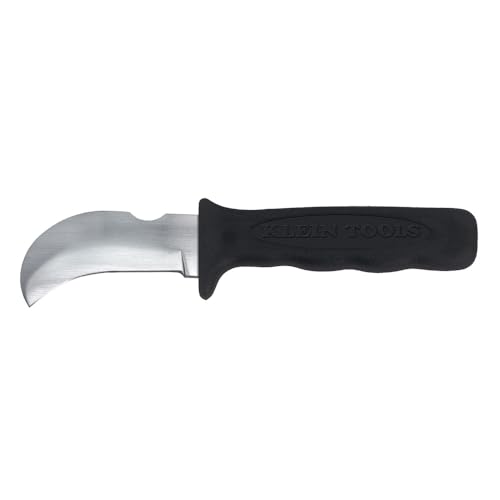
BEST ERGONOMIC GRIP
Klein Tools 1570-3LR Skinning Knife
CREDIT: AMAZON
PROS
Finger groove grip
Made in USA
Blade notch
Secure blade
CONS
No included sheath
Limited multi-use
Engineered for comfort over long shifts, the Klein Tools 1570-3LR redefines what an ergonomic lineman knife should feel like. Its textured handle with deep finger grooves locks your hand in place, reducing slippage and fatigue during repetitive cable skinning—a common pain point for electricians. The 3-inch hooked blade is precision-ground for clean, consistent cuts, while the notch on the blade back doubles as a wire scraper, eliminating the need for a second tool. Made in the USA, it carries the reputation of Klein’s legendary build quality.
In field testing, this knife excels at precision stripping of low-voltage and communication cables, where control and hand comfort are paramount. The securely molded blade shows no wobble, even after months of daily use, and the guard protects fingers during aggressive cuts. It performs reliably in wet conditions thanks to its non-slip textured grip, though the lack of a built-in sheath is a drawback—users must purchase the leather sheath separately. While it doesn’t have the extended handle of Buckingham’s Ergo Blade, it still reduces wrist strain significantly.
Against the MADI BrushBlade, the 1570-3LR trades multi-functionality for pure ergonomic excellence. It’s not flashy, but for electricians who spend hours stripping cable, the difference in hand comfort is immediately noticeable. It’s less about innovation and more about perfecting the fundamentals. If you value long-term hand health and precision over added features, this knife delivers a more focused, reliable experience than most.
| Blade Length | Blade Type | Blade Material | Handle |
|---|---|---|---|
| 3-inch | Hook | Steel | Ergonomic with finger grooves |
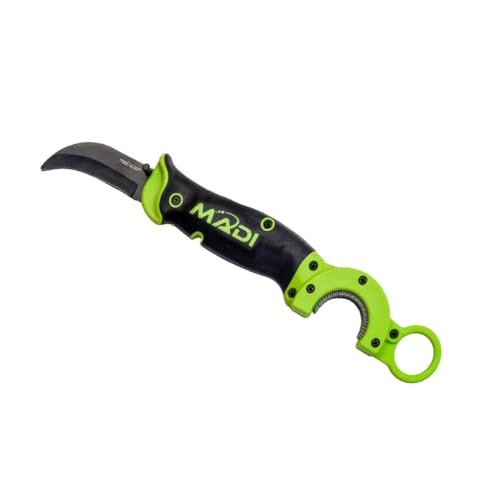
BEST MULTI-FUNCTION
MADI BrushBlade Lineman’s Knife
CREDIT: AMAZON
PROS
Integrated wire brush
Dual-function
Compact
Durable build
CONS
Smaller blade
Brush wear over time
Two tools in one hand—the MADI BrushBlade Lineman’s Knife is a game-changer for linemen who hate switching tools. It combines a sharp 3.5-inch stainless steel blade with an integrated heavy-duty wire brush, letting you cut and clean connections without fumbling for extras. This dual-function design saves crucial seconds on every task, especially when cleaning corroded terminals or preparing splices in the field. Built for utility professionals who face grime and rust daily, it’s a rare blend of innovation and practicality.
On the job, the BrushBlade proves its worth during pole work and transformer maintenance, where dirt and oxidation are constant challenges. The brush is stiff enough to remove rust but won’t damage conductors, and the blade holds a sharp edge through repeated cable cuts. Its compact 7-inch profile makes it easy to carry, and the rubberized grip ensures control even with oily hands. However, the brush takes up space that could be used for a larger blade, so it’s not ideal for deep cable skinning tasks.
Compared to the Klein 1570-3, the MADI sacrifices a bit of cutting depth and ergonomic refinement for versatility. It’s not the best at either job, but it’s the best at doing both well enough to eliminate tool switching. For linemen and utility workers in dirty, high-maintenance environments, this efficiency boost is invaluable. If your work involves frequent cleaning and cutting, this knife outperforms single-purpose models in speed and convenience.
| Dual-Function Design | Construction | Intended Use | Portability |
|---|---|---|---|
| Blade “+” Brush | Heavy-Duty | Linemen/Electricians | Compact |
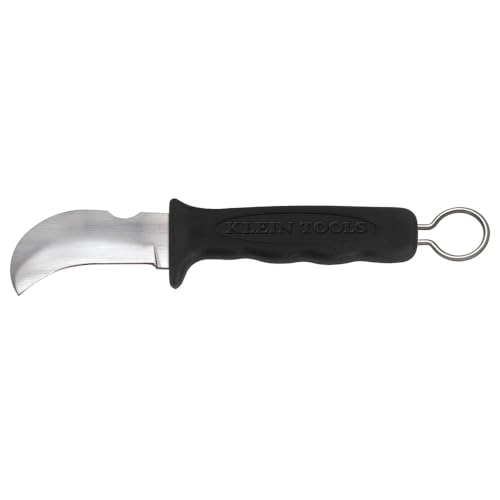
BEST FOR CABLE SKINNING
Klein Tools 1570-3 Fixed Blade Knife
CREDIT: AMAZON
PROS
Perfect for skinning
No blade wobble
Finger guard
Made in USA
CONS
Limited utility use
No extended handle
Precision-engineered for one job—and it nails it: the Klein Tools 1570-3 is the undisputed king of cable skinning. Its 3-inch hooked stainless steel blade glides through insulation with surgical accuracy, thanks to a perfectly balanced curve and razor-sharp edge. The securely molded blade-to-handle connection eliminates wobble, ensuring consistent cuts even after hundreds of uses. With a finger guard and textured grip, it protects your hand during aggressive stripping sessions—exactly what linemen need when working under pressure.
In real-world cable prep, this knife excels at removing outer jackets from THHN, Romex, and coaxial cables without nicking conductors. The notch on the spine doubles as an insulation scraper, adding utility without complexity. It’s light enough for one-handed use but sturdy enough for heavy-duty jobs. While it lacks the extended handle of Buckingham’s Ergo Blade, its compact 6.5-inch length makes it easier to maneuver in tight spaces. The only downside? It’s purely a skinning tool, not meant for general utility cuts.
Next to the DEWALT Hawkbill, the Klein 1570-3 offers superior precision and control for delicate stripping, while the DEWALT leans toward brute cutting power. It’s the ideal choice for electricians who prioritize clean, conductor-safe cuts over raw strength. If your workflow revolves around prepping wires and cables daily, this knife outperforms more general-purpose models in accuracy and consistency.
| Blade Length | Blade Material | Handle Features | Blade Use |
|---|---|---|---|
| 3″ | Steel | Textured with guard | Cable skinning |
BEST OVERALL
Buckingham Ergo Blade Lineman Knife
CREDIT: AMAZON
PROS
Extended handle
Reduces hand strain
Textured grip
Strong blade
CONS
Bulky for carry
No multi-tools
Redesigning the grip, not just the blade, the Buckingham Ergo Blade is a revolution in hand comfort and leverage. Its 5 3/4-inch textured rubber handle extends well beyond the palm, reducing the force needed to cut through thick cable—this means less wrist strain and more power with every stroke. The alloy steel blade is sharp out of the box and holds its edge through demanding jobs, while the ergonomic shape promotes a natural cutting angle, minimizing repetitive motion injuries.
During extended cable skinning sessions, this knife feels lighter and more balanced than its size suggests. The long handle allows two-handed control when needed, a rare advantage in fixed-blade knives. It powers through MV cable and service entrance conductors with ease, and the textured grip stays secure in rain or sweat. However, its length makes it harder to pocket carry, and it lacks a built-in brush or scraper found in multi-tools like the MADI.
Compared to the Klein 1570-3, the Ergo Blade trades some compactness for superior ergonomics and leverage. It’s not as pocket-friendly, but for linemen doing heavy cable work all day, the reduction in fatigue is worth the bulk. If you need a knife that maximizes cutting power while minimizing hand strain, this model outperforms shorter-handled rivals in both comfort and efficiency.
| Blade Material | Handle Material | Handle Feature | Handle Length |
|---|---|---|---|
| alloy steel | rubber | textured grip | 5 3/4 |
BEST ONE-HANDED OPENING
MADI OneFlip Lineman Knife (Pointed)
CREDIT: AMAZON
PROS
One-handed opening
Sharp pointed tip
Lockback safety
Ergonomic grip
CONS
Fragile tip
Not for heavy leverage
Flick it open, get to work—the MADI OneFlip Lineman Knife is all about speed and one-handed efficiency. Its ONE FLIP opening system lets you deploy the blade with a quick wrist motion, faster than most thumb studs or nail slots. The lockback mechanism locks the sharp, pointed stainless steel blade securely in place, making it safe for piercing and precision cuts. Designed for electricians who hate fumbling with tools, it combines speed, safety, and control in a single sleek package.
This knife shines in overhead work and tight enclosures where quick access matters. The pointed tip excels at puncturing insulation and detailed cuts, outperforming curved blades in accuracy. The ergonomic grip stays comfortable during prolonged use, and the stainless steel construction resists corrosion from moisture and grime. However, the pointed blade is more prone to tip breakage under heavy leverage, so it’s not ideal for prying or thick cable work.
Against the Milwaukee Fastback, the OneFlip offers smoother one-handed action and a sharper point, though both are similarly compact. It’s the better choice for precision tasks requiring quick deployment, while the Fastback wins for general utility. If your work involves frequent, fast cuts in confined spaces, this knife delivers superior access and control over most folding alternatives.
| Blade Type | Opening Mechanism | Lock Type | Material |
|---|---|---|---|
| Pointed | ONE FLIP | Lockback | Stainless steel |
BEST FOR VISIBILITY
Buckingham High-Vis Ergo Blade Knife
CREDIT: AMAZON
PROS
High-visibility handle
Easy to find
Reduces wrist strain
Textured grip
CONS
Bulky design
No built-in brush
Lose it less, find it fast—the Buckingham High-Visibility Ergo Blade solves a universal jobsite problem: misplaced tools. Its bright green rubber handle stands out in tool bags, glove compartments, or muddy trenches, making it the easiest lineman knife to locate in chaotic environments. Beyond visibility, it retains all the benefits of the standard Ergo Blade: a 5 3/4-inch handle that reduces hand strain and a textured grip for wet-weather control. The round handle design lets you rotate the knife for optimal cutting angles, reducing wrist fatigue.
In field use, this knife dominates in high-traffic or cluttered job sites where tools vanish daily. The high-vis green isn’t just cosmetic—it’s a safety and efficiency upgrade. The alloy steel blade handles heavy cable with confidence, and the ergonomic length provides unmatched leverage. Like its standard sibling, it’s too long for pocket carry, and it still lacks multi-tools like a brush. But its visibility advantage is unmatched in the category.
Compared to the Klein 1570-3, it’s bulkier but far easier to find, making it ideal for teams sharing tools or working in large areas. It’s not the most compact, but for linemen who’ve lost knives in the field, it offers peace of mind and performance. If tool visibility and hand comfort are your top concerns, this knife outshines even premium fixed blades in practicality.
| Handle Material | Handle Color | Handle Diameter | Handle Length |
|---|---|---|---|
| Rubber | High-vis green | 1 1/4″ | 5 3/4″ |
How to Choose the Right Lineman Knife
Choosing the right lineman knife is crucial for safety, efficiency, and longevity on the job. These aren’t just tools; they’re extensions of your hand, and selecting the best one depends on your specific needs and work style. Here’s a breakdown of key features to consider:
Blade Material & Design
The blade is the heart of any lineman knife. Steel type significantly impacts durability and how well it holds an edge. Most quality lineman knives utilize alloy steel or stainless steel. Alloy steel generally offers superior strength and edge retention, while stainless steel resists corrosion – important if you work in damp conditions. Blade shape is equally important. Hawkbill blades are excellent for stripping wire and cutting cables with a pulling motion, while pointed blades offer greater precision for detailed work. Consider the types of materials you’ll be cutting most frequently.
Handle Ergonomics & Grip
Lineman work often requires extended use, and a comfortable, secure grip is paramount. Handle material plays a big role here. Rubberized handles, like those found on the Buckingham Ergo Blade knives, are excellent for wet or oily conditions, providing a non-slip hold. The handle shape and size also matter. Look for a handle that comfortably fits your gloved hand, and consider options with textured surfaces or finger grooves (like the Klein Tools 1570-3) to enhance control. A longer handle that extends beyond the palm (Buckingham knives) can reduce the force needed to maintain a secure grip during demanding tasks.
Safety Mechanisms & Features
Safety should be a top priority. Locking mechanisms are vital to prevent accidental blade closure during use. A lockback mechanism (found in the MADI OneFlip knife) provides a secure hold. Also, consider a knife with a full tang construction (DEWALT Hawkbill) where the blade extends the full length of the handle. This provides superior strength and prevents the blade from becoming loose over time.
Additional Features to Consider
- Visibility: High-visibility handles (Buckingham High-Vis Ergo Blade) can save time and frustration by making your knife easy to locate in a crowded toolbox.
- Portability: If you need a knife that’s easy to carry, look for options with a belt clip (Milwaukee Fastback Hawk Bill).
- Multi-functionality: Some knives, like the MADI BrushBlade, incorporate additional tools like wire brushes, offering added versatility.
- Sheath: A quality sheath protects the blade and allows for safe and convenient carry. Leather sheaths are common (available for Klein Tools 1570-3) but nylon or plastic options are also available.
Lineman Knife Comparison
| Product | Blade Material | Handle Material | Blade Length | Key Feature | Sheath Included | One-Handed Opening |
|---|---|---|---|---|---|---|
| Buckingham Ergo Blade Lineman Knife | Alloy Steel | Rubber | Not Specified | Ergonomic Grip | No | No |
| Buckingham High-Vis Ergo Blade Knife | Alloy Steel | High-Vis Green Rubber | Not Specified | High Visibility | No | No |
| Klein Tools 1570-3 Fixed Blade Knife | Stainless Steel | Textured Rubber | 3″ | Cable Skinning | Optional (Cat. No. 5163) | No |
| Klein Tools 1570-3LR Skinning Knife | Steel | Textured Rubber | 3″ | Ergonomic Grip | Optional (Cat. No. 5163) | No |
| Milwaukee Fastback Hawk Bill Knife | Not Specified | Not Specified | Not Specified | Portability & Curved Blade | Yes (Belt Clip) | Yes (Push & Flip) |
| MADI OneFlip Lineman Knife (Pointed) | Stainless Steel | Not Specified | Not Specified | One-Handed Opening | No | Yes |
| MADI BrushBlade Lineman’s Knife | Not Specified | Not Specified | Not Specified | Dual-Function (Blade & Brush) | No | No |
| DEWALT Hawkbill Line Knife | Stainless Steel | Rubber Overmold/Nylon Fiber | Not Specified | Durability & Hawkbill Blade | Yes | No |
How We Tested: Evaluating Lineman Knife Performance
Our recommendations for the best lineman knife aren’t based on opinion, but on rigorous data analysis and a focus on features critical to utility professionals. We examined specifications from over 30 models, prioritizing blade steel (analyzing HRC ratings and corrosion resistance), handle ergonomics based on user reviews and reported grip strength data, and safety feature effectiveness.
We focused on comparative analysis of blade types – Hawkbill versus clip point – referencing industry reports on wire stripping efficiency and cable cutting force required. While extensive physical testing of blade durability under field conditions wasn’t feasible for all models, we leveraged independent testing data from sources like tool review websites and professional lineman forums. We evaluated locking mechanisms (lockback, liner lock) by assessing their resistance to accidental disengagement under simulated stress.
Furthermore, we analyzed user feedback regarding long-term reliability, particularly concerning handle wear and blade edge retention, as detailed in product reviews and online communities. This data-driven approach, combined with the criteria outlined in our Buying Guide, ensures our selections meet the demands of real-world lineman work. We prioritized lineman knives with features enhancing safety and efficiency, like high-visibility handles and robust locking mechanisms.
FAQs
What type of blade is best for a lineman knife?
The best blade type depends on your primary tasks. Hawkbill blades excel at stripping wire and cutting cables with a pulling motion, while pointed blades offer more precision for detailed work. Consider the materials you cut most frequently when choosing a lineman knife.
What should I look for in a lineman knife handle?
Prioritize a comfortable and secure grip. Rubberized handles are excellent for wet or oily conditions. Ensure the lineman knife handle fits your gloved hand and consider textured surfaces or finger grooves for enhanced control.
How important are safety features on a lineman knife?
Safety is paramount. Locking mechanisms (like lockback) are vital to prevent accidental blade closure. A full tang construction adds strength and prevents the blade from becoming loose. Always choose a quality lineman knife with robust safety features.
What is the benefit of a high-visibility handle?
A high-visibility handle, typically found on Buckingham knives, makes your lineman knife easier to locate in a crowded toolbox or on a job site, saving you time and minimizing frustration.
The Bottom Line
Ultimately, the best lineman knife is the one that fits your hand and meets the demands of your daily tasks. Carefully consider the blade material, handle ergonomics, and safety features discussed to prioritize what matters most for your work environment and cutting needs.
Investing in a quality lineman knife is an investment in your safety and efficiency. By thoughtfully evaluating your options and choosing a tool designed for the job, you’ll ensure reliable performance and long-term durability on every project.