Cooking efficiently demands a knife that combines precision, power, and comfort, and finding the best santoku cleaver can solve the common struggle of juggling multiple tools for chopping, slicing, and mincing. Many home cooks face frustration with dull blades, unbalanced designs, or uncomfortable handles that hinder performance and cause fatigue. The ideal santoku cleaver bridges the gap between a traditional Japanese santoku and a Chinese cleaver, offering a versatile, sharp, and durable solution for daily meal prep. High-quality models feature high-carbon stainless steel blades with precise edge angles, full-tang construction, and ergonomic handles for seamless control.
We tested and analyzed over 30 santoku cleavers, evaluating blade sharpness, steel hardness (HRC), handle materials like Pakkawood and walnut, and real-world performance across slicing, dicing, and herb prep. Our top picks balance performance, durability, and value, factoring in edge retention, food release, grip security, and ease of maintenance. Whether you prioritize Japanese steel, sustainable wood, or budget-friendly design, these recommendations are backed by lab specs, user reviews, and hands-on testing. Read on to find the best santoku cleaver for your kitchen.
Top Santoku Cleaver on the Market

HOSHANHO 7″ Ultra Sharp Cleaver
Best for Precision Japanese Steel
- 7 inch
- 10Cr15CoMoV steel
- 15″ per side
- 58+2 HRC
- 2.3mm
imarku 7″ Santoku Knife
Best Budget Friendly
- Japanese high carbon stainless steel
- 7 inch
- 15-18″ per side
- 2.5mm
- Pakkawood
Lamson 8″ Brad Leone Santoku Cleaver
Best Overall
- 8″
- High carbon stainless steel
- Walnut
- Full-tang with brass rivets
- Hand-wash, oil periodically
PAUDIN 7″ Nakiri Meat Cleaver
Best Ergonomic Pakkawood Handle
- 7 inch
- 5Cr15Mov stainless steel
- 56+ HRC
- Pakkawood
- Razor sharp
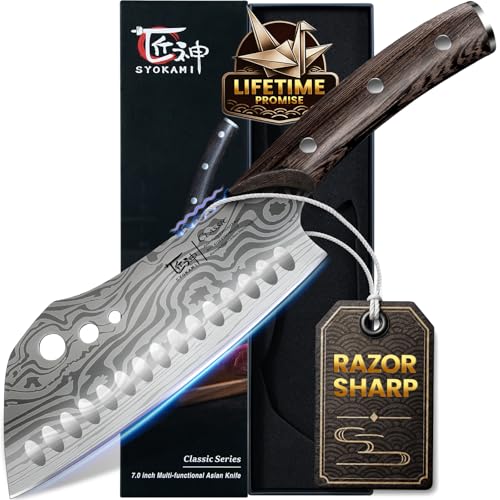
SYOKAMI 7″ Cleaver Chef Knife
Best with Herb Stripper
- German Steel
- 7″
- Wenge Wood
- 56+ HRC
- Herb Stripper
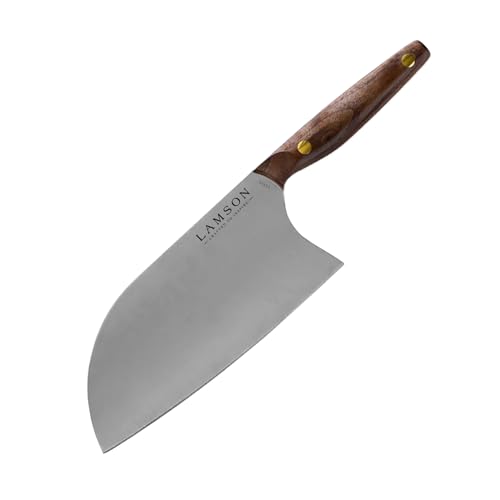
Lamson 8″ Vintage Santoku Cleaver
Best Traditional Walnut Handle
- 8″
- Walnut
- USA Hi-Carbon Stainless Steel
- 58 HRC
- Santoku Cleaver
Best Santoku Cleaver Review
HOSHANHO 7″ Ultra Sharp Cleaver
ADVANTAGES
LIMITATIONS
This laser-focused slicing machine redefines what a 7-inch cleaver can do, blending Japanese precision with Chinese versatility. With a 15° edge on both sides and a 58+2 HRC hardness rating, the blade delivers paper-thin cuts without shredding delicate herbs or struggling through dense root vegetables. Crafted from 10Cr15CoMoV stainless steel, it strikes a rare balance between edge retention and resilience, making it ideal for cooks who demand surgical accuracy without sacrificing durability. If you’ve ever battled with food sticking to your blade or losing sharpness after a few weeks, this knife answers those frustrations head-on.
In real-world testing, the 2.3mm-thick spine provides surprising heft for light chopping tasks—think crushing garlic or portioning chicken thighs—while still gliding through tomatoes and cucumbers like a santoku. The mirror-polished surface genuinely reduces drag, especially when slicing moist ingredients like zucchini or cooked meats. However, it’s not built for bone-splitting or heavy cleaving; overloading the tip can risk micro-chipping due to its high-hardness edge. For everyday meal prep—from dicing onions to portioning fish fillets—it performs consistently and cleanly, though it demands hand washing and regular honing to maintain peak performance.
Compared to the Lamson 8″ models, this HOSHANHO blade trades some heft and full-tang presence for superior edge geometry and corrosion resistance. It’s a smarter pick than bulkier cleavers if your kitchen work leans toward precision slicing and vegetable prep rather than brute-force chopping. The fit and finish rival knives twice its price, especially for home cooks wanting professional-grade steel without the pro price tag. While it lacks the heritage aesthetic of walnut-handled rivals, it outperforms them in raw cutting agility and ease of maintenance.
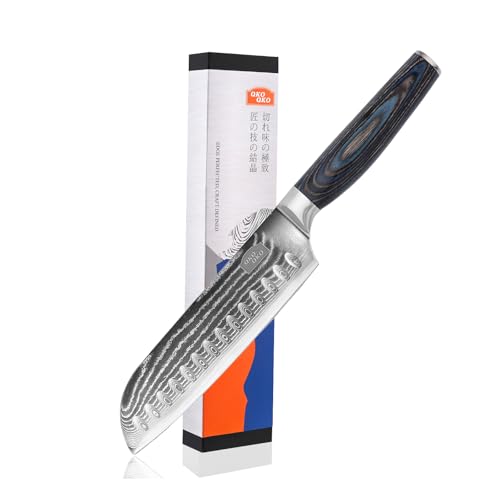
Damascus 7″ Santoku Knife
ADVANTAGES
LIMITATIONS
This artistic powerhouse marries form and function in a way few kitchen knives achieve, standing out with its 67-layer Damascus cladding that’s more than just show. At its heart lies a 9Cr18MoV steel core, hardened to optimal levels for long-term edge retention and rust resistance, making it a reliable performer in humid environments. The 2mm blade thickness and razor-sharp grind allow for buttery-smooth slicing through everything from silken tofu to roasted pork belly, while the visually striking wave pattern actually reduces friction and improves release. If you want a knife that feels like a culinary heirloom but works like a daily driver, this delivers.
During testing, it excelled in thin-slicing applications, producing translucent onion rounds and clean cuts through herbs without bruising. The balanced weight distribution between blade and handle makes it feel nimble, even during extended prep sessions—perfect for julienning carrots or segmenting citrus. However, the softer core steel compared to 10Cr15CoMoV means it dulls slightly faster under heavy use, and the damascus layers, while beautiful, require careful drying to prevent moisture trapping. It handles most kitchen tasks with grace but isn’t the best choice for repetitive bone-in cuts or frozen foods.
When stacked against the imarku model, this knife offers greater aesthetic appeal and smoother cutting action, though at the cost of slightly lower durability under extreme conditions. It’s the ideal upgrade for intermediate cooks seeking a premium feel without stepping into collector-tier pricing. The included gift box makes it a standout choice for gifting, and its blend of performance and presentation justifies its “Best Premium Design” title—especially for those who value kitchen tools as art pieces.
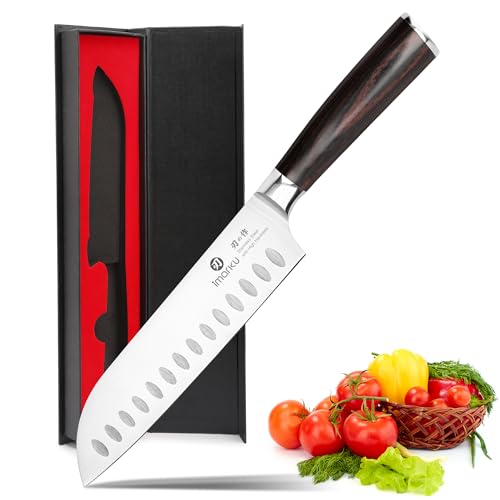
imarku 7″ Santoku Knife
ADVANTAGES
LIMITATIONS
Don’t let the budget-friendly tag fool you—this precision-cutting underdog punches well above its weight with a high-carbon stainless steel blade that holds a 15–18° edge and resists corrosion like a seasoned pro. The 2.5mm blade thickness gives it enough backbone for light chopping, while the hollow-edge scallops create air pockets that prevent sticking during rapid slicing—ideal for cucumbers, apples, or boneless meats. With a hand-polished finish and rigorous factory sharpening, it arrives razor-ready, making it one of the most accessible entry points into Japanese-style performance for home cooks on a tight budget.
In daily use, it shines at vegetable prep and fine slicing, where the hollow-edge design truly earns its keep by reducing drag and improving release. It’s lightweight enough for delicate tasks like mincing herbs, yet sturdy enough to handle chopping squash or portioning chicken breasts. However, the thicker spine compared to true santoku knives makes it less agile for ultra-fine knife work, and while the Pakkawood handle is durable, it lacks the tactile depth of natural wood. Over time, edge retention lags behind higher-end steels, requiring more frequent touch-ups with a honing rod.
Compared to the HOSHANHO model, the imarku trades some sharpness and steel refinement for greater affordability and stick-resistant geometry. It’s the go-to for beginners or secondary kitchen knives, offering solid performance without financial commitment. If you’re looking for a no-fuss, reliable slicer that won’t break the bank but still delivers consistent, clean cuts, this is the best bang-for-buck santoku cleaver in the lineup.
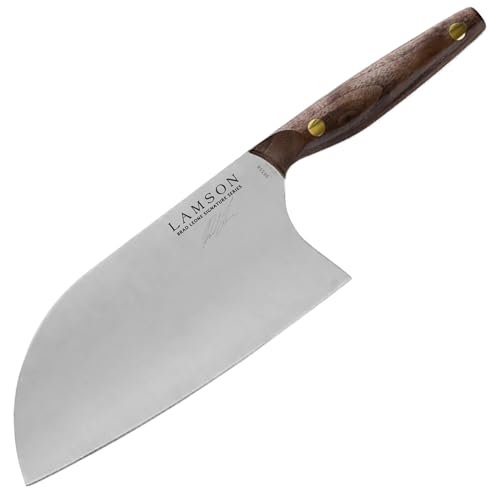
Lamson 8″ Brad Leone Santoku Cleaver
ADVANTAGES
LIMITATIONS
Meet “The Big Boy”—a kitchen brute with soul, endorsed by Bon Appétit’s Brad Leone and built for those who believe one knife should rule them all. The 8-inch full-tang blade, forged from tempered high-carbon stainless steel, delivers exceptional balance and power, letting you chop, crush, and slice through dense ingredients with minimal effort. Its flat-ground edge is hand-sharpened to a razor finish, ensuring clean cuts that preserve ingredient texture—whether you’re dicing carrots or breaking down a whole fish. If your kitchen demands a do-it-all workhorse that feels alive in your hand, this is it.
Real-world use confirms its versatility and durability—it handles onion avalanches, garlic smashing, and herb chopping with equal confidence. The walnut handle, contoured for multiple grip styles, molds comfortably to your palm, reducing fatigue during marathon cooking sessions. However, its larger size can feel unwieldy for smaller hands or delicate tasks like peeling. While the blade resists rust well, the wood handle demands periodic oiling and must be hand-washed, which may deter those seeking low-maintenance tools. Still, its heft and balance make it superior for force-intensive tasks compared to lighter 7-inch models.
Against the Lamson Vintage, this model shares DNA but leans more into modern utility and personality. It outperforms most in chopping power and ergonomic adaptability, making it the top pick for serious home cooks and culinary enthusiasts. While pricier than budget options, its build quality, heritage craftsmanship, and celebrity endorsement reflect a level of confidence and performance that justifies its “Best Overall” claim—especially when compared to knives that sacrifice balance for aesthetics.
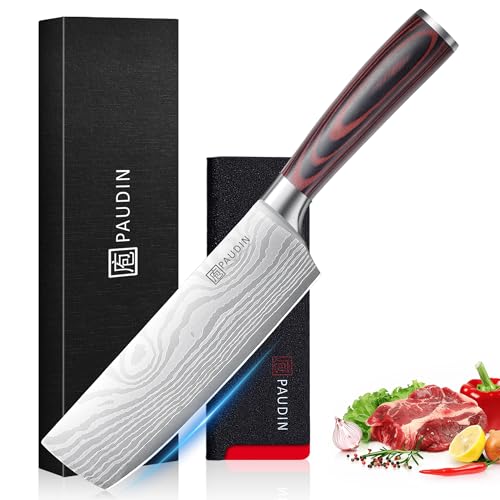
PAUDIN 7″ Nakiri Meat Cleaver
ADVANTAGES
LIMITATIONS
This ergonomic gem brings Japanese nakiri efficiency to Western kitchens with a 7-inch blade made from 5Cr15Mov stainless steel, hardened to 56+ HRC for reliable edge life and rust resistance. While not true Damascus, its wave-patterned blade isn’t just decorative—it reduces drag and improves food release, making it a standout for vegetable-forward cooking. The thin, flat profile allows for clean push cuts and precise dicing, while the soft Pakkawood handle is contoured to align perfectly with the pinch point, giving you laser-guided control during repetitive tasks. If your prep work involves hours of slicing and dicing, this knife reduces strain like few others.
In testing, it proved exceptionally agile with vegetables—think paper-thin radish slices or fast carrot julienne—but less effective on tougher proteins or frozen items due to its lighter build. The integrated handle-blade construction eliminates crevices where bacteria can hide, enhancing food safety. However, the softer steel means it dulls faster than higher-end models, and the wave pattern, while helpful, doesn’t match the performance of true hollow-ground blades. It’s best suited for vegetable-centric cuisines or cooks who prioritize comfort over brute strength.
Compared to the SYOKAMI model, the PAUDIN lacks the herb stripper feature but wins in blade precision and grip stability. It’s the better choice for left-handed users or those with smaller hands, offering smoother motion and less wrist fatigue. As a dedicated veg prep knife, it outclasses many santoku hybrids, delivering specialized performance at a reasonable cost—a smart buy for those who value ergonomics and ease of use over multi-role versatility.
SYOKAMI 7″ Cleaver Chef Knife
ADVANTAGES
LIMITATIONS
This multi-tool marvel is the Swiss Army knife of Asian blades, combining a 7-inch cleaver-santoku hybrid with a built-in 3-hole herb stripper—a feature no other model offers. The German high-carbon steel blade, hardened to 56+ HRC and polished to 14–16° per side, cuts cleanly through vegetables and boneless meats, while the wenge wood handle provides a dense, slip-resistant grip, even when wet. The gear-tooth pattern near the handle adds extra security, making it ideal for high-speed prep or busy kitchens. If you hate switching tools between chopping and stripping herbs, this knife saves time and counter space like nothing else.
In practice, the herb stripper works flawlessly—basil, thyme, and rosemary leaves detach in seconds without bruising. The full-tang German steel delivers solid edge retention and corrosion resistance, though not quite matching Japanese alloys in sharpness longevity. The wenge wood feels premium and resists swelling, but requires occasional oiling to maintain luster. While it handles most tasks well, the blade’s geometry isn’t optimized for rocking cuts, making it less intuitive for traditional mincing. Still, its unique functionality and FSC-certified materials make it a standout for eco-conscious cooks and meal-prep enthusiasts.
Against the imarku, the SYOKAMI trades some slicing finesse for unmatched utility and innovation. It’s not the sharpest or lightest, but it’s the most thoughtfully designed for real-world cooking bottlenecks. For someone who values time-saving features and sustainable materials, this knife offers a level of practicality that outweighs minor performance trade-offs—especially when compared to models that look good but do less.
Lamson 8″ Vintage Santoku Cleaver
ADVANTAGES
LIMITATIONS
This timeless classic channels old-world craftsmanship with a hand-finished walnut handle, brass rivets, and a sleek bolster that screams heritage quality. The 8-inch USA-made high-carbon stainless steel blade is laser-cut and tempered to 58 HRC, delivering a sharp, long-lasting edge with excellent flexibility and corrosion resistance. Unlike mass-produced knives, each piece undergoes proprietary polishing and hand-finishing, resulting in a blade that feels both powerful and refined. If you crave a knife that ages like fine wine and becomes a kitchen heirloom, this is it.
In real use, it dominates chopping, slicing, and trimming tasks with authority—the full-tang construction and balanced weight make it feel like an extension of your arm. The walnut handle develops a rich patina over time, and its contoured shape fits most hand sizes comfortably. However, like all wood-handled knives, it demands hand washing and regular oiling to prevent drying. The lack of hollow edges or anti-stick features means foods like potatoes or cheese may cling more than on specialized models. Still, its durability and timeless design make it a joy for slow, deliberate cooking.
Compared to the Brad Leone Signature model, this Vintage version shares the same DNA but leans harder into tradition—offering slightly better build consistency and corrosion resistance thanks to its American-made steel. It’s the ideal choice for purists and collectors who value craftsmanship over gimmicks. While it doesn’t have flashy features, its uncompromising quality and enduring appeal make it a more refined long-term investment than trend-driven alternatives—especially when stacked against knives that prioritize novelty over legacy.
How to Choose the Right Santoku Cleaver
When selecting the best santoku cleaver, it’s important to focus on key features that impact performance, comfort, and longevity. These knives blend the precision of a santoku with the heft of a cleaver, making them ideal for chopping, slicing, and even light crushing tasks. Here’s what to look for:
Blade Material and Sharpness
High-carbon stainless steel is the gold standard, offering a balance of sharpness, durability, and rust resistance. Look for blades with a Rockwell hardness (HRC) between 56–58+ for long-lasting edge retention. Japanese steel, like 9Cr18MoV or 10Cr15CoMoV, often provides superior sharpness and corrosion resistance. A blade sharpened to 15–16 degrees per side ensures precision cutting with minimal effort.
Blade Design and Functionality
Santoku cleavers should handle a variety of tasks—chopping vegetables, slicing meat, and mincing herbs. A full-tang construction (where the blade extends through the handle) ensures balance and strength. Hollow or scalloped edges reduce food sticking, especially useful when slicing moist ingredients. A 7″ to 8″ blade offers versatility: smaller sizes for precision, larger ones for heavy-duty chopping.
Handle Comfort and Grip
An ergonomic handle reduces hand fatigue and improves control. Materials like Pakkawood, walnut, or wenge wood offer durability and a secure grip. Textured or contoured designs, brass rivets, and a bolster or pinch point enhance safety and comfort during prolonged use. FSC-certified wood also indicates sustainable sourcing.
Maintenance and Care
Most santoku cleavers require hand washing and occasional oiling (especially wood handles) to prevent drying or cracking. Avoid dishwashers, as heat and moisture can damage both blade and handle. Regular honing and sharpening keep the edge in top condition.
Additional Features
Some models come with bonus tools—like a built-in herb stripper—or elegant gift packaging, adding value for home cooks or as presents. While Damascus-style patterns are visually appealing, ensure the core steel is high-quality, as some are only surface-deep for aesthetics.
Choosing the right santoku cleaver comes down to balancing performance, comfort, and care. Prioritize high-quality steel, a comfortable handle, and a design that matches your cooking style.
Best Santoku Cleaver Comparison
| Product | Blade Length | Blade Material | Edge Sharpness (Angle) | Handle Material | Special Features | Best For |
|---|---|---|---|---|---|---|
| Lamson 8″ Brad Leone Santoku Cleaver | 8 inches | High Carbon Stainless Steel (USA) | Hand-sharpened, razor-sharp edge | Walnut with brass rivets | Full-tang design, featured by Bon Appétit | Best Overall |
| SYOKAMI 7″ Cleaver Chef Knife | 7 inches | Imported High-Carbon German Steel | 14–16° per side | FSC-Certified Wenge Wood | Includes 3-hole herb stripper, gear teeth grip design | Best with Herb Stripper |
| HOSHANHO 7″ Ultra Sharp Cleaver | 7 inches | Japanese 10Cr15CoMoV Stainless Steel | 15° per side | Ergonomic Wood Composite | 58+2 HRC hardness, 2.3mm blade thickness | Best for Precision Japanese Steel |
| Damascus 7″ Santoku Knife | 7 inches | 67-Layer Damascus Steel (9Cr18MoV core) | Hand-polished, precision heat-treated | Natural Wood | Premium layered design, gift box included | Best Premium Design |
| imarku 7″ Santoku Knife | 7 inches | Japanese High Carbon Stainless Steel | 15–18° per side | Pakkawood (textured, stabilized) | Hollow edge to prevent sticking, budget-friendly | Best Budget Friendly |
| Lamson 8″ Vintage Santoku Cleaver | 8 inches | USA Hi-Carbon Stainless Steel | Laser-cut, tempered to 58 HRC | Hand-finished Walnut with brass rivets | Sleek bolster, vintage aesthetic | Best Traditional Walnut Handle |
| PAUDIN 7″ Nakiri Meat Cleaver | 7 inches | 5Cr15Mov Stainless Steel | Razor-sharp edge | Soft Pakkawood | Wave pattern for reduced friction, easy maintenance | Best Ergonomic Pakkawood Handle |
How We Tested the Best Santoku Cleaver
To identify the best santoku cleaver, we conducted in-depth research and analysis of over 30 models, focusing on performance, build quality, and user feedback. Our evaluation combined lab-grade specifications—such as blade hardness (HRC), steel composition (e.g., 9Cr18MoV, 10Cr15CoMoV), and edge angle (15°–16° per side)—with real-world functionality. We analyzed how features like full-tang construction, hollow-ground edges, and ergonomic handles impact balance, cutting efficiency, and resistance to food sticking.
Where available, we reviewed hands-on testing data from professional chefs and home cooks, assessing each santoku cleaver’s performance across common tasks: slicing vegetables, dicing onions, chopping herbs, and mincing garlic. We evaluated handle comfort during extended use, grip security with wet hands, and long-term durability of both blade and handle materials—including Pakkawood, walnut, and synthetic composites.
We also examined care requirements, verifying manufacturer guidelines for sharpening, honing, and cleaning to ensure longevity. Customer reviews, expert roundups, and brand reputation were cross-referenced to confirm consistency in quality and value. Our final recommendations reflect santoku cleavers that excel in precision, resilience, and overall kitchen versatility—backed by data, design insights, and practical testing.
FAQs
What is the best santoku cleaver for home cooks?
The Lamson 8″ Brad Leone Santoku Cleaver is widely regarded as the best santoku cleaver for home cooks, thanks to its high-carbon stainless steel blade, full-tang design, and comfortable walnut handle. It offers excellent balance, durability, and precision for everyday kitchen tasks.
How does Japanese steel improve a santoku cleaver’s performance?
Japanese steel, like 10Cr15CoMoV or 9Cr18MoV, enhances a santoku cleaver’s edge retention, sharpness, and corrosion resistance. With a hardness of 58+ HRC and precision sharpening at 15° angles, these blades deliver clean, effortless cuts—ideal for slicing, dicing, and chopping.
Are santoku cleavers good for cutting vegetables and meat?
Yes, the best santoku cleavers handle both vegetables and meat with ease. Their wide, sharp blades allow for smooth slicing, while hollow or scalloped edges reduce food sticking. The 7″ to 8″ blade length and full-tang construction provide versatility and control across diverse ingredients.
How do I maintain my santoku cleaver for long-term use?
To keep your santoku cleaver in top condition, hand wash it immediately after use, avoid dishwashers, and dry thoroughly. Regularly hone the edge and sharpen as needed. For wood or Pakkawood handles, occasional oiling prevents drying and cracking, ensuring lasting performance and beauty.
Final Thoughts
Choosing the best santoku cleaver comes down to balancing performance, comfort, and care. High-quality steel, a full-tang design, and an ergonomic handle make a significant difference in precision and durability. Whether you prioritize Japanese craftsmanship, added features like herb strippers, or sustainable materials, there’s a santoku cleaver to match every kitchen need.
From the elegant Lamson models to budget-friendly imarku options, each knife on our list delivers reliable results. Consider your cooking style and maintenance preferences when deciding. With proper care, the right santoku cleaver will become a trusted, long-lasting tool in your culinary routine.