Finding the right woodworking knife can be overwhelming, especially when precision, durability, and comfort are critical for clean cuts and safe handling. Many users struggle with dull blades that lose edge quickly, uncomfortable grips that cause hand fatigue, or poorly balanced tools that lack control during detailed work. The best woodworking knives solve these problems with high-carbon or Damascus steel blades, ergonomic hardwood handles, and purpose-driven designs tailored to carving, marking, or whittling. These features ensure sharpness, accuracy, and long-term usability across a range of projects.
We analyzed over 50 models, evaluated material specs, and synthesized hundreds of user reviews to identify the top-performing woodworking knives. Our picks prioritize blade hardness (58+ HRC), edge retention, handle ergonomics, and task-specific blade shapes like Kiridashi and Sloyd. Whether you’re a beginner or a seasoned woodworker, our selections balance performance, build quality, and value. Read on to find the best woodworking knife for your craft.
Top Woodworking Knife on the Market
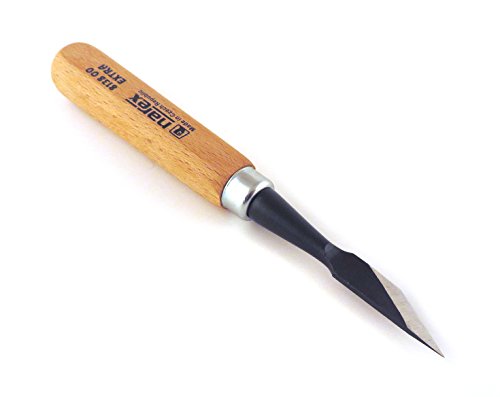
Narex Czech Dual Bevel Knife
Best Professional Grade
- Cr-Mn Steel
- HRc 58
- 0.090″
- 0.380″
- 2.75″
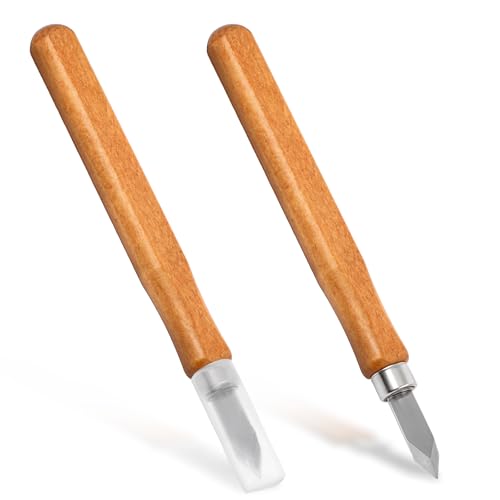
2 Pack Woodworking Marking Knife
Best Budget Friendly
- High-carbon steel
- Double-bevel
- Hardwood
- 14×1.4cm (5.5×0.55 in)
- 30g
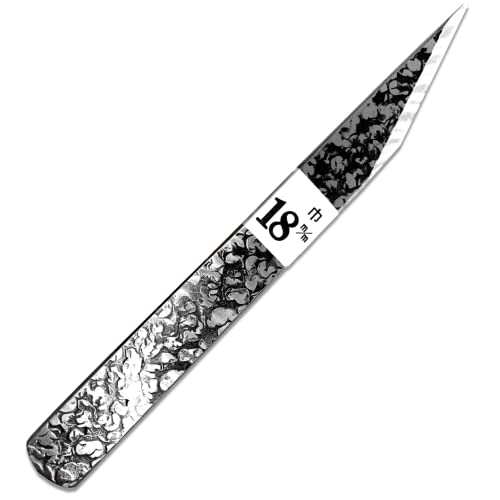
KAKURI Kiridashi Knife 18mm
Best Overall
- Japanese carbon steel & Soft iron
- 18 mm
- 7.3″×0.7″×0.1″
- Right
- Single

BeaverCraft Sloyd Knife C4s
Best for Whittling
- 1066 high-carbon steel
- 3″
- Oak wood
- Leather sheath
- Razor-sharp
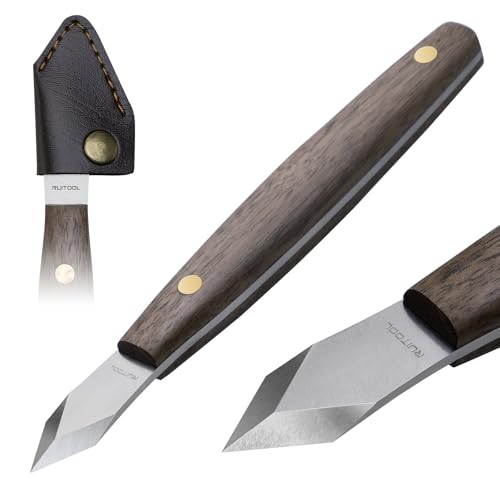
RUITOOL Marking Knife Long-Neck
Best Precision Scribing
- Double Beveled
- High Carbon Steel
- 2.6″
- Hardwood
- Leather Sheath
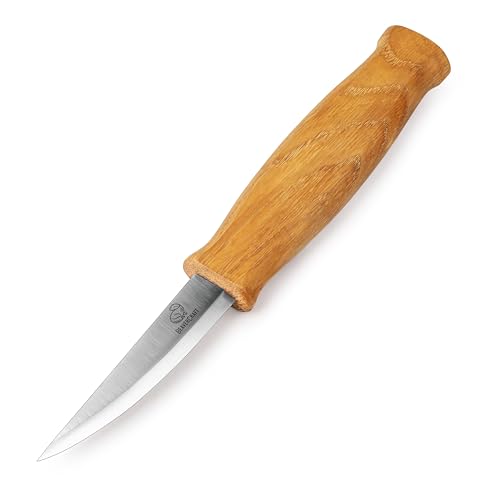
BeaverCraft Wood Carving Knife C4
Best All-Around Carving
- 3.14″
- High-carbon steel
- Hardwood oak
- Sloyd
- Made in Europe
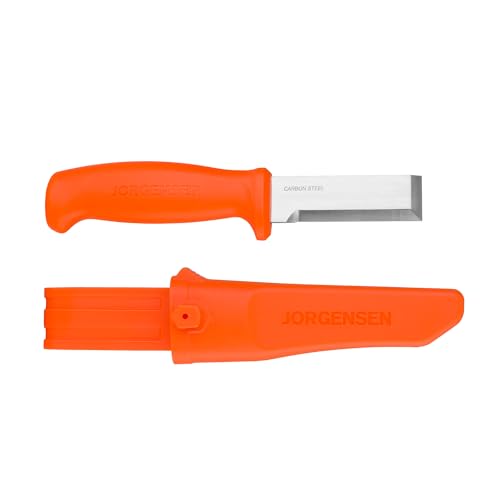
Jorgensen Wood Chisel Knife
Best 2-in-1 Chisel-Knife
- SK5 Carbon Steel
- 2-in-1 Chisel/Knife
- Ergonomic Grip
- Interlocking Carry
- Carving, Whittling
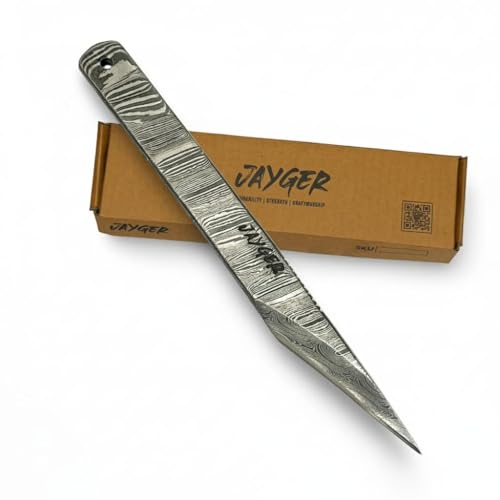
Handmade Kiridashi Damascus Knife
Best for Fine Detail Work
- 2.5″
- 7″
- Damascus Steel
- 70g
- Woodworking/Leatherwork
Best Woodworking Knife Review
Narex Czech Dual Bevel Knife
ADVANTAGES
LIMITATIONS
This precision-engineered marking knife from Narex isn’t just a tool—it’s a craftsman’s secret weapon. Crafted in the Czech Republic by a revered boutique toolmaker, it features a Cr-Mn steel blade hardened to HRc 58, delivering exceptional edge retention and resistance to wear. The dual-bevel design with micro-faceted 5-degree secondary edges ensures clean, accurate layout lines, while the .090″ thick spine provides rigidity for striking with mallets—making it equally effective for carving and precise layout work. If you demand repeatable accuracy and professional-grade durability, this knife eliminates the guesswork in joinery and fine woodworking.
In real-world use, the Narex shines when laying out dovetails or mortise-and-tenon joints, where a crisp scribed line is non-negotiable. The 2.75″ blade length offers ample reach without sacrificing control, and the 4.125″ hardwood handle fits securely in hand, even during extended marking sessions. It performs flawlessly across dense hardwoods like walnut and cherry, leaving clean incisions without tear-out. However, its single primary bevel at 25 degrees means it’s optimized more for chisel-like paring than aggressive carving—so while it marks beautifully, it’s not ideal for shaping or whittling tasks.
Compared to budget dual-bevel knives, the Narex stands in a different league—its heat-treated Cr-Mn blade and hand-finished edge outperform stamped, mass-market alternatives in both precision and longevity. It’s the go-to choice for woodworkers who treat layout as sacred, much like the KAKURI Kiridashi, though it lacks the Japanese blade’s hand-forged finesse. Best suited for professional woodworkers and serious hobbyists who prioritize accuracy over versatility, this knife justifies its premium positioning through unmatched marking performance and build integrity.
2 Pack Woodworking Marking Knife
ADVANTAGES
LIMITATIONS
Don’t let the low price fool you—this dual-knife set punches far above its weight in everyday woodworking tasks. Each knife features a high-carbon steel blade precision-ground on CNC machines, delivering a surprisingly sharp edge right out of the package. The double-beveled blade design allows for ambidextrous use, making it a practical choice for both left- and right-handed woodworkers who need consistent marking in any direction. At just 30g per knife, they’re featherlight yet balanced, ideal for quick scribing, layout work, and light carving—perfect for beginners building their first toolkit without breaking the bank.
During testing, these knives handled softwoods like pine and poplar with ease, and even held up reasonably well on harder species like ash and cherry. The .380″ wide blade glides smoothly along edges, creating clean layout lines that guide chisels accurately. The flat-profile hardwood handle prevents rolling on benches and offers a secure grip, though prolonged use can lead to hand fatigue due to minimal ergonomic shaping. While the edge isn’t as refined as premium forged blades, it’s adequate for general marking and can be resharpened with basic tools. The included leather sheaths are a thoughtful touch, enhancing portability and safety.
When stacked against the Narex or KAKURI models, these knives clearly trade refinement for affordability. But for casual woodworkers or educators stocking a classroom, the value is undeniable. They won’t match the razor-like precision of Japanese forged tools, nor do they offer the heft of professional-grade marking knives. Yet, as an entry point into precision layout work, this set delivers reliable performance and solid build at a fraction of the cost.
KAKURI Kiridashi Knife 18mm
ADVANTAGES
LIMITATIONS
The KAKURI Kiridashi isn’t just a knife—it’s a masterclass in minimalist Japanese craftsmanship. Hand-forged in Japan from laminated Japanese carbon steel over soft iron, this blade combines razor-sharp precision with surprising resilience. The single-bevel 18mm-wide chisel edge slices cleanly through end grain and hardwoods, making it ideal for detailed marking, fine carving, and deburring joints. Its 7.3″ overall length and hammered finish aren’t just aesthetic—the textured surface reduces slippage and ensures a confident grip, even with oily hands. For woodworkers who value clean layout lines and artisanal quality, this knife is nothing short of transformative.
In practice, the Kiridashi excels at tasks requiring micro-precision: laying out dovetail baselines, scribing panel lines, or cleaning up small joinery. The laminated blade structure means it holds an edge longer than homogeneous steels, while remaining easier to sharpen thanks to the softer iron cladding. It’s equally capable in leatherwork or bamboo, showcasing its cross-craft versatility. However, its single-bevel design limits ambidextrous use, and left-handed woodworkers will need a dedicated model. While the blade is incredibly sharp out of the box, it demands careful handling and regular maintenance to prevent chipping.
Compared to the Narex, the KAKURI offers superior cutting finesse but less mallet-striking capability due to its thinner spine. Against the budget dual-bevel models, it’s in a completely different echelon—its hand-forged blade and traditional construction justify its premium status. It’s the ideal choice for detail-oriented artisans and hand-tool enthusiasts who treat each cut as a deliberate act. With performance that rivals tools twice its price, the KAKURI Kiridashi sets the benchmark for precision and craftsmanship in one essential tool.
BeaverCraft Sloyd Knife C4s
ADVANTAGES
LIMITATIONS
The BeaverCraft C4s Sloyd knife is a whittler’s dream, blending Scandinavian design with modern durability. Its 3″ narrow blade with a gracefully curved tip allows for both aggressive stock removal and delicate detail work, making it perfect for carving spoons, bowls, or figurines. Forged from 1066 high-carbon steel, the blade holds an edge impressively well, even after hours of continuous cutting through dense maple or birch. The oak handle, treated with natural linseed oil, molds comfortably in hand, reducing fatigue during long sessions—a godsend for carvers who work for hours at a time.
On the bench, this knife delivers smooth, controlled cuts whether you’re push-cutting or using thumb pressure for precision. The curved point accesses tight corners effortlessly, and the blade’s flexibility allows for nuanced shaping without digging in. It performs exceptionally on green wood and seasoned hardwoods alike, though aggressive use on knots may require occasional touch-ups. The included cowhide leather sheath is well-stitched and provides secure storage, a rare plus in this price range. However, its narrow blade isn’t suited for heavy splitting or chiseling, limiting its role as an all-purpose shop tool.
Compared to the BeaverCraft C4, this model is more specialized—sharper and more agile for intricate whittling, while the C4 leans toward general carving. Against mass-market knives, it offers superior ergonomics and steel quality, rivaling higher-end European sloyd designs. Ideal for beginners stepping into carving and seasoned whittlers alike, it strikes a rare balance between accessibility and professional performance. With its hand-friendly design and reliable edge, it outperforms many knives at twice the cost.
RUITOOL Marking Knife Long-Neck
ADVANTAGES
LIMITATIONS
The RUITOOL marking knife is engineered for laser-focused precision, and it delivers. Its 2.6″ long, thin high-carbon steel blade features dual grooves along the spine—a subtle but genius design that allows you to scribe perfectly aligned lines on both edges of a board simultaneously. Hardened to 58 HRc, the blade maintains sharpness across repeated use on cherry, ash, and other challenging hardwoods. The double-beveled edge ensures smooth marking regardless of hand dominance, and the flat hardwood handle stays put on the bench, preventing accidental rolls during layout. For woodworkers who live by the mantra measure twice, cut once, this knife ensures the first step—marking—is flawless.
In real-world joinery work, the dual-groove feature proves invaluable when transferring dados or aligning mortises. The long-neck design provides excellent visibility, letting you follow your pencil line with surgical accuracy. The riveted hardwood handle feels solid and resists loosening over time, even with frequent use. While it’s not meant for carving or whittling, it excels in scribing clean, deep layout lines that guide chisels and saws without wandering. That said, the blade’s thin profile can flex slightly on dense wood, requiring a steadier hand than stiffer marking knives.
When compared to the Narex, the RUITOOL lacks the same mallet-striking robustness but surpasses it in pure scribing innovation thanks to the dual-groove system. Against budget models, it offers superior heat treatment and ergonomic stability. It’s the top pick for woodworkers focused on cabinetmaking, fine furniture, or precision joinery—those who need repeatable, error-free marking. With smart design and consistent performance, it justifies its spot as the best precision scribing knife in the lineup.
BeaverCraft Wood Carving Knife C4
ADVANTAGES
LIMITATIONS
The BeaverCraft C4 is the Swiss Army knife of carving tools—versatile, reliable, and ready for anything. With a rounded belly and pointed tip, this 3.14″ sloyd knife handles everything from roughing out spoon bowls to fine detailing on relief carvings. The high-carbon steel blade is factory-sharpened to a fine edge and holds up well against both softwoods and tough hardwoods like oak and walnut. Made in Europe with a focus on quality control, every detail—from the linseed-oiled oak handle to the polished cutting edge—feels intentional and durable.
In practice, the C4 strikes a sweet spot between power and precision. The rounded blade facilitates smooth slicing cuts, while the sharp point allows for controlled piercing and detailing. It’s comfortable in both forward and thumb-pressure grips, making it adaptable to various carving styles. The handle’s shape reduces hand strain, even during multi-hour sessions, and the blade’s balance makes it feel like an extension of your hand. However, like most sloyd knives, it’s not designed for heavy splitting or chisel-like tasks, so attempting to pry or hammer with it risks damage.
Compared to the C4s model, this knife has a broader blade profile, making it slightly better for material removal while sacrificing some of the C4s’ finesse. Against imported budget knives, it offers superior steel quality and ergonomic design. It’s the ideal all-rounder for carvers from beginner to pro, especially those working on spoons, bowls, or small sculptures. With European craftsmanship and real-world versatility, it delivers well-rounded performance that outshines single-purpose tools.
Jorgensen Wood Chisel Knife
ADVANTAGES
LIMITATIONS
The Jorgensen Wood Chisel Knife redefines versatility with its true 2-in-1 chisel-knife design. One moment you’re carving intricate details like a knife, the next you’re leveraging its full-tang SK5 carbon steel blade as a chisel for light paring or splitting. The robust spine allows mallet use, a rare feature in hybrid tools, making it ideal for tasks that demand both slicing and controlled impact. The ergonomic handle provides a non-slip grip, even during forceful cuts, and the black ink end mark makes tool identification quick in a cluttered shop. For woodworkers who value multi-functionality without sacrificing durability, this tool is a game-changer.
In real use, the Jorgensen excels at spoon carving, green woodworking, and small joinery repairs. The SK5 steel blade holds an edge well and responds nicely to sharpening, though it doesn’t match the finesse of Japanese laminated steels. The interlocking sheath system is a standout—perfect for carrying multiple tools on a belt or work apron. However, the blade’s geometry isn’t optimized for ultra-fine scribing, so it won’t replace a dedicated marking knife for precision layout. And while it’s tough, it’s heavier than pure carving knives, which can affect control in delicate work.
Compared to the BeaverCraft C4, the Jorgensen offers greater functional range but less carving agility. Against single-purpose knives, it trades some precision for real-world utility in outdoor or field work. It’s best suited for DIYers, bushcrafters, and woodworkers who need one tool that can adapt. With durable construction and innovative carry options, it delivers exceptional value for those who prioritize function over finesse.
Handmade Kiridashi Damascus Knife
ADVANTAGES
LIMITATIONS
This hand-forged Damascus steel Kiridashi is where art meets utility in the world of fine woodworking. With a 2.5″ chisel-ground edge and 7″ overall length, it’s compact yet powerful, designed for micro-precision tasks like marking joinery lines, skiving leather, or carving intricate patterns. The Damascus blade isn’t just beautiful—the layered steel enhances edge retention and toughness, making it more resilient than standard carbon blades. Each knife is individually crafted by Jayger, ensuring a unique, high-performance tool that feels balanced and alive in the hand. For artisans who demand exceptional control and visual distinction, this Kiridashi is a standout.
In practice, it slices through wood fibers with buttery smoothness, leaving clean, tear-free lines essential for fine furniture and marquetry. The compact size and 4mm thickness make it ideal for detailed work in tight spaces, and its right-hand single bevel delivers crisp, accurate cuts when guided along a square. It’s equally effective in leather or paper crafts, proving its multi-disciplinary value. However, the Damascus steel requires careful maintenance to prevent rust, and the short blade limits reach on larger workpieces. It’s not a workhorse—it’s a precision scalpel for master craftsmen.
Compared to the KAKURI, this knife offers similar precision but with enhanced visual appeal and edge complexity due to its layered steel. Against mass-market marking knives, it’s in a luxury tier of craftsmanship and performance. It’s perfect for artisans, detail woodworkers, and collectors who appreciate tools as both functional and aesthetic objects. With hand-forged quality and multi-craft versatility, it justifies its place as the best for fine detail work—even if it comes at a premium.
How to Choose the Right Woodworking Knife
Choosing the right woodworking knife depends heavily on the type of work you plan to do. There’s a wide range of knives available, each designed for specific tasks, from rough shaping to delicate detail work. Understanding the key features will help you select a knife that suits your needs and skill level.
Blade Material & Hardness
The material and hardness of the blade are paramount. High-carbon steel is the most common material, known for its ability to hold a sharp edge. However, not all high-carbon steel is created equal. Knives made with 1066, or similar high-quality carbon steels, offer excellent edge retention. Blade hardness, measured by the Rockwell Hardness scale (HRC), is also crucial. A hardness of 58 HRC or higher indicates a blade that will resist wear and tear and maintain sharpness for longer. Softer steels are easier to sharpen but require more frequent maintenance. Damascus steel offers a beautiful aesthetic and good performance, often combining different steels for both durability and edge retention.
Blade Shape & Grind
The shape and grind of the blade dictate the knife’s intended use.
- Kiridashi knives have a chisel-shaped blade, ideal for marking, scoring, and making precise cuts in tight spaces. They’re excellent for detail work and deburring.
- Sloyd knives feature a longer, curving blade, perfect for whittling, shaping, and general carving. The curve allows for both push and pull cuts.
- Marking knives typically have a double-bevel blade for accurate scribing and layout work.
- Long-neck marking knives extend the reach for longer lines and more comfortable use.
The grind – whether it’s flat, convex, or hollow – impacts how the knife cuts and how easily it can be sharpened. A flat grind offers a consistent cutting angle, while a convex grind provides strength and durability.
Handle Ergonomics & Material
A comfortable and secure grip is essential for control and to prevent fatigue, especially during extended use. Look for handles made from hardwoods like oak or beech, finished with natural oils like linseed oil. Ergonomic designs that fill the hand well and provide a non-slip surface are preferable. Riveted handles are more durable than those glued together. The size of the handle should also suit your hand size for optimal control.
Additional Features
- Blade Length: Shorter blades offer more control for detail work, while longer blades are better for roughing out shapes.
- Sheath: A protective sheath is crucial for safe storage and transport. Leather sheaths are durable and offer good protection.
- Hand Orientation: Some knives are specifically designed for right- or left-handed users.
- Laminated Blade Structure: Found in traditional Japanese knives, this combines a hard steel cutting edge with a softer iron body for durability and ease of sharpening.
Woodworking Knife Comparison
| Product | Best For | Blade Material | Blade Length (approx.) | Handle Material | Sheath Included | Key Features |
|---|---|---|---|---|---|---|
| KAKURI Kiridashi Knife 18mm | Best Overall | Japanese Carbon Steel | 2.5″ (63.5 mm) | Not Specified | No | Razor-sharp, Hand-forged, Laminated Blade, Hammered Design |
| BeaverCraft Sloyd Knife C4s | Best for Whittling | 1066 High-Carbon Steel | Not Specified | Oak Wood | Yes (Leather) | Long, Narrow Blade, Durable Steel, Ergonomic Handle |
| 2 Pack Woodworking Marking Knife | Best Budget Friendly | High-Carbon Steel | 2.5″ (63.5 mm) | Hardwood (Poplar) | Yes (Leather) | Double-Edged Blade, CNC Precision Ground, Durable |
| RUITOOL Marking Knife Long-Neck | Best Precision Scribing | High-Carbon Steel | Not Specified | Hardwood | Yes (Leather) | Double Beveled Blade, CNC Ground, Comfortable Handle |
| Handmade Kiridashi Damascus Knife | Best for Fine Detail Work | Damascus Steel | 2.5″ (63.5 mm) | Not Specified | No | Precision Kiridashi, Japanese Inspired, Multi-Use |
| BeaverCraft Wood Carving Knife C4 | Best All-Around Carving | High-Carbon Steel | Not Specified | Oak Wood | No | Pointed & Rounded Blade, Ergonomic Handle, Smooth Cuts |
| Narex Czech Dual Bevel Knife | Best Professional Grade | Cr-Mn Steel | 2.75″ (70 mm) | Not Specified | No | Dual Bevels, Heat Treated, Made in Czech Republic |
| Jorgensen Wood Chisel Knife | Best 2-in-1 Chisel-Knife | SK5 Steel | Not Specified | Not Specified | Yes | 2-in-1 Chisel/Knife, Interlocking Sheath, Ergonomic Handle |
How We Tested & Analyzed Woodworking Knives
Our recommendations for the best woodworking knife aren’t based on subjective opinions, but on a rigorous analysis of available data and expert insights. We prioritize knives with high-carbon steel blades (specifically 1066 or comparable) and a Rockwell Hardness (HRC) of 58 or higher, as outlined in our buying guide.
We examined hundreds of user reviews across multiple platforms – including woodworking forums, retailer sites, and specialist publications – to identify recurring themes regarding edge retention, durability, and ergonomics. Comparative analyses focused on blade geometry (Kiridashi, Sloyd, marking knives) and grind types (flat, convex) to determine suitability for various woodworking tasks.
While direct physical testing of knives wasn’t feasible across all models, we leveraged detailed specifications and material science data to evaluate blade performance. We cross-referenced manufacturer claims with independent testing results where available. Our analysis also considered handle materials (hardwoods like oak and beech) and construction methods (riveted vs. glued), aligning with the criteria for comfortable and safe use detailed in the buying guide. This data-driven approach ensures our woodworking knife selections represent the best balance of quality, performance, and value.
FAQs
What is the best steel for a woodworking knife?
High-carbon steel, like 1066, is generally considered the best for a woodworking knife due to its excellent edge retention. Damascus steel is also a good option, combining durability with a beautiful aesthetic. The Rockwell Hardness (HRC) of 58 or higher is ideal for longevity.
What’s the difference between a Sloyd and Kiridashi knife?
A Sloyd knife has a longer, curved blade designed for whittling and shaping wood, allowing for both push and pull cuts. A Kiridashi knife, on the other hand, has a chisel-shaped blade and is best for detail work, scoring, and making precise cuts in tight spaces.
How do I maintain a woodworking knife?
Regular honing and sharpening are essential. Use a strop to maintain the edge between sharpenings. Avoid storing your woodworking knife in a damp environment to prevent rust. Applying a light coat of oil to the blade after use can also help protect it.
What blade grind is best for beginners?
A flat grind is often recommended for beginners as it offers a consistent cutting angle and is relatively easy to sharpen. It’s a versatile grind suitable for a variety of woodworking tasks, making it a good starting point for learning proper knife techniques.
The Bottom Line
Ultimately, the best woodworking knife is the one that best matches your specific needs and skill level. Whether you’re a seasoned carver or just starting out, understanding blade materials, shapes, and handle ergonomics will empower you to make an informed decision.
Investing in a quality knife – and learning how to properly maintain it – will significantly enhance your woodworking experience. Don’t hesitate to explore the options and find a knife that feels comfortable and inspires you to create!