If you’ve come across a Kinfolks knife—whether inherited, found at a flea market, or acquired from a collector—you’re holding a piece of American cutlery history shaped by family legacy and craftsmanship. But to truly appreciate its value, you need to know when it was made. Misidentifications are common: many sellers and even seasoned collectors wrongly label post-1950s revival knives as pre-WWII antiques. The key to accurate dating lies in analyzing tang stamps, model numbers, handle materials, blade design, and production timelines. This guide gives you the tools to confidently determine your Kinfolks knife’s age, distinguish originals from revivals, and avoid costly mistakes.
Identify the Tang Stamp Type
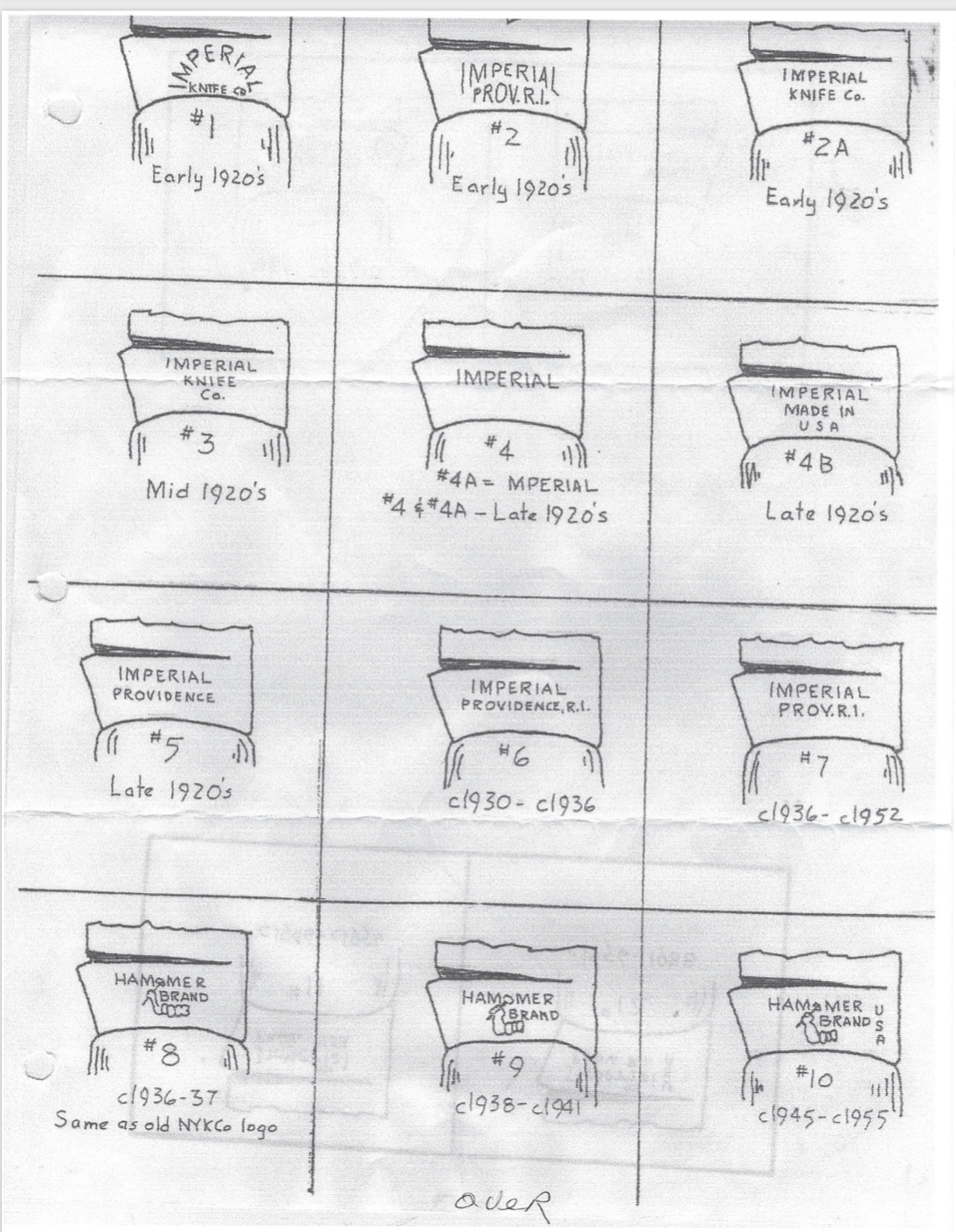
The tang stamp—engraved on the base of the blade near the handle—is your most reliable clue for dating a Kinfolks knife. Its wording and style changed over time, directly correlating with ownership shifts and historical periods.
“Kinfolks Inc., Little Valley, NY” (1925–1930)
Knives stamped “Kinfolks Inc., Little Valley, NY” were produced during the brand’s founding years, from 1925 to 1930. These early models are rare and highly sought after. Look closely: the full city name is essential. If it’s missing, the knife isn’t from this era. These blades typically feature clip point designs with bone or celluloid handles, reflecting the pre-Depression emphasis on handcrafted quality.
What to check: Verify the presence of “Little Valley, NY.” Its absence rules out this period entirely.
“Kinfolks INC” (1930–1939)
In 1930, the company simplified its branding. Knives stamped “Kinfolks INC”—without the location—date from 1930 to 1939. This period aligns with leadership changes, including Dean J. Case taking over from Tent Chaplain in 1929. These mid-era knives often have full tang construction and may bear secondary markings like “Jcase” or “Jean Casease,” indicating ties to the WR Case family.
Pro tip: These markings reflect overlapping family-run knife companies. Seeing “Jcase” doesn’t mean it’s a WR Case knife—but it does confirm authenticity within the Kinfolks lineage.
“Kinfolks USA” (1939–1951)
Starting in 1939, the stamp changed to “Kinfolks USA”, a shift likely influenced by wartime patriotism during WWII. Production remained in Little Valley, NY, and some models were issued to U.S. military personnel, though claims linking them to Navajo Code Talkers remain unverified. These knives often feature carbon steel blades and natural bone handles.
Visual cue: Wartime production sometimes resulted in simpler finishes due to material shortages. Don’t assume poor finish means it’s fake—wartime austerity plays a role.
Check for Spine Etching (1951–1957)

After 1951, Kinfolks stopped using tang stamps and began etching “Kinfolks” along the spine of the blade. This method was less durable than stamping, so many surviving examples show faded or partially worn etching.
Warning: A missing spine etch doesn’t automatically mean your knife is older. Decades of use can wear it away completely.
Knives with spine-only markings likely date from 1951 to 1957, the final years of original production. While some sources claim manufacturing ended in 1948, catalog evidence and collector consensus support limited production into the mid-1950s.
Confirm No Tang Stamp? Likely Robersonson Era (1958–1965)

If your knife has no tang stamp at all but bears a blade etch only, it’s almost certainly from the Robersonson Cutlery revival period (1958–1965).
In 1958, Emerson Case—grandson of Jean Casease—acquired the Kinfolks trademark and relaunched the brand under Robersonson Cutlery. These revival knives differ significantly:
– No tang stamp—only a blade etch
– Strawberry bone handles, a signature Robersonson material
– Models like the 568 TC (Tungsten Carbide)
Critical insight: The absence of a tang stamp alone rules out all pre-1958 Kinfolks production. This single detail can debunk claims of 1920s–30s origin.
Analyze the Model Number
Model numbers offer precise dating clues when matched with historical records and catalogs.
Model 380: Hunter’s Favorite
The Model 380 was one of the most popular Kinfolks knives, widely used by outdoorsmen. It often features a “K 380” mark inside a circular emblem—possibly inspired by Karusg, Tent Chaplain’s father’s company.
Dating clue: While early versions exist, the Model 380 continued into the Robersonson era. Always cross-check the tang stamp and handle material before assigning a date.
Model 568 TC: Post-1955 Only
The 568 TC, or “Flame Edged Super Hunter,” features a tungsten carbide (TC) edge. This is a definitive post-1955 marker, as tungsten carbide wasn’t patented for blade use until that year.
Red flag: Any listing claiming a 1920s or 1930s TC model is historically impossible. This feature alone exposes fraudulent or misinformed listings.
Catalogs from 1963 confirm the 568 TC was still in production, placing it firmly in the Robersonson revival era.
Examine Handle Materials
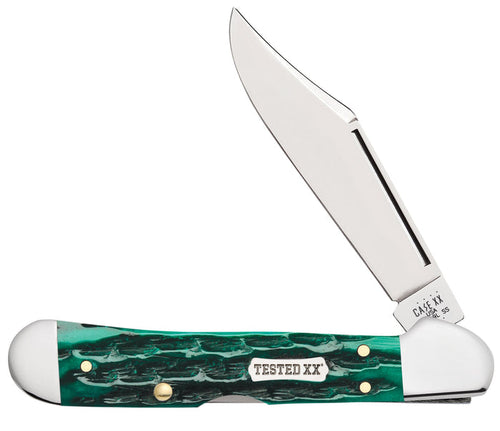
Handle materials evolved over time and serve as strong secondary indicators.
Bone or Celluloid (1925–1940s)
Early Kinfolks knives used natural materials:
– Bone (polished or dyed)
– Celluloid (an early plastic with a glossy finish)
These were standard through the 1940s and are typical of pre-war and wartime production.
Strawberry Bone (1958–1965)
The bright reddish-pink strawberry bone is a hallmark of Robersonson Cutlery. If your knife has this handle and no tang stamp, it’s almost certainly from the 1958–1965 revival.
Expert note: Strawberry bone was not used during the original 1925–1957 run. Its presence immediately dates the knife to the Robersonson era.
Synthetic Materials (Delrin® or Composites)
Handles made of Delrin® or other synthetics indicate post-1950s production. While some Delrin® was used in the 1950s, when paired with blade etching and no tang stamp, it supports a late 1950s–60s date.
Assess Blade Design and Edge Type
Blade style and edge technology can confirm or contradict your dating hypothesis.
Clip Point Blades (Pre-1945)
Most early Kinfolks knives feature clip point blades, a classic American design ideal for hunting and utility. These are strongly associated with pre-WWII production.
Look for: Full tang construction and etchings like “Jean Casease” or “Jcase,” which reflect early branding overlaps.
Drop Point or Flame-Edged Blades (Post-1945)
After WWII, design trends shifted:
– Drop point blades became more common
– Flame-edged (serrated) blades appeared in hunting models
These styles are rare before 1945 and point to 1950s–60s production, especially when paired with TC models.
Key fact: Flame-edged blades were not part of early Kinfolks offerings. Their presence suggests a post-war or revival-era knife.
Rule Out 1990s Reproductions
Not all knives labeled “Kinfolk” are vintage. A series released in the 1990s by the Tennessee River Valley Knife Association bears a script logo reading “Kinfolk” (singular).
These are reproductions, not original Kinfolks knives. While well-made, they:
– Lack authentic tang stamps
– Use modern synthetic or stag-like materials
– Have no connection to the Case or Chaplain families
Avoid confusion: The singular “Kinfolk” vs. the original “Kinfolks” (plural) is a subtle but critical distinction.
Cross-Check with Collector Resources
Even with physical evidence, verification is crucial. Use authoritative references to confirm your findings.
Use Levine’s Guide and Peterson’s Field Guide
Two essential books:
– Levine’s Guide to Knives and Their Values by Bernard Levine
– Peterson’s Field Guide to American Knives
These include:
– Detailed illustrations of Kinfolks models
– Production timelines
– Tang stamp variations
– Confirmation that TC models originated post-1955
Pro tip: Bernard Levine’s analysis of the TC line definitively places those models in the Robersonson era, debunking early dating myths.
Consult Collector Forums and Shows
Engage with communities such as:
– BladeForums.com
– Old Knife Collector groups on Facebook
– The Eleville Knife Show (annual event)
These networks offer access to verified examples, expert opinions, and rare catalogs.
User insight: One collector shared, “I thought I had a 1920s Kinfolks—until I noticed the TC mark. A forum member set me straight. Now I know it’s a 1960s Robersonson.”
Follow a Step-by-Step Dating Workflow
To avoid errors, use this systematic approach:
1. Inspect Tang and Blade Markings
Start with the tang:
– “Kinfolks Inc., Little Valley, NY” → 1925–1930
– “Kinfolks INC” → 1930–1939
– “Kinfolks USA” → 1939–1951
– No tang stamp, blade etch only → 1958–1965
Then check the spine:
– Etched “Kinfolks” → 1951–1957 (if tang stamp missing but spine etch present)
2. Locate and Research the Model Number
Find any number on the blade or tang:
– 380 → widely produced; check era-specific features
– 568 TC → must be post-1955; likely 1960s
Search catalogs or Levine’s Guide for confirmation.
3. Evaluate Handle Material
- Bone/celluloid → pre-1950s
- Strawberry bone → 1958–1965
- Synthetic → post-1950s
4. Analyze Blade Style
- Clip point → earlier (pre-1945)
- Drop point/flame-edged → post-war (1945+)
- Tungsten carbide edge → after 1955 only
5. Eliminate Reproductions
- “Kinfolk” script logo → 1990s reproduction
- Modern materials on “antique” claims → red flag
Summary of Key Dating Indicators
| Feature | Indicates |
|---|---|
| “Kinfolks Inc., Little Valley, NY” | 1925–1930 |
| “Kinfolks INC” | 1930–1939 |
| “Kinfolks USA” | 1939–1951 |
| “Kinfolks” etched on spine | 1951–1957 |
| Blade etch only (no tang stamp) | 1958–1965 (Robersonson) |
| Model 568 TC | Post-1955 (tungsten carbide) |
| Strawberry bone handle | 1958–1965 |
| Flame-edged blade | 1950s–60s |
| “Kinfolk” script logo | 1990s reproduction |
Final Tips for Collectors
- Never rely on one feature alone. Combine tang stamp, model number, and handle material for accuracy.
- Beware of dealers claiming 1920s–30s origin for knives with TC edges or synthetic handles—these are impossible.
- Preserve original condition. Restoration can reduce value if not done correctly.
- Join collector networks. Shared knowledge is the best defense against misinformation.
The Kinfolks knife is more than a tool—it’s a legacy of American craftsmanship, born from family ties and innovation. By following these steps, you can uncover the true story behind your knife and ensure its history is respected and preserved.