If you’ve ever crushed a clove of garlic while trying to mince it, struggled to remove the core from a strawberry without losing half the fruit, or watched a chef effortlessly segment an orange with surgical precision, you’ve seen the difference a paring knife makes. This compact blade—typically just 3 to 4 inches long—is the unsung hero of the kitchen. While your chef’s knife handles the heavy lifting, the paring knife takes over where finesse, control, and detail matter most.
Far more than just a peeler, this small but mighty tool is essential for precision tasks that larger knives can’t perform safely or effectively. From deveining shrimp to crafting citrus garnishes, its sharp point and nimble blade allow you to work with accuracy and speed. One of its greatest advantages? It’s designed for in-hand cutting, meaning you can hold food in one hand and slice with the other—no cutting board required. This technique gives you unmatched control, especially when working with small or round ingredients.
In this guide, you’ll discover exactly what a paring knife is used for, how to use it safely and effectively, the different types available, and how to care for it so it lasts for years. Whether you’re prepping a single lime or plating a gourmet dish, understanding this tool will transform the way you cook.
Peel Fruits and Vegetables with Precision Control
One of the most common—yet underappreciated—uses of a paring knife is peeling produce. Unlike a vegetable peeler, which removes a uniform layer of skin, a paring knife lets you navigate around bruises, blemishes, and irregular shapes with minimal waste.
Use it to peel apples, pears, potatoes, kiwis, tomatoes, carrots, and ginger—especially when you need to preserve as much flesh as possible. Its pointed tip allows you to dig into crevices and follow curves closely, making it ideal for knobby root vegetables like ginger or turmeric.
How to peel safely:
– Hold the fruit or vegetable in your non-dominant hand.
– Use a pinch grip: place your thumb and index finger on the blade just above the handle for maximum control.
– Slice downward toward your body, rotating the food as you go.
– Keep your fingers curled and movements small and deliberate.
Pro tip: For ginger, some chefs prefer using the edge of the knife or a spoon to scrape off the skin. But a bird’s beak paring knife excels here, following the natural contours better than any other tool.
Core Apples and Hull Strawberries Like a Pro
Coring and hulling are tasks where precision equals presentation—and the paring knife delivers every time.
For strawberries:
– Insert the tip at a 45° angle where the green stem meets the fruit.
– Hold the knife steady and rotate the berry to cut out the core in a neat cone shape.
– Done correctly, you preserve the full shape and maximum flesh—perfect for desserts, salads, or garnishes.
For apples or tomatoes:
– Make a circular cut around the stem to cleanly remove the core.
– This method works especially well when preparing fruit for baking or stuffing, where appearance matters.
The sharp point of the paring knife makes these jobs quick, clean, and efficient—far more so than trying to use a larger blade that risks crushing or overcutting.
Segment Citrus Without the Bitter Membranes
Want perfect orange or grapefruit segments for a salad, tart, or cocktail garnish? The paring knife is your best friend.
Its narrow blade slides easily between the membranes that surround each citrus segment, freeing the juicy flesh without leaving behind stringy, bitter pith.
Step-by-step technique:
1. Slice off both ends of the fruit to create flat bases.
2. Stand the fruit upright and cut downward from top to bottom to remove all peel and white pith.
3. Hold the fruit over a bowl (to catch juice).
4. Slide the blade along one side of a membrane, then the other, to release the segment.
Result: Clean, restaurant-quality segments that elevate any dish—plus, you’ll have fresh juice for dressings or drinks.
Mince Garlic, Shallots, and Herbs Without Crushing

A chef’s knife rocks and crushes—great for bulk work, but not ideal for small quantities. A paring knife lets you mince garlic, shallots, chili peppers, and herbs with precision, preserving their delicate flavors.
How to mince:
– Trim the root end from a garlic clove.
– Use the pinch grip and gently rock the blade with the tip on the cutting board.
– Lift and lower the heel of the knife to chop finely.
– For ultra-fine results, gather the pieces and press with the side of the blade.
Why it matters: Less cell damage means less bitterness and more aromatic, fresh flavor—especially important in sauces, dressings, and raw preparations.
Dice Small Ingredients for Salsas and Garnishes
Need ¼-inch cubes of chili pepper or perfectly uniform radish slices? The paring knife gives you the control needed for consistent results.
- Score the surface first to guide your cuts.
- Use the sharp tip to separate sections cleanly.
- Ideal for garnishes, salsas, or plating, where visual appeal and texture are key.
Because the blade is small and maneuverable, you can easily adjust your cuts on the fly—no need to transfer ingredients to a larger knife.
Trim and Prep Vegetables with Surgical Accuracy
From mushrooms to Brussels sprouts, the paring knife handles cleanup and prep work with ease.
- Clean mushrooms: Trim tough stems without tearing the delicate caps.
- Prep Brussels sprouts: Remove outer leaves and trim the base before halving or shredding.
- Cut small broccoli or cauliflower florets: Make precise cuts where needed without over-processing.
It’s also ideal for peeling and trimming root vegetables like carrots or turnips when only a small section needs attention. Use it to:
– Remove “eyes” from potatoes.
– Trim artichoke stems.
– Scrape seeds from chili peppers or vanilla pods.
Visual cue: Look for brown spots or dry edges—your paring knife removes them cleanly without wasting good parts.
Devein Shrimp and Prepare Shellfish Safely
:max_bytes(150000):strip_icc()/How-to-Devein-Shrimp-FT-BLOG0523-992db9bd97604ca2b059f489bcae85a1.jpg)
The paring knife’s narrow, pointed blade is perfect for deveining shrimp, a task that improves both taste and texture.
For peeled shrimp:
– Lay the shrimp flat on a cutting board.
– Make a ⅛-inch deep cut along the back from head to tail.
– Lift out the dark intestinal tract (vein) with the tip of the knife.
– Rinse under cold water.
For shell-on shrimp (presentation style):
– Cut between the second and third shell segments.
– Lift the vein without splitting the shell—keeps the shrimp intact for grilling or elegant plating.
Note: Deveining isn’t necessary for tiny cooked shrimp, but it’s highly recommended for large or raw ones to avoid grit and improve flavor.
Score Dough and Meats for Better Texture
Shallow cuts can make a big difference in how food cooks—and the paring knife is ideal for scoring.
On bread dough:
– Make diagonal or cross-shaped cuts before baking.
– Helps control rising and creates a crisp, attractive crust.
On meats:
– Score duck breast, pork belly, or thick steaks.
– Allows marinades to penetrate and fat to render evenly.
– Creates a crispier exterior and more even cooking.
The sharp tip enables precise, controlled cuts—essential when working with delicate doughs or fatty meats.
Create Stunning Garnishes and Decorative Cuts
Turn your paring knife into a culinary artist’s tool with these simple garnish techniques.
Try these:
– Citrus twists: Cut thin strips from lemon or orange peel for cocktails.
– Tomato rose: Spiral-cut the skin and roll into a flower.
– Radish flowers: Slice thin petals without cutting through the base.
– Vegetable curls: Use the edge to peel elegant spirals from cucumbers or carrots.
Pro tip: Use a serrated paring knife for tomatoes to slice through the skin without squashing the soft interior.
Use In-Hand Cutting for Speed and Efficiency
One of the paring knife’s greatest strengths? You don’t need a cutting board.
This technique—called in-hand cutting—is used by chefs worldwide for peeling, hulling, and segmenting. It’s faster, cleaner, and gives you more control than using a board.
How to do it safely:
– Hold food in your non-dominant hand.
– Use your thumb as a guard to stop the blade.
– Cut toward your body, not away.
– Keep fingers curled and movements small.
Safety note: Only use this method with firm, manageable foods—never with slippery or hard items.
Best for:
– Peeling apples or citrus.
– Hulling strawberries.
– Segmenting oranges.
– Slicing a single lime or lemon.
Why it works: More control, less cleanup, faster prep.
Choose the Right Type for Your Needs
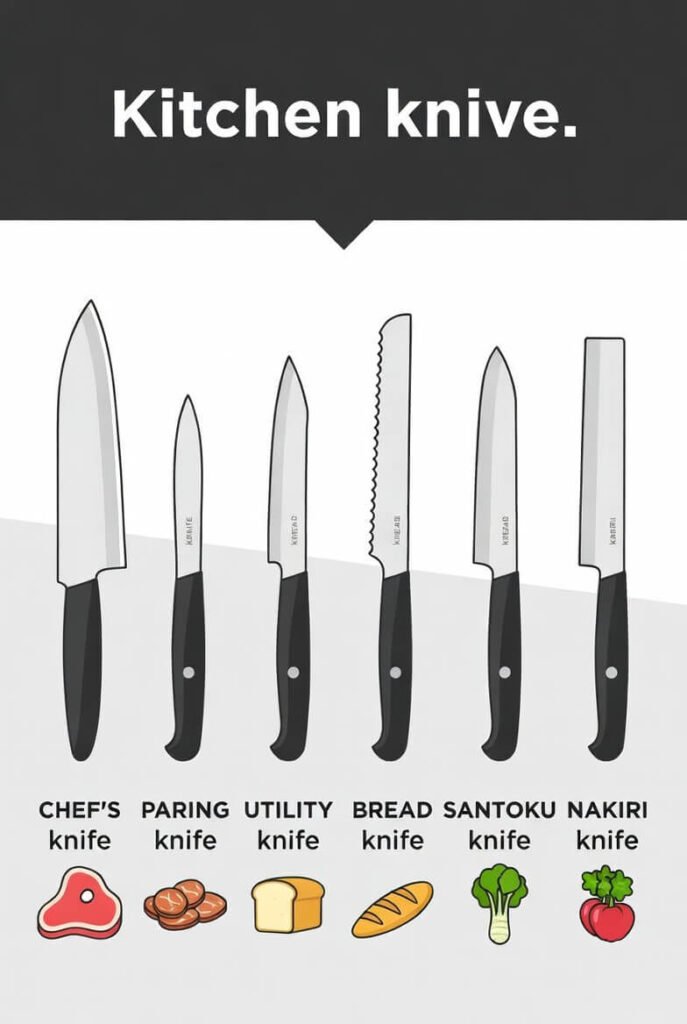
Not all paring knives are the same. Pick one based on your most common tasks.
Straight Paring Knife (Most Versatile)
- Blade: Straight edge, sharp point.
- Best for: General use—peeling, coring, dicing.
- Ideal length: 3.25 to 3.5 inches.
Bird’s Beak (Tourné) Knife
- Blade: Curved downward.
- Best for: Peeling round fruits, decorative cuts.
Serrated Paring Knife
- Blade: Tiny saw-like edge.
- Best for: Tomatoes, bread rolls, citrus with tough skins.
Flat Cut Paring Knife
- Blade: Completely flat edge.
- Best for: Julienning, seeding chilies, precise slicing.
Peeling Knife
- Blade: Short, curved, beak-like.
- Best for: Fast peeling with minimal waste.
Top picks:
– WÜSTHOF Classic 3.5″: Durable, balanced, full tang.
– Dalstrong Shogun 3.5″: Razor-sharp Japanese steel.
– Victorinox Swiss Army 3.25″: Budget-friendly, high performance.
Avoid These Common Mistakes
Even experienced cooks misuse paring knives. Don’t:
- Cut bones or frozen foods – can chip or snap the blade.
- Use for large jobs – inefficient and causes hand fatigue.
- Open packages or pry lids – dulls the edge and risks injury.
Reserve it for small, controlled tasks only.
Keep It Sharp, Clean, and Safe
A dull paring knife is dangerous—it slips easily. Maintain it properly.
Care Tips:
- Hand wash only—never dishwasher.
- Dry immediately, especially at the blade-handle junction.
- Store in a knife block, magnetic strip, or sheath.
- Never toss loose in a drawer.
Sharpening:
- Hone weekly with a ceramic rod (10–15° angle).
- Sharpen with a whetstone (#1000 grit) when needed.
- Test sharpness: should slice paper or tomato skin effortlessly.
Warning: Dull blades cause more accidents than sharp ones.
Build Your Essential Knife Set
The paring knife is one of the three core tools every kitchen needs:
- Chef’s knife (8″) – for chopping, slicing, dicing.
- Bread knife (8–10″) – for crusty loaves and soft cakes.
- Paring knife (3.5″) – for detail work.
Together, they cover 95% of kitchen tasks.
Optional additions: utility knife, boning knife, or Santoku.
Reality check: Many home cooks underuse their paring knife because they don’t know in-hand techniques. Once learned, it becomes indispensable.
Final Takeaways
The paring knife is more than a peeler—it’s a precision powerhouse for small, controlled cuts. Use it to:
– Peel, core, and hull fruits.
– Devein shrimp and prep shellfish.
– Segment citrus and mince garlic.
– Score dough and garnish dishes.
– Cut safely in-hand without a board.
Choose a 3.25 to 3.5-inch straight blade for the best balance of reach and control. Avoid using it for heavy tasks, always hand-wash it, and keep it sharp. Whether you cook daily or once a week, a good paring knife saves time, reduces waste, and elevates your results.
Invest in one today—your fingers, flavors, and plating will thank you.