Every time you pick up a knife, you’re holding a tool that can either prepare a safe meal or become a vector for foodborne illness. Knives come into direct contact with food—raw meats, fresh produce, allergens, and ready-to-eat items—and if not properly cleaned and sanitized at the right times, they can spread harmful bacteria like Salmonella, E. coli, and Listeria, or trigger life-threatening allergic reactions. This isn’t just about scrubbing off visible food bits; it’s about following science-backed hygiene practices that protect everyone who eats your food.
So when must a knife be cleaned and sanitized? Not just “when it looks dirty.” The real answer lies in specific, high-risk moments defined by food safety experts, regulators, and health inspectors. Whether you’re working in a restaurant kitchen or at home, knowing these critical moments can prevent illness, avoid cross-contamination, and ensure every meal is safe. In this guide, you’ll learn exactly when to clean and sanitize your knife, how to do it correctly, and what mistakes to avoid—so you never compromise food safety again.
After Handling Raw Animal Products
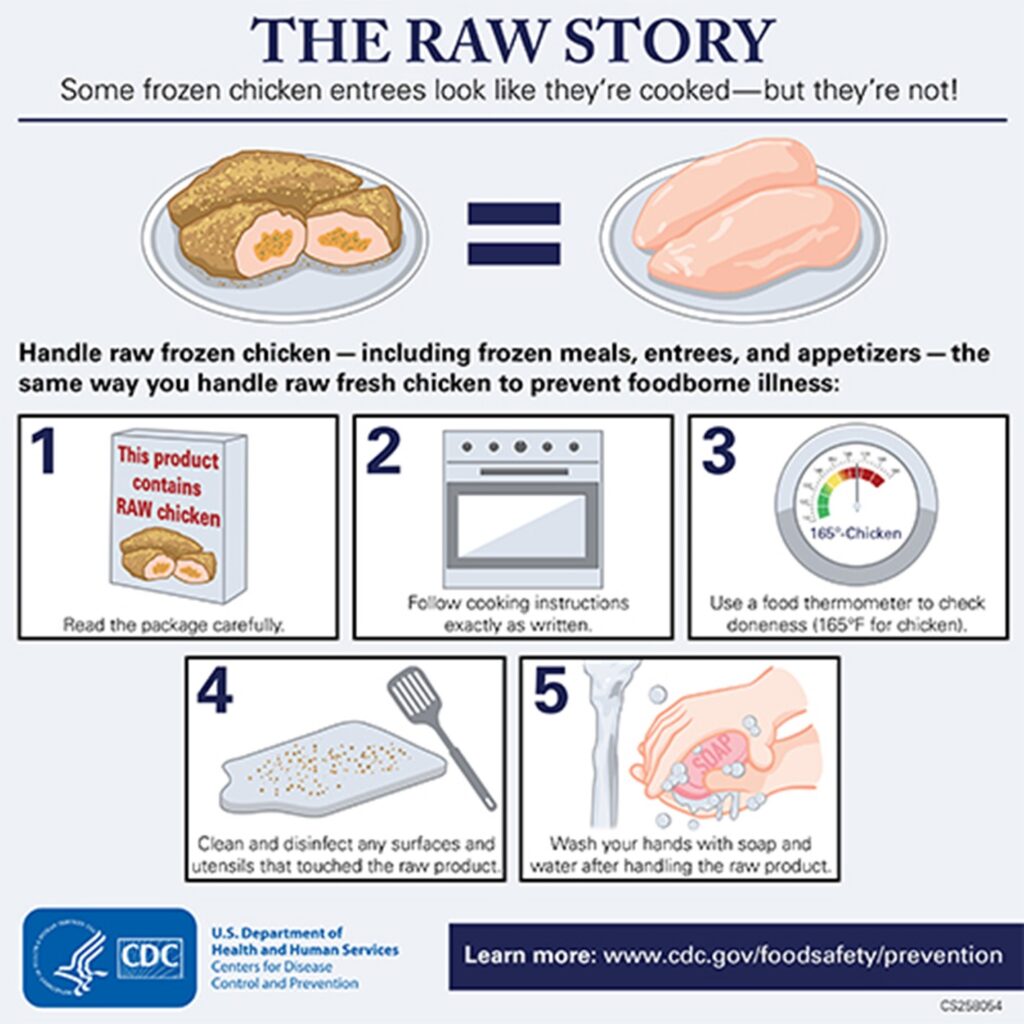
Raw meat, poultry, seafood, and eggs carry dangerous pathogens. Once your knife touches them, it becomes contaminated—even if the blade looks clean.
Why This Matters
- Salmonella, E. coli, and Campylobacter are common in raw animal products.
- These bacteria can survive on metal surfaces for hours.
- Slicing raw chicken and then cutting salad ingredients with the same knife without cleaning causes direct cross-contamination—and the salad won’t be cooked to kill bacteria.
Example: A home cook slices raw steak, wipes the knife on a towel, and cuts tomatoes for a sandwich. That sandwich could make someone sick.
What to Do
- Stop using the knife immediately after cutting raw animal products.
- Begin the full clean and sanitize process (scrape, wash, rinse, sanitize, air-dry).
- Never return the knife to use until it’s fully dry.
Pro Tip: Use color-coded cutting boards and knives—red for raw meat—to reduce mistakes.
Before Switching Food Types

Changing from one ingredient to another—even both vegetables—requires cleaning and sanitizing. Soil, allergens, and microbes don’t vanish just because food looks clean.
Common Scenarios
- After peeling potatoes and before slicing carrots
- After cutting gluten-containing bread and moving to gluten-free prep
- From dairy to nut-free dishes
Why It’s Required
- Root vegetables like potatoes carry soil-borne pathogens (E. coli, Listeria).
- Allergens (gluten, nuts, shellfish) cannot be neutralized by sanitizers—they must be physically removed.
- Even small residues can trigger severe allergic reactions.
ServSafe Rule: A knife used on potatoes must be cleaned and sanitized before slicing carrots—even if both are vegetables.
Action Steps
- Treat every food switch as a contamination risk.
- Clean and sanitize the knife before starting the new task.
- Label or separate knives by food type in high-risk kitchens.
After Any Interruption in Use
Stepped away for a phone call? Helped someone else? Washed your hands? That knife is no longer safe.
When This Applies
- Leaving the prep station for more than 1 minute
- Answering the door or phone
- Assisting another cook
- Stepping out of the kitchen
Why It’s a Risk
- Airborne contaminants can settle on the blade.
- Someone may have touched the knife or placed it on a dirty surface.
- Time out of sight increases uncertainty—assume contamination.
Health Inspector Standard: Any unattended knife used in food prep must be re-cleaned and sanitized before reuse.
Quick Fix
- Don’t just pick it back up.
- Run through the full cleaning and sanitizing steps.
- Reset your workflow as if starting fresh.
Every 4 Hours During Continuous Use
Even if you’re slicing the same cooked food all morning, your knife must be cleaned and sanitized every 4 hours.
Applies to TCS Foods
- Cooked meats
- Deli meats
- Cut produce (melons, tomatoes)
- Cooked vegetables
- Garlic-in-oil mixtures
The Science Behind the Rule
- Bacteria grow over time—even on cooked or ready-to-eat foods.
- Handles, bolsters, and blade crevices trap moisture and organic matter.
- After 4 hours, microbial levels may reach unsafe thresholds.
FDA Food Code Requirement: All equipment used continuously with Time/Temperature Control for Safety (TCS) foods must be cleaned and sanitized at least every 4 hours.
How to Follow It
- Set a timer during long prep sessions.
- Use natural breaks (lunch, shift change) to reset.
- Log cleaning times in commercial kitchens for audit compliance.
Immediately After Contamination
If your knife touches the floor, trash, blood, or chemicals, stop everything. It’s unsafe.
Common Contamination Events
- Dropped on the floor
- Touched a garbage bin
- Used during a cut (blood exposure)
- Left in cleaning chemical
Required Response
- Stop food prep immediately.
- Discard any food that contacted the knife.
- Clean, rinse, and sanitize the knife.
- Sanitize the work surface.
- Cover wounds with waterproof bandages and gloves before resuming.
Why Blood Is Critical
- Blood can carry Hepatitis A, Norovirus, or HIV.
- Even a small droplet on a blade can contaminate food.
- Workers must follow injury protocols—no bare-hand contact.
Expert Note: A knife that touches blood is a biological hazard—treat it like a biohazard spill.
After Sharpening or Honing
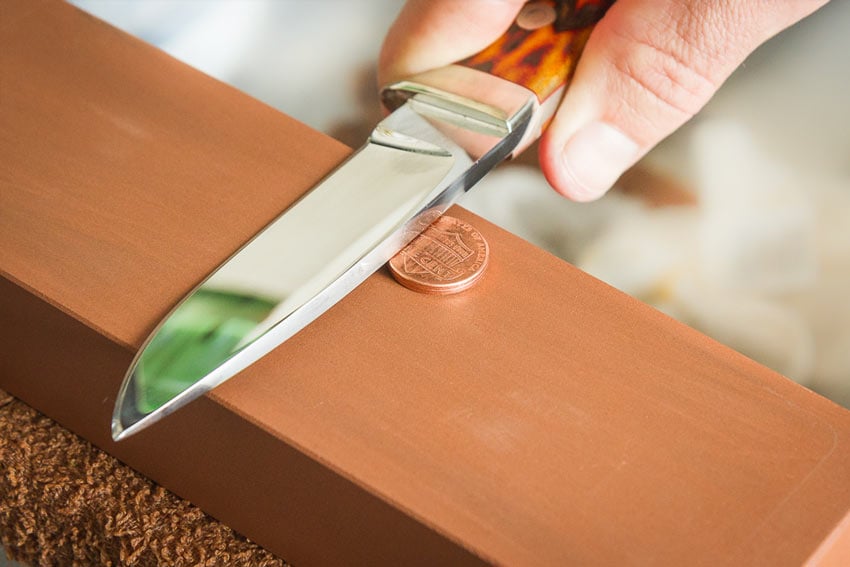
Sharpening removes tiny metal particles. Those shavings are physical contaminants.
Risks of Skipping This Step
- Metal fragments can end up in food.
- High-carbon and Damascus steel blades shed more during honing.
- Microscopic filings are invisible but dangerous if ingested.
Best Practice
- Always clean and sanitize after sharpening or honing.
- Do sharpening in a separate area, away from food prep zones.
- Use a soft brush to remove filings before washing.
Pro Tip: Keep a designated honing station with its own mat and brush—never on the cutting board.
The 5-Step Cleaning and Sanitizing Process
Cleaning and sanitizing are two separate steps. One doesn’t replace the other.
Step 1: Scrape or Pre-Rinse
- Remove large food particles under warm running water.
- Focus on:
- Blade heel and spine
- Bolster (where blade meets handle)
- Rivets and handle grooves
- Prevents clogs and prepares for washing.
Step 2: Wash with Soap
- Use warm water (100–110°F) and mild dish soap.
- Scrub with a soft sponge or brush.
- Pay extra attention to:
- Serrated edges
- Textured handles
- Blade base
- Scrub for 20–30 seconds.
Warning: Abrasive pads or steel wool damage blades and create bacterial traps.
Step 3: Rinse Thoroughly
- Use clean, warm water.
- Remove all soap residue.
- Why: Detergent blocks sanitizer effectiveness.
Step 4: Sanitize Properly
Choose one method:
| Method | Requirements |
|---|---|
| Chlorine Solution | 50–100 ppm bleach, 30–60 sec contact |
| Quats (Quaternary Ammonium) | 150–400 ppm, follow label time |
| Heat Sanitizing | 171°F (77°C) for 30 seconds |
Critical: A quick dip isn’t enough. The blade must stay in contact for the full time.
Step 5: Air Dry Completely
- Place on a clean drying rack, edge-up.
- Never towel-dry—cloths reintroduce bacteria.
- Never stack wet knives—traps moisture and breeds bacteria.
Once dry, the knife is safe to use.
Signs a Knife Needs Cleaning (Even If It Looks Clean)
Looks can be deceptive. Hidden contamination is often invisible.
Red Flags
- Slimy or sticky feel on the handle
- Fishy or sour odor when wiped
- Discoloration (garlic stains, rust spots)
- Food trapped in serrations or rivets
- Rust, especially near the handle
High-Carbon Blades: These are prone to rust—dry immediately after washing.
Common Mistakes That Break Food Safety
Even pros make these errors—don’t let them happen in your kitchen.
Wiping Instead of Washing
- Risk: Cloth removes nothing—bacteria and allergens remain.
- Fix: Always wash and sanitize when switching foods.
Ignoring the Handle and Bolster
- Risk: Hands touch handles constantly—germs live there.
- Fix: Scrub the entire knife, not just the blade.
Soaking Knives in Water
- Risk: Creates injury hazard (can’t see blade), spreads bacteria.
- Fix: Wash immediately—never soak.
Using the Dishwasher
- Risk: High heat dulls edges, damages wooden handles, warps blades.
- Fix: Hand-wash all quality knives—especially high-carbon, ceramic, or Damascus.
Towel-Drying
- Risk: Cloth towels are bacteria reservoirs.
- Fix: Always air-dry on a clean rack.
Forgetting the 4-Hour Rule
- Risk: Bacteria multiply undetected.
- Fix: Set a timer. Reset during natural breaks.
Special Situations: Allergens and Cross-Contact
Sanitizers don’t destroy allergens. You must physically remove them.
High-Risk Allergens
- Peanuts, tree nuts
- Gluten (wheat, barley, rye)
- Shellfish, eggs, dairy
Best Practices
- Wash thoroughly to remove protein residues.
- Rinse and sanitize after.
- Use color-coded knives:
- Red: Raw meat
- Green: Vegetables
- Blue: Seafood
- Purple: Allergen-free
- Dedicate knives for allergy-safe prep.
Home Tip: If cooking for someone with allergies, use separate, labeled knives and store them apart.
Commercial vs. Home Kitchen Standards
Rules are stricter in restaurants—but risks are the same at home.
| Factor | Commercial Kitchen | Home Kitchen |
|---|---|---|
| Regulation | Enforced by health department | No enforcement |
| 4-Hour Rule | Mandatory | Recommended |
| Sanitizer Use | Required | Optional but advised |
| Color Coding | Common | Rare but helpful |
| Dishwasher Use | Avoided for fine knives | Often misused |
Bottom Line: Home cooks should follow commercial standards. Kids, elderly, and immunocompromised are especially vulnerable.
Recommended Tools and Supplies
Use the right tools to clean safely and effectively.
Safe Cleaning Tools
- Soft-bristle brush: For serrated edges
- Non-abrasive sponge: Protects blade finish
- Knife scrubber: Holds blade securely during cleaning
- Mild dish soap: No citrus or abrasives
Sanitizing Options
- Bleach solution: 1 tbsp unscented bleach per gallon of water
- Quats: Commercial-grade, long-lasting
- 70% isopropyl alcohol: Wipe on clean, dry blade—evaporates quickly
- White vinegar: Mild antimicrobial, not a true sanitizer
Note: Alcohol is great for quick sanitizing but not a substitute for full cleaning.
Proper Storage to Prevent Contamination
How you store your knife affects hygiene and safety.
Best Storage Methods
- Magnetic strip: Keeps blades dry and visible
- Blade guards: Protect edges and prevent accidents
- In-drawer organizers: Prevent contact with other utensils
- Dry knife block: Only if cleaned monthly and fully dry
How to Clean a Knife Block
- Remove all knives.
- Shake out crumbs.
- Soak in:
– Bleach solution (1 tbsp/gal) for 60 sec
– Or undiluted white vinegar - Rinse and air-dry completely (6+ hours).
Warning: Wet blocks grow mold and bacteria—never store knives in a damp block.
Maintenance for Long-Term Safety
A well-maintained knife is a safe knife.
Key Habits
- Dry immediately after washing
- Hone every 2–3 uses to keep edge aligned
- Sharpen when dull—a sharp knife is safer
- Avoid dishwashers—they ruin blades
- Follow manufacturer guidelines for special steels
Damascus or High-Carbon Blades: These require extra care—oil occasionally to prevent rust.
Consequences of Poor Knife Hygiene
Skipping steps has real, dangerous outcomes.
| Risk | Result |
|---|---|
| Cross-Contamination | Foodborne illness (vomiting, hospitalization) |
| Allergen Exposure | Anaphylaxis, emergency care |
| Bacterial Buildup | Biofilm forms—resistant to cleaning |
| Rust and Corrosion | Metal flakes in food, blade failure |
| Failed Inspections | Fines, closure (in commercial kitchens) |
One dirty knife can shut down a restaurant—or hospitalize a family.
Final Takeaways: When to Clean and Sanitize a Knife
You now know the critical moments:
– ✅ After raw meat, poultry, seafood, or eggs
– ✅ Before switching food types
– ✅ After any interruption in use
– ✅ Every 4 hours during continuous use
– ✅ Immediately after contamination (floor, blood, chemicals)
– ✅ After sharpening or honing
And the correct way:
1. Scrape
2. Wash
3. Rinse
4. Sanitize
5. Air Dry
Never skip steps. Never towel-dry. Never assume “clean enough.”
Whether you’re a professional chef or a home cook, your knife hygiene reflects your commitment to safety. Follow these rules every time—and make food safety a habit, not a gamble.