You reach for your pocket knife to slice an apple, only to end up squashing it instead. The blade drags, catches, and barely cuts—clearly, it’s time to sharpen. But before you grab a stone, there’s a critical question: what angle should you sharpen your pocket knife? Get it wrong, and you’ll either create a fragile edge that chips on contact or a thick, dull blade that requires excessive force. The sweet spot for most pocket knives is 20° per side, balancing sharpness and durability. This guide breaks down how to choose the right angle based on your knife’s steel, intended use, and factory grind—so you can sharpen with confidence, not guesswork.
Match Your Knife’s Factory Sharpening Angle
Sharpening at the wrong angle doesn’t just waste metal—it degrades performance. Most manufacturers optimize the edge geometry for each model, so matching the original bevel ensures your knife cuts the way it was designed.
Use the Sharpie Trick to Find the True Angle

Don’t guess—test. The Sharpie trick is a foolproof way to determine your knife’s existing angle. Color the entire bevel with a permanent marker, then make a few light passes on a sharpening stone at your estimated angle. If the ink is removed only at the very edge, you’re aligned perfectly. If the marker is wiped off higher up the bevel, your angle is too steep. If no ink comes off, you’re too shallow. Adjust incrementally until only the cutting edge contacts the stone.
Pro Tip: This method is especially effective with guided systems like Lansky or Work Sharp, where even slight clamp misalignment can throw off your angle.
Why You Should Preserve the Factory Grind
Manufacturers tailor edge angles to each knife’s design and steel. A Spyderco with a 17° factory edge is built for precision slicing. A Cold Steel with a 22.5° grind is made for heavy-duty tasks. Altering the angle changes how the blade performs. Unless you’re intentionally reprofiling for a specific purpose, always aim to match the factory bevel.
Choose the Right Angle Based on Steel Type
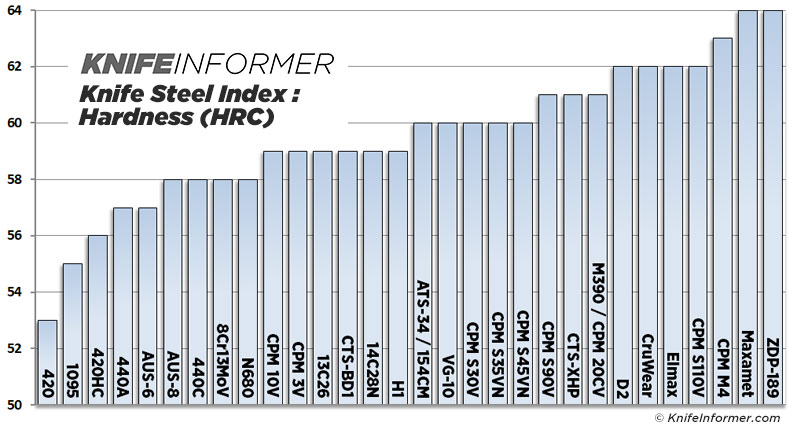
The steel in your blade determines how thin an edge it can support. Harder steels hold sharper angles. Softer or tougher steels need more material behind the edge to resist rolling and chipping.
Hard Steels: 15°–17° per Side
High-performance steels like S30V, S35VN, CPM-20CV, and D2 (typically 58–62 HRC) are wear-resistant and can maintain a fine edge. A 15°–17° angle delivers exceptional sharpness, ideal for slicing paper, food, or light materials.
- Best for: Precision tasks, EDC folders with high-end steel
- Caution: These edges are brittle. Avoid prying, twisting, or cutting hard materials like cardboard with staples.
Medium Steels: 17°–20° per Side
Steels such as VG-10, 154CM, and 9Cr18MoV offer a balanced mix of hardness and toughness. They sharpen well and hold an edge under moderate use.
- Ideal for: Everyday carry, kitchen prep, light outdoor tasks
- Sharpening tip: If unsure, go with 18.5°—it’s a reliable compromise between sharpness and resilience.
Soft or Tough Steels: 20°–22.5° per Side
Budget-friendly steels like 8Cr13MoV or 1095 are softer and more prone to edge deformation. A wider angle (20°–22.5°) adds support, reducing the risk of rolling or chipping.
- Why it works: The thicker edge spreads impact forces across more metal.
- Trade-off: Slightly more effort to cut, but far less frequent sharpening.
Expert Note: “Softer steel doesn’t mean bad steel. It means you need a tougher edge.” Choose your angle based on use, not just specs.
Optimize the Angle for Your Daily Use
How you use your knife matters more than any chart. A backpacker needs durability. An office worker wants clean cuts. Match the angle to your lifestyle.
Light-Duty Tasks: 15°–17° per Side
If your knife mostly opens mail, slices fruit, or handles fine detail work, a sharper angle makes sense.
- Pros: Effortless slicing, minimal drag
- Cons: Vulnerable to rolling under pressure
- Best for: Gentleman’s folders, folding kitchen knives, pen knives
Warning: Avoid dropping or lateral pressure. These edges fail fast on abrasive materials.
General EDC: 20° per Side
This is the gold standard for most users. A 20° edge is sharp enough to cut paper, rope, and food, yet durable enough to handle daily abuse.
- Why it works: Matches factory grinds from Benchmade, Kershaw, and CRKT
- Universal fit: Works across a wide range of steels and tasks
- Maintenance: Holds an edge longer than 15°, easier to touch up than 25°
Outdoor & Bushcraft: 21°–22.5° per Side
When your knife scrapes bark, batons sticks, or cuts through cordage, durability trumps sharpness.
- Edge behavior: Resists chipping and deformation under impact
- Ideal steels: 1095, 8Cr13MoV, or thick-tang models
- Field advantage: Less frequent sharpening, fewer edge failures
Tactical & Heavy-Duty: 21°–25° per Side
For rescue tools, survival knives, or tactical folders used in extreme conditions, a wider angle is essential.
- Edge strength: Withstands forceful use without deforming
- Downside: Requires more effort to cut soft materials
- Pro tip: Pair with a leather strop and honing compound to restore sharpness without thinning the edge
Understand the Mechanics of Sharpening Angles
It’s not just about the number—it’s about geometry and performance.
Per Side vs. Total Included Angle
- Per side: The angle from the blade’s flat to the bevel (e.g., 20°)
- Total included angle: Both sides combined (e.g., 20° + 20° = 40° total)
Most pocket knives follow Western standards (20° per side, 40° total), while Japanese-style blades often use 15° per side (30° total). Know which system your knife follows.
Hardness vs. Toughness: The Tradeoff
- High hardness (60+ HRC): Can be sharpened to 15°, but chips if abused
- High toughness (lower HRC): Needs 22.5° to avoid rolling
- Balance: A 20° edge on 58 HRC steel offers the best real-world performance
Analogy: Think of edge angle like tire tread. Racing slicks (15°) grip perfectly on clean roads but fail off-road. All-terrain tires (22.5°) aren’t as fast, but they last.
Master Your Sharpening Method
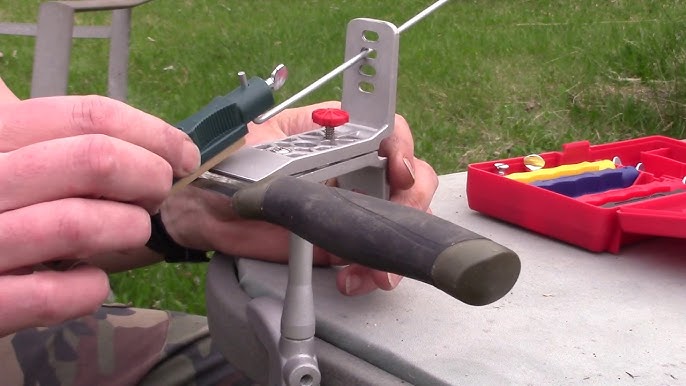
Your tools determine how accurately you can maintain the correct angle.
Guided Systems: Best for Consistency
Tools like Lansky, Edge Pro, or Work Sharp lock in your angle for repeatable results.
- Advantage: Ideal for beginners and maintaining factory edges
- Pitfall: Clamp flex can alter the angle. Press your fingers against the clamp to stabilize.
- Best for: Sharpening multiple knives or preserving exact geometry
Freehand Sharpening: Maximum Control
Holding the blade by hand on a stone offers flexibility but demands skill.
- Build muscle memory: Use visual markers or the Sharpie trick
- Best for: Experienced users or custom grinds
- Tip: Rest your wrist on the stone’s edge for stability
Electric Sharpeners: Fast but Risky
Angle-locked electric sharpeners (e.g., Chef’sChoice) can work well if calibrated.
- Risk: Over-grinding thin blades or high-end steels
- Best for: Quick touch-ups, not full re-sharpening
- Avoid: Cheap pull-through sharpeners—they remove too much metal and damage the edge
Apply Advanced Techniques for Peak Performance
Once you’ve mastered the basics, refine your edge for better results.
Use a Microbevel for Faster Touch-Ups
A microbevel is a tiny secondary edge, 1°–2° steeper than the primary bevel.
- Example: 18.5° primary + 2° microbevel = 20.5° final edge
- Why it works: Lets you refresh the edge quickly without regrinding the whole bevel
- Field benefit: Touch up with a strop or small stone in seconds
Pro Tip: Keep microbevels under 1/16” wide. Too much, and you lose the benefit.
Progress Through Grits for a Clean Edge
Don’t skip grits. Follow this sequence:
- Coarse (100–400): Fix chips or reprofile
- Medium (600–1000): Establish the bevel
- Fine (2000–4000): Refine the edge
- Polish (6000–8000+): Achieve mirror finish and slicing perfection
- Water stones: Best for high-hardness steels
- Diamond plates: Fast on tough steels like D2
- Ceramic rods: Great for maintenance
Finish with Stropping for a Razor-Sharp Edge
After sharpening, use a leather strop with honing compound.
- Action: Pull the blade edge-trailing across the strop
- Benefits: Removes burr, aligns the edge, enhances sharpness
- Frequency: After every sharpening session
Avoid These Common Sharpening Mistakes
Even experienced users make these errors—don’t lose performance or metal unnecessarily.
Sharpening Too Shallow (Below 15°)
- Risk: Ultra-thin edge rolls or chips on first use
- Only for: Delicate tasks with zero impact
- Never use on: EDC knives or tools used on cardboard
Inconsistent Angles
- Symptom: One side sharper than the other
- Cause: Hand wobble, uneven pressure, or loose clamps
- Fix: Use guided systems or practice on scrap blades
Over-Sharpening
- Signs: Blade feels thinner, spine-to-edge distance shrinks
- Prevention: Limit coarse-grit passes; stop when edge is restored
- Rule of thumb: 5–10 strokes per side on medium grit is usually enough
Ignoring the Full Bevel
- Mistake: Only sharpening the tip or heel
- Result: Uneven cutting performance
- Solution: Maintain full contact from pivot to tip on every stroke
Final Recommendations
There’s no one-size-fits-all angle. But for most people, 20° per side is the best starting point. Use this quick reference:
| Scenario | Angle (per side) | Notes |
|---|---|---|
| General EDC | 20° | Safe, balanced, widely compatible |
| High-performance steel | 15°–17° | Maximize sharpness on S30V, CPM-20CV |
| Soft steel (8Cr13MoV, 1095) | 20°–22.5° | Prevents rolling and chipping |
| Outdoor/bushcraft | 21°–22.5° | Handles scraping and impact |
| Precision slicing | 15°–17° | For food, paper, fine cuts |
| Unknown factory angle | Use Sharpie trick | Avoid guesswork and regrinds |
Best Practices Checklist
✅ Determine existing angle with the Sharpie method
✅ Match factory grind unless reprofiling
✅ Choose angle based on steel and use
✅ Use consistent angle throughout sharpening
✅ Progress from coarse to fine grits
✅ Finish with a leather strop
✅ Avoid angles below 15° for EDC
The perfect sharpening angle balances sharpness and durability. A 20° edge on a 154CM blade will serve most users better than a fragile 12° edge on S35VN. Use the Sharpie trick, respect your steel, and sharpen with purpose. A well-maintained pocket knife isn’t just sharp—it’s reliable, safe, and ready for anything.