Yes, you can mail a knife through USPS—but only if you follow strict federal regulations on knife type, packaging, labeling, and recipient eligibility. While many people assume all knives are banned from the mail, the truth is that most common knives are allowed when properly secured. Pocket knives, kitchen blades, hunting tools, and utility knives can all be shipped legally through the U.S. Postal Service—as long as they’re not switchblades or gravity knives sent to unauthorized individuals.
USPS does not prohibit all sharp objects; it regulates them to protect postal workers, prevent illegal weapon distribution, and ensure compliance with federal and state laws. A poorly packaged blade or mislabeled switchblade can result in package seizure, fines, or even criminal charges. Misrepresenting contents—like calling a knife a “gift” or “tool”—is fraud under federal law.
In this complete guide, you’ll learn which knives are mailable, how to package them safely, what to write (and not write) on labels, and the risks of domestic and international shipping. Whether you’re sending a chef’s knife to a relative, mailing a folding knife for repair, or handling a professional cutlery shipment, these rules will help you ship legally, safely, and confidently.
Mailable vs. Nonmailable Knives
Common Knives You Can Mail
Most everyday knives are permitted by USPS as long as they’re securely packaged. This includes:
- Pocket knives (when fully closed)
- Kitchen knives (chef’s, paring, serrated)
- Hunting and outdoor knives
- Fixed-blade survival knives
- Utility and box cutters (with retractable or covered blades)
These items are considered mailable because they require manual opening and pose minimal risk when properly enclosed. Millions of such knives are shipped each year—by individuals, retailers, and artisans—without incident.
✅ Pro Tip: If the blade must be opened by hand, it’s likely mailable.
Always avoid mailing any knife that could be interpreted as a weapon under local or federal law, even if it seems harmless. When in doubt, check both USPS rules and the recipient’s state regulations before shipping.
Switchblades: Who Can Receive Them?
Switchblade knives—those that open automatically via a button, spring, or inertia—are not outright banned, but their mailing is strictly controlled.
Under USPS Regulation 442, switchblades are only mailable when sent to:
- Government procurement officers (federal, state, or local)
- Authorized manufacturers or bona fide dealers
This means private individuals cannot mail switchblades to other private individuals, even as gifts or for repair. Violating this rule can lead to federal penalties, including fines up to $250,000.
📌 Example: A law enforcement officer ordering a switchblade for duty use through official channels may receive it via USPS. But you cannot mail one to your friend—even if it’s legal in their state.
Postal clerks may ask for proof of recipient status before accepting such shipments. Always be prepared to verify the recipient’s eligibility.
Gravity Knives and Other Restricted Types
Gravity knives—blades that open by swinging or flicking the wrist—are often treated like switchblades under federal interpretation. While not always explicitly named in USPS guidelines, they fall under the category of automatic-opening devices and are not mailable to private recipients.
Other prohibited or high-risk knives include:
- Ballistic knives (blades ejected by spring or gas)
- Disguised knives (e.g., belt buckle knives, lipstick blades)
- Daggers or stilettos (in some jurisdictions)
- Knives over 3 inches (in states like New York or California)
Even if a knife is legal to own, shipping it improperly through the mail can turn a lawful item into a federal offense.
⚠️ Never assume: Just because you can buy or carry a knife doesn’t mean you can mail it.
How to Package a Knife for USPS: Step-by-Step
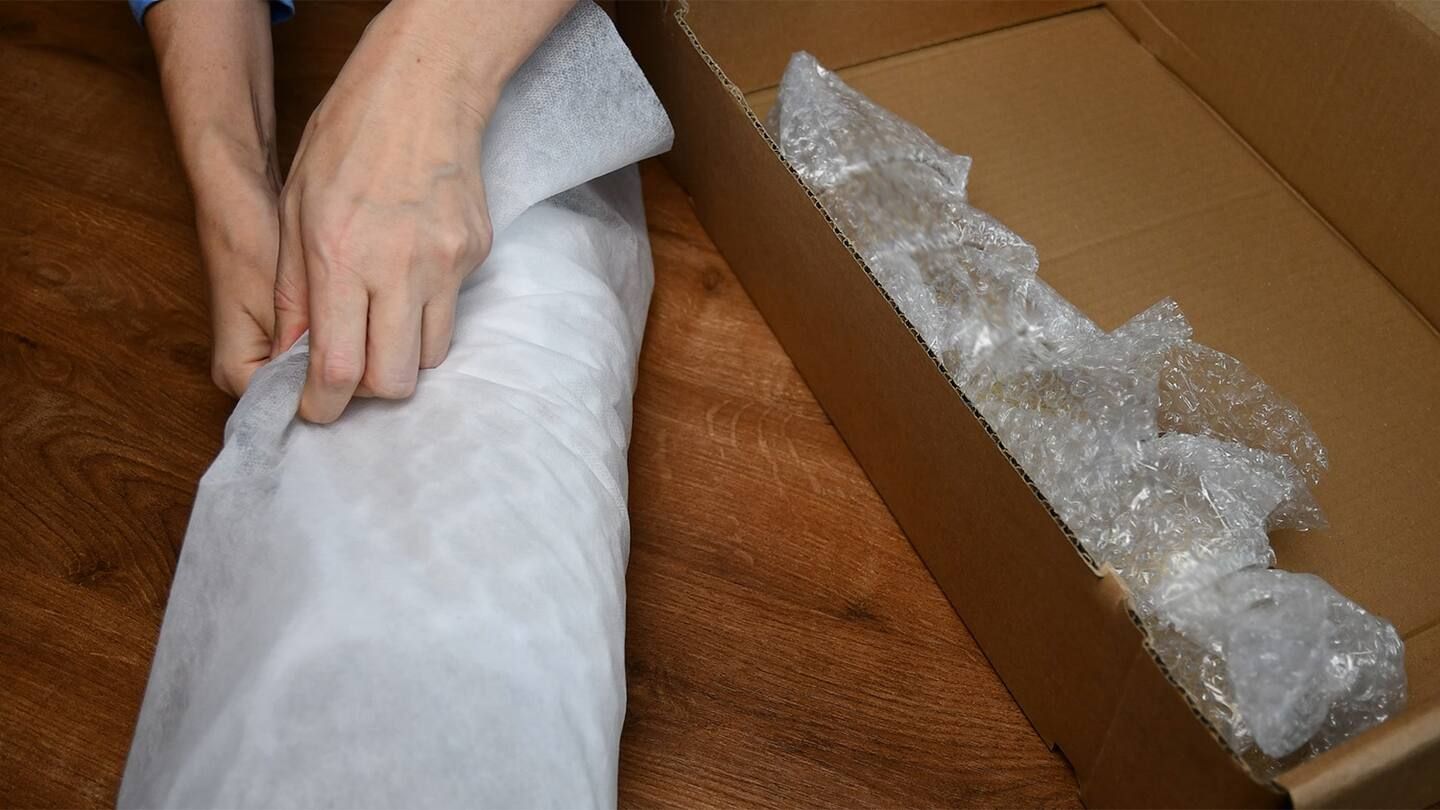
Packing a Fixed-Blade Knife Safely
Mailing a kitchen or hunting knife safely requires multiple layers of protection. Follow these steps:
-
Wrap the blade in paper
Use newspaper or copy paper. Fold it tightly over the entire blade, covering the tip and edge completely. -
Tape the paper sheath
Seal it with clear packing tape to prevent unraveling. -
Add a rigid inner layer
Cut a strip of cardboard and roll it around the wrapped blade. Tape it shut on all sides. -
Double-tape for strength
Apply additional tape over seams and ends to prevent the blade from poking through. -
Place in a sturdy outer box
Use a new corrugated cardboard box large enough to allow cushioning on all sides. -
Fill voids with padding
Use bubble wrap, foam, or crumpled paper to immobilize the knife inside the box. -
Seal all flaps securely
Use H-taping (reinforcing top and bottom seams) for extra durability.
✅ Goal: The package should feel like a solid brick—no movement, no weak spots.
Packing Pocket and Folding Knives
For folding knives, ensure the blade is fully closed before packaging:
-
Close and lock the blade
Verify it won’t open during transit. -
Tape the knife shut (optional)
Especially for knives with weak locks, a small piece of tape keeps it secure. -
Wrap in bubble wrap
Use at least two layers to cushion the handle and prevent scratches. -
Place in a rigid box
Avoid soft envelopes—they can be punctured easily. -
Add cushioning
Surround the knife with foam, paper, or air pillows to stop shifting. -
Seal the box completely
Tape all seams, edges, and flaps.
❌ Never ship in padded mailers—they offer no puncture resistance and are often rejected by USPS.
What to Write (and Not Write) on the Label

Avoid Identifying the Contents
USPS does not require you to label a package as containing a knife—and in fact, you should not.
Never write words like:
- “Knife”
- “Blade”
- “Sharp Object”
- “Weapon”
- “Tool”
Even seemingly neutral terms like “gift” or “instrument” can raise suspicion. The outside of the package should only show:
- Sender’s address
- Recipient’s address
- Return address (if different)
- Tracking label (printed)
📌 USPS Guidance: Packages should not be marked in a way that reveals the presence of sharp instruments.
This rule applies to all knives, including kitchen and pocket blades. The goal is to reduce risk to postal workers and prevent theft or tampering.
Switchblade Shipping: Labeling and Documentation
If you’re legally shipping a switchblade to a government agency or authorized dealer:
- Do not mark the package as containing a switchblade.
- The exterior should remain neutral and unmarked.
- Internally, on customs or shipping forms, you must accurately declare the contents.
Mislabeling a switchblade as a “gift” or “tool” is fraud and can lead to federal charges.
💬 Direct Rule: “Do not misrepresent the contents of a mailpiece.” — USPS Publication 52
Domestic vs. International Knife Shipping
Domestic Shipping: Key Rules
Within the U.S., most non-restricted knives can be shipped using standard USPS services. Key points:
- No formal declaration needed for domestic packages.
- Tracking is strongly recommended.
- Insure the full value—Priority Mail includes $50 coverage.
- Verify recipient state laws—some ban certain knives.
✅ Recommended Service: USPS Small Flat Rate Box (~$7–$9, includes tracking and insurance, works nationwide).
International Shipping: Extra Restrictions
Shipping knives overseas adds layers of legal complexity.
Customs Forms Are Mandatory
For all international shipments, complete Customs Form 2976-A and declare:
- Item: “Pocket knife,” “kitchen knife,” etc.
- Material: e.g., “stainless steel”
- Quantity: e.g., “1”
- Value: Actual price or estimated worth
- Reason: “Gift,” “personal use,” or “repair”
❌ Never write “tool” or “accessory” to disguise a knife—this is illegal.
Country-Specific Bans
Many countries prohibit knife imports:
| Country | Restrictions |
|---|---|
| UK | No knives over 3 inches; switchblades illegal |
| Japan | Requires permits; strict blade length limits |
| Canada | Allows some knives; bans automatics |
| Australia | Requires import permit; most knives restricted |
🔍 Always check destination laws before shipping. A package accepted in the U.S. may be seized abroad.
Best USPS Services for Knife Shipments
Priority Mail: Top Choice for Most Knives
Priority Mail is the most popular option because it offers:
- 1–3 day delivery
- Free $50 insurance
- Tracking included
- Flat Rate boxes available
Use Priority Mail Flat Rate for heavy or long-distance shipments—it costs the same whether you’re sending to Maine or Hawaii.
✅ Pro Tip: The Small Flat Rate Box fits most pocket and kitchen knives and costs under $10.
Express Mail: For High-Value Knives
If you’re shipping a collectible, handmade, or expensive knife:
- Guaranteed delivery (1–2 days)
- $100 insurance included
- Signature confirmation available
- Faster handling
Worth the extra cost for items over $100.
First-Class Mail: Only for Small, Light Knives
First-Class is cheap but not recommended for most knives because:
- Max weight: 15.99 oz
- No insurance included
- No tracking (unless added)
- Often rejected for sharp objects
Only consider this for very small, well-protected folding knives.
Insurance, Tracking, and Claim Protection
Always Insure Your Knife Shipment
Even a $20 knife should be insured. Accidents happen—packages get lost, damaged, or stolen.
- Priority Mail includes $50 insurance
- Additional coverage: Buy up to $5,000 online
- Declare full value—underinsuring limits reimbursement
📸 Take photos of the packaged knife before sealing. Keep them with your tracking number.
Keep Records for Claims
If your package is lost or damaged:
- File a claim at USPS.com/claims
- Provide:
– Tracking number
– Proof of insurance
– Photos of packaging
– Receipts for item and shipping
Without documentation, claims are often denied.
✅ Best Practice: Use USPS Click-N-Ship to print labels online—automatically saves tracking and payment details.
Final Checklist: Ship a Knife Legally and Safely
✅ Yes, You Can Mail a Knife If:
- It’s not a switchblade or gravity knife
- Or, if it is a switchblade, the recipient is a government official or authorized dealer
- The blade is fully enclosed and immobilized
- You use inner and outer packaging
- The box is rigid, sealed, and cushioned
- The package is not labeled as containing a knife
- It’s tracked and insured
- You truthfully complete customs forms (international)
- The recipient’s state allows possession
Mailing a knife is common and legal—when done right. Follow USPS rules, prioritize safety, and respect the law. With proper packaging and awareness, you can ship knives confidently, whether it’s a birthday gift or a repair job. When in doubt, contact your local post office or consult USPS Publication 52 for the full regulations.