If you’re about to board a flight and wondering, “Can you put a knife in a checked bag?”—the answer is yes, but only under strict conditions. The Transportation Security Administration (TSA) allows most knives in checked luggage as long as they’re not classified as prohibited weapons. However, the real challenge isn’t just clearing airport security—it’s ensuring your knife won’t be seized, damaged, or land you in legal trouble once you arrive at your destination. Even if TSA permits it, your airline, transit country, or local laws might not. A single oversight can mean losing your favorite pocket knife, facing fines, or worse. This guide breaks down everything you need to know: what knives are allowed, how to pack them safely, and where to avoid bringing them altogether.
✈️ TSA Rules: What Knives Are Allowed in Checked Luggage?
The TSA draws a clear line between carry-on and checked baggage when it comes to bladed items. Understanding this distinction is critical to avoiding confiscation at the checkpoint.
Carry-On Bags: All Knives Are Banned
You cannot bring any knife in a carry-on bag, regardless of size or material. This includes:
- Pocket knives with 1-inch blades
- Ceramic or plastic-bladed utensils
- Swiss Army knives
- Multi-tools with blades
Even seemingly harmless items like a plastic butter knife with a sharp edge can be flagged by TSA officers. The agency treats all bladed objects as potential threats in the cabin, and screeners have full discretion to reject any item they deem unsafe.
Exception: Only blunt, round-tipped utensils—such as silicone cutlery or dull plastic butter knives—are permitted in carry-ons.
Checked Bags: Most Knives Are Permitted
You can pack most non-prohibited knives in checked luggage. Unlike carry-ons, TSA does not restrict blade length. Instead, the type and opening mechanism determine whether a knife is allowed.
Allowed in checked bags:
– Folding knives (including locking blades)
– Pocket knives
– Multi-tools (Leatherman, Swiss Army)
– Kitchen, hunting, camping, and fixed-blade knives
– Bowie knives
Prohibited (even in checked bags):
– Switchblades (automatic-opening knives)
– Gravity knives
– Butterfly knives (balisongs)
– Daggers
– Throwing stars
– Ballistic knives
Key Rule: If a knife opens automatically or is classified as a weapon, it’s banned on all U.S. commercial flights—no exceptions.
📦 How to Pack a Knife in Checked Luggage Safely

Just because a knife is allowed doesn’t mean you can toss it loosely into your suitcase. Improper packing risks injury to baggage handlers, damage to your blade, or even inspection-related theft.
Secure the Blade Before Packing
- Folding knives: Ensure the blade is fully closed and locked in place. Use a rubber band or zip tie for extra security if needed.
- Fixed blades: Always store in a rigid sheath—leather, Kydex, or hard plastic—to prevent accidental exposure.
- Never allow loose blades to rattle inside your bag.
Wrap and Protect the Blade
Use multiple layers of protection:
1. Wrap the blade in cloth, bubble wrap, or a plastic edge guard.
2. Place it inside a hard-sided knife roll, case, or padded tool bag.
3. Nestle the case in the center of your suitcase, surrounded by soft items like clothing or towels for cushioning.
Why this matters: TSA and airline staff manually inspect many bags. A well-protected knife reduces the risk of damage or injury during handling.
Label and Secure Your Bag
- Add a handwritten note inside the bag: “Tool Equipment – Safe to Handle” to signal it’s not a weapon.
- Use TSA-approved locks (e.g., Travel Sentry). Non-TSA locks will be cut off if inspectors need to open your bag.
- For high-value knives, tape the knife case to an immovable part of the suitcase to deter theft.
🌍 International Laws: Destination Matters More Than TSA

Even if your knife clears TSA, your destination may treat it as illegal. Many travelers learn this too late—confiscation is common in countries with strict knife laws.
United Kingdom: Strict Carry Laws
- Only non-locking folding knives under 3 inches are legal to possess.
- Locking or one-hand-opening knives (like most EDC knives) are illegal, even in luggage.
- Recommendation: Leave knives at home unless essential for work or sport.
European Union: Mixed Enforcement
- Germany: Bans gravity knives and one-hand-opening mechanisms.
- France, Italy, Spain: Allow utility knives if they don’t resemble weapons.
- Real case: A traveler’s Spyderco Para 3 and automatic knife were seized during a layover in Greece—despite being in checked luggage.
Japan: High Risk of Confiscation
- Carrying any knife without a valid purpose (e.g., fishing, cooking) is a crime.
- Even a Swiss Army knife can trigger police questioning or detention.
- Smart move: Buy a knife in Japan, use it, and gift it before departure.
China: Frequent Seizures
- Knives are often confiscated at airports, train stations, or hotels, even if packed in checked bags.
- Discovery = near-certain loss.
Canada: Border Confiscations Are Common
- CBSA bans centrifugal and gravity knives.
- Many U.S.-legal EDC knives have been seized at the border.
- Always declare if asked—concealing items can lead to fines or denial of entry.
Mexico: Must Justify the Knife
- Knives are treated as weapons.
- You must prove it’s for work, sport, or survival use—otherwise, you risk arrest.
Pro Tip: Buy a knife at your destination and leave it behind. Popular among chefs and knife collectors.
✈️ Airline Policies: Not All Carriers Are the Same
TSA sets the baseline, but airlines can enforce stricter rules in their Contract of Carriage.
Major U.S. Airlines (Delta, United, American)
- Follow TSA guidelines.
- Allow knives in checked bags.
- No liability for damage or loss—standard baggage insurance often excludes sharp tools.
Budget Airlines (Spirit, Frontier)
- Same rules, but higher fees—packing a $20 knife in a $60 checked bag isn’t cost-effective.
- No special handling—knives are treated like any other item.
International Airlines
- Emirates, Qatar Airways, Etihad: May impose tighter restrictions than TSA.
- Always check with your airline before departure.
For valuable knives: Purchase excess valuation coverage (up to $5,000) from the airline. Costs $5–$10 per $1,000 of declared value.
🔪 Knife Types: What’s Safe to Travel With?
Folding Knives
✅ Allowed in checked bags
Best for everyday carry (EDC) travelers
– Under 3 inches: Low legal risk
– 3–4 inches: Higher risk in Europe and Canada
Avoid flipper or assisted-opening mechanisms in restrictive countries.
Multi-Tools (Leatherman, Swiss Army)
✅ Allowed if blades are secured
– TSA-compliant versions (no blade) available for carry-on
– Remove blades if unsure about destination laws
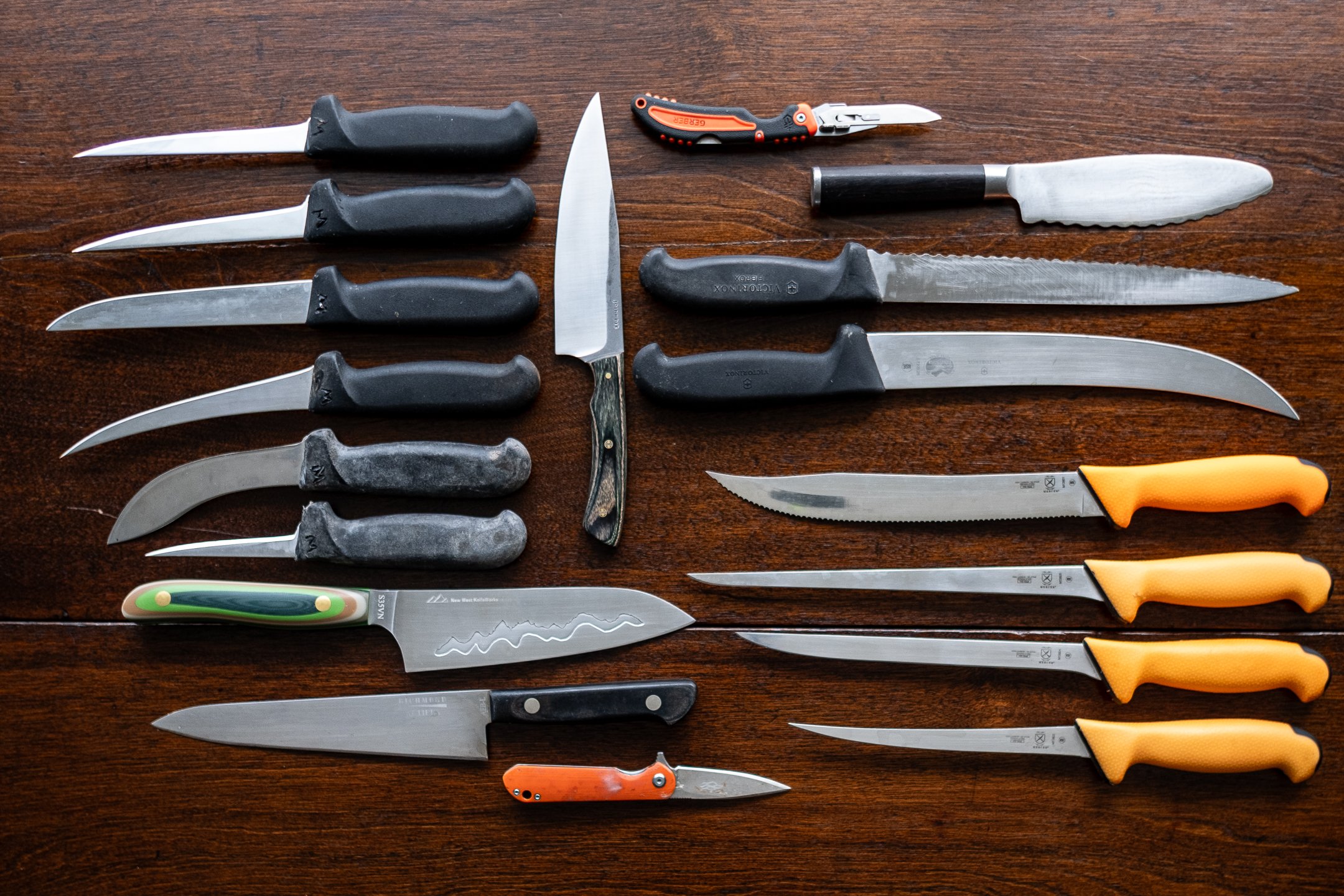
Kitchen Knives
✅ Allowed with proper packing
Use a knife roll with plastic edge guards
– Chef’s, paring, utility knives all permitted
– Travelers report no issues bringing Japanese chef’s knives back to the U.S.
Hunting & Camping Knives
✅ Allowed if legal at destination
Use heavy-duty sheaths
– Declare as “sporting equipment” if questioned
Ceramic Knives
✅ Allowed in checked bags
❌ Not in carry-ons
– Fragile: Wrap carefully
– Hard to detect on X-ray—may trigger manual inspection
📊 Risk Assessment: What Could Go Wrong?
| Risk | Reality Check |
|---|---|
| Confiscation | Legal knives seized in transit countries (e.g., Germany, Greece) |
| Theft | Baggage handlers may steal visible or loose knives |
| Damage | Poor packing = dull or broken blades |
| Legal Trouble | Possession illegal upon arrival, even if transport was allowed |
Real Traveler Experiences
- Namibia via South Africa: Mora, Leatherman, and Silky saw cleared with inspection note.
- Jamaica: 3” flipper carried to and from—no issues.
- Madagascar: Knife collection passed with no problems.
- Germany: Automatic knife confiscated despite being in checked bag.
Lesson: Just because it’s allowed doesn’t mean it’s safe.
📏 Blade Length and Legal Risk (U.S. Focus)
TSA doesn’t regulate blade length in checked bags—but state and city laws do.
| Blade Length | Legal Risk | Notes |
|---|---|---|
| < 2.5″ | Low | Legal in most areas, including federal buildings |
| 2.5″ – 3.0″ | Moderate | Banned in Boston, D.C., NYC |
| 3.0″ – 4.0″ | High | Often illegal to conceal without permit |
| > 4.0″ | Very High | Treated as a weapon in many states |
New York City: Bans “gravity knives” and “one-hand open” knives—regardless of blade size.
🛡️ Protect Your Knife: Travel Smart
For High-Value Knives
- Document: Take clear photos before departure.
- Declare value: Buy excess valuation from the airline.
- Track it: Use an Apple AirTag or Tile Pro hidden in bag lining.
- Inspect after flight: Look for a TSA inspection notice. If missing, file a claim within 30 days.
❓ FAQs: Quick Answers
Can I bring a small pocket knife in my carry-on?
❌ No. All knives, even 1-inch blades, are banned in carry-ons—no exceptions.
Do I have to declare a knife in checked luggage?
❌ No. Unlike firearms, knives don’t require verbal declaration. But secure packing is mandatory.
What if I forget a knife in my carry-on?
You can:
– Check the bag (if time allows)
– Hand it to a non-traveler
– Mail it to yourself (some airports have kiosks)
– Surrender it to TSA (not returned)
Are ceramic knives treated differently?
❌ No. They’re still sharp objects—must be in checked bags. But they’re fragile, so wrap carefully.
Can I lock my bag with a knife inside?
✅ Yes—but only with a TSA-approved lock. Non-TSA locks will be cut during inspection.
✅ Final Checklist: Travel Without Trouble
Before checking a bag with a knife, confirm:
- [ ] Knife is not prohibited (no switchblade, gravity, or butterfly knife)
- [ ] Blade is sheathed or wrapped securely
- [ ] Packed in hard case or knife roll, centered in suitcase
- [ ] Bag secured with TSA-approved lock
- [ ] Destination laws verified—especially for transit countries
- [ ] High-value knife: Photos taken, value declared, tracker hidden
Bottom Line: Yes, you can put a knife in a checked bag under TSA rules—but the journey doesn’t end at security. The biggest dangers are local laws, airline policies, and mishandling. When in doubt: leave it behind or buy it at your destination. Safe travels—and sharper packing.