Being locked out of a room—especially when a child or pet is trapped inside—can trigger panic in seconds. In those high-pressure moments, knowing how to open a lock door with a knife might feel like a lifesaving skill. While it won’t work on every door, this method can bypass certain interior locks in emergencies when keys are missing and help isn’t nearby.
Contrary to what movies suggest, you can’t slice through a lock or jimmy open a front door with a steak knife. But if the door uses a spring-loaded latch and there’s even a small gap between the frame and the door, a butter knife or flat tool might be all you need to pop it open. This guide walks you through exactly which locks respond to this technique, how to do it safely and effectively, and when you should stop and call a professional instead. You’ll also learn what tools actually work, how to prevent future lockouts, and the legal risks of using improvised methods.
Determine If Your Door Can Be Unlocked with a Knife
Before forcing anything, assess whether your door’s lock is even vulnerable to knife entry. Most exterior doors are immune, but many interior doors—especially in older homes—can be opened with basic household tools.
Spring Latch Doors Are the Only Real Target
These are the only locks that respond to knife-based techniques. Found on bedrooms, bathrooms, and closets, spring latch doors use a slanted bolt that automatically retracts when the doorknob turns. Because the latch isn’t mechanically locked, it can often be pushed back from the outside using a flat tool.
🔍 Quick test: Close the door and look for a visible gap between the door and frame near the knob. If you can slide a piece of paper through, a knife or credit card will likely fit.
Turn-Lock and Push-Button Interior Locks Can Be Released
Many bathroom doors feature a small hole on the exterior side of the knob. This is an emergency release designed for use with a flat tool like a butter knife or screwdriver. Insert the tool and rotate—often with a satisfying click—and the lock disengages.
💡 Pro tip: Practice this on an unlocked door first. Some models require a clockwise turn; others need counterclockwise pressure.
Deadbolts and High-Security Locks Won’t Budge
If your door has a deadbolt, forget about using a knife. These locks extend a solid metal bolt deep into the frame and require a key or thumb turn to release. They’re immune to prying, sliding, or knife manipulation.
❌ Warning: If you see a second, lower knob or a keyhole on the outside, it’s likely a deadbolt. Stop and call a locksmith—no knife will open it.
Use the Latch-Prying Method (Butter Knife Technique)
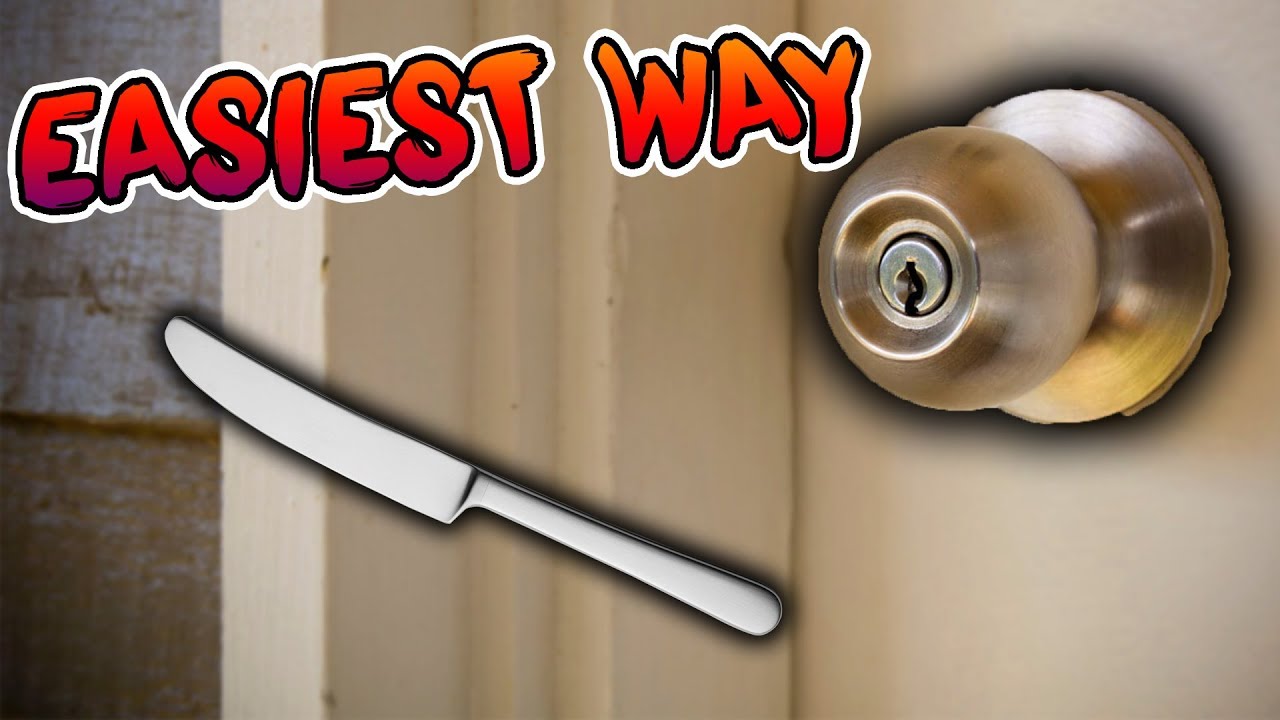
This is the most reliable method for opening a spring-latch door when you don’t have a key.
Insert Knife Just Above the Latch
Stand on the side where the doorknob is on the right—this gives you the best angle. Hold a butter knife or putty knife horizontally and slide the blade into the gap between the door and frame, just above the latch. Angle the tip so it contacts the beveled (slanted) side of the bolt.
✅ Best tools: Use a dull, rigid blade. Sharp knives increase the risk of injury and can slip easily.
Push the Latch Back into the Door
Apply steady inward pressure toward the door jamb. Use a sweeping motion to push the latch back into the door. As it retracts, gently pull or push the door open. If it resists, try wiggling the door slightly—this reduces tension on the latch and helps it slide free.
💡 Real-world tip: Compress weatherstripping by pressing the door inward slightly before inserting the blade. This creates more clearance.
When It Fails: Troubleshoot Common Obstacles
- Tight gap? Use the knife to gently widen the space before attempting the slide.
- No movement? The security pin may be engaged—common on well-installed exterior latches.
- Scraping sounds? The strike plate may be misaligned, blocking the latch.
⚠️ Never force it. Too much pressure can bend the latch, splinter the door, or break the knife.
Unlock Interior Doors Using the Side Hole Method
Many interior doorknobs have a small access hole (2–4mm) on the side, opposite the hinges. This is a built-in emergency release.
Locate the Access Hole
Look at the side of the knob near the base. Shine a flashlight if needed. On some models, the hole is hidden under a plastic cap that can be pried off.
🔎 Pro tip: If you’re unsure, check the manufacturer’s website or model number—many brands like Kwikset and Schlage use standardized emergency release systems.
Insert and Rotate the Knife
Use the flat tip of a butter knife and push it straight into the hole until you feel resistance. Then, turn clockwise or counterclockwise—one direction will release the lock. Listen for a click, then test the door.
🔄 Practice first: Try this on an unlocked door to learn which way the mechanism turns.
Alternative Tools If the Knife Fails
- Flat-head screwdriver – More control than a knife
- Hex key (Allen wrench) – Perfect size for many models
- Straightened paper clip – Can hook into the mechanism if bent correctly
✅ Works on most standard interior locks, but not all. High-security models may lack the hole entirely.
Combine Knife and Credit Card for Tight Gaps
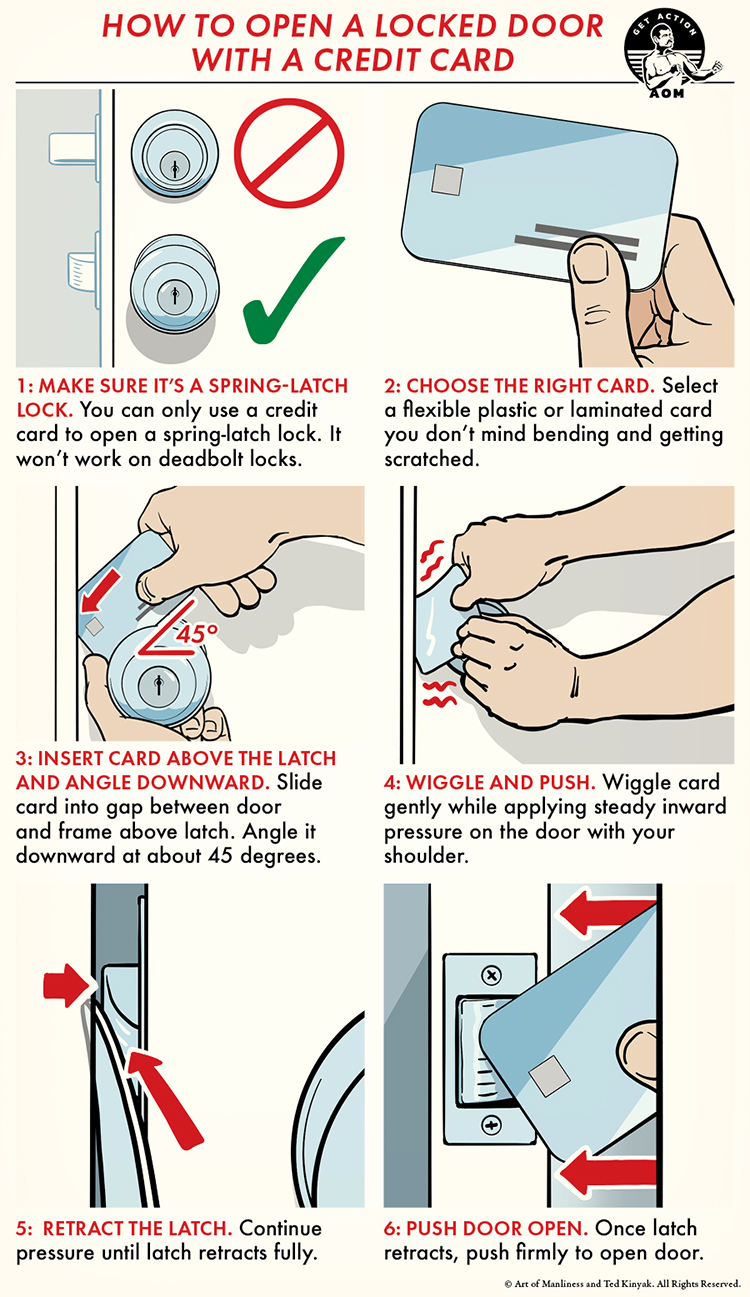
If the door sits flush and you can’t insert a knife, use the knife as a wedge to create space for a credit card.
Use the Knife to Force a Gap
Slide the blade into the narrowest part of the gap—usually near the top of the latch. Gently wiggle side to side to push the door away from the frame. Hold it in place or remove it quickly to insert your card.
Insert and Swipe the Credit Card
Use a stiff card (old gift card, hotel key) and angle it toward the beveled side of the latch. Swipe downward and inward to push the bolt back into the door.
🛑 Warning: Cards can crack or snap. Use a disposable one.
💬 User insight: “I tried a butter knife for 10 minutes—nothing. Used it to open a gap, then slid in a card. Door opened in 2 seconds.”
Can You Pick a Lock with a Pocket Knife?
Technically possible—but not practical for most people or modern locks.
Attempt Knife-as-Tension-Wrench Method
Insert the thin blade into the bottom of the keyway. Apply light turning pressure (like turning a key). Then use the blade or a second tool (like a bobby pin) to jiggle the pins upward. Listen for a click—this means a pin has set.
🧩 Problem: Most pocket knives are too thick or stiff to manipulate pins precisely.
Why It Rarely Works
- Requires two tools: one for tension, one for picking
- Modern pin tumbler locks have security pins and anti-pick features
- Knives lack the finesse of real lock picks
🔐 Expert verdict: “If locks were that easy, I wouldn’t have a job.” —Professional locksmith
Choose the Right Tool for the Job

Not all knives work. Some are safer and more effective than others.
Best Knives for Door Unlocking
| Tool | Best For | Why It Works |
|---|---|---|
| Butter Knife | Latch prying, hole rotation | Dull, rigid, safe |
| Putty Knife | Tight gaps | Thin, flexible, long blade |
| Pocket Knife (Closed) | Wedging | Use spine, not blade |
✅ Avoid sharp knives—they slip easily and increase injury risk.
Better Alternatives Than a Knife
| Tool | Advantage |
|---|---|
| Credit Card | Slides easily into gaps |
| Flat-Head Screwdriver | More control than a knife |
| Bobby Pin | Fits keyholes; easy to shape |
| Hex Key | Perfect size for tension wrench |
🛠️ Smart move: Keep a multi-tool or emergency kit with these items.
Prevent Unauthorized Access: Secure Your Doors
If you’re worried about someone opening your door with a knife, upgrade your security.
Install a Latch Guard
A metal plate that covers the latch and bolts into the frame. Blocks knife or card insertion. Stops most latch-sliding attempts.
🔒 Example: Nightlock Door Security Device—popular for rentals.
Upgrade to a Deadbolt
Even if the latch is bypassed, the deadbolt remains locked. Install it 12 inches above the handle for maximum protection.
Know the Legal and Safety Risks
Using a knife to open a door isn’t always legal—or safe.
Legal Consequences
- Trespassing or burglary charges apply without permission
- Possession of lock-picking tools is illegal in some states
- Damaging rental property may violate lease terms
📚 Only use on your home or in genuine emergencies.
Safety Hazards
- Knife slips: Can cause deep cuts
- Broken blades: Metal shards can fly
- Door damage: Wood can splinter
- Lock damage: May require replacement
🧤 Protect yourself: Wear gloves and work in good lighting.
When to Call a Locksmith
- Door has a deadbolt
- Knife method fails after 2–3 tries
- It’s an exterior door
- You hear grinding or snapping
📞 A pro can open most doors in under 5 minutes—no damage, no risk.
Real-World Success vs. Online Myths
Many videos make this look easy. Reality is different.
What Actually Works
- Opening bathroom doors with side holes
- Sliding spring latches on old interior doors
- Emergency access when kids or pets are trapped
What’s Overhyped
- Opening front doors with a knife
- Picking locks using only a pocket knife
- Removing hinges from outside
🎥 User comment: “Please make a video doing this on a real door. /s” —Reflects widespread skepticism.
Final Tips and Key Takeaways
✅ What Works
- Butter knife to push back spring latches
- Side hole rotation on bathroom locks
- Knife + credit card combo for tight gaps
- Emergency access only—not for break-ins
❌ What Doesn’t Work
- Deadbolts
- Exterior doors with security pins
- High-security or smart locks
- Lock picking with a standard knife
🔐 Prevention Tips
- Install deadbolts and latch guards
- Keep spare keys in a secure location
- Use keyless entry or smart locks
- Practice on unlocked doors first
🆘 Final Advice
If you’re locked out and unsure, call a locksmith. But if it’s a child in a bathroom and seconds count, keep a butter knife or old credit card in your emergency kit. That dull blade might just be the hero you need.
Remember: This skill is for emergencies and self-rescue, not forced entry. Respect the law, prioritize safety, and upgrade your home security to prevent future lockouts.