If you’re searching for a high-performing kitchen knife under $50, Imarku likely caught your eye. With sleek designs, bold claims of Japanese craftsmanship, and tens of thousands of glowing Amazon reviews, it’s natural to wonder: Is Imarku a good knife brand—or just another case of smart marketing overshadowing substance?
The answer is yes—Imarku is a solid, value-driven brand that delivers sharp, durable, and stylish knives ideal for home cooks. Independent testing, steel analysis, and real-world feedback confirm that its best models—especially the 8″ chef knife—outperform many competitors in slicing precision, edge retention, and comfort. The pakkawood handles feel premium, the blades come razor-sharp out of the box, and the lifetime warranty adds peace of mind.
But not everything lives up to the branding. While individual knives shine, large sets often include lower-tier stamped blades and weak steak knives made from low-grade 3Cr13MOV steel. The brand also uses vague steel descriptions and markets “Damascus” patterns that are etched or laminated, not hand-forged—meaning the beauty is mostly aesthetic.
In this in-depth review, you’ll get a clear, no-hype breakdown of Imarku’s strengths and weaknesses—so you can decide whether it’s the right brand for your kitchen.
Imarku’s Value Proposition: High Performance at Low Cost
Imarku positions itself as a high-performance, budget-friendly knife brand, and for the most part, it delivers. For under $50, you get a knife that slices effortlessly, looks elegant on display, and holds up to daily use. But what makes it stand out in a crowded market?
Sharper Out of the Box Than Most Premium Knives
One of Imarku’s biggest advantages is exceptional out-of-box sharpness—a rare feat in the budget knife world. Blade sharpness is measured using the Bess C scale, where lower numbers mean sharper edges. Testing reveals:
– 8″ Chef Knife: 250g (very sharp)
– 7″ Deba Knife: 80g (extremely sharp)
– 8″ Damascus Chef Knife: 165g
For context, many professional-grade knives fall in the 200–300g range. Imarku’s Damascus models rival high-end Japanese knives in initial sharpness, making them ideal for precise slicing right after unboxing—no immediate sharpening needed.
Balanced Edge Retention for Home Use
While not as hard as premium steels like SG2 or VG-10, Imarku uses 5Cr15MoV and 7Cr17MoV stainless steels with a hardness of 56–58 HRC—offering a balanced mix of performance and durability:
– Holds a sharp edge for 1–2 weeks with regular home use
– Resists rust and staining
– Easy to sharpen, even for beginners
Higher-end models use powdered steel (61–63 HRC), which improves hardness, wear resistance, and edge retention—putting them near Shun or Tojiro-level performance at half the price.
Pakkawood Handles That Feel Premium
Unlike budget brands that use plastic or rubberized grips, Imarku equips most of its better models with pakkawood—a composite of wood and resin that resists moisture, warping, and cracking. This same material is used in Shun and other high-end Japanese brands, giving Imarku knives a luxurious look and feel without the luxury price tag.
The handles are ergonomically shaped to suit both Japanese pinch grip and German full-hand grip, making them comfortable for all hand sizes and cutting styles.
What’s Really in Imarku’s Blades? Steel Quality Breakdown

Imarku markets its knives with terms like “high-carbon German/Japanese stainless steel,” but these descriptions lack specificity. So what’s really in the blades?
Common Steels Used in Imarku Knives
| Steel | Hardness (HRC) | Performance | Found In |
|---|---|---|---|
| 5Cr15MoV | 54–56 | Comparable to Wüsthof’s X50CrMoV15 | Entry-level chef knives |
| 7Cr17MoV | 56–58 | Similar to 440A, better wear resistance | Mid-range models |
| SUS440A | 55–58 | Budget Japanese steel, decent edge | Large sets |
| Powdered Steel | 61–63 | Fine grain, high hardness, excellent edge | Premium “Damascus” knives |
| 3Cr13MOV | 52–54 | Low-end, dulls quickly, hard to sharpen | Steak knives in sets |
🔍 Key Insight: The powdered steel in premium models is a major upgrade—offering near-premium performance at mid-tier prices. However, the lack of specific naming (e.g., no mention of RWL-34 or 154CM) makes it hard to verify exact quality.
Forged vs. Stamped: Know What You’re Buying

- Forged Knives: Full tang, heavier balance, more durable. Used in individual chef and santoku knives.
- Stamped Knives: Thinner, lighter, less durable. Found in large sets to cut costs.
Imarku’s best models are forged with full tangs, ensuring stability and longevity. But in large sets, stamped blades compromise overall quality and durability.
Handle Comfort and Grip: Designed for Real Kitchen Use
A knife is only as good as its handle. If it slips or fatigues your hand, performance drops fast. Imarku gets this right in most of its core models.
Pakkawood: Durable, Stylish, and Functional
Pakkawood combines the warmth and beauty of wood with the durability of synthetic materials. It’s:
– Resistant to water and heat
– Doesn’t absorb odors
– Available in black, red, white, and more
Users consistently praise the comfort and grip, especially during long prep sessions.
Ergonomic Design Features That Matter
- Sheared-off blade heel on paring knife prevents finger pricking
- Balanced at the bolster for better control
- 1.7-inch knuckle clearance on 8″ chef knife—excellent for fast chopping
✅ Pro Tip: The diamond-shaped handle on the $130 chef knife offers superior grip but may not suit all hand sizes.
Best Imarku Knives: Top Picks for Everyday Cooking
Not all Imarku knives are created equal. Stick to individual models or small sets for the best experience.
8″ Chef Knife (Gyuto) – The Best All-Around Performer
- Price: $40–$50
- Steel: 5Cr15MoV or 7Cr17MoV
- Hardness: 56–58 HRC
- Weight: 6.6 oz
- Handle: Pakkawood
- Warranty: Lifetime
This is Imarku’s flagship model and one of the best-performing knives under $60. It slices through onions like paper, handles rock chopping with ease, and maintains sharpness longer than Victorinox or Mercer.
🏆 Why It Wins: Combines German heft with Japanese thinness behind the edge—ideal for both power and precision.
7″ Santoku Knife – Precision Dicing Made Easy
- Double-bevel edge
- 15° sharpening angle
- Thinner than most budget santokus
Perfect for mincing herbs, dicing vegetables, and slicing boneless proteins. Outperforms many competitors in control and finesse.
3.5″ Paring Knife – Detail Work Done Right
- Ideal for peeling, coring, and segmenting citrus
- Sheared heel enhances safety
- Balances perfectly in the hand
Despite the high price (~$46), it’s a top-tier paring knife for the cost.
10″ Serrated Bread Knife – Skip the 8″
- Better reach for large loaves
- German high-carbon steel
- Cleaner cuts than smaller version in sets
The 8″ bread knife in sets is underwhelming. The 10″ standalone model is the better buy.
Avoid These Imarku Products: Where the Brand Falls Short
Imarku’s reputation suffers mostly due to overpriced, low-quality sets. Here’s what to skip.
Large Knife Sets (14–16 Pieces) – Quantity Over Quality
While they seem like a deal—sometimes under $10 per knife—they come with major compromises:
– Steak knives made of 3Cr13MOV steel—soft, dull quickly, hard to sharpen
– Stamped blades in utility and paring knives
– No empty slots in block—can’t expand your collection
– Inconsistent QC—some users report warped blades
❌ Bottom Line: You’re paying for quantity, not quality.
“Damascus” Knives: Style Over Substance?
Imarku markets some models as 108-step forged, 15-time folded, 32,768-layer Damascus steel. But testing shows:
– No evidence of true hand-forged layering
– Likely laminated or powdered steel with acid-etched patterns
– Aesthetic appeal only
While the performance is still good (thanks to high HRC), don’t buy these expecting traditional craftsmanship.
How Imarku Compares to Top Knife Brands
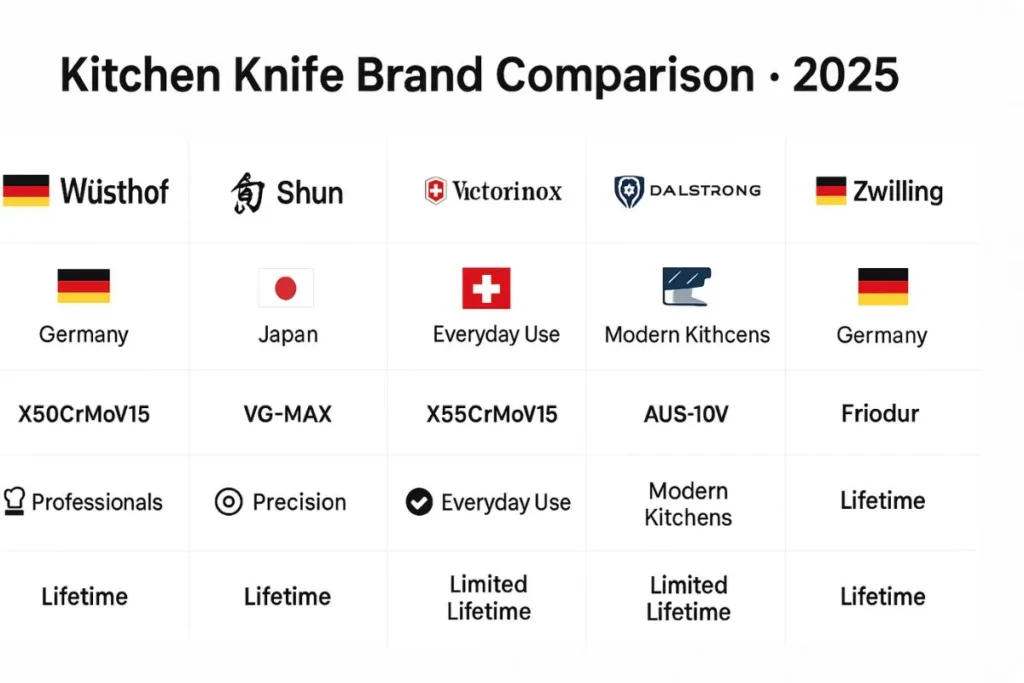
Where does Imarku stand against popular competitors?
| Feature | Imarku 8″ Chef | Victorinox Fibrox | Wüsthof Classic | Shun Classic | Tojiro DP |
|---|---|---|---|---|---|
| Blade Steel | 5Cr15MoV / 7Cr17MoV | X50CrMoV15 | High-Carbon Stainless | VG-MAX | SG2 |
| Hardness (HRC) | 56–58 (up to 63) | 56 | 58 | 61 | 60–61 |
| Handle | Pakkawood | Fibrox | Synthetic | Pakkawood | Pakkawood |
| Price | $40–$50 | $40 | $120 | $150 | $80 |
| Edge Angle | 15° | 15° | 14° | 16° | 15° |
| Best For | Value + performance | Budget workhorse | Professional kitchens | Precision & beauty | High-end budget |
✅ Verdict: Imarku beats Victorinox in handle quality and slicing thinness, undercuts Wüsthof by 60%, and offers 80–90% of Shun’s performance at a fraction of the cost.
Real-World Durability: Do Imarku Knives Last?
A good knife must last years, not months. So how do Imarku knives hold up?
13-Month Real-Use Test Results
One long-term user reported:
– No rust, staining, or handle warping
– Edge still sharp after regular honing
– No chipping, even with moderate use
– Maintained original appearance
Pakkawood showed no fading or cracking, and the blade finish remained intact.
Care Tips for Longevity
- Hand wash only—even if labeled dishwasher-safe
- Dry immediately to prevent water spots
- Use wood or plastic cutting boards—avoid glass, stone, or marble
- Hone weekly with a ceramic rod
- Sharpen every 3–6 months depending on use
⚠️ Warning: Thin blades (especially Damascus models) can chip on frozen foods or bones. Use a cleaver for heavy tasks.
Warranty & Customer Service: What You’re Covered For
Imarku stands behind its products:
– Lifetime warranty on most knives
– 90-day return policy
– Responsive support for warped or defective blades
Users report quick replacements for damaged items, even years later. PR-gifted knives (common in influencer reviews) don’t appear to skew overall ratings.
Who Should Buy Imarku?
✅ Buy If You:
- Are a home cook upgrading from basic knives
- Want sharp, stylish tools under $50
- Prefer pakkawood handles over plastic
- Value lifetime warranty and customer support
- Are buying a gift (packaging is premium)
❌ Skip If You:
- Are a professional chef needing ultra-durable tools
- Demand full material transparency (e.g., exact steel type)
- Need heavy-duty cleavers or boning knives
- Prefer authentic forged Damascus or traditional Japanese forging
- Want lightweight, nimble blades (Imarku leans German in balance)
Where to Buy: Best Deals and Smart Buying Tips (2024–2025)
- Individual Knives: $40–$100
- Small Sets (3–5 pcs): $60–$120
- Large Sets: $70–$170 (some discontinued)
- Amazon: Frequent 50% off deals during Prime Day, Black Friday
- Imarku Website: Promo codes often drop prices by 20–30%
🛒 Smart Buying Tip: Wait for Amazon lightning deals or use brand site coupons. The 8″ chef knife often drops to $35–$40.
Final Note: Imarku is a strong choice for home cooks who want sharp, durable, and beautiful knives without overspending. While the branding leans into exaggerated heritage claims, the performance is real—especially in individual forged models. Avoid large sets and steak knives, stick to pakkawood-handled chef, santoku, and paring knives, and you’ll get one of the best values in the sub-$60 knife market.