Yes, it is legal to carry a knife in California—but only under strict conditions. The answer isn’t a simple yes or no. Instead, it depends on the type of knife, how you carry it (open or concealed), where you are, and which city or county you’re in. What’s perfectly legal in one part of California could lead to arrest in another. This guide breaks down everything you need to know about California’s complex knife laws, based on state statutes, court rulings, and real-world enforcement.
California does not have statewide preemption for knife laws, meaning local governments can—and often do—impose stricter rules than the state. A folding pocket knife might be fine in rural Kern County but illegal in Los Angeles or San Francisco. Even a common box cutter has been used to convict someone of carrying a concealed dirk or dagger. Ignorance of the law is not a defense.
By the end of this article, you’ll understand:
– Which knives are always illegal
– How to legally carry a fixed blade or folding knife
– Where knives are banned—even if otherwise legal
– How local laws override state rules
– What recent court cases say about enforcement
Let’s cut through the confusion.
Legal Knife Types in California
Folding Knives: Always Legal When Closed
Folding knives are your safest option for everyday carry. Under Penal Code § 17235, any folding knife is legal as long as the blade is closed—regardless of length. You can carry it concealed in your pocket, in your backpack, or openly on your belt.
However, once the blade is opened and locked into position, it may be classified as a dirk or dagger, especially if carried concealed. The moment it becomes fixed open, it falls under stricter rules.
✅ You can:
– Carry a folding knife with any blade length, as long as it’s closed
– Keep it in your pocket, purse, or bag
– Use it openly, then close and stow it
❌ Avoid:
– Carrying a locking folding knife with the blade open and concealed
– Using a folding knife in a threatening manner (brandishing)
Assisted-Opening Knives: Legal Due to Court Rulings
Assisted-opening (or “spring-assist”) knives are not switchblades and are legal in California. These knives require manual pressure—like a thumb stud or flipper—to start opening, and they have a detent or spring bias toward closure.
This distinction was confirmed in In re: Gilbert R (2012) and reinforced in People v. Hester (2020). As long as the knife doesn’t deploy with a button or switch, it’s legal when folded.
✅ Safe to carry concealed if closed
❌ Never carry an assisted knife open and locked on your person unless openly displayed in a waist sheath
Switchblades Under 2 Inches: Generally Legal
Switchblades that open automatically via button, spring, or flick are illegal if the blade is 2 inches or longer (Penal Code § 21510). But knives with blades under 2 inches are not prohibited by state law.
But beware:
– San Francisco bans all switchblades, regardless of size
– Local ordinances may still ban them
– Federal law restricts possession on federal property (e.g., post offices, military bases)
Always check local laws before carrying.
Illegal Knife Types: Banned in All Cases
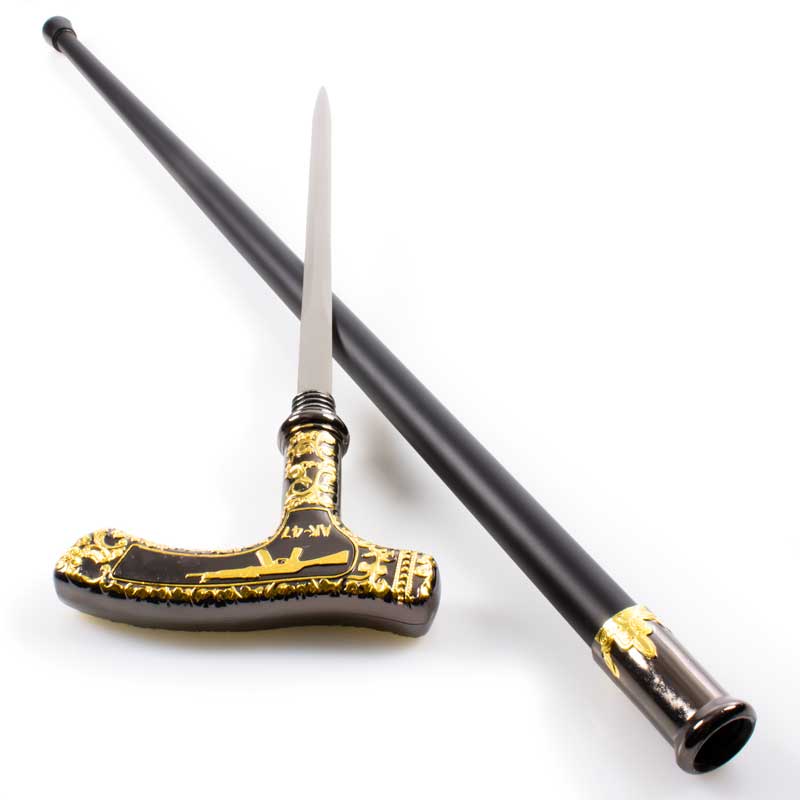
Ballistic, Cane, and Disguised Knives
Certain knives are always illegal under Penal Code § 16590, no matter how or where you carry them:
| Knife Type | Description |
|---|---|
| Ballistic knife | Launches blade like a projectile |
| Cane sword | Hidden blade inside walking stick |
| Belt buckle knife | Knife integrated into buckle |
| Pen, lipstick, or air gauge knife | Concealed in everyday objects |
| Undetectable knife | Made of non-metallic materials |
Possession is a wobbler offense—can be charged as misdemeanor or felony:
– Misdemeanor: Up to 1 year in jail, $1,000 fine
– Felony: 16 months to 3 years, up to $10,000 fine
These are not gray-area tools. They are classified as concealable weapons designed to evade detection—do not carry them.
Concealed Carry: What’s Forbidden
Carrying a Concealed Dirk or Dagger
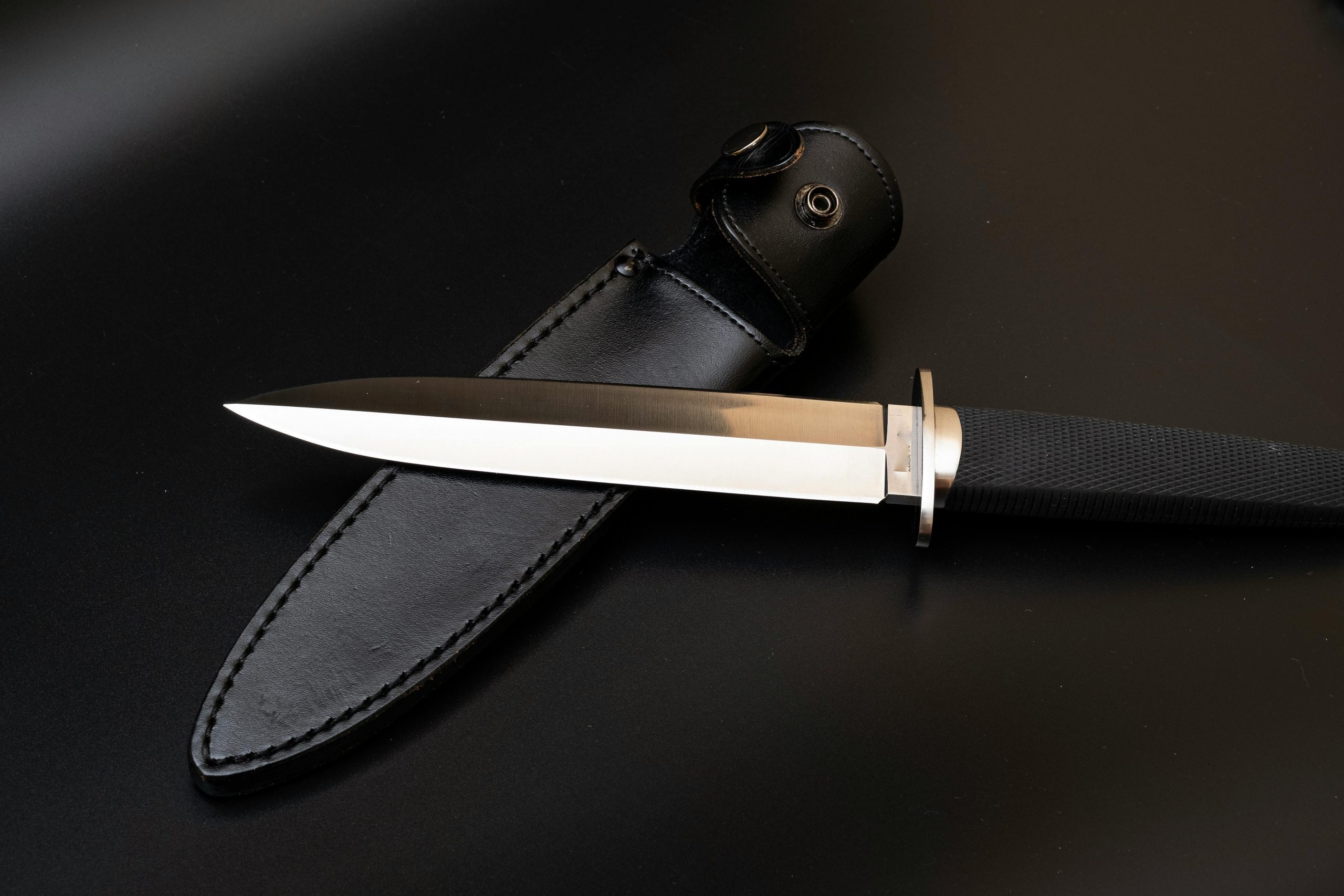
Penal Code § 21310 makes it illegal to carry a concealed dirk or dagger upon your person. This is one of the most misunderstood and broadly applied laws in California.
What Is a Dirk or Dagger?
Defined under Penal Code § 16470 as:
“Any knife or instrument capable of ready use as a stabbing weapon that may inflict great bodily injury or death.”
This includes:
– Fixed-blade knives (daggers, hunting knives)
– Locking folding knives when open
– Box cutters with retractable blades
– Even scissors or knitting needles in certain contexts
🔑 Key point: It’s not about intent—it’s about capability. If it can be used to stab, it’s a dirk or dagger.
And yes, a fixed-blade knife in your pocket—even a small one—is considered a concealed dirk or dagger.
Pocket Carry = Illegal for Fixed Blades
Never carry a fixed-blade knife in your pocket. Even if it’s in a sheath, it’s concealed upon the person and violates PC 21310.
This applies regardless of blade length. There is no legal blade length exemption for concealed carry.
“There is no allowable blade length for concealed dirks/daggers.” – People v. Hester (2020)
Backpacks and Purses: Still “Upon the Person”?
If the bag is worn on your body (e.g., shoulder strap, waist pack), courts have ruled it may still be considered “upon the person.” A knife in a backpack could be illegal if deemed readily accessible and concealed.
Safer options:
– Store in trunk or locked container
– Keep in glove compartment only if secured and not within easy reach
Open Carry: The Only Safe Way for Fixed Blades
Wear Sheath Openly on Your Waist
Penal Code § 20200 states:
“A knife carried in a sheath worn openly suspended from the waist is not considered concealed.”
This is your best legal protection for carrying a fixed blade.
To comply:
– Use a proper belt sheath
– Wear it on your hip or back, not hidden under a jacket
– Ensure it’s clearly visible
Even partial concealment (e.g., under a loose shirt) may be enough to trigger enforcement.
⚠️ Note: This rule applies only to dirks and daggers. Folding knives remain legal when concealed—as long as closed.
Transporting Knives in Vehicles
Legal If Not on Your Person
You can transport a fixed-blade knife in your car as long as:
– It is not on your body
– It is not readily accessible
– It is stored in a way that doesn’t constitute “carrying”
Recommended Storage:
- Trunk – safest option
- Glove compartment – only if locked or not immediately reachable
- Locked container – ideal for multiple tools
- Under seat – acceptable if not within arm’s reach
⚠️ Risk: If the knife is within easy reach (e.g., driver’s floor), police may argue it’s “on your person” or infer intent—especially with a prior record.
“In general, absent a local ordinance… a fixed blade knife… can be concealed anywhere but upon your person.” – Veteran California detective
Location-Based Restrictions: Where Knives Are Banned
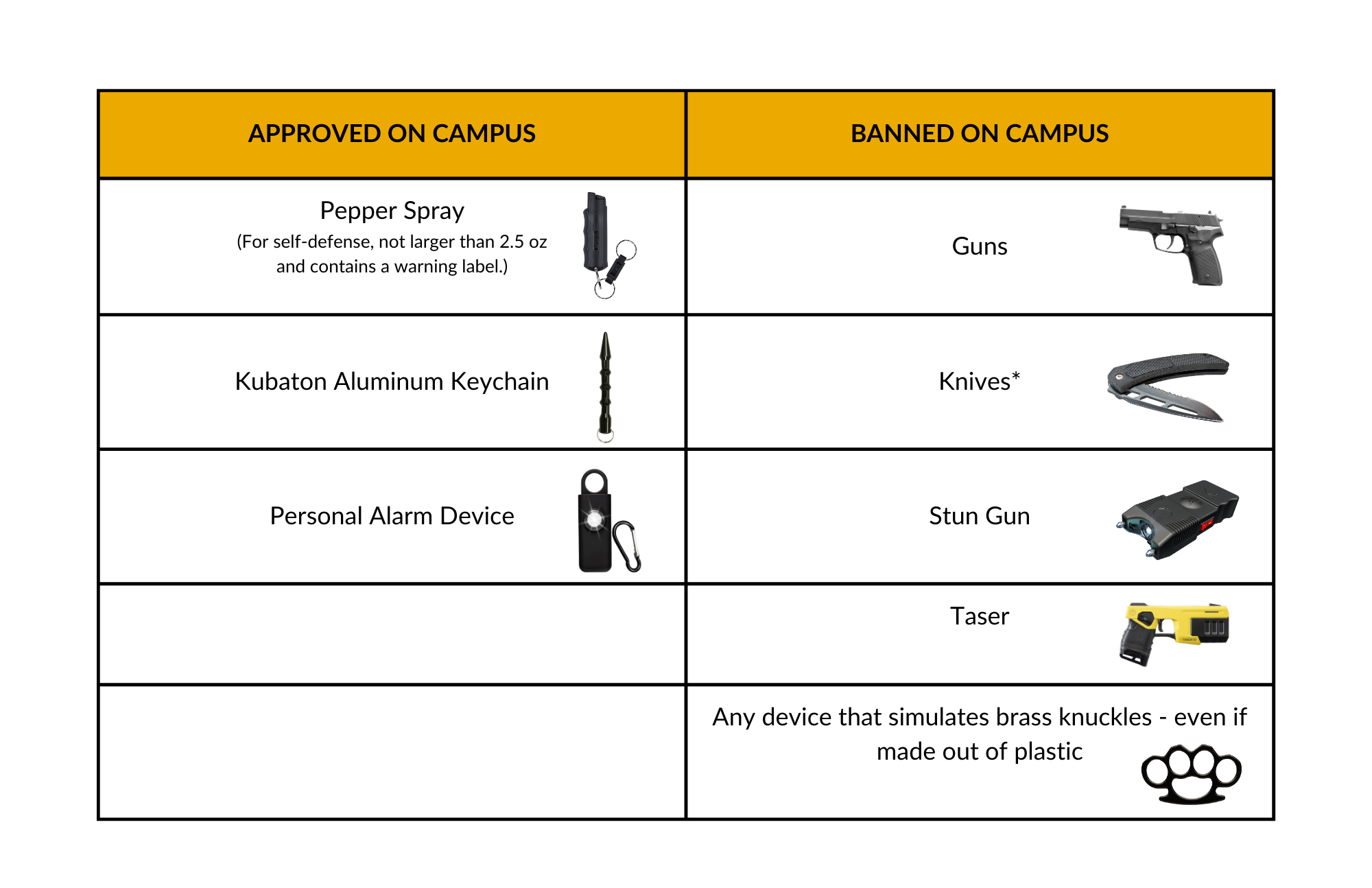
Schools and College Campuses
Penal Code § 626.10 bans knives on all school grounds, including:
– K–12 campuses
– Community colleges and universities
– Parking lots and school events
Prohibited:
– Knives with blades longer than 2.5 inches
– Locking folding knives, regardless of length
– Dirks, daggers, ice picks
✅ Only exception: A non-locking folding knife with blade 2.5 inches or shorter
Violations are wobblers:
– Misdemeanor: up to 1 year jail
– Felony: up to 3 years state prison
“Bringing a Swiss Army knife to school could result in felony charges if it locks open.” – Legal analysis
Government Buildings and Public Meetings
Penal Code § 171b bans:
– Knives with blades over 4 inches
– Any prohibited weapon (switchblade, ballistic knife)
Applies to:
– Courthouses
– City halls
– State offices
– Public meetings
Violation is a wobbler with potential felony charges.
Airports and Transit Hubs
Penal Code § 171.5 applies the same 4-inch rule at:
– Airports
– Passenger vessel terminals
And § 171.7 bans undetectable knives in sterile areas of public transit facilities.
Federal law also prohibits switchblades on federal property, including TSA zones.
Private Property: No-Weapons Signs Apply
Businesses, landlords, and event venues can ban knives via posted signs. Refusing to comply can lead to trespassing charges.
Always look for:
– “No Weapons” signage
– Security checkpoints
– Bag checks
Local Laws: Where State Rules Don’t Apply
Major Cities With Stricter Knife Ordinances
Because California has no statewide preemption, local governments can—and do—ban knives more strictly than the state.
| City/County | Restriction |
|---|---|
| Los Angeles (City) | No open carry of knives with blade ≥ 3 inches on public streets |
| San Francisco | Bans switchblades of any length; prohibits loitering with concealed knife ≥ 3 inches |
| Oakland | Bans carrying any knife with blade ≥ 3 inches |
| Sacramento County | Prohibits knives on county property |
| San Diego County | Bans throwing knives in county parks |
What’s legal in Bakersfield may be a crime in downtown LA. Always research local codes before traveling.
Penalties: What Happens If You’re Caught?
Criminal Charges and Jail Time
Violating knife laws can lead to serious consequences:
| Offense | Classification | Penalty |
|---|---|---|
| Concealed dirk/dagger (PC 21310) | Wobbler | Misdemeanor: 1 year jail Felony: 3 years |
| Switchblade ≥ 2 inches (PC 21510) | Misdemeanor | 6 months jail, $1,000 fine |
| Prohibited knife (PC 16590) | Wobbler | Up to 3 years prison |
| Knife on school grounds (PC 626.10) | Wobbler | Up to 3 years state prison |
| Brandishing (PC 417) | Misdemeanor | 30 days–1 year jail |
⚠️ Enhancement: Under PC 12022, possessing an illegal knife during a felony adds +1 year to your sentence.
Real cases:
– Jonathon Lee Hester: 6 years for two box cutters
– Emmanuel Castillolopez: 3 years 8 months despite Supreme Court ruling
Even if you believe you’re legal, prosecutors can charge you—and you’ll need a lawyer to fight it.
Self-Defense: Can You Use a Knife?
Legal Use Requires Justification
You can use a knife in self-defense if:
– You reasonably believe you’re in danger of great bodily injury or death
– The force used is proportional to the threat
– You are not the aggressor
But drawing a knife—even legally carried—can lead to:
– Brandishing charges (PC 417): illegal to display in a threatening way
– Assault with a deadly weapon (PC 245a1): applies even without contact
– Criminal investigation and potential felony enhancement
⚠️ Critical: If your knife is illegal, you cannot claim self-defense.
Safer Alternatives
For personal protection, consider:
– Pepper spray – legal and effective
– Stun gun – allowed for most adults
– Personal alarm
Carrying a knife primarily for self-defense increases legal risk.
Court Rulings That Define Enforcement
People v. Castillolopez (2016): Non-Locking Knives Are Not Dirks
A man carried a non-locking Swiss Army knife in his pocket, blade open. He was convicted of carrying a concealed dirk.
The California Supreme Court reversed the conviction, ruling:
“A non-locking folding knife is not ‘locked into position’ when open, and therefore cannot be a dirk or dagger.”
🔑 Takeaway: Only locking blades qualify as dirks when open.
People v. Hester (2020): No Blade Length Exception
Hester carried two box cutters (~1 inch blades) in his pocket and backpack. He argued they were too small to be dangerous.
Court upheld conviction:
“No safe harbor based on blade length” for concealed carry.
🔑 Takeaway: Size doesn’t matter—concealed fixed blade = illegal.
In re: Luke W (2001): Tiny Blade in Wallet Not a Dirk
A credit card tool with a micro-blade in a wallet was ruled not a concealed dirk, due to lack of lethality and context.
Shows that context matters—but don’t rely on this precedent.
How to Stay Legal: 6 Practical Rules
1. Choose the Right Knife
✅ Safe choices:
– Folding knife (any length, closed)
– Assisted-opening knife with thumb stud
– Sub-2-inch switchblade (outside SF)
❌ Avoid:
– Switchblades ≥ 2 inches
– Ballistic, cane, belt buckle, pen knives
– Any undetectable or disguised knife
2. Carry Closed or Openly
- Folding knife: Keep closed—concealed is fine
- Fixed blade: Only carry openly in a waist sheath
- Never carry a fixed blade in pocket, purse, or backpack on your body
3. Check Local Laws First
Before entering a city:
– Search “[City] municipal code knife laws”
– Assume urban areas are stricter
– When in doubt, leave it behind
4. Avoid Restricted Locations
Never bring a knife to:
– Schools (K–12 or college)
– Courthouses, city halls
– Airports, transit hubs
– Private property with no-weapons signs
5. Store Knives Properly in Vehicles
- Use trunk or locked container
- Avoid glove compartment unless secured
- Never keep within easy reach while driving
6. Use Knives as Tools, Not Weapons
If questioned:
– Say you use it for work (e.g., construction, cooking)
– Have receipts or work ID if possible
– Remain calm, cooperative, and silent if charged
Final Note: California’s knife laws are complex, inconsistently enforced, and full of traps. A legal knife in one context can become a felony in another. The safest rule: If you’re not sure, don’t carry it. When in doubt, consult a California-licensed attorney before relying on any interpretation.