You’re pinned in a vehicle after a crash, smoke filling the cabin. With one hand on the steering wheel and the other free, you reach into your pocket and press a switch. In a split second, a blade shoots straight out the front of the handle—no flipping, no fumbling. You slice through the seatbelt and escape. This is the real-world power of an OTF knife, or Out-The-Front knife—a precision-engineered tool designed for speed, control, and one-handed operation when it matters most.
An OTF knife deploys its blade in a straight line from the front of the handle, unlike traditional folding knives that swing open sideways. It’s a unique category of automatic or spring-assisted knives prized for their rapid deployment, compact usability, and mechanical sophistication. Whether you’re an everyday carry (EDC) enthusiast, a first responder, or someone who values preparedness, understanding what an OTF knife is, how it works, and where it’s legal can make a critical difference. In this guide, you’ll explore the inner mechanics, types, legal status, top uses, and key buying considerations for OTF knives.
How OTF Knives Work: The Linear Blade Mechanism
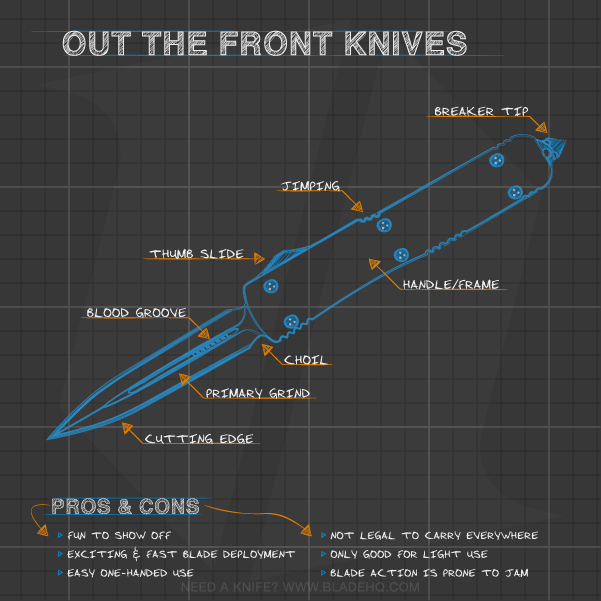
The Core Design: Blade Moves Front, Not Side
Unlike a standard pocket knife that pivots at the base, an OTF knife operates on a linear slide system. The blade rests inside the handle and moves forward and back along a straight path—like a drawer opening and closing. This front-to-back motion eliminates the need for lateral space, making OTFs ideal for tight environments like car interiors, machinery panels, or while wearing gloves.
The mechanism is housed entirely within the handle, typically made of aluminum, stainless steel, or G10. This sealed design protects internal parts from dirt, moisture, and impact, contributing to reliability—especially in demanding conditions.
Why “Out-The-Front” Is More Than a Name
The term OTF isn’t just descriptive—it defines a functional category. Any knife where the blade extends straight from the front qualifies as an OTF, regardless of whether it’s automatic or assisted. This design fundamentally separates OTFs from:
– Side-opening switchblades (e.g., Benchmade SOCOM Auto)
– Manual flippers (e.g., Spyderco Paramilitary 2)
– Gravity knives, which swing downward via gravity
This front-deploying action allows users to maintain a full grip throughout operation—your hand never leaves the handle. That means better control, faster response, and safer use in high-pressure scenarios.
Types of OTF Knives: From Assisted to Automatic
Spring-Assisted OTF Knives
These models require manual input to start the opening process. You press a thumb stud or slide, then a spring takes over to fully extend the blade.
– Blade starts closed
– Activation: Thumb pressure + spring assist
– Legal status: Often not classified as switchblades in many U.S. states
These are popular for EDC due to their balance of speed, reliability, and legal accessibility. They’re also typically more affordable and durable than fully automatic versions.
Automatic OTF Knives (True Switchblades)
Press a button or slide a switch—the blade instantly fires forward with no manual effort.
– Blade starts open, held closed by a latch
– Activation: Push-button or slide mechanism
– Legal status: Classified as switchblades in most jurisdictions; heavily restricted
These are the fastest OTFs available, favored in tactical, law enforcement, and self-defense roles. However, they’re illegal or restricted in states like New York, New Jersey, and California.
Gravity OTF Knives
A niche variant, these use gravity, not springs, to deploy the blade.
– Operation: Hold knife downward, press trigger, blade drops into place
– No spring power for deployment
– Common users: Stagehands, utility workers, dock crews
While technically OTFs due to front deployment, they function differently and face unique legal scrutiny—especially in places like New York, where gravity knives were historically banned.
Single Action vs Double Action OTF: Know the Difference
Single-Action OTF: Auto Open, Manual Close
In single-action OTF knives, only opening is automatic.
– Push the slide forward → blade fires out
– To close: manually push the blade back in
Pros:
– Simpler mechanism
– More durable
– Lower price ($30–$80)
Cons:
– Requires two hands to close
– Slower reset in emergencies
Best for users who prioritize reliability over convenience.
Double-Action OTF: Open and Close Automatically
Double-action models let you open and close the blade with the same thumb slide.
– Slide forward → blade deploys
– Slide backward → blade retracts
Pros:
– Full one-handed operation
– Faster cycling
– Tactical advantage in emergencies
Cons:
– More complex internals
– Higher risk of mechanical wear
– Pricier ($90–$200+)
Ideal for self-defense, EMTs, or anyone needing rapid, repeatable access.
Inside the Mechanism: How OTF Knives Deploy

Key Components That Make It Work
An OTF knife’s speed hinges on precision engineering. Here’s what’s inside:
| Component | Function |
|---|---|
| Blade | Slides on rails; locks in open/closed positions |
| Spring | Stores energy for deployment/retraction |
| Steel Plate | Connects thumb slide to spring; transfers motion |
| Thumb Slide | External control—push/pull to operate |
| Detents | Spring-loaded pins that lock blade position |
| Angled Tab | Lifts detents to release blade during operation |
Step-by-Step Deployment
- User pushes thumb slide forward
- Steel plate moves, stretching the spring
- Angled tab lifts rear detent, releasing blade
- Spring snaps blade forward
- Front detent disengages; rear detent locks blade open
Result: Full deployment in under a second—faster than most side-opening knives.
Controlled Retraction (Double-Action Only)
- User pulls thumb slide backward
- Steel plate shifts, further tensioning spring
- Angled tab lifts front detent
- Spring pulls blade back into handle
- Rear detent releases; front detent locks closed
This reverse-action system is exclusive to double-action OTFs and enables seamless, one-handed resetting—critical in life-or-death moments.
OTF vs Other Knife Types: How They Compare
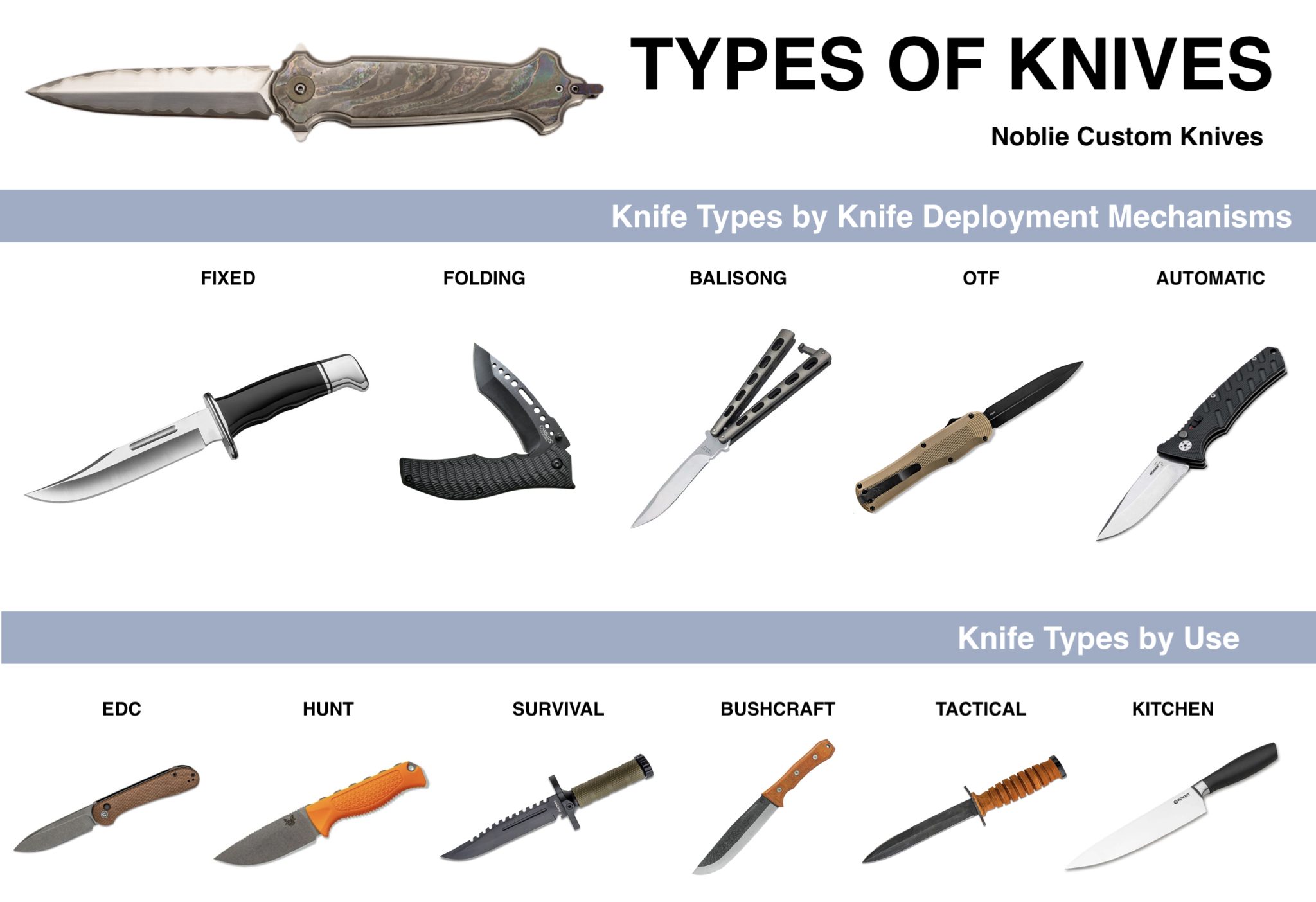
| Feature | OTF Knife | Side-Opening Auto | Assisted Open | Gravity Knife |
|---|---|---|---|---|
| Deployment Direction | Front | Side | Side | Downward arc |
| One-Handed Close? | Yes (DA), No (SA) | Yes | Yes | Yes |
| Blade Resting State | Open (auto), Closed (assisted) | Open | Closed | Closed |
| Activation | Slide/button | Button | Thumb stud | Trigger + gravity |
| Mechanical Complexity | High | Moderate | Low | Moderate |
OTFs stand out for linear motion, full-handle grip, and compact usability—but come with higher complexity and legal scrutiny.
Legal Status: Where Are OTF Knives Allowed?
U.S. Federal and State Laws
The Switchblade Knife Act of 1958 bans interstate sale and transport of switchblades—but not ownership. State laws vary widely:
- Restricted or Illegal:
- California: Automatic OTFs banned unless <2″ blade and carried openly
- New York: All switchblade-type knives (including OTFs) illegal
- New Jersey: Strict ban; possession can lead to criminal charges
-
Michigan: Legal if not marketed as switchblades
-
Generally Legal:
- Texas, Florida, Arizona, Colorado (with concealed carry caveats)
Key legal test: Does the blade deploy without manual effort? If yes, it’s likely a switchblade.
International Regulations
- UK: All automatic knives illegal under Restriction of Offensive Weapons Act
- Canada: OTFs classified as prohibited weapons
- Australia: Banned in most states; permits rare
- Germany: Only allowed with government authorization
- France: Permitted if blade ≤8.5 cm and not carried in public
Always check local laws before purchasing or carrying.
Why Choose an OTF Knife? Key Benefits
One-Handed Operation
From opening packages to emergency escapes, OTFs let you keep your other hand free. Double-action models take this further—open and close without setting the knife down.
Full Grip Retention
Unlike flipper knives, OTF users never lose grip during deployment. This improves control, especially in wet, gloved, or high-stress conditions.
Use in Tight Spaces
No swinging room needed. The blade extends straight out—perfect for under dashboards, inside machinery, or while climbing.
Tactical and Emergency Use
Many OTFs include glass breakers and seatbelt cutters, making them essential vehicle emergency tools. Firefighters, paramedics, and drivers rely on them.
Modern, Collector-Friendly Design
With CNC-machined titanium, smooth action, and futuristic looks, OTFs are mechanical art. Brands like Microtech and Zero Tolerance craft models that are as much collectibles as tools.
Common Uses and Who Should Carry One
Everyday Carry (EDC)
Compact OTFs (<3″) handle daily tasks—opening boxes, cutting tape, food prep. Mini OTFs fit on keychains.
Self-Defense
Fast deployment gives OTFs an edge. But check local laws—many states ban carrying automatics for defense.
Outdoor and Survival
Great for camping, fishing, or hunting—especially with gloves on.
Professional Use
Electricians, HVAC techs, and carpenters use OTFs for quick line cutting without two-handed fumbling.
Emergency Response
Used by first responders to:
– Cut seatbelts
– Break car windows
– Open medical packaging
Many EMTs and police carry OTFs—where legal.
What to Look for When Buying an OTF Knife
Blade Size: Match to Your Needs
- Mini OTF (<2″): Discreet, keychain carry
- Medium (2–3″): Best for EDC
- Large (>3″): Heavy-duty use; may trigger legal issues
Tip: In many states, blades over 3″ attract more scrutiny.
Edge Type: Straight, Serrated, or Combo
- Straight: Clean cuts, easy sharpening
- Serrated: Grips rope, carpet, seatbelts
- Combo: Best of both—common on tactical models
Blade Shape
- Tanto: Strong tip—good for piercing
- Drop Point: Versatile—ideal for utility
- Clip Point: Sharp tip—great for detail work
- Spear Point: Balanced—common in daggers
Steel Quality
- 440A/C: Budget-friendly; rust-resistant but soft
- D2: Wear-resistant; holds edge well
- S30V, CPM-154: Premium; excellent performance
Handle Material
- Aluminum: Lightweight, durable
- Stainless Steel: Tough, heavier
- G10, Titanium: Premium grip and corrosion resistance
Look for textured grip, contoured shape, and ergonomic switch placement.
Top OTF Brands and Price Tiers
Budget ($30–$70): Schrade, Cold Steel, Kershaw
- Basic aluminum handles
- 440A/C steel
- Good for beginners
Mid-Range ($70–$150): CRKT, Benchmade, Gerber
- Better steel (D2, 154CM)
- Smoother action
- Ideal for daily EDC
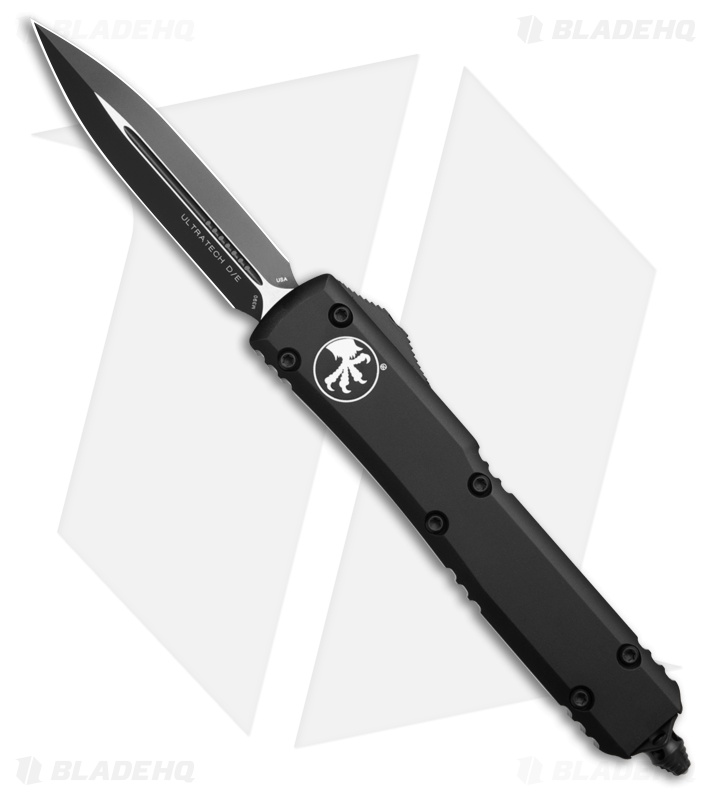
High-End ($150+): Microtech, Zero Tolerance, Spyderco
- Aerospace materials
- CPM-S30V, Elmax, M390 steels
- Lifetime warranties
- Microtech Ultratech is the gold standard
Maintenance Tips for Longevity
- Clean rails and blade channel every 1–2 months
- Use light knife oil (Tri-Flow, Ballistol)
- Avoid WD-40—it attracts dust
- Inspect for wear, wobble, or weak spring tension
- Many brands offer lifetime warranties (Microtech, Benchmade)
Final Thought: An OTF knife is more than a tool—it’s a fusion of engineering and utility. Whether you’re cutting a box or cutting yourself free, it delivers when seconds count. Just know your laws, maintain it properly, and choose the right model for your life.