If your kitchen feels like it’s missing that one perfect blade—something sharper, lighter, and more precise than the average chef’s knife—you’re not alone. The gyuto knife has quietly become the go-to tool for cooks who demand more from their cutlery. It’s not just a fancy upgrade; it’s the Japanese evolution of the Western chef’s knife, engineered for speed, accuracy, and effortless performance. Whether you’re slicing a seared ribeye, dicing onions, or filleting delicate fish, the gyuto handles it all with surgical precision.
So, what is a gyuto knife? At its heart, it’s an all-purpose kitchen workhorse, born from Japan’s Meiji era to cut beef but now used for everything from vegetables to poultry. With a thinner blade, harder steel, and a sharper edge than most Western knives, it slices cleanly without crushing or tearing. It’s lighter, faster, and built for control—making it a favorite among professionals and home cooks alike. In this guide, you’ll learn its history, design, uses, and how to choose and care for one so you can make a smart, lasting investment in your kitchen.
Origins: The Meiji-Era Revolution That Created the Gyuto
Why Japan Needed a “Cow Sword”
The gyuto knife emerged in the late 1800s during Japan’s Meiji era (1868–1912), a time of rapid modernization and Western influence. As foreign trade opened and diets shifted, meat—especially beef—became more common. But traditional Japanese knives like the deba (for fish) and usuba (for vegetables) weren’t suited for thick cuts of meat. Something new was needed.
Enter the gyuto, whose name literally means “cow sword” (gyu = cow, to = knife). It wasn’t just a copy of Western knives—it was a Japanese reinterpretation, blending the chopping motion of a German chef’s knife with the razor-sharp precision of traditional Japanese blades. Crafted by skilled blacksmiths, the gyuto was lighter, thinner, and more agile than its European counterparts, designed to slice through meat with minimal resistance.
From Butchery Tool to Kitchen Essential
Originally used for breaking down beef, the gyuto’s versatility quickly made it indispensable. Chefs realized it could handle poultry, fish, and vegetables just as well. Over time, it evolved from a specialized meat knife into the primary all-purpose blade in Japanese and global kitchens. Today, it’s not just a relic of culinary history—it’s a modern staple.
Design: What Makes a Gyuto Blade So Effective?

Blade Length: Choosing the Right Size
Gyuto knives typically range from 7 to 10 inches (180–270 mm), with 8-inch (200 mm) and 9.5-inch (240 mm) models being most popular. Size affects performance:
- 18–21 cm (7–8.3 in): Best for home cooks, smaller hands, and compact boards
- 21–24 cm (8.3–9.5 in): Ideal for serious cooking and professional use
- 24–27 cm (9.5–10.6 in): Preferred for large roasts or whole fish
Choose based on comfort and cutting style—longer blades offer reach, shorter ones offer control.
Curve and Cutting Motion: Rock, Slice, Repeat
The gyuto features a gentle, sweeping curve from heel to tip, enabling the rock-chopping technique used in Western kitchens. But unlike heavier German knives, its belly is flatter, allowing longer slicing strokes—perfect for sashimi, roasts, or tomatoes. This hybrid profile supports both rocking and push-cutting, making it ideal for diverse prep styles.
Near the heel, a 1–2 inch flat edge allows precise dicing without needing a separate knife. It’s this balance of curve and flatness that makes the gyuto uniquely adaptable.
Thin Blade, Light Weight: Why It Cuts So Cleanly
Compared to Western chef’s knives, the gyuto is thinner behind the edge and lighter overall. This reduces drag and hand fatigue, especially during extended prep. While less robust than German blades, its precision and agility make it superior for delicate tasks.
Harder steel means less material is needed for strength—so the blade stays thin without sacrificing performance. The result? Effortless cuts through dense and soft ingredients alike.
Steel and Sharpness: The Secret Behind Its Razor Edge
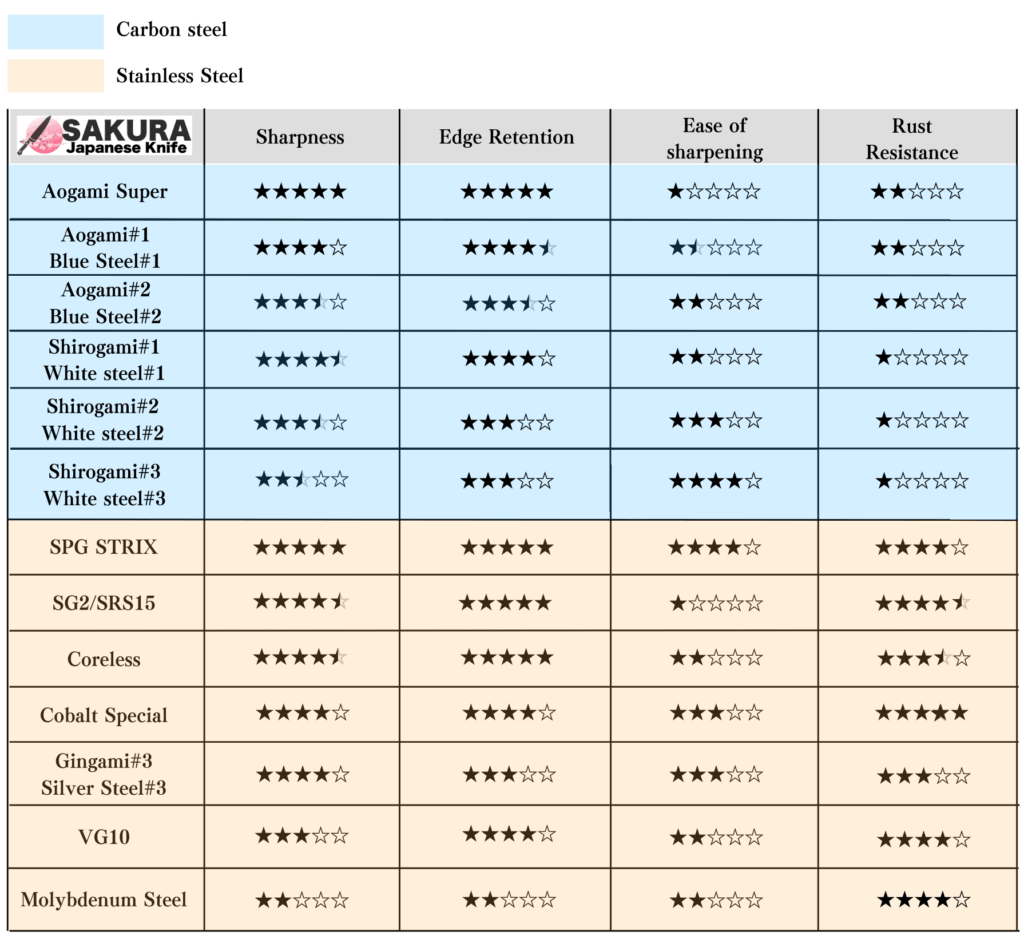
High-Performance Japanese Steels
Gyuto knives are made from high-carbon or stainless Japanese steels known for sharpness and edge retention. Common types include:
- VG-10: Stainless steel, excellent edge retention, ideal for beginners
- AUS-10: Similar to VG-10, slightly softer
- Aogami (Blue Steel): High-carbon, extremely sharp, preferred by pros
- Shirogami (White Steel): Even sharper but requires high maintenance
- Damascus: Layered steel for beauty and performance
Hardness is measured in HRC (Rockwell Hardness). Most gyutos range from 58 to 65 HRC, with harder steels (60+) holding an edge longer but being more brittle.
Why Japanese Blades Stay Sharper Longer
Japanese steel is finer-grained and purer, allowing for sharper, thinner edges. A typical gyuto is sharpened to 10°–15° per side, compared to 15°–20° for German knives. This acute angle slices with less resistance—ideal for clean cuts through meat, fish, and vegetables.
However, this sharpness comes with a trade-off: less durability under impact. Never use a gyuto on bones, frozen foods, or hard shells.
Handle and Balance: How It Feels in Your Hand
Japanese vs. Western Handles

Gyuto knives come with two main handle styles:
- Wa (Japanese) Handle:
- Octagonal or D-shaped
- Made from magnolia, zelkova, or rosewood
- Lightweight, balanced toward the blade
-
Favored by pros for precision
-
Western-Style Handle:
- Full tang, ergonomic grip
- Pakka wood, resin, or composite
- Heavier, balanced near the hand
- More shock-absorbent for heavy tasks
The wa handle feels like an extension of your arm—ideal for fast, controlled cuts. The Western handle offers grip security during forceful chopping.
Finding Your Balance Point
Balance affects control and fatigue. Test the knife by balancing it on one finger:
- Front-heavy (blade-forward): Better for slicing and rocking
- Center-balanced: Versatile for mixed tasks
- Handle-heavy: More stable for beginners
A well-balanced gyuto should feel natural and responsive, not tiring after 30 minutes of use.
Function: What Can a Gyuto Actually Do?
Meat and Poultry: Precision Over Power
The gyuto excels at breaking down whole chickens, slicing steaks, and trimming fat. Use the full blade length to cut perpendicular to the grain for tender results. Its sharp edge ensures clean separation without tearing.
Avoid using it for bone-in cuts—opt for a cleaver or boning knife instead.
Fish and Seafood: Slicing Like a Pro
From filleting salmon to slicing sashimi, the gyuto’s precision is unmatched. Use a pull-cut motion to glide through delicate flesh. For slippery fish, place a damp towel under the cutting board for stability.
While not a dedicated deba, it handles small to medium fish with ease.
Vegetables and Fruits: Clean Cuts, No Bruising
Chop onions, dice carrots, julienne peppers—all with one knife. The pointed tip allows for detailed work like mincing garlic or chiffonading herbs. Its thin blade slices soft fruits like tomatoes without bruising.
Use the rock-chop technique for herbs and aromatics. The flat heel helps crush garlic before mincing.
Herbs and Aromatics: Preserving Flavor
A gyuto’s sharp edge preserves volatile oils in herbs like basil and cilantro—no bruising means brighter flavor. Use a fine rocking motion for even mincing, or a pull-cut for leafy greens.
How It Compares: Gyuto vs. Other Knives
Gyuto vs. Western Chef’s Knife
| Feature | Gyuto | Western Chef’s Knife |
|---|---|---|
| Steel | Harder (60–65 HRC) | Softer (54–58 HRC) |
| Edge Angle | 10°–15° | 15°–20° |
| Weight | Lighter | Heavier |
| Balance | Tip-forward | Handle-balanced |
| Best For | Slicing, precision | Chopping, durability |
The gyuto is faster and sharper, the Western knife tougher and more forgiving.
Gyuto vs. Santoku
- Gyuto: Longer, curved—better for rocking and slicing
- Santoku: Shorter, flat—better for chopping and dicing
- Tip: Gyuto has a sharp point, Santoku a sheep’s foot (rounded)
Choose gyuto for Western-style cooking, santoku for Japanese-style prep.
Gyuto vs. Bunka and Kiritsuke
- Bunka: Flatter edge, angular tip—ideal for push-cutting and detail work
- Kiritsuke: Often single-bevel, straighter—used by professional sushi chefs
- Gyuto: Most versatile for home cooks
The bunka and kiritsuke are specialized; the gyuto is universal.
How to Use a Gyuto Safely and Effectively
Master the Pinch Grip
The pinch grip—thumb and index finger on the blade, rest of fingers on the handle—gives maximum control and safety. It reduces wrist strain and improves precision. Use the full handle grip only for heavy tasks.
Choose the Right Cutting Board
- Best: End-grain wood (maple, walnut) – self-healing, blade-friendly
- Good: Soft polyethylene – hygienic, durable
- Avoid: Glass, bamboo, hard plastic – dull or chip the blade
Never cut frozen items or bones—you’ll damage the edge.
Cutting Techniques to Master
- Rock-chopping: For onions, herbs, garlic
- Pull-cutting: For sashimi, tomatoes, delicate items
- Push-cutting: For root vegetables, squash
- Traveling cut: For fibrous ingredients like celery
Keep your fingers curled under (claw grip) to avoid cuts.
Sharpening and Maintenance: Keep It Razor-Sharp
Sharpening with a Whetstone
Use a 1000–3000 grit stone for regular sharpening, 5000+ grit for polishing. Steps:
- Soak water stone for 10–15 minutes
- Hold 15° angle (use guide if needed)
- Stroke full blade length, heel to tip
- Alternate sides evenly (5–10 strokes each)
- Finish with a leather strop or 8000-grit stone
Sharpen every 1–2 months for home use.
Honing vs. Sharpening
- Honing: Realigns the edge—do it before or after each use
- Sharpening: Removes metal—needed less often
Use a ceramic or steel honing rod, not too much pressure.
Daily Care Tips
- Hand wash only—never dishwasher
- Dry immediately, especially at the handle-blade junction
- Store in block, magnetic strip, or sheath—never loose in a drawer
- For carbon steel: Apply food-safe mineral oil to prevent rust
Avoid acidic foods (like tomatoes) for long periods if using carbon steel.
How to Choose the Right Gyuto Knife
Match Size to Your Needs
- Home cook: 18–21 cm (7–8.3 in)
- Serious cook: 21–24 cm (8.3–9.5 in)
- Pro chef: 24–27 cm (9.5–10.6 in)
Smaller blades offer control; larger ones increase efficiency.
Pick the Right Steel
- Beginner: VG-10 or AUS-10 (stainless, low maintenance)
- Advanced: Aogami or Shirogami (carbon steel, high performance)
- Enthusiast: Damascus (beautiful, layered, durable)
Stainless is rust-resistant; carbon is sharper but high-maintenance.
Consider Handle Comfort
Test the grip if possible. Wa handles suit smaller hands and precision work; Western handles are better for heavy use. Materials like magnolia are light and traditional; pakka wood is moisture-resistant.
Set a Realistic Budget
- Under $40: Entry-level, good starter
- $40–$120: Best value—excellent performance
- $120+: Professional-grade, hand-forged, premium
You don’t need to spend $200+ for a great knife—many $60 models outperform $100 German knives.
Top Recommended Gyuto Knives
Iseya I Series 33-Layer Damascus (210mm)
- Steel: VG-10 core, 33-layer Damascus
- Finish: Hammered (reduces food stick)
- Handle: D-shaped black plywood
- Weight: 175g
- Best for: Cooks who love design and performance
Sakai Takayuki 33-Layer Damascus (210mm)
- Steel: VG-10, hand-sharpened
- Handle: Mahogany with natural grain
- Pros: Lightweight, sharp, balanced
- Best for: Fans of authentic Japanese craftsmanship
Sakai Takayuki Aogami Super Black (190mm)
- Steel: Blue Paper Super (~65 HRC)
- Handle: Octagonal zelkova (Wa)
- Weight: 150g (ultra-light)
- Best for: Pros or those with wrist fatigue
Fujijiro DP 3-Layer Steel (210mm)
- Steel: VG-10 core, stainless cladding
- Handle: Black Stamina wood
- Pros: Great value, easy to sharpen
- Best for: Upgrading from budget knives
FAQs: Quick Answers
What is a gyuto knife used for?
An all-purpose blade for slicing meat, chopping veggies, mincing herbs, and filleting fish.
Is a gyuto a chef’s knife?
Yes—it’s the Japanese version of the Western chef’s knife, but lighter, thinner, and sharper.
Can I cut bones with a gyuto?
No—never use it on bones or frozen food. It can chip or crack. Use a cleaver instead.
How often should I sharpen it?
- Hone: Before or after each use
- Sharpen: Every 1–2 months for home cooks
Why is my gyuto rusting?
It’s likely carbon steel. Dry it immediately and oil it occasionally. Stainless models resist rust.
Are gyutos good for beginners?
Yes—especially 8-inch, double-bevel, stainless steel models. They’re versatile and forgiving.