Yes, you can pack a knife in your luggage—but only in checked baggage. The Transportation Security Administration (TSA) bans all knives in carry-on bags, regardless of size or type. Whether it’s a small pocket knife, a Swiss Army tool, or a full-sized chef’s blade, any item with a sharp edge must be securely packed in your checked suitcase. This rule applies to all domestic U.S. flights and international departures from American airports. While TSA allows virtually any knife in checked luggage—no blade length limits, no restrictions on locking mechanisms—how you pack it and where you’re traveling matter just as much as the rule itself.
Every year, thousands of travelers unknowingly bring prohibited knives through security, resulting in confiscations, fines, and delays. Others face legal trouble upon arrival because their legally owned U.S. knives violate strict weapon laws abroad. This guide breaks down exactly what’s allowed, how to pack safely, and what international rules could affect your trip. You’ll also learn real-world tips from experienced travelers, airline policies, and how to avoid costly mistakes—so you can fly with confidence.
Knives in Carry-On vs. Checked Bags: What TSA Allows
The TSA enforces a strict no-knife policy for carry-on luggage. Any object deemed a cutting instrument is banned from the cabin unless it’s completely non-sharp.
Carry-On Baggage: Zero Tolerance for Blades
❌ All knives are prohibited in carry-on bags, including:
– Pocket knives
– Folding blades
– Multi-tools with blades
– Ceramic knives
– Box cutters
– Tactical pens with sharp tips
Even a tiny blade on a keychain multi-tool will be confiscated. Security officers have final authority—if it looks like a weapon, it won’t make it through screening.
The only exceptions are:
– Plastic cutlery
– Butter knives or round-bladed spreaders with no sharp edge or serration
These must be truly blunt and used solely for spreading food.
Checked Luggage: Knives Allowed with Conditions
✅ Knives are permitted in checked bags under TSA rules. There is:
– No blade length limit
– No restriction on knife type
– No ban on locking blades or one-handed openers
You can pack folding knives, fixed blades, hunting knives, chef’s knives, swords, machetes, and even tactical gear—as long as they’re securely sheathed or wrapped to prevent injury. However, remember: TSA rules apply only to U.S. flights. Your destination country or airline may impose stricter regulations.
How to Pack a Knife in Checked Luggage Safely
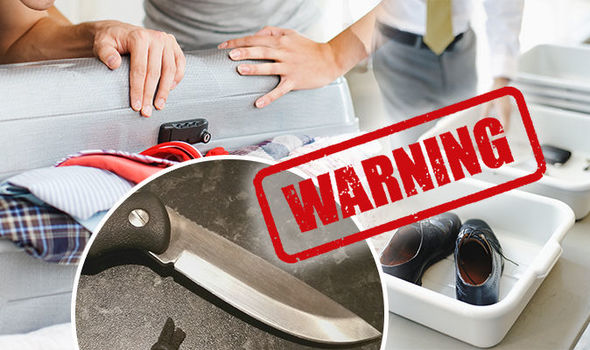
Packing a knife correctly protects baggage handlers, prevents damage, and reduces inspection risks.
Secure the Blade Before Packing
For folding knives, ensure the blade is fully closed. Test that the lock (liner, frame, or button) is disengaged and the blade stays shut under light pressure.
For fixed blades, always use a rigid sheath—leather, Kydex, or hard plastic. Never store a bare blade loose in your suitcase.
Wrap or Sheath Every Blade
If no sheath is available:
– Wrap the blade in bubble wrap or thick cloth
– Add a layer of cardboard or newspaper for extra padding
– Seal with duct tape, but place paper between tape and metal to avoid residue
Avoid zip ties or flimsy tape that can unravel during transit.
Cushion and Immobilize in the Suitcase
Place the wrapped knife in the center of your suitcase. Surround it with soft items like:
– Sweaters
– Towels
– Jeans
– Jackets
This absorbs impact and prevents punctures. Keep it away from electronics, zippers, and outer walls.
Use Hard-Shell Luggage When Possible
Hard-shell suitcases (polycarbonate or aluminum) offer better protection than soft-sided bags. They resist crushing and punctures—especially important if your bag is stacked under heavy cargo.
Label the Bag Clearly
Attach an external tag:
“Knife Inside – Securely Sheathed”
This helps TSA and handlers identify the contents safely. Include your name and contact info in case of inspection.
Lock with a TSA-Approved Lock
Use a TSA-approved lock (look for the red diamond symbol). Agents can open these with universal keys. Non-TSA locks will be cut off if inspection is required.
Declare at Check-In (Recommended)
Tell the airline agent:
“My bag contains a sheathed knife in checked luggage.”
No formal declaration is required (unlike firearms), but transparency builds trust and reduces suspicion.
Types of Knives Allowed in Checked Bags

All knife types are permitted in checked luggage under TSA rules—but proper packing is mandatory.
Folding and Pocket Knives
✅ Allowed when blade is closed and wrapped.
Popular EDC knives like Spyderco, Kershaw, or Benchmade are fine if securely packed.
⚠️ Warning: Locking blades are legal in the U.S. but banned in some countries (e.g., UK, Germany).
Fixed Blade and Hunting Knives
✅ Allowed with a sheath required.
Commonly transported by outdoor enthusiasts. Treat as sporting equipment.
Multi-Tools and Swiss Army Knives
✅ Allowed only in checked bags.
Tools like Leatherman Wave, Victorinox Swiss Army, or Gerber Center-Drive must not go in carry-ons—even with small blades.
🔧 Pro Tip: Buy a TSA-compliant multi-tool (without a blade) for carry-on access to pliers, screwdrivers, and files.
Kitchen and Chef’s Knives
✅ Allowed when properly protected.
Chefs and culinary travelers should use:
– Knife rolls with individual slots
– Plastic edge guards on each blade
– Bubble-wrapped rolls inside luggage
Avoid loose packing—blades can shift and damage other items.
Swords, Machetes, and Large Blades
✅ Allowed if sheathed and secured.
This includes:
– Samurai swords
– Kukris
– Machetes
– Tactical tomahawks
Pack in a hard case or custom sheath. Inform the airline if blade exceeds 24 inches.
Ceramic and Non-Metal Knives
✅ Allowed—but treated like sharp objects.
Ceramic blades don’t trigger metal detectors, but they’re still dangerous. Wrap carefully to prevent breakage.
Airline Policies on Knives in Checked Bags
Most airlines follow TSA rules but may add conditions.
Major U.S. Carriers
| Airline | Knife Policy |
|---|---|
| Delta | ✅ Allowed in checked bags |
| United | ✅ Allowed; no extra restrictions |
| American Airlines | ✅ Allowed; must be sheathed |
No major U.S. airline bans knives in checked luggage. However, liability for loss or damage is limited—usually capped at $3,800 per passenger (2024 DOT limit).
Budget Airlines
| Airline | Policy |
|---|---|
| Spirit | ✅ Allowed, but $35–$65 checked bag fee |
| Frontier | ✅ Allowed; higher fees apply |
Same rules apply—just more expensive to check a bag.
International Airlines
| Airline | Policy |
|---|---|
| Emirates | ✅ Allowed in checked bags |
| Lufthansa | ✅ Allowed; EU laws apply |
| Qatar Airways | ✅ Allowed; no carry-on exceptions |
Always verify destination laws—airlines enforce local regulations upon arrival.
International Travel: Destination Laws Matter
TSA allows your knife on the flight—but your destination may not.
United Kingdom
- ❌ Locking knives and automatic openers are illegal
- ✅ Only non-locking folding knives under 3 inches (7.6 cm) permitted
- Swiss Army knives with locks may be confiscated
Even if packed correctly, UK customs may seize your knife upon entry.
European Union
Rules vary widely:
– Germany: Bans one-hand opening and gravity knives
– France: Allows non-locking knives under 8.5 cm (3.3 in)
– Netherlands: Strict enforcement—small knives often seized
– Italy: Folding knives under 4 inches allowed; switchblades banned
Canada
- CBSA prohibits:
- Gravity knives
- Centrifugal (flick) knives
- Certain locking blades
- Many U.S. EDC knives (e.g., Benchmade, Spyderco) have been seized at border crossings
- Declare all knives—false declaration risks fines or criminal charges
Australia
- ❌ Butterfly knives (balisongs) are illegal to import
- Knives over 6 cm may be classified as prohibited weapons
- Customs conducts random inspections—expect questions
Asia
- Japan: Carrying a knife without purpose (e.g., fishing, camping) violates Swords and Firearms Control Law
- China: Frequent checks; knives often confiscated at train stations
- Singapore: Extremely strict—fines or arrest for small blades
🌍 Rule of Thumb: When in doubt, don’t bring it. Research local laws before departure.
What Happens If You Bring a Knife Through Security?
Bringing a knife into a TSA checkpoint—intentionally or not—can lead to serious consequences.
Civil Fines and Confiscation
- Fines range from $390 to $2,250
- Knife is destroyed or kept by TSA
- Secondary screening and delays
- Law enforcement referral for large or tactical blades
💡 Example: Forgetting a Swiss Army knife in your backpack can cost $500+—even if it’s your first offense.
Criminal Charges
If intent to harm is suspected:
– Felony charges possible
– Permanent travel restrictions
– Fingerprinting and arrest
Always assume TSA treats knives as potential threats.
What to Do If You Forget a Knife in Carry-On
Realizing too late? Act fast.
Before Security
- Check the bag if possible
- Give it to a non-traveling friend
- Mail it to yourself (some airports have kiosks)
- Voluntarily surrender to TSA (you won’t get it back)
At the Checkpoint
- Stay calm and cooperative
- Say it was accidental
- Do not argue or resist
Compliance reduces the chance of fines.
Risk Management: Theft, Loss, and Insurance
Knives, especially high-end models, are vulnerable.
Anti-Theft Measures
- Use a cable lock through the lanyard hole and attach to suitcase frame
- Tape or seal the bundle to deter quick removal
- Use hidden compartments or false-bottom bags
Tracking and Recovery
- Place an Apple AirTag or Tile Pro in your luggage
- Photograph the knife and bag before departure
- For knives over $500, consider:
- Excess valuation with airline
- Travel insurance covering valuables
- Declared value at check-in
If Lost or Stolen
- File a Property Loss Report (PLR) at the airport
- Provide photos, receipts, and serial numbers
- If TSA inspected the bag (look for a notice), file a claim with TSA
- Airlines rarely cover knives under standard liability
Final Tips and Best Practices
- Pack knives only in checked bags—never in carry-on.
- Sheath or wrap every blade—prevent injury and confiscation.
- Use TSA-approved locks—avoid having your bag cut open.
- Label and declare—transparency helps.
- Research destination laws—a legal knife in the U.S. may be illegal abroad.
- Bring a knife you can afford to lose—theft or seizure happens.
- Buy locally instead—purchase at your destination. Mail it home if allowed.
- Avoid high-risk knives—skip automatics, butterfly knives, and gravity blades.
- Add a handling note—tag: “Camping/Tool Equipment – Safe to Handle.”
- Stay updated—rules change. Check TSA.gov, AskTSA on X, and destination customs websites.
Final Note: Yes, you can pack a knife in your luggage—but only in checked bags, and only if you follow TSA rules and respect international laws. The flight is usually the easy part. The real challenge is arriving without breaking local weapon regulations. When in doubt, leave it behind or buy it locally. Your trip—and your legal standing—are worth more than bringing your favorite blade.