Yes, you can score sourdough with a knife—and do it successfully without a specialized bread lame. Scoring, the act of making precise slashes on the surface of your loaf before baking, is essential for controlling expansion in the oven. It allows steam and gases to escape in a predictable way, promoting even oven spring and preventing random cracks. While professional bakers often use a lame (a thin razor mounted on a handle), most home bakers achieve excellent results using common kitchen tools. If you’re standing in your kitchen, dough ready and oven preheated, and realize you don’t have a lame, don’t panic. You likely already own something that works just as well—if not better—than some store-bought scoring tools.
The key isn’t the tool itself, but how you use it. A dull blade, slow motion, or incorrect angle can drag the dough, deflate your loaf, or create uneven splits. But with a sharp serrated knife, a clean utility blade, or even a pair of kitchen shears, you can produce clean, professional-looking scores that allow your sourdough to rise beautifully. In this guide, you’ll learn exactly how to score sourdough using everyday tools, what techniques make the difference between success and failure, and when scoring isn’t necessary at all.
Use a Serrated Knife for Reliable, Clean Cuts
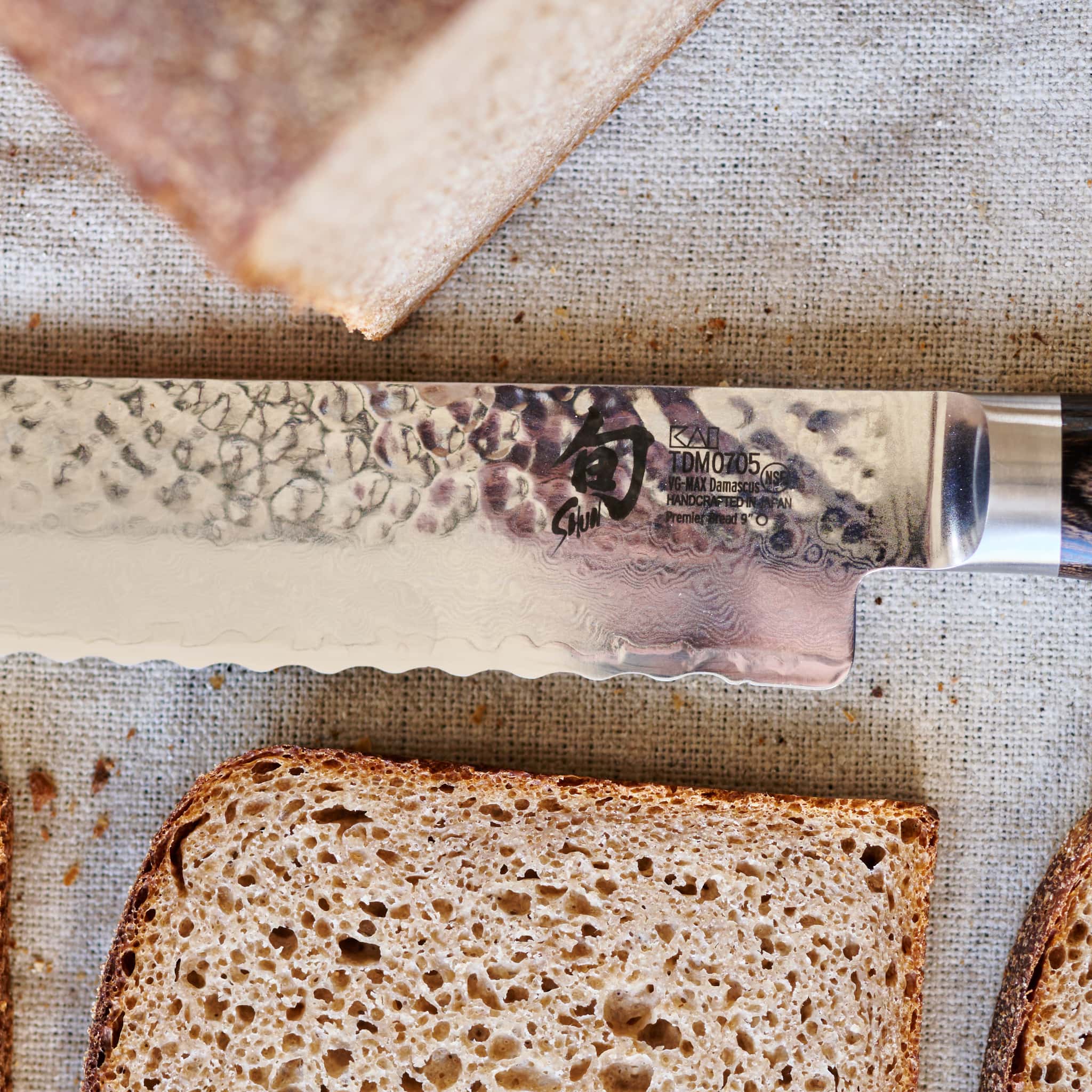
A serrated bread knife is one of the best alternatives to a lame—especially for beginners. Its toothed edge grips the sticky surface of high-hydration sourdough without sliding or tearing, making it ideal for controlled slashing.
Why a Serrated Knife Works Better Than a Chef’s Knife
Smooth-bladed knives tend to stick and compress wet dough, especially if they’re not razor-sharp. A serrated blade, however, “bites” into the dough with minimal pressure. Each tiny point of the blade cuts incrementally, reducing drag and preserving delicate gas bubbles inside the loaf. This means better oven spring and cleaner expansion along your score lines.
How to Score With a Serrated Knife: Step-by-Step
- Choose the right knife: Use a full-length bread knife (8–10 inches). Avoid short steak knives—they lack the reach for smooth, continuous slashes.
- Work quickly and confidently: Use short, swift pulling motions—don’t saw back and forth. Let the serrations do the cutting.
- Aim for ¼ inch depth: Too shallow and the loaf may burst elsewhere; too deep and you risk collapsing the structure.
- Adjust the angle based on loaf shape:
– For boules (round loaves): Hold the knife vertically (90°) and make a cross or tic-tac-toe pattern.
– For batards (oval loaves): Tilt the knife to about 45° and make one long diagonal slash from end to end, creating an “ear” that lifts during baking. - Retreat and reset if needed: If the blade catches or drags, pull out gently and reposition. Never drag across the same spot twice.
Pro Tip: Lightly dampen the blade with water or spray it with cooking oil. This reduces sticking, especially on very wet doughs (75% hydration or higher).
Try a Utility Knife for Razor-Sharp Precision
A utility knife with a fresh blade mimics the thin profile of a traditional lame, making it one of the most effective substitutes for scoring sourdough.
Why a Utility Knife Is a Hidden Gem for Bakers
Utility blades are typically just 0.018 inches thick—much thinner than most kitchen knives. This slim edge glides through dough with almost no resistance, minimizing drag and preserving internal structure. When used correctly, it delivers clean, deep cuts that open beautifully in the oven.
Important Safety Note: Only use a blade designated for food-safe applications. Never use a utility knife that’s been cutting drywall, insulation, or other non-food materials. Clean the handle and blade thoroughly with hot, soapy water before use.
How to Score With a Utility Knife
- Extend the blade fully: A longer blade gives better control and consistent depth.
- Grip like a pencil: Hold the knife close to the blade for maximum precision.
- Use one fast, decisive motion: Hesitation causes tearing. Slash quickly and confidently.
- Match cut to loaf shape:
– Boule: Two deep, perpendicular slashes forming a cross, about ¼ inch deep.
– Batard: One long diagonal cut at a 45° angle, starting from the far end and slicing toward you. - Change blades often: A dull utility blade tugs instead of cuts. Always use a fresh, sharp edge.
Expert Note: Some bakers prefer folding X-Acto-style knives for finer control. These are excellent for intricate scoring designs—just ensure the blade is sterile and unused for non-food purposes.
Score With Scissors for Zero-Drag Results on Sticky Dough
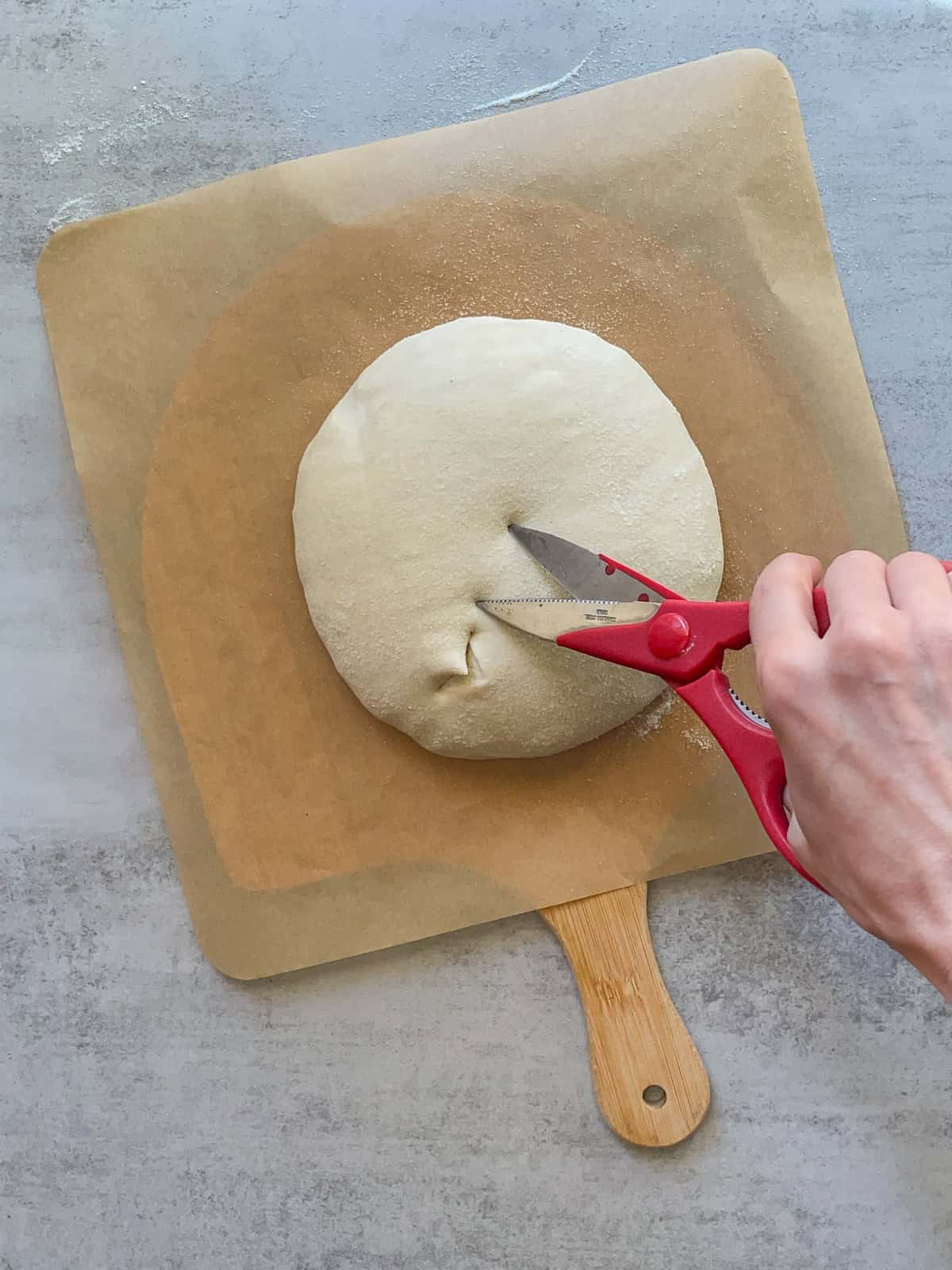
Kitchen shears offer a unique advantage: they cut without pushing down, eliminating the risk of compressing your dough. This makes them perfect for soft, over-hydrated sourdoughs that resist knife slashing.
Why Scissors Beat Knives on Wet Dough
Instead of forcing a blade through the dough, scissors open from within, creating clean separation with no dragging. This is especially helpful for doughs above 75% hydration, which tend to cling to metal surfaces.
How to Score With Scissors
- Use clean, food-safe shears: Regular scissors work in a pinch, but kitchen shears are safer and easier to sanitize.
- Wash and dry thoroughly: Residual moisture or oil can affect crust formation.
- Hold at a shallow angle (15–20°): Position the blades just above the dough surface.
- Make quick, even snips: Create 4–6 cuts in a row, forming an invisible straight line across the top.
- Space cuts closely (~½ inch apart): This encourages uniform expansion and a blooming effect.
Best Uses: Round boules, batards, or decorative loaves. The result is a dramatic “flowering” crust as each snipped section peels back during baking.
Time-Saving Hack: Keep a dedicated pair of shears in your baking station. Store them with your banneton or flour bin so they’re always ready when you are.
What Happens If You Don’t Score Sourdough?
Unscored sourdough doesn’t automatically fail—but it loses predictability. As the loaf heats up, trapped steam and CO₂ build pressure, forcing the dough to burst at its weakest point. This often results in:
- Random cracks on the sides or bottom
- Uneven rise and distorted shape
- Poor oven spring due to uncontrolled expansion
However, fully proofed dough (90–100%) may not need scoring. When dough is perfectly risen, it’s delicate and expands gently, reducing the risk of explosive bursting. This is common with pan loaves or sandwich breads, where a smooth, domed top is desired.
When Should You Avoid Scoring?
Not every loaf needs slashing. Skip scoring in these situations:
Fully Proofed Pan Loaves
Loaf pans provide structural support. When the dough is fully proofed, it puffs up evenly without needing weak points created by scoring. The result is a smooth, rounded top—ideal for sandwich bread.
Over-Proofed Dough
If your dough has collapsed, feels sticky, or won’t hold its shape, scoring will likely cause it to deflate. Bake it as-is to preserve whatever structure remains.
Seam-Up Baking
For artisan loaves baked seam-side-up on a stone or in a Dutch oven, the natural seam acts as a built-in weak point. The loaf will split along this line during baking, mimicking the effect of a deliberate score.
Can You Use a Paring Knife? (Spoiler: Not Ideal)
Short answer: Not recommended.
A paring knife is too short, too thick, and lacks the reach for clean, deep slashes. It tends to drag across the dough, compressing it and creating jagged cuts. If it’s your only option, use it at a sharp angle and make very quick cuts—but expect limited control and inconsistent results.
Better alternatives: A serrated knife, utility knife, or scissors will outperform a paring knife every time.
Tips for Clean, Professional-Looking Scores
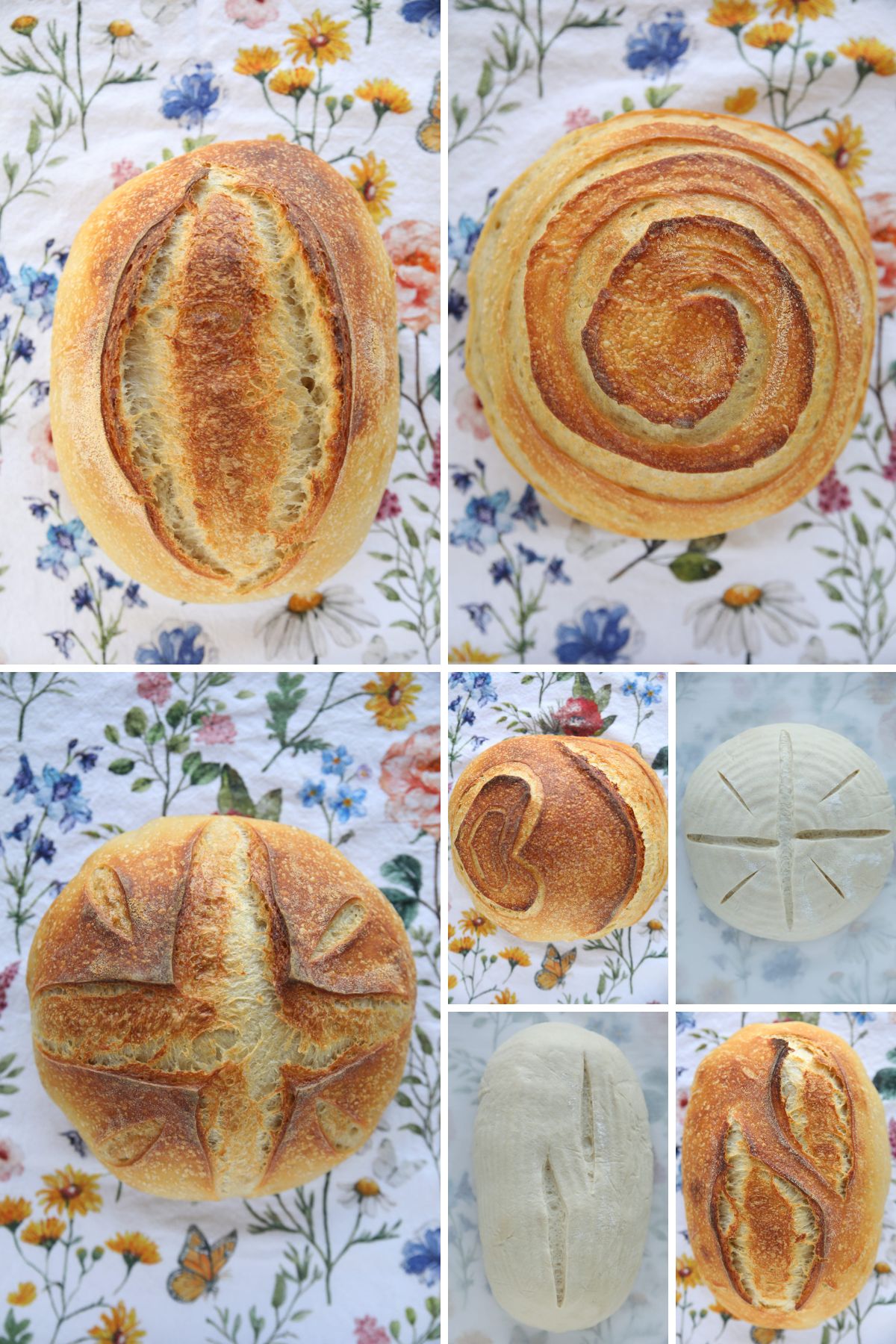
Even without a lame, you can achieve bakery-quality results with the right approach.
1. Work Fast and Confidently
Hesitation is the enemy of clean scoring. Commit to each cut with speed and precision. A slow blade sticks; a fast one slices.
2. Chill the Dough Slightly
Place the shaped loaf in the freezer for 10–15 minutes before scoring. This firms up the surface, making it easier to slash cleanly—especially helpful for sticky, high-hydration doughs.
3. Use a Damp or Oiled Blade
Lightly mist your knife with water or spray with cooking oil. This prevents sticking without affecting the final crust.
4. Practice Simple Patterns First
Start with basics:
– Single slash for batards
– Cross or square for boules
– Spiral or tic-tac-toe for visual appeal
As you gain confidence, experiment with stars, leaves, or initials.
5. Adjust Depth Based on Dough Strength
- Strong, elastic dough: Up to ½ inch deep
- Loose, slack dough: Stick to ¼ inch
- High hydration: Shallow cuts prevent spreading
Common Mistakes to Avoid
Even experienced bakers make these errors:
❌ Pressing Too Hard
Let the sharpness of the blade do the work. Pressing down collapses gas pockets and flattens the loaf.
❌ Re-Cutting the Same Spot
Each additional pass weakens the dough and leads to uncontrolled spreading. Make one decisive cut.
❌ Scoring Too Early
Score just before the loaf goes into the oven. Scoring too early—especially in warm conditions—can cause the dough to dry out or expand unevenly.
❌ Using a Dull Blade
A blunt knife tugs instead of cuts. Always use the sharpest tool available, even if it’s not a traditional bread knife.
Final Note: You Don’t Need a Lame to Score Sourdough
Yes, you can score sourdough with a knife—and do it well. Whether you use a serrated knife, utility knife, or scissors, the right technique makes all the difference. Focus on speed, angle, and confidence. Avoid dull blades and hesitation. And remember: great bread doesn’t require fancy tools—just good practice.
If you’re just starting out, try the serrated knife method first. It’s the most forgiving and widely available. As you refine your skills, experiment with utility blades or shears for different effects.
Bottom line: Don’t let lack of a lame stop you from baking beautiful sourdough. Use what you have, score with purpose, and enjoy the rise.