If you’re wondering how big of a knife you can legally carry in California, the answer isn’t about length—it’s about type, carry method, location, and local laws. Unlike many states, California does not set a universal blade size limit, but instead uses a complex web of rules that can turn even a small pocketknife into a felony offense depending on how and where it’s carried.
A folding knife with a 5-inch blade is perfectly legal if carried closed in your pocket. The same knife, if opened and locked while concealed, could be prosecuted as a concealed dirk or dagger under Penal Code § 21310. A 12-inch machete is legal if openly worn in a sheath on your waist, but becomes illegal the moment it’s tucked under a jacket or stored within reach in your car.
This guide breaks down exactly what you can carry, where, and how—so you avoid criminal charges. From folding pocket knives to full-sized fixed blades, we’ll cover the legal definitions, location restrictions, vehicle rules, and real-world pitfalls that could land you in court.
Legal Knife Types in California
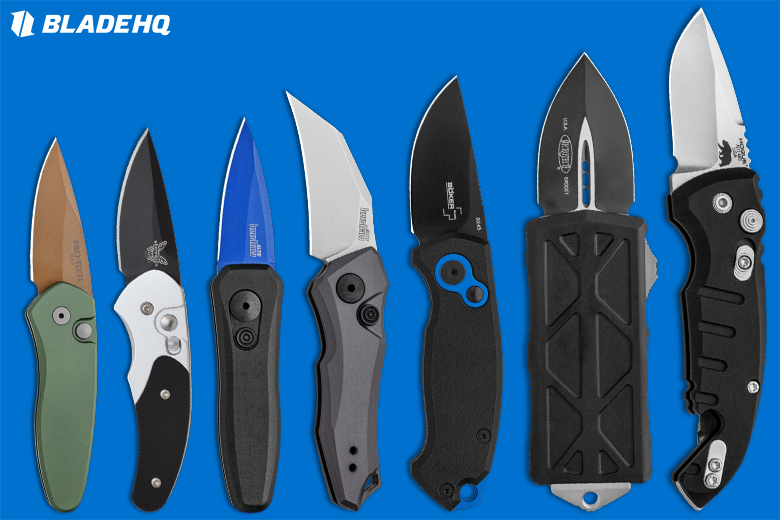
California law focuses more on knife design and carry method than blade length. Knowing which types are allowed—and which are banned—is the first step to staying compliant.
Folding Knives: Legal When Carried Closed
Folding knives are legal to carry in California regardless of blade size—as long as they are carried closed.
This includes:
– Pocket knives
– Swiss Army knives
– Utility knives
– Box cutters
– Multi-tools
Key rule: A folding knife is not considered a “dirk or dagger” unless the blade is exposed and locked open. When folded and closed, even a 6-inch folder is legal to carry concealed.
Warning: If you open and lock a folding knife while it’s in your pocket, it may be considered a concealed dirk or dagger, especially if it’s not visible to others.
The California Supreme Court ruled in People v. Castillolopez (2016) that a non-locking Swiss Army knife does not qualify as a dirk or dagger, reinforcing that carry method and blade lock status matter more than appearance.
Fixed-Blade Knives: Open Carry Only
Fixed-blade knives—like hunting, survival, or kitchen knives—are legal only when openly carried in a sheath worn on the waist.
- Must be suspended from the belt
- Must be fully visible (not covered by clothing)
- Concealed carry is illegal under Penal Code § 21310
There is no maximum blade length under state law. A 10-inch Bowie knife or a 14-inch machete is legal if openly carried in a waist sheath.
But if it’s:
– In your backpack
– Under your shirt
– On your hip but hidden by a jacket
→ It’s concealed, and you could face felony charges.
Assisted-Opening Knives: Legal and Widely Used
Knives that open with manual pressure (thumb stud or flipper) but use a spring or detent to assist are not switchblades—as long as the blade doesn’t deploy automatically.
These are legal to carry:
– Openly or concealed
– As long as they require manual force to open
– And have a bias toward closure
The 2012 case In re: Gilbert R. confirmed that assisted-openers are not switchblades under California law.
Switchblades: The 2-Inch Rule
Automatic knives (switchblades) with a blade 2 inches or longer are illegal to possess, carry, sell, or transfer under Penal Code § 21510.
- Blade < 2 inches: Legal to own and carry (but still banned in schools, courthouses, etc.)
- Blade ≥ 2 inches: Felony-level offense, even if carried openly
- San Francisco: Bans all switchblades, regardless of size
Pro tip: Measure from the pivot point. Many “1.75-inch” autos are actually over 2 inches when measured correctly.
Always Illegal Knives: What You Can’t Carry
Some knives are banned in California no matter the size or carry method.
| Knife Type | Why It’s Banned |
|---|---|
| Ballistic Knife | Fires blade like a projectile (PC 21110) |
| Cane Sword | Hidden blade in a walking stick (PC 16340) |
| Belt Buckle Knife | Concealed in belt hardware |
| Gravity Knife | Opens via blade shift; treated as switchblade |
| Undetectable Knife | Made of non-metal materials (PC 20810) |
| Disguised Knives | Hidden in pens, phones, lipsticks |
These are felony offenses with penalties up to 3 years in prison and $10,000 fines.
Blade Length Rules: What’s Allowed?
Despite common belief, California has no statewide maximum blade length—but restrictions apply based on context.
Folding Knives: No Size Limit When Closed
You can legally carry a folding knife of any length—3″, 5″, even 7″—as long as:
– It’s closed
– It’s not a switchblade ≥ 2″
– It’s not in a restricted location
Example: A 4-inch folding knife in your pocket is legal. But if opened and locked in your pocket, it could be considered a concealed dirk or dagger.
Fixed-Blade Knives: Any Size—If Open Carried
There is no legal limit on fixed-blade length. A 12-inch machete is legal if openly carried in a waist sheath.
But if it’s:
– In your backpack
– Under your jacket
– On your hip but covered by clothing
→ It’s concealed and illegal.
Switchblades: The 2-Inch Line
Any automatic knife with a blade 2 inches or longer is illegal statewide.
- Legal: 1.75-inch auto knife (rare and risky)
- Illegal: 2-inch or longer, even if carried openly
- Local laws: Some cities ban all switchblades
Warning: Many “1.5-inch” knives are actually 2.1″ when measured from pivot. Always verify.
Where You Can’t Carry Knives

Even legal knives are banned in certain locations—regardless of size or carry method.
Schools and Campuses (PC 626.10)
Banned on K–12 and college campuses, including private schools and universities.
Prohibited:
– Knives with blades over 2.5 inches
– Locking folding knives
– Dirks, daggers, ice picks
Allowed:
– Non-locking folding knives with blades ≤ 2.5 inches
– Fixed blades used for food prep in dorms
Note: Driving onto campus with a 3-inch folder could be a violation—even if stored in your car.
Government Buildings (PC 171b)
Illegal to carry in:
– Courthouses
– City halls
– Police stations
– Public meetings
Banned:
– Knives with fixed or lockable blades over 4 inches
– All switchblades
– Box cutters
Exception: Law enforcement and authorized personnel.
Airports and Transit (PC 171.5)
All knives banned in sterile areas (post-security screening).
- TSA rules: No knives in carry-ons, regardless of size
- Undetectable knives illegal in public transit hubs
- Box cutters specifically banned in terminals
Tip: Checked luggage is generally allowed for legal knives—but check airline policies.
Federal Property
Switchblades are banned on federal lands (national parks, military bases, post offices) under 15 U.S.C. § 1242.
Penalties include up to 5 years in prison.
Local Laws: City and County Restrictions
Because California lacks statewide preemption, cities can—and do—enact stricter knife laws.
Los Angeles: 3-Inch Open Carry Limit
Under LAMC § 55.10:
– Open carry of any knife with blade ≥ 3 inches is illegal on public streets
– Applies to fixed blades and large folding knives
– Concealed carry of dirks/daggers already illegal under state law
Example: A 3.5-inch folding knife worn openly in a sheath on a belt could be a violation in LA.
San Francisco: Switchblade Ban & Concealment Rules
- All switchblades banned, even under 2 inches
- Loitering with a concealed knife ≥ 3 inches is illegal
- Aggressive enforcement in tourist and downtown areas
Oakland and Sacramento
- Oakland (§ 9.36.010): Bans carrying knives with blades ≥ 3 inches
- Sacramento County: Enforces strict rules on county property, including parks
Bottom line: A legal knife in rural Fresno may be illegal in downtown San Diego or Berkeley.
Carrying Knives in Vehicles

Rules for carrying knives in cars are less strict—but still risky.
State Law: Not on Your Person
- A fixed-blade knife in the glove box, center console, or trunk is not considered concealed on your person
- Switchblades ≥ 2 inches are illegal to possess in a vehicle
- Best practice: Store in the trunk or a locked container
Reality check: A veteran detective notes: “I stop people with concealed machetes within reach of the driver seat more than I expected.”
Practical Risk
Even if legal:
– Knives under the seat or in the door pocket may be seen as accessible and concealed
– Police may question your intent
– If pulled over, expect inspection
Recommendation: Keep large knives in the trunk unless in use.
Occupational and Self-Defense Use
Certain jobs allow knife carry as a tool—but with limits.
Legal for Work
Professions that may carry knives:
– Chefs (kitchen knives)
– Construction workers (utility knives)
– Hunters and fishermen
– Gardeners and landscapers
Conditions:
– Must be used for lawful job duties
– Must follow location rules (e.g., no knives on school grounds)
– Off-duty carry must comply with general laws
Self-Defense: Legal With Limits
You can lawfully use a knife in self-defense if:
– You reasonably fear imminent harm
– You use proportional force
But beware:
– Brandishing (PC 417): Showing a knife in a threatening way is a crime
– Misdemeanor: Up to 1 year in jail
– Felony if near schools or police
– Assault with a Deadly Weapon (PC 245a1): Felony if used aggressively
– PC 12022: +1 year prison if used during a felony
Safer option: Consider pepper spray or a stun gun—they’re less likely to escalate to deadly force charges.
Penalties for Knife Violations
Carrying the wrong knife in the wrong place can lead to serious consequences.
| Offense | Charge Type | Possible Penalty |
|---|---|---|
| Concealed dirk/dagger (PC 21310) | Wobbler (misd/fel) | Up to 3 years prison |
| Switchblade ≥2″ (PC 21510) | Misdemeanor | 6 months jail, $1,000 fine |
| Knife on school grounds (PC 626.10) | Wobbler | Up to 3 years prison |
| Brandishing (PC 417) | Misd or fel | 30 days–3 years jail |
| ADW with knife (PC 245a1) | Wobbler | Up to 4 years prison |
| Felony with knife (PC 12022) | Enhancement | +1 year to sentence |
Real cases:
– Jonathon Hester: 6 years for two 1-inch box cutters in his pocket
– Emmanuel Castillolopez: Convicted for Swiss Army knife (overturned on appeal)
How to Carry Legally: 7-Step Checklist
Stay compliant with this practical guide.
-
✅ Choose a legal knife type
Avoid switchblades ≥2″, ballistic knives, disguised blades. Use assisted-openers instead of autos. -
✅ Carry folding knives closed
Even 4-inch folders are legal when closed. Don’t open and lock in pocket. -
✅ Open carry fixed blades
Use a waist-mounted sheath. Ensure full visibility—no jacket coverage. -
✅ Avoid restricted locations
Schools, courthouses, airports, public transit. When in doubt, leave it behind. -
✅ Check local city laws
LA, SF, Oakland, Sacramento have extra rules. 3-inch blade limits common in urban areas. -
✅ Secure knives in vehicles
Store in trunk or locked container. Don’t keep under seat or in console. -
✅ Use only when necessary
Self-defense must be reasonable and proportional. Never brandish unless life is in danger.
Final Answer: How Big of a Knife Can You Carry?
There is no legal size limit on knives in California—if you follow the rules.
- Folding knives: Any length, if carried closed
- Fixed blades: Any length, if openly carried in a waist sheath
- Switchblades: Banned if 2 inches or longer
- Local laws: May cap open carry at 3 inches (e.g., LA, Oakland)
The biggest risk isn’t blade size—it’s concealment and location. A small knife in the wrong place can land you in jail, while a large knife worn openly may be perfectly legal.
Final tip: When in doubt, consult a California criminal defense attorney. Knife laws are interpreted case by case—and a jury decides what’s a “dirk or dagger.” Play it safe, stay visible, and know your city’s rules.