If you’re asking how long of a knife you can carry in California, you’re not alone—but the answer isn’t just about inches. Unlike many states that set a hard blade length limit, California’s knife laws focus on knife type, carry method (open vs. concealed), and location, not just size. A 6-inch folding knife is perfectly legal in your pocket—as long as it’s closed. But even a 3-inch fixed blade could land you in jail if it’s hidden on your person. Misunderstanding these rules can lead to serious criminal charges, including misdemeanors or felonies, so knowing the law is essential.
This guide breaks down the real rules behind California’s complex knife laws. You’ll learn which knives are legal, how to carry them safely, and where strict local laws in cities like Los Angeles or San Francisco go beyond state rules. Whether you’re a tradesperson, hiker, or just want a reliable everyday carry tool, this article will help you stay compliant and avoid legal trouble.
Legal Knife Types in California
Folding Knives: Always Legal When Closed
One of the most important rules is that folding knives of any blade length are legal to carry in California as long as they are closed. This includes pocket knives, utility knives, and even box cutters. You can conceal or openly carry a folding knife in your pocket, backpack, or purse without breaking the law—no matter how long the blade.
However, once opened, the situation changes. A locking folding knife—like those with liner locks or frame locks—can be classified as a dirk or dagger under Penal Code § 16470 if it’s capable of ready use as a stabbing weapon. That means while it’s safe in your pocket when folded, carrying it open and locked might require you to open carry it in a sheath to avoid legal issues.
Non-Locking vs. Locking Knives: A Critical Legal Difference
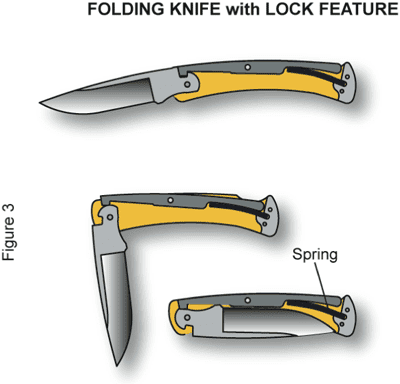
The distinction between non-locking and locking folding knives is crucial:
-
Non-locking knives, such as traditional slip-joint pocket knives or Swiss Army knives, are never considered dirks or daggers, even when open. This was confirmed by the California Supreme Court in People v. Castillolopez (2016). You can carry these concealed or openly, open or closed, with minimal legal risk.
-
Locking knives, once opened, may be treated as dirks or daggers, meaning they cannot be concealed and should be openly carried in a sheath attached to the waist to remain compliant.
Fixed-Blade Knives: Open Carry Only

Open Carry in a Sheath Is Legal
You can legally carry a fixed-blade knife in California—but only if it’s openly carried in a sheath suspended from your waist. According to Penal Code § 20200, a knife worn this way is not concealed, making it legal regardless of blade length. Whether your blade is 3 inches or 12 inches, the law looks at how it’s carried, not how long it is.
This is the clearest and safest legal method for carrying larger blades. As long as the sheath is visible and the knife is worn on the outside of your clothing, you’re within your rights under state law.
Concealed Carry Is a Crime
Carrying a fixed-blade knife concealed—whether in your pocket, waistband, backpack, or jacket—is a violation of Penal Code § 21310. Even if the knife is in a closed container, it’s still considered concealed if not immediately visible. This offense is a “wobbler”, meaning it can be charged as either a misdemeanor (up to 1 year in jail) or a felony (up to 3 years), especially with prior convictions.
Automatic and Switchblade Knives
Switchblades Under 2 Inches Are Legal
California bans switchblade knives with blades 2 inches or longer under Penal Code § 21510. However, automatic knives with blades shorter than 2 inches are legal to possess and carry, as long as you’re not in a restricted location like a school or courthouse.
This is why many brands market mini out-the-front (OTF) knives under 2 inches specifically for California residents. These compact tools are legal to carry openly or concealed when under the size limit.
OTF and Gravity Knives: Know the Difference
- Out-the-Front (OTF) knives with blades 2 inches or longer are illegal, no matter how or where you carry them.
- Gravity knives, which deploy with a flick or shake, are also prohibited.
However, assisted-opening knives—which require manual thumb pressure to start opening and use a spring to finish—are legal. The California Supreme Court ruled in In re: Gilbert R (2012) that these are not switchblades because they have a bias toward closure and require human initiation.
Where You Can’t Carry Any Knife

Schools and School Grounds: Strict Limits
Even legal knives become illegal on K–12 school campuses, buses, and events. The only exception is a non-locking folding knife with a blade 2.5 inches or shorter. Carrying a fixed blade, switchblade, or locking pocket knife on school grounds is a wobbler offense, punishable by up to 3 years in jail.
Exceptions include:
– School staff preparing food
– Students in culinary or vocational programs (under supervision)
Government Buildings and Courthouses
Under Penal Code § 171b, it’s illegal to carry:
– Switchblades (any length)
– Fixed-blade knives with blades 4 inches or longer
– Box cutters or utility knives
– Knives that lock open with one hand
in state or local government buildings, including city halls and courthouses. Violation is a misdemeanor or felony, with penalties up to 3 years in jail.
Airports and Public Transit
Penal Code § 171.5 bans:
– Switchblades
– Fixed blades 4 inches or longer
– Box cutters
– Undetectable knives
in airport sterile areas and passenger terminals. TSA and local law enforcement enforce these strictly.
Public transit systems like BART or LA Metro may also ban knives, especially non-metallic (undetectable) blades, under Penal Code § 171.7.
Local Laws Can Be Stricter
Los Angeles: 3-Inch Open Carry Limit
While state law doesn’t cap blade length for open carry, local ordinances can. For example:
– Los Angeles Municipal Code § 55.10 bans openly carrying any knife with a blade 3 inches or longer in public.
– San Francisco prohibits all switchblades, even those under 2 inches—stricter than state law.
Other cities may restrict knives in parks, near bars, or during public events. Always check local rules before carrying, especially when traveling.
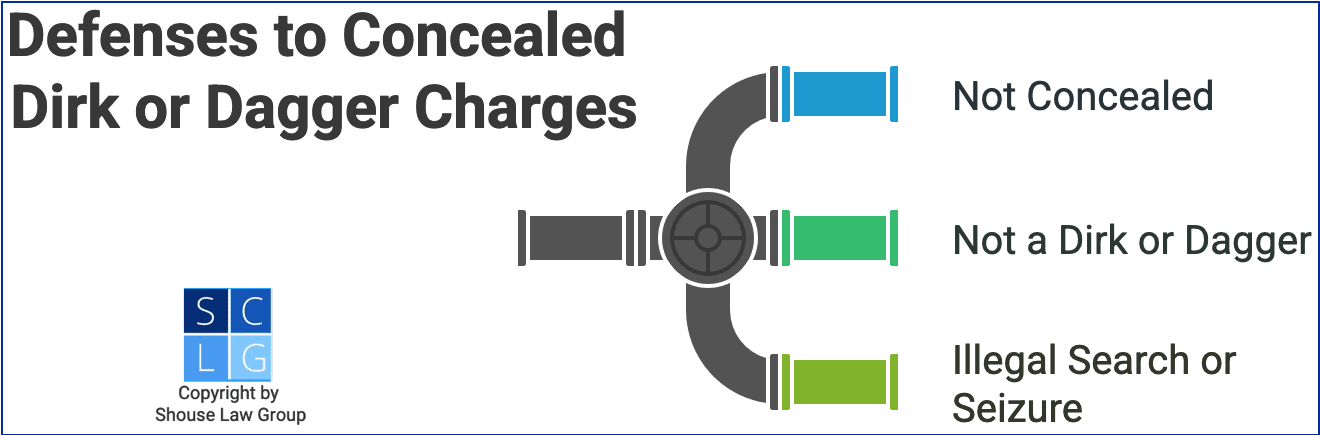
What Makes a Knife a Dirk or Dagger?
Legal Definition: Capable of Ready Use as a Stabbing Weapon
Under Penal Code § 16470, a dirk or dagger is any knife “capable of ready use as a stabbing weapon.” This includes:
– Fixed-blade knives
– Locking folding knives
– Ice picks
– Certain tools (e.g., box cutters) if used as weapons
Courts consider context: where you were, where you were going, and whether the knife was altered. But non-locking folding knives are not dirks, even when open.
Pocket Clip Carry: Risky Legal Gray Area
Carrying a locking folding knife on a pocket clip is not guaranteed to be legal. While it may seem visible, prosecutors can argue it’s still concealed. Without a visible waist sheath, you risk being charged under PC 21310.
For maximum protection, use a belt sheath for locking folders you plan to carry open.
Occupational Exceptions: Work-Related Carry
Legal to Carry for Job Purposes
Certain professions can legally carry otherwise restricted knives on the job, including:
– Construction workers using utility knives
– Chefs carrying kitchen knives
– Hunters with field-dressing knives
– Landscapers using pruning tools
Conditions:
– Must be on duty or en route to work
– Knife must be used for legitimate occupational purpose
– Off-duty carry still subject to standard laws
If stopped, explain your job role and purpose—this can support a defense.
Penalties for Illegal Knife Carry
Misdemeanor vs. Felony: What’s at Stake
Violating California knife laws can lead to serious consequences:
| Offense | Charge Type | Jail Time | Fine |
|---|---|---|---|
| Concealed dirk/dagger (PC 21310) | Wobbler | Up to 3 years | Up to $10,000 |
| Switchblade ≥ 2″ (PC 21510) | Misdemeanor | Up to 6 months | $1,000 |
| Knife on school grounds (PC 626.10) | Wobbler | Up to 3 years | $10,000 |
| Knife in public building (PC 171b) | Wobbler | Up to 3 years | $10,000 |
A wobbler offense means the prosecutor can file it as either a misdemeanor or felony.
Real-World Example: Overcharging Risk
In one case, Jonathon Lee Hester was sentenced to 6 years for possessing two box cutters with ~1-inch blades. Though small, they were deemed dangerous weapons. This shows how aggressively some charges can be pursued—even for common tools.
Self-Defense and Brandishing Laws
Using a Knife in Self-Defense
You can use a legally carried knife in self-defense if:
– You reasonably fear imminent harm
– You use proportional force
– You are not the aggressor
But carrying an illegal knife cannot be justified by self-defense.
Brandishing: Even Showing a Knife Can Be a Crime
Under Penal Code § 417, it’s illegal to:
– Draw a knife in a threatening manner
– Display it during an argument
– Use it to resist arrest unlawfully
Penalty: 30 days to 3 years in jail. Just showing a knife to scare someone off could be brandishing—no contact needed.
Best Knives for California Carry
Recommended Legal Options
To stay safe and compliant, choose:
- Non-locking folding knives: Victorinox Swiss Army, traditional pocket knives
- Assisted-opening knives: Kershaw Leek, CRKT Heel
- Sub-2″ OTF knives: Microtech Halo, ProTech Flipper Jr
- Fixed blades (open carry): Benchmade or Gerber in a waist sheath
Knives to Avoid
Never carry:
– Switchblades with blades ≥ 2 inches
– Belt buckle knives, cane swords, ballistic knives
– Undetectable ceramic or plastic blades
– Gravity knives
Final Tips to Stay Legal
Carry Smart: Practical Safety Rules
To avoid trouble:
– Keep folding knives closed unless in use
– Use a belt sheath for locking or fixed blades
– Avoid switchblades ≥ 2″ — not worth the risk
– Check local laws before visiting cities like LA or SF
– Never brandish — even to scare off a threat
– Don’t carry in schools, courthouses, or airports
When in doubt, carry a small, non-locking pocket knife under 3 inches. It’s legal everywhere, easy to use, and minimizes legal risk.
Final Note: California’s knife laws are complex and context-dependent. There’s no single blade length rule—legality hinges on type, carry method, and location. Stay informed, carry responsibly, and when unsure, consult a legal professional.