You reach for your favorite kitchen knife, only to find orange specks creeping across the blade. Rust. It’s alarming—but not the end. How to get rust off a knife is a common challenge, especially with carbon steel blades, pocket knives, or tools left damp after use. The good news? Most rust can be removed safely and effectively using household items and a few simple techniques. Whether you’re dealing with light surface spots or stubborn corrosion, this guide delivers proven, step-by-step methods to restore your blade—without damaging the steel. You’ll also learn how to prevent future rust, protect your investment, and choose the best method based on your knife’s material.
Assess Rust Severity Before You Begin
Jumping straight into cleaning can do more harm than good. First, inspect the blade closely to determine the extent of rust damage.
Surface Rust: Easy to Remove
- Signs: Light orange or brown spots, smooth to the touch.
- Cause: Brief exposure to moisture or acidic foods.
- Solution: Responds well to baking soda, vinegar, or Barkeeper’s Friend.
Deep Rust or Pitting: Requires Extra Care
- Signs: Dark, flaky patches, rough texture, or visible dents in the metal.
- Risk: Compromises blade strength and edge integrity.
- Action: May need steel wool, rust eraser, or commercial removers.
- Warning: If pitting affects the cutting edge or spine, consider replacement—safety comes first.
✅ Pro Tip: Use a magnifying glass and bright light to inspect hidden areas like the heel, tang, and pivot.
Remove Stubborn Rust with White Vinegar Soak

White distilled vinegar is one of the most effective home remedies for rust thanks to its acetic acid, which breaks down iron oxide.
How to Soak Safely
- Pour white vinegar into a container—enough to submerge only the rusted portion.
- Avoid soaking handles, especially wood, micarta, or G10, which can absorb liquid and swell.
- Soak for:
– 5–15 minutes: Light rust.
– 30 minutes to 2 hours: Moderate buildup.
– Overnight (max 24 hours): Heavy rust—never exceed one day.
⚠️ Caution: Prolonged soaking can etch or weaken the blade, especially on carbon steel.
Scrub and Dry Properly
- After soaking, gently scrub with a soft brush, Scotch-Brite pad, or 0000 steel wool.
- Rinse thoroughly with warm, soapy water.
- Dry immediately and completely with a lint-free towel—no air-drying.
🔄 Alternative: Apple cider vinegar or Coca-Cola (contains phosphoric acid) work similarly but are less potent.
Use Baking Soda Paste for Gentle, Non-Toxic Cleaning
Baking soda offers a safe, food-friendly option ideal for kitchen knives and delicate finishes.
Apply the Paste Correctly
- Mix baking soda with water until it forms a thick, toothpaste-like consistency.
- Spread over rusted areas—avoid the handle.
- Let sit for 1–2 hours to allow the paste to lift oxidation.
- Scrub gently with a toothbrush or soft sponge.
- Rinse with warm water and dry thoroughly.
Boost Effectiveness with Lemon Juice
- Add fresh lemon juice to create a mild fizzing reaction that helps dissolve rust.
- Effective for light corrosion, but limit exposure on carbon steel to prevent further oxidation.
✅ Best for: Stainless steel, Damascus, and everyday kitchen knives.
Try Lemon and Salt for Natural Rust Removal
This kitchen-safe method uses citric acid and abrasion to lift rust—perfect for minor spots.
Step-by-Step Process
- Sprinkle coarse salt (like kosher or sea salt) over the rust.
- Squeeze fresh lemon juice until the area is fully saturated.
- Let sit for 2–4 hours.
- Rub with the lemon rind or a soft cloth to gently scrub.
- Rinse immediately and dry completely.
💡 Why it works: Salt acts as a mild abrasive; lemon acid dissolves rust.
Caution for High-Carbon Steel
- Avoid prolonged use on 1095 carbon steel (e.g., Schrade Old Timer).
- Risk of hydrogen embrittlement, which can weaken the blade.
- If used, neutralize with baking soda paste afterward.
Use a Potato to Remove Light Rust (Yes, It Works)
Don’t toss that potato—its natural oxalic acid helps break down rust safely.
Two Effective Methods
Method 1: Rubbing
1. Cut a potato in half.
2. Dip the cut side in baking soda or salt.
3. Rub over rusted areas in circular motions.
4. Rinse and dry.
Method 2: Overnight Soak
1. Insert the blade into a whole raw potato.
2. Leave for 1–3 hours.
3. Remove, wash with soap, and dry thoroughly.
✅ Bonus: Non-toxic and food-safe—ideal for kitchen tools.
Use Barkeeper’s Friend on Carbon or Stainless Steel
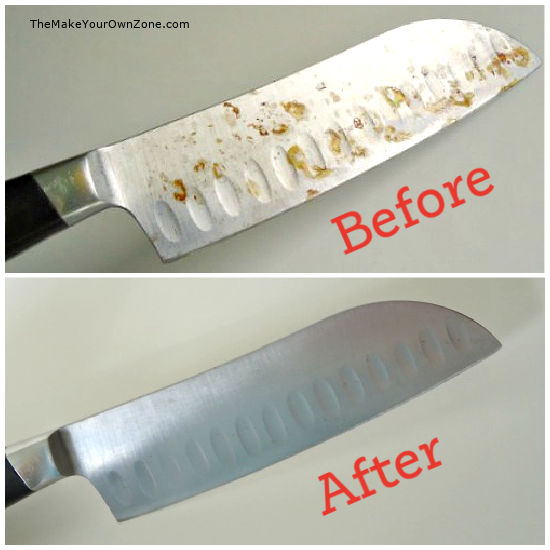
Barkeeper’s Friend (BKF) is a favorite among knife owners for its oxalic acid and mild abrasives.
Apply with Precision
- Sprinkle powdered BKF directly on the blade.
- Add a few drops of water to form a paste.
- Apply with a damp cloth, soft brush, or wine cork.
- Work in one direction to avoid swirl marks.
- Focus only on rusted areas—preserve patina if present.
Rinse and Protect
- Wash thoroughly with soap and water.
- Dry immediately.
- Apply a thin coat of oil to prevent new rust.
💬 User tip: “BKF removes rust without harming the blade—my go-to for carbon steel.”
Try Aluminum Foil for Quick Surface Rust
This surprising trick uses electrochemical action—aluminum pulls rust from iron.
How to Do It
- Crumple a piece of aluminum foil into a ball.
- Dip in water or vinegar to improve contact.
- Gently rub over rust spots.
- Wipe clean and dry.
✅ Best for: Small spots, blade edges, or knives with delicate finishes.
Use WD-40 for Pocket Knives and Tools
WD-40 penetrates rust and loosens corrosion—ideal for folding knives and outdoor gear.
Clean and Protect
- Spray WD-40 directly on rusted areas.
- Wait 5–10 minutes.
- Scrub with a cloth or toothbrush.
- Wipe clean.
⚠️ Important: WD-40 is not food-safe—rinse thoroughly if used on kitchen knives.
Safe for Synthetic Handles
- Compatible with Delrin, G10, and metal grips.
- Won’t degrade materials like Schrade Old Timer handles.
Use a Rust Eraser for Deep or Pitted Rust
Rust erasers (silicon carbide rubber) are highly effective for stubborn stains without scratching.
How to Use It
- Soak the eraser in water for 5 minutes.
- Rub over rust in long, even strokes, following the grain.
- Re-wet if it dries out.
- Rinse, wash with soap, and dry.
✅ Advantage: Removes rust without thinning or damaging the blade.
Use 0000 Steel Wool for Stubborn Spots

Fine 0000 grade steel wool works well—but only when used correctly.
When to Use It
- Pocket knives
- 1095 carbon steel blades
- Disassembled folders
How to Apply
- Use 0000 grade only—it’s the finest and least abrasive.
- Apply dry or with WD-40 for lubrication.
- Rub gently in one direction.
- Wipe off metal residue.
What to Avoid
- ❌ Never use on stainless steel—micro-scratches trap moisture and invite rust.
- ❌ Avoid on kitchen knives—fibers can break off and pose contamination risks.
Try Commercial Rust Removers for Severe Corrosion
For heavily rusted knives, industrial products offer powerful results.
Top Options
- EvapoRust: Biodegradable; safe but may darken the blade.
- Krud Kutter: Great for spot treatment on disassembled knives.
- Naval Jelly: Phosphoric acid-based—use sparingly.
Safety First
- Wear gloves and eye protection.
- Work in a well-ventilated area.
- Test on a small area first.
⚠️ Never soak wooden-handled knives—chemicals can damage the grip.
Post-Cleaning: Protect the Blade
Removing rust is only half the battle. Prevent recurrence with proper care.
Wash and Dry Immediately
- Use mild dish soap and warm water.
- Dry with a lint-free towel—never air-dry.
- Pay attention to crevices, tangs, and hinges.
Apply a Protective Oil
- Use a thin layer of:
- Mineral oil
- Food-safe blade oil
- Gun oil (for non-kitchen blades)
- Wipe off excess to avoid dust buildup.
🔁 Reapply after every wash for carbon steel knives.
Sharpen After Rust Removal
Rust weakens the edge. Sharpening removes micro-damage and restores performance.
Recommended Tools
- Whetstone (1000–6000 grit)
- Honing rod for maintenance
- Guided sharpening system for precision
✅ Benefit: Removes surface pitting and realigns the edge.
Prevent Rust Before It Starts
Prevention beats restoration every time. Follow these habits to keep your knives rust-free.
Daily Care Tips
- Wash and dry immediately after use.
- Never leave wet in the sink or dishwasher.
- Wipe after every cut, even quick tasks.
Safe Storage
- Store in a:
- Knife block
- Magnetic strip
- Sheath or blade cover
- Avoid drawers—contact with other metals causes galvanic corrosion.
💡 Pro tip: Add silica gel packs to storage boxes in humid climates.
Never Put Knives in the Dishwasher
This can’t be overstated: dishwashers destroy knives.
Why It’s Harmful
- High heat warps blades and loosens handles.
- Harsh detergents strip protective oils.
- Prolonged moisture causes rust—even on stainless steel.
- Internal rust in the dishwasher can transfer particles to your knife.
✅ Always hand-wash—it takes 30 seconds and saves your investment.
Special Care by Knife Type
Not all knives are created equal. Match your method to the steel.
Carbon Steel Knives
- Use: BKF, rust eraser, potato, baking soda.
- Avoid: Vinegar, lemon, strong acids—risk of hydrogen embrittlement.
- Care tip: Build a protective patina through regular use.
Stainless Steel Knives
- Use: Vinegar, BKF, lemon, baking soda.
- Avoid: Steel wool—can scratch and create rust traps.
- Note: Not rust-proof—low-quality stainless still corrodes.
Pocket and Folding Knives
- Use: WD-40, copper penny, Krud Kutter.
- Avoid: Soaking—water damages internal mechanisms.
- Disassemble if possible for deep cleaning.
Schrade Old Timer (1095 Steel)
- Use: WD-40 + 0000 steel wool, copper penny.
- Avoid: Acids—vinegar and lemon can weaken the blade.
- Oil after every use—this steel demands attention.
Final Restoration Checklist
After rust removal, follow these steps to ensure full recovery:
- Clean with soap and water.
- Dry thoroughly—no spots missed.
- Oil the blade with a food-safe or protective oil.
- Sharpen to restore edge integrity.
- Store properly—dry, protected, and ready for use.
🌟 “A little patina isn’t a flaw—it’s character.” But rust? That’s just a reminder to care a little better.
Can a Rusted Knife Be Saved?
Yes—almost always.
- Light rust? Gone in minutes with vinegar or baking soda.
- Deep pitting? Restorable with effort and the right tools.
- Prevention is key: dry immediately, oil regularly, store safely.
Even high-carbon blades like 1095 can be revived—just avoid acids and use gentle abrasives.
🛠️ “Rust on a carbon steel knife isn’t a crisis—it’s a signal, not a sentence.”
With the right knowledge, every knife deserves a second chance. Now you know exactly how to get rust off a knife—safely, effectively, and permanently.