If your electric fillet knife is tearing through fish instead of slicing cleanly, the problem is almost certainly a dull blade. While many anglers automatically replace the blade—often spending $10 to $30 on a new one—sharpening electric fillet knife blades is a smarter, more sustainable solution. Not only does it save money over time, but it also reduces waste and keeps your tools performing like new. This guide focuses specifically on serrated blades, the most common type, which require special care due to their thin, flexible design and U-shaped teeth.
You don’t need to be a professional knife sharpener to restore cutting performance. With the right tools—like a Work Sharp, tapered diamond file, or manual serrated sharpener—and proper technique, you can bring your blade back to razor-sharp condition. Whether you’re a weekend angler, a commercial fisher, or someone who enjoys hands-on maintenance, this step-by-step guide covers everything from blade anatomy and tool selection to exact sharpening methods, safety tips, and brand-specific advice—all based on real user experiences and proven techniques.
Choose: Sharpen or Replace?
Before picking up any tool, decide whether sharpening is the right choice for your blade.
When to Replace the Blade
- Serrations are worn flat or completely rounded with no tooth structure left.
- The blade is bent, cracked, or deeply pitted from corrosion.
- You need a quick fix and lack time or tools.
- The blade is inexpensive, and replacement costs less than the effort to sharpen.
Many manufacturers, including Rapala (Garmin), officially recommend replacing rather than sharpening blades. Their reasoning? It’s safer and ensures consistent performance. As one user put it:
“I will not touch an electric knife blade. It’s like patching a flat tire—just replace it.” – GrumpyLoomis
When to Sharpen
- You clean fish frequently and want long-term savings.
- You’re eco-conscious and want to reduce disposable blade waste.
- You enjoy tool maintenance or are preparing for remote trips.
- The blade has minor dullness but intact, defined serrations.
Even if it’s not the cheapest option upfront, sharpening can pay for itself after saving just 3–4 blade sets—especially if you use a durable tool like the Work Sharp.
Identify Your Blade Type
Not all electric fillet knife blades are the same. The method you use depends entirely on the edge style.
Serrated Blades (Most Common)
- Feature U-shaped or scalloped grooves.
- Use a scissor-like cutting action between dual blades.
- Found on Rapala, Bubba, Dexter, American Angler.
- Must be sharpened only on the beveled side.
⚠️ Never sharpen the flat side—doing so ruins the scissor effect and reduces cutting efficiency.
Straight-Edge Blades (Less Common)
- Smooth, non-serrated cutting edge.
- Sharpen like a standard kitchen knife.
- Use whetstones or guided sharpeners at a 15–20° angle.
Always confirm your blade type before starting. Using the wrong method can permanently damage the edge.
Best Tools for Sharpening
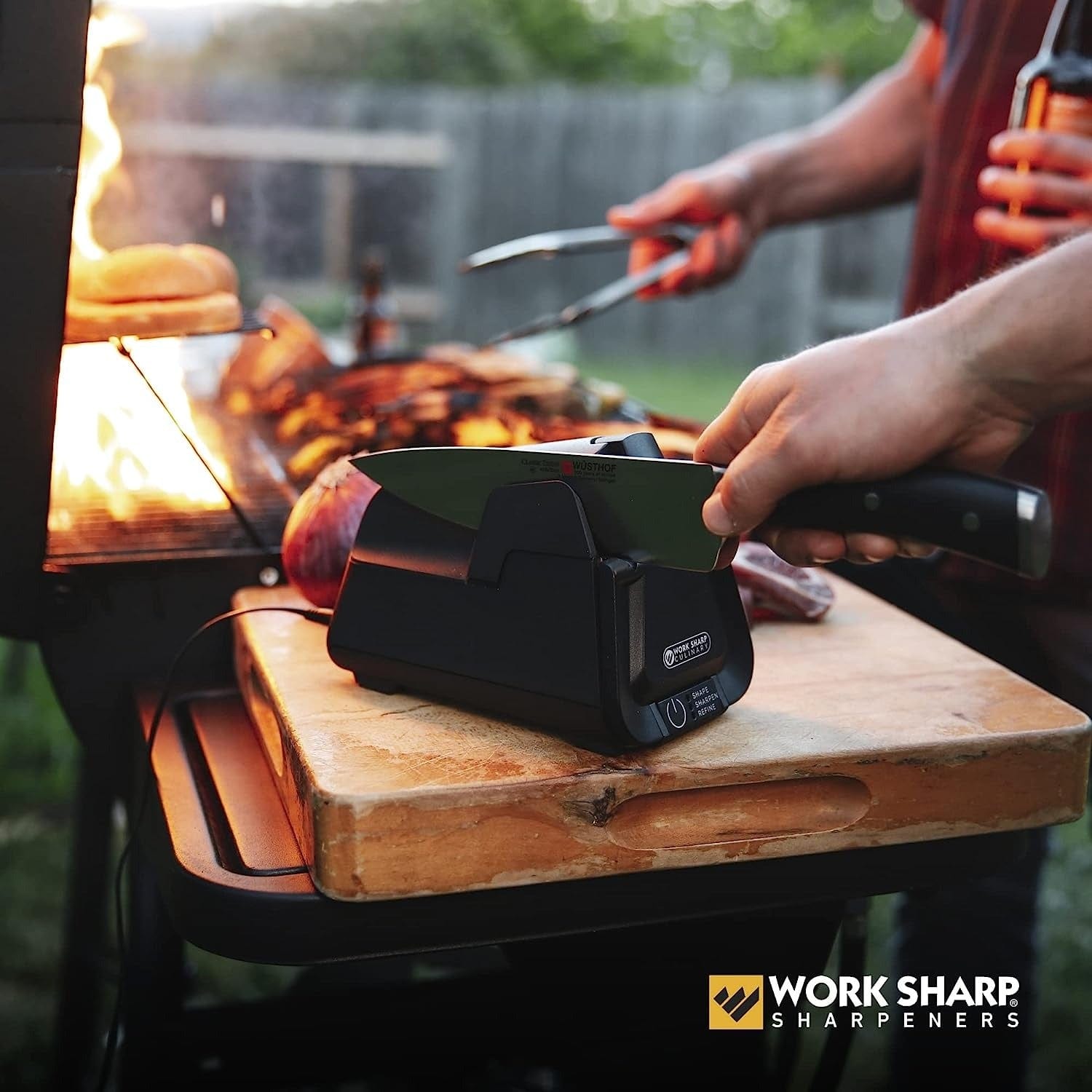
Choose the right tool based on your usage, blade type, and budget.
Work Sharp with Serrated Guide
- Best for: Frequent users and U-shaped serrations.
- Why it works: Holds the blade flat, matches the factory bevel, and uses coarse + fine belts.
- Process:
- 3–5 passes on coarse belt.
- 4–5 on fine (purple) belt.
- Sharpen beveled side only.
- User result: “2 strokes per serration restores full sharpness.” – tandm
✅ Top pick: Fast, repeatable, and offers long-term value.
Tapered Diamond Files
- Best for: Precision sharpening and deep serrations.
- Types: Round diamond rods (e.g., DMT), 5/32″ chainsaw files.
- How to use:
- Insert file into each “U” groove.
- 3–5 passes per tooth, following the curve.
- Maintain 15–20° angle.
- Pro tip: “Use a steel to remove burr from the back.” – regulator
✅ Budget-friendly (~$15), portable, and effective.
Round Manual Serrated Sharpeners
- Best for: Casual users and light touch-ups.
- Design: Rotating ceramic or diamond wheel fits into grooves.
- Use while relaxing—many users finish during a TV show.
- Limitation: May not fit narrow or deep serrations.
✅ Easy to use, no power required.
Whetstones (1000–3000 Grit)
- Best for: Straight-edge blades or skilled users.
- Types: Water stones, oil stones, DMT diamond plates.
- Technique:
- Soak water stone 10–15 mins.
- Use arc motion to follow blade curve.
- Alternate sides; finish with fine grit.
- Hone: Use ceramic rod to refine edge.
✅ Full control, excellent for polishing.
Rotary Tools (Dremel, etc.)
- Best for: Nick removal, not full sharpening.
- Risk: Overheating ruins steel temper.
- Use low speed, short bursts, and cool frequently.
- Not recommended for beginners.
⚠️ High risk—use only for minor repairs.
Electric Knife Sharpeners
- Only use models with serrated slots.
- Risk: Removes too much metal, shortens blade life.
- Use sparingly—2–3 passes max per grit.
⚠️ Aggressive; may alter factory edge.
Step-by-Step: Sharpen Serrated Blades
Follow this process for safe, effective sharpening.
1. Remove and Clean the Blade
- Unplug the knife and detach the blade.
- Wash with mild soapy water to remove fish oils and debris.
- Dry completely to prevent rust.
- Inspect for cracks, bends, or corrosion.
✅ Critical: Never sharpen a dirty or wet blade.
2. Choose Your Sharpening Tool
- For speed and consistency: Work Sharp.
- For precision and control: Tapered diamond file.
- For occasional use: Round manual sharpener.
Ensure the tool fits your blade’s serration depth.
3. Sharpen Only the Beveled Side
This is the most critical rule.
- The beveled side (angled edge) is the cutting surface.
- The flat side must remain untouched to maintain scissor action.
❌ Never sharpen the flat side—it creates a gap, reducing cutting efficiency.
Using a Tapered File:
- Insert file into first serration.
- Match the existing angle (~15–20°).
- Make 3–5 smooth, forward passes.
- Repeat for each “U” groove.
- Work slowly to avoid slipping.
🔍 Visual cue: Look for fresh metal shavings—sign of effective sharpening.
Using a Work Sharp:
- Secure blade in serrated guide.
- Use coarse belt: 3–5 passes on beveled side.
- Switch to fine belt: 4–5 light passes.
- Flip and repeat if needed (only on beveled side).
- Do not sharpen flat side.
✅ Pro tip: Use light pressure—let the abrasive do the work.
4. Deburr the Flat Side
After sharpening, a tiny metal burr forms on the flat side.
- Do not sharpen it—just remove the burr.
- Use a fine stone, ceramic rod, or leather strop.
- Lightly stroke the flat side 1–2 times per section.
✅ Result: Smooth edge without altering geometry.
5. Reassemble and Test
- Reattach blade securely to handle.
- Plug in and test on soft material.
Performance Tests:
- Paper test: Blade should slice cleanly with no drag.
- Bread test: Cuts soft bread without crushing.
- Tomato test: Slices skin without squishing.
🔎 Check alignment: Blades should close tightly with no gap.
If performance is poor, recheck sharpening angle or alignment.
Avoid Common Mistakes
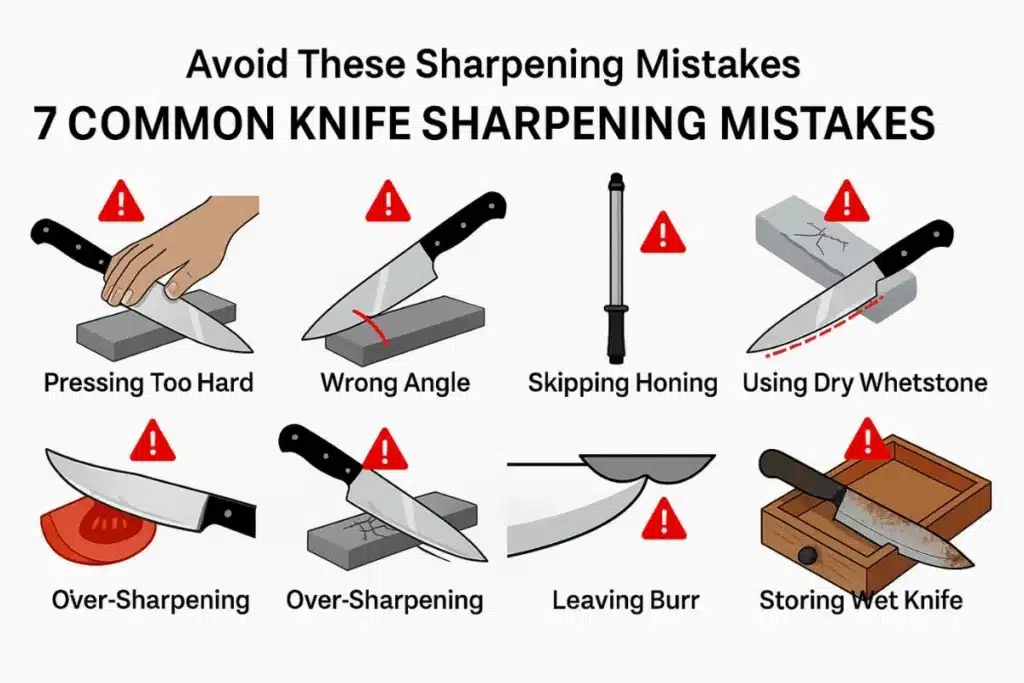
Even experienced users make errors that ruin blades.
❌ Sharpening the Flat Side
- Destroys scissor action.
- Causes blades to miss each other, reducing efficiency.
- Irreversible without professional grinding.
REW’s rule: “Never ever sharpen the flat side.”
❌ Using Wrong File Size
- A file too thick won’t fit into serrations.
- Too thin = uneven contact.
- 5/32″ chainsaw file fits most U-shaped blades.
❌ Overheating with Power Tools
- High speed dulls steel by altering temper.
- Cool frequently or use water drip.
❌ Skipping Cleaning
- Fish oils cause corrosion.
- Dirt clogs sharpening tools.
- Always clean before and after sharpening.
Maintenance for Long Blade Life
Keep your blades sharp longer with simple habits.
Clean After Every Use
- Wash by hand with mild soap.
- Rinse and dry immediately.
- Never use a dishwasher—heat and chemicals promote rust.
Store Properly
- Use a sheath, blade block, or tackle box compartment.
- Avoid loose storage—prevents nicks and dulling.
Hone Between Sharpenings
- Use a ceramic honing rod weekly.
- Removes micro-bends and realigns the edge.
- Extends time between full sharpenings.
Avoid Hard Surfaces
- Never cut on glass, stone, or metal.
- Use a plastic or wood cutting board.
Sharpening Frequency Guide
| Usage Level | Sharpening Interval | Honing Frequency |
|---|---|---|
| Occasional (1–2 trips/month) | Once per season | Every 3–4 uses |
| Frequent (weekly) | Every 5–10 fish | After each use |
| Commercial | Every 2–3 fish | Multiple times per day |
✅ Honing is key: Maintains edge, reduces sharpening need.
Brand-Specific Tips

Different brands respond differently to sharpening.
| Brand | Sharpening Notes |
|---|---|
| Rapala | Works well with Work Sharp or diamond files. |
| Bubba | Serrated edges hold up; sharpenable but expensive. |
| Dexter | “True commercial grade”—durable and worth sharpening. |
| American Angler | Common replacement; responds well to manual tools. |
| Cutco | Unique serrations; users report never needing sharpening. Factory service available. |
“I’ve used Cutco for years—still like new.” – REW
Safety First
Always prioritize safety when handling sharp blades and tools.
Essential Precautions:
- Unplug the knife before removing the blade.
- Wear cut-resistant gloves.
- Use non-slip mat when sharpening.
- Secure the blade—don’t hold it freehand.
- Keep fingers behind the edge.
⚠️ Never rush—a dull blade is safer than a careless hand.
Final Recommendations
Best Overall Tool: Work Sharp with Serrated Guide
- Fast, consistent, and cost-effective.
- Ideal for frequent fish cleaners.
- Pays for itself in 3–4 saved blades.
Best Budget Option: Tapered Diamond File
- Inexpensive, portable, precise.
- Requires patience but delivers results.
Best for Straight-Edge Blades: Whetstone (1000–3000 Grit)
- Traditional, full control.
- Excellent for fine-tuning.
When to Replace:
- Serrations are gone or flattened.
- Blade is bent or cracked.
- You lack time or tools.
Conclusion
Sharpening electric fillet knife blades isn’t just possible—it’s practical, economical, and deeply satisfying for those who value craftsmanship and sustainability. While manufacturers often push replacement, smart sharpening preserves performance and reduces waste.
For most users, the Work Sharp with serrated guide delivers the best balance of speed and precision. For DIYers and budget-conscious anglers, a tapered diamond file or chainsaw file offers reliable, portable sharpening.
Remember: sharpen only the beveled side, never the flat, and always deburr lightly. With proper care, a single blade can last for years, saving you money and keeping your fish cleaning efficient and clean.
Whether you’re sharpening during the off-season or prepping for the next trip, taking control of your tools ensures you’re always ready—sharp, prepared, and self-reliant.